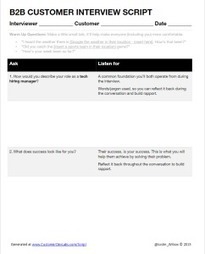
[Updated] July 18, 2018Here’s an example: Use this template… As a starting point. Add & edit questions as necessary. As a place to store the notes from your interviews. To share with your teammates so you’re all asking the same questions. Let’s Create your Script Fill out each of the fields below then …
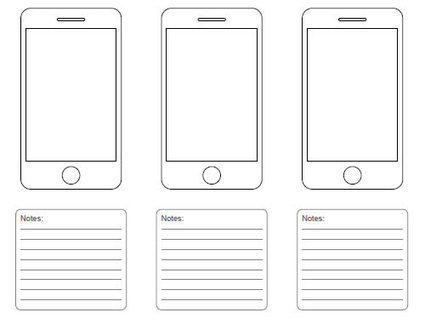
In the world of digital design, we have a lot of different tools that make the process of prototyping really simple. But still pen and paper remain the most useful tools for UX designers. Paper…
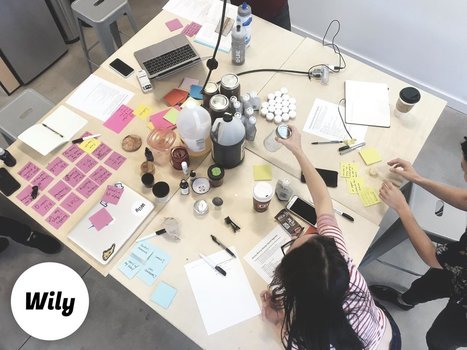
Sprints are all the rage, but beware the snake-oil! This is what I learnt by taking part in a modified design sprint, run by people with incomplete understanding of the Google Ventures Design Sprint process. Jake Knapp describes Design Sprints as a greatest hits of productivity, decision making, innovation, creativity, and design — and I think that’s true. But I... Read More →
As one of the keynote speakers, Tom Chi shares his radical approach to prototyping which is based on key techniques used to build Google Glass, Self-Drivin
How to achieve a Design sprint in three days, without users, without client and without time? Keep calm and Design thinking… Feedback on a stressful and intense design experience.
The aim of our sprint was to design a new app to capture leads during automobile fairs and others likely events. We had only three days to achieve a prototype…
Le Design Sprint est une méthode d’innovation inspirée par les principes du Lean Startup et du Design Thinking. L’objectif est de répondre aux besoins des utilisateurs et clients rapidement et à moindre coût. En 5 jours, une petite équipe passe ainsi d’une problématique au test utilisateur d’un prototype.
The Design Sprint is a great way to break this cycle. What’s a Design Sprint? It’s a five-day process for answering critical business questions through design, prototyping, and testing ideas with customers. Teams typically get together in the same place and focus on problem for 5 days. They often lead to breakthroughs that might otherwise take months or never happen at all.
Design Sprint is by far the hottest technique in the field of problem-solving. I'm personally a fan because of its strict no BS policies. Learn more here.
The problem is that we have unrealistic expectations of the technique and we seek by using it to find THE answer fast. This is primarily because of the high upfront costs that come with Design Sprint.
The solution to this situation is to acknowledge that there are no quick answers. If your organization is committed to integrating Design Sprint in its problem-solving processes, you must also be ready to have rounds of iteration in case the response from the first round is tepid and not reliable enough.
If you seek to gain more insights on the topic, please read Michael’s article that initially sparked in me the excitement to write about it.
When I first started facilitating Design Sprints I exclusively relied on the tools and checklists by Jake Knapp. However, since I published my first article on Medium a few weeks ago, many of you…
Learn Running Product Design Sprints from University of Virginia. Typically, clients and managers don't want to pay for design (or strategy) -- they want ‘results’! Too often, this leads to solutions that just don’t make sense and aren’t valuabl
EPiC filmed the evening and condensed it into a detailed 20-minute video below if you want to deep-dive into design process and learn about Will's experience applying it.
When it comes time to show your paper prototypes to other people — whether stakeholders or testers — things get tricky. Because so much is dependent on the user’s imagination, you need to set the right context.
Designate one person as play the “computer” — A common mistake is to have the presenter also control the prototype screens, but the role of the “computer” requires full attention. To best simulate an automated system, one person’s only job should be switching the screens according to the user’s action.
Rehearse — The role of the computer is not as easy as you might think. Rehearse beforehand to iron out the kinks and prepare the “computer” for a live performance.
Follow standard usability test best practices — Tips like using a minimum of 5 users and recording the tests still apply. For advice on usability testing in general, read the free Guide to Usability Testing.
Guide the feedback. When showing someone a paper prototype, prime them by explaining the context of the design. What did you design? What have you left out for later? What elements of the design are you looking for input specifically? Generally, you’ll want to explain that structure and flow are where the person should focus.
The Design Sprint is a five-day process for answering critical business questions through design, prototyping and testing ideas with customers. Design Sprints are a powerful process for orienting…
After a full day of understanding the problem and choosing a target for your sprint, on Tuesday, you get to focus on solutions. The day starts with inspiration: a review of existing ideas to remix and improve. Then, in the afternoon, each person will sketch, following a four-step process that emphasizes critical thinking over artistry. You’ll also begin planning Friday’s customer test by recruiting customers that fit your target profile. Read more here: https://library.gv.com/sprint-week-tu...
There are many different methodologies that help designers be more productive and efficient. One of the most popular frameworks that’s heavily focused on teamwork and collaboration with the client is the Design Sprint.It was developed by Jake Knapp and covered in his best-selling book Sprint.
As mentioned before, AJ&Smart have updated the original Design Sprint framework based on their learnings from running Sprints with clients for a couple of years, and where they saw parts of the Sprint that could be condensed and more efficient.
For a while now they’ve been 100% focused on running Design Sprints, a move they made because they saw the effectiveness of the method.
They named their new framework the Design Sprint 2.0. So, what’s different from the original framework?
By merging exercises from Day 1 and Day 2 into just Day 1, AJ&Smart made the full Sprint take 4 days instead of 5. This way they have time to reflect on sprints on Friday.
There are more differences, which we will find out about now — let’s jump in!
Imagine getting the chance to go to London, England. Now imagine partnering with the Church of England to dream up ideas with over 60 people to impact 25 million church attenders in the U.K…
If there is something the world wasn’t short of, it's content about design sprints; how tos, success stories, what to do and what not to do, yadda yadda yadda.
Design sprints distracted me from the bigger challenge. I was substituting activities for thinking. I was taking the easy way out. I had started identifying my expertise with running design sprints rather than the intended outcome to deliver lasting change and value for our clients.
So before diving headlong into recommending design sprints, I have re-focussed our efforts. This means making sure we are focussed on questions and outcomes before we think about method.
Are we focussed on the behaviours and practices of the customers?
Does the team have permission to fail and to experiment?
Is there a programme of ongoing customer development?
Are we creating good design, not just good design sprints?
So, it wasn’t them, it was me. In the future design sprints and I might get back together, but it won’t be a monogamous relationship: we definitely need to see other people.
In closing
I do believe design sprints can help solve hard problems.
I also believe that design sprints can appeal to people who are looking for a silver bullet, or looking for an answer to design but don't want to do the hard work.
No matter what your problem is, I suggest starting from a set of goals, rather than a specific method, no matter how appealing it sounds.
I am grateful that the Jake Knapp and the GV team for creating design sprints, and introducing us to a novel method. Having been on the journey, I prefer to rely on design as a practice and sprints as a process.
You can view the original slides from the presentation below
To get content containing either thought or leadership enter:
To get content containing both thought and leadership enter:
To get content containing the expression thought leadership enter:
You can enter several keywords and you can refine them whenever you want. Our suggestion engine uses more signals but entering a few keywords here will rapidly give you great content to curate.


 Your new post is loading...