Your new post is loading...

|
Scooped by
Mickael Ruau
February 21, 2022 1:16 AM
|
Programming is about writing code. You take a task and write code to solve it.
Software engineering is when you take that piece of code and consider:
How will this task evolve?
How will this code adapt to those changes?
What does this code encourage others to do?
How does this code encourage other programmers to use it?
How will I understand this code in 5 months?
How will a busy team member jumping around grok this?
What happens when the business becomes bigger?
When will this code stop being good enough?
How does it scale?
How does it generalize?
What hidden dependencies are there?
That's engineering � considering the long-term effects of your code. Both direct and indirect.
You always face the underlying concern of "What's the expected life span of this code?". How you approach a black friday marketing site is different from how you approach your company's payment system.
|
|
Scooped by
Mickael Ruau
December 15, 2021 1:08 AM
|
Jamstack’s core ideas are not something new. If you go back to the origins of the web, you’ll recap how developers used to create static HTML content manually, page by page, to serve the clients.
The whole cycle from development to deployment was simpler for everyone involved. Obviously, with the complexities required for the systems nowadays, we can not go back to the way it used to be.
However, Jamstack’s not focused on simply serving manually-created static HTML contents to gain in page load speed. It’s goal is on extracting the best out of these experiences to improve performance, productivity, and flexibility while keeping maintenance simpler.
Aside from that, there’s a famous article from AWS known as The 5 Pillars of the AWS Well-Architected Framework, which the company wrote to share with the community their extensive experience in making great architectures. They are:
Operational Excellence
Security
Reliability
Efficiency (in terms of performance)
Optimization (in terms of costs)
When looking at a Jamstack architecture, you can spot each one of these pillars well implemented through:
Reducing the number of internal architectural pieces that move within the systems to decrease the need for Ops people and, therefore, have better operational excellence.
Making sure the app follows the consolidated best practices for security means which increases the overall security.
Providing endless scalability to the various nodes in which your app may be running so that it’s reliable.
Delivering the fastest experience possible due to the static nature of all website resources, including CDN.
Decreasing costs since there are only static resources to host .
|
|
Scooped by
Mickael Ruau
December 8, 2021 8:56 AM
|
Une panne majeure a perturbé les services cloud d'Amazon mardi, mettant temporairement hors service les plateformes de streaming Netflix et Disney+, Robinhood, une large gamme d'applications et le site de commerce électronique d'Amazon.com Inc, alors que les consommateurs faisaient leurs achats avant Noël.
|
|
Scooped by
Mickael Ruau
December 6, 2021 1:16 AM
|
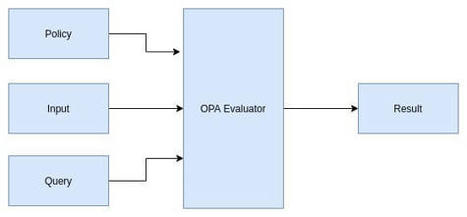
Open Policy Agent is an open-source engine that provides a way of declaratively writing policies as code and then using those policies as part of a decision-making process. It uses a policy language called Rego, allowing you to write policies for different services using the same language.
OPA can be used for a number of purposes, including:
Authorization of REST API endpoints.
Allowing or denying Terraform changes based on compliance or safety rules.
Integrating custom authorization logic into applications.
Implementing Kubernetes Admission Controllers to validate API requests.
OPA was originally created by Styra, and is now part of the Cloud Native Computing Foundation (CNCF), alongside other CNCF technologies like Kubernetes and Prometheus.
In this article, I will give an overview of Open Policy Agent, explain why you would want to use it, as well as showcase how you can use OPA with your Spacelift account. Although OPA can serve many purposes, I’m going to focus on how it can be used alongside Infrastructure as Code.
|
|
Scooped by
Mickael Ruau
November 26, 2021 6:09 AM
|
The AWS Well-Architected Framework helps cloud architects build the most secure, high-performing, resilient, and efficient infrastructure possible for their applications. The framework provides a consistent approach for customers and AWS Partner Network (APN) Partners to evaluate architectures, and provides guidance to implement designs that scale with your application needs over time.
In this post, we provide an overview of the Well-Architected Framework’s five pillars and explore design principles and best practices. You can find more details—including definitions, FAQs, and resources—in each pillar’s whitepaper we link to below.
Read the full Well-Architected whitepaper >>
1. Operational Excellence
|
|
Scooped by
Mickael Ruau
November 19, 2021 7:43 AM
|
La première partie de cette série d'articles évoque l'évolution de l'architecture et les patterns stratégiques d'architecture pour les tendances technologiques comme les microservices, le serverless et la conteneurisation. Les architectures s'appuyant sur des principes comme le couplage faible, l'extensibilité, et la programmation par interfaces seront plus résilients lors de changements majeurs de plateforme technologique. Les solutions bien conçues résistent au temps en isolant la logique métier des composants technologiques, ceux-ci devenant obsolètes tôt ou tard.
La seconde partie décrit le temps nécessaire à la stabilisation de l'architecture et certains anti-patterns comme le monolithe distribué et l'architecture "Etoile de la Mort". Il démontre le besoin d'équilibrer l'architecture et la stabilité technologique.
Cette troisième partie étudie l'importance des interactions entre les services dans une architecture microservices, les difficultés récurrentes des systèmes distribués, et comment des patterns d'architecture modernes comme l’orchestration de services et le Service Mesh peuvent y répondre.
|
|
Scooped by
Mickael Ruau
November 11, 2021 5:32 AM
|
This article describes a vendor/technology-neutral reference architecture for a cloud native digital enterprise that can be mapped into different cloud-native platforms (Kubernetes and service mesh), cloud providers (Microsoft Azure, Amazon AWS, and Google GCP), and infrastructure services.
|
|
Scooped by
Mickael Ruau
November 3, 2021 8:49 AM
|
Among the most fundamental of distributed computing concepts is the endpoint. We know every piece of software – objects, microservices, applications, you name it – by its inputs and outputs, and we call such points of interaction endpoints.
Over the history of distributed computing, endpoints have come in many flavors: sockets, IP addresses, interfaces, Web Services, and ingress, to name a few. Regardless of their nature, other pieces of software must be able to find the appropriate endpoints, connect (or bind) to them, and interact with them.
Endpoints also represent holes in our attack surface, so securing them is always of tantamount importance. At their most basic, endpoints are part of our physical distributed computing architecture. However, if all we had to work with were physical endpoints, we’d have little to no flexibility, and hence, limited programmability and severe limitations to their usability. For these reasons, we’ve implemented many approaches to abstracting endpoints over the years. Today we must continue this trend as we build out our cloud-native infrastructure.
Within the new cloud-native computing paradigm, however, abstracted endpoints take on a new meaning.
|
|
Scooped by
Mickael Ruau
October 14, 2021 9:59 AM
|
Sélection des meilleurs tutoriels, exercices et cours de formation gratuits pour apprendre le cloud computing du niveau débutant à expert
|
|
Scooped by
Mickael Ruau
October 8, 2021 8:22 AM
|
Cloud computing is a model for enabling ubiquitous, convenient, on-demand network access to a shared pool of configurable computing resources (e.g., networks, servers, storage, applications, and services) that can be rapidly provisioned and released with minimal management effort or service provider interaction. This cloud model is composed of five essential characteristics, three service models, and four deployment models.
|
|
Scooped by
Mickael Ruau
October 8, 2021 6:35 AM
|
Ce rapport est r�alis� par l'�quipe Google Cloud�s DevOps Research and Assessment (DORA).
Il tente de r�pondre aux questions suivantes :
Comment les �quipes logicielles les plus performantes se distinguent-elles des �quipes moins performantes ?
|
|
Scooped by
Mickael Ruau
July 21, 2021 10:05 AM
|
With a bucket of Legos, you can tell any story. You can build an airplane or a dragon or a pirate ship—it’s whatever you can imagine.
Christopher Miller One of the hallmarks of any digital transformation is increased speed and agility. Decisions need to be made more quickly using data and algorithms. Digital services need to be created rapidly to capture new revenue streams and increase customer experience. You might have heard your CTO or Chief Architect (or AWS) talk excitedly about a new software architecture that is going to save your business, make it more agile, innovative, and solve world hunger called microservices. Much has been written about the technical aspects of microservices architecture, but the non-technical aspects (business, organization, etc.) of microservices I find are not covered with the same frequency or energy. But before I cover the non-technical aspects of microservices, I think it’s worth trying to explain it in layman’s terms and the connection to business value.
|
|
Scooped by
Mickael Ruau
July 14, 2021 1:54 AM
|
Software architecture diagrams can be a very useful communication tool, but many teams have scaled back on the creation of diagrams, and when diagrams are created, they are often confusing and unclear. The C4 model consists of a hierarchical set of software architecture diagrams for context, containers, components, and code.
|
|
|
Scooped by
Mickael Ruau
February 4, 2022 1:16 AM
|
If there was one book this year that it was hard to avoid hearing about, it was “Software Engineering at Google”. As such, it was only a matter of time before I jumped on the bandwagon and decided to give it a read, but I’m happy I finally did!
I track my highlights and notes through my kindle / goodreads, and ended up with about 80 of them. In this blogpost, I’ll just go over some of what that I thought stood out in the book in one way or another.
|
|
Scooped by
Mickael Ruau
December 9, 2021 4:50 AM
|
Le 25 novembre 2021, l’association Gaia-X a publié son cadre de conformité et de labellisation des services proposés au sein de Gaia-X (Compliance and...
|
|
Scooped by
Mickael Ruau
December 7, 2021 4:02 AM
|
L'adoption du cloud computing a pris d'assaut le monde. Selon le rapport annuel de Flexera sur l'état du cloud pour 2020, 93 % des personnes interrogées ont utilisé un cloud multi ou hybride.
|
|
Scooped by
Mickael Ruau
November 28, 2021 5:30 AM
|
Google Cloud apologized for the service outage and any inconvenience caused its downstream customers. The organization specified the root cause as “a latent bug in a network configuration service which was triggered during a leader election charge.” The cloud giant has assured customers there are now “two forms of safeguards protecting against the issue happening in the future.”
With the massive adoption of public cloud, this latest incident (in a long year of outages) illustrates how significant the impact a public cloud vendor outage can be downstream. It also illustrates how vulnerable enterprises are to third-party vendor outages.
You can clearly see that many enterprises rely on public Internet, services, and infrastructure to conduct their business and deliver digital experiences to their clients. While there are many positives to this situation, the challenge is that those same businesses have little to no control over the underlying infrastructure on which their organizations run.
Three Key Lessons for Any Company
Below are three critical lessons that we took away from this outage, which you can apply to your own business:
While failure is bound to happen, don’t overlook the importance of communicating to the end user through a proper error page. Don’t assume your users will find your status page or go to Twitter to see your communications. They will have already moved on to your next competitor, and will eventually read about it in the news. If there was one thing that confused the end users in this instance, it was the Google error page that greeted people. Most people would have expected an error message from the company they were trying to reach, not the hosting company. It’s a little unclear if Google Cloud allows folks to modify this. Perhaps it’s not possible. However, any company should be ready for such failures, and implement a process where they are able to change the DNS or CDN configuration to point people to a proper error page with their own branding and messaging to apologize for the failure in their own words. And ideally, make it fun. Don’t be afraid to be human and relate to the end users. A proper error page is always better than confusing error pages (as in this instance), obscure errors (such as “the server failed to respond”), or worse, nothing at all and hanging on into infinity to connect to the server.
|
|
Rescooped by
Mickael Ruau
from Time to Learn
November 22, 2021 9:53 AM
|
|
|
Scooped by
Mickael Ruau
November 17, 2021 7:47 AM
|
Key Takeaways
The multi-cloud journey is often a long, complex one. Adaptable tooling is key to deal with current heterogeneous systems, and accommodate future change.
Team buy in is key. The transformation will touch many organizations and require leadership and a well communicated vision to succeed.
Measure the current state of IT utilization. A successful transformation not only needs a clear vision of the future, but also a clear understanding of the present.
Cloud selection must be driven by current and anticipated business needs. This can include differentiators such as security, performance, reliability, cost for anticipated usage, etc.
Avoid large scale sudden transformation; favor incrementalism initially. The journey to multi-cloud is one of organizational learning as well as execution. Incremental transformation allows internal systems to adjust to new realities and absorb the shock of change. Later, when experience and confidence is gained with new technology and operational models, the change can accelerate.
|
|
Scooped by
Mickael Ruau
November 3, 2021 10:22 AM
|
The first part of this article series discussed architecture evolution and strategic architecture patterns for technology trends like microservices, serverless, and containerization. Architectures based on principles such as loose coupling, extensibility, and interface-based design will be more resilient during major shifts in technology platforms. Well-designed solutions stand the test of time by insulating business logic from technology components that become obsolete over time.
The second part focused on architecture stabilization gaps and anti-patterns such as distributed monoliths and "Death Star architecture." It demonstrates the need to balance architecture and technology stability.
This third part explores the importance of service interaction in a microservices-based architecture, the typical challenges of distributed systems, and how advanced architecture patterns like service orchestration and service mesh can help address those challenges.
|
|
Scooped by
Mickael Ruau
November 1, 2021 9:28 AM
|
Dans le Cloud computing - le tutoriel pour débutant
|
|
Scooped by
Mickael Ruau
October 8, 2021 8:24 AM
|
Il existe une confusion entre DevOps, SRE (Site Reliability Engineer), SysAdmin et Ingénieur Cloud. Nous éclaircissons ces métiers dans cet article.
|
|
Scooped by
Mickael Ruau
October 8, 2021 8:18 AM
|
The adoption of cloud computing into the Federal Government and its implementation depend upon a variety of technical and non-technical factors.
|
|
Rescooped by
Mickael Ruau
from Enterprise Architecture
August 26, 2021 3:34 AM
|
As an enterprise, keeping control of your cloud(s) requires a Cloud Center of Excellence (CCoE). But what is a CCoE all about? We examine the fundamentals and key success factors of a CCoE.
Via Emeric Nectoux
|
|
Scooped by
Mickael Ruau
July 18, 2021 7:41 AM
|
|