Devops for Growth
120.7K views | +11 today
Devops for Growth
For Product Owners/Product Managers and Scrum Teams: Growth Hacking, Devops, Agile, Lean for IT, Lean Startup, customer centric, software quality...
Curated by Mickael Ruau
Your new post is loading...

Popular Tags

Current selected tag: 'bug'. Clear
Scooped by Mickael Ruau
March 25, 2021 2:43 AM
Scoop.it!

Patch vs Hotfix vs Coldfix vs Bugfix: Differences Explained – BMC Software | Blogs

Patch vs Hotfix vs Coldfix vs Bugfix: Differences Explained – BMC Software | Blogs | Devops for Growth | Scoop.it

Finding and fixing the problem is just the first step. Then, you have to decide how to fix the problem—and how to roll it out in a way that minimizes the impact to users. That remedy might be delivered via:

  • Patch
  • Hotfix
  • Coldfix
  • Bugfix

Those terms are often used interchangeably, but there are differences in each one based on how a programmer incorporates their solution into the software.

No comment yet.
Scooped by Mickael Ruau
January 20, 2020 4:37 AM
Scoop.it!

Year 2038 problem - Wikipedia

Year 2038 problem

The Year 2038 problem (also called Y2038 or Unix Y2K) relates to representing time in many digital systems as the number of seconds passed since 00:00:00 UTC on 1 January 1970 and storing it as a signed 32-bit integer. Such implementations cannot encode times after 03:14:07 UTC on 19 January 2038.

No comment yet.
Scooped by Mickael Ruau
November 19, 2019 8:08 AM
Scoop.it!

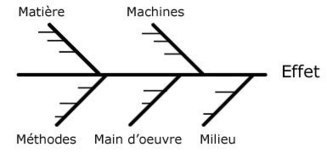
Les 5M ou Comment faire un diagramme d'Ishikawa

Les 5M ou Comment faire un diagramme d'Ishikawa | Devops for Growth | Scoop.it
Apprenez à faire un diagramme Ishikawa facilement. Découvrez les causes des variations au travers des 5M. Milieu, Matière, Main d'oeuvre, Méthode, Machine
Mickael Ruau's insight:

Dans la dernière colonne, on multiplie le Bénéfice par le Coût. On obtient ainsi un classement des actions à mener en priorité. Dans notre exemple, l’entreprise s’attaquera d’abord à la formation et au changement de l’outillage. Comme vous le constatez, il y a parfois des égalités, le stress et l’éclairage sont tous les deux à 12. Dans ce cas, soit vous arbitrez vous-même, soit vous ajoutez un coefficient à l’une des colonnes. Admettons que pour des raisons de budget, vous donner priorité au Coût. Vous ajouter donc un coefficient 2 à cette colonne. Après calcul, on voit que le Manque d’éclairage devient prioritaire par rapport au facteur Stress.

 Résumé 5M et diagramme d’Ishikawa

Voilà, ce qu’il faut retenir c’est que les 5M (Main d’œuvre, Matière, Méthode, Machine, Milieu) sont les 5 causes de variabilité d’un processus. Pour résoudre un problème de variabilité on peut utiliser le diagramme d’Ishikawa qui a l’avantage d’illustrer et de structurer la réflexion. On peut décomposer la méthode en 4 étapes :

  • Constituer le groupe de travail
  • Poser le problème et récolter en vrac les idées
  • Structurer les idées selon les 5M
  • Hiérarchisez les causes pour mettre en place un plan d’action
No comment yet.
Scooped by Mickael Ruau
November 8, 2019 5:55 AM
Scoop.it!

How to Handle Bugs, Backlog, Prioritization and Communication with the Burndown Framework

In two previous posts, I introduced how we crafted our own framework for building product at Drift (Burndown) and talked through how you can actually implement the Burndown Framework at your own…
No comment yet.
Scooped by Mickael Ruau
November 6, 2019 9:07 AM
Scoop.it!

Best Strategies for Managing Bugs and Feature Requests

Best Strategies for Managing Bugs and Feature Requests | Devops for Growth | Scoop.it
Dealing with bugs and feature requests coming from different sources? Check this list of smart and proven strategies for managing bugs and feature requests.
No comment yet.
Scooped by Mickael Ruau
September 27, 2019 10:07 AM
Scoop.it!

Scrum : Met-on de la complexité sur les bugs ?

Scrum : Met-on de la complexité sur les bugs ? | Devops for Growth | Scoop.it


Il existe deux philosophies dans le monde du Scrum d’où le fait de traiter cette réponse en un article complet.

Non, je ne mets pas de complexité

Dans un agile simplifié (à ne pas lire négativement), on a tendance à dire que les bugs ne doivent pas avoir de complexité afin que la vélocité reflète en partie la valeur délivrée.

Dans ce cas, la courbe de la vélocité (sur le temps) peut montrer les phases où les développeurs ont bien répondu aux demandes métiers et les phases où ce n’est pas le cas.

En général, si vous n’avez pas d’intégration continue ou devops, votre vélocité fini par baisser car le legacy grandissant impose de corriger de plus en plus de bugs.

Oui je mets de la complexité

Dans un agile plus complexe (toujours à ne pas lire négativement), on a tendance à mettre de la complexité sur l’ensemble des tâches (user-story, tâches techniques, bugs…). Ca simplifie la prédictibilité et la vélocité est un indicateur qui ne mélange pas deux notions : la charge et la valeur cliente.

On ajoute en fait un deuxième indicateur que l’on appelle la « Business Value » qui sera là pour suivre la valeur qui sera délivrée au client (ou utilisateurs clés). Du coup, il n’est plus utile de jouer cet aspect client sur les tâches à traiter et on décide alors de mettre de la complexité sur l’ensemble des tâches (excepté les spikes qui sont eux timeboxé).

No comment yet.
Scooped by Mickael Ruau
September 27, 2019 10:03 AM
Scoop.it!

Defect Triaging In Scrum: How Is It Organized In a Scrum Setup

Defect Triaging In Scrum: How Is It Organized In a Scrum Setup | Devops for Growth | Scoop.it
What is Defect Triaging in Scrum – we will try to understand the importance of Defect Triaging and how is it organized in a Scrum Setup. 
No comment yet.
Scooped by Mickael Ruau
April 21, 2019 2:04 PM
Scoop.it!

Le Chaos Engineering comme outil de validation de l'observabilité

Le Chaos Engineering comme outil de validation de l'observabilité | Devops for Growth | Scoop.it
Comment le Chaos Engineering a permis à OUI.sncf de mettre à l'épreuve son monitoring et d'évaluer son niveau d'observabilité.
No comment yet.
Scooped by Mickael Ruau
June 22, 2017 3:26 AM
Scoop.it!

Zoom sur... Sonar, pour automatiser la vérification de la qualité du code Java - Le blog de Clever Age

Zoom sur... Sonar, pour automatiser la vérification de la qualité du code Java - Le blog de Clever Age | Devops for Growth | Scoop.it
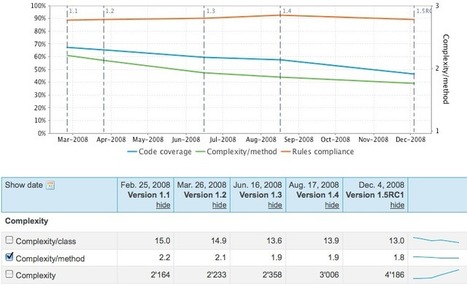
La qualité du code est souvent le parent pauvre des projets en entreprise et, pourtant, celle-ci a un impact sur la productivité. Sonar est le tableau de bord permettant de suivre l'évolution de la qualité des sources au fur et à mesure de la vie d'un projet.
Mickael Ruau's insight:

Sonar effectue un calcul de complexité du code permettant de déterminer la bonne disposition des instructions dans les classes Java. Cela permet de détecter les méthodes / les classes ayant une complexité forte aggravant la maintenance de l’application.

L’algorithme de calcul de la complexité est celui défini par Thomas McCabe, appelé complexité cyclomatique. Cet algorithme génère un graphe qui décrit tous les chemins possibles que peut prendre l’exécution du code. Plus le nombre de chemins est élevé, plus la complexité augmente.

Des méthodes ayant une mesure de complexité trop élevé seront susceptibles de réduire la possibilité de les maintenir et les comprendre correctement. La diminution de la complexité s’effectue alors en déportant des parties d’instructions dans de nouvelles méthodes ou classes.

No comment yet.
Scooped by Mickael Ruau
December 2, 2016 8:24 AM
Scoop.it!

Google rend accessibles publiquement ses serveurs NTP aux entreprises, pour éviter des soucis après la seconde intercalaire prévue à la fin de 2016

Google rend accessibles publiquement ses serveurs NTP aux entreprises, pour éviter des soucis après la seconde intercalaire prévue à la fin de 2016 | Devops for Growth | Scoop.it

Dans un billet de blog, Google a annoncé que les services horaires qui régulent tous ses services sont désormais ouverts à tous ceux qui opèrent dans l’IT. La firme va laisser tout le monde utiliser ses serveurs NTP (Network Time Protocol), une démarche qui vise à aider les intervenants de l’IT à gérer les changements qui surviendront durant la prochaine seconde intercalaire prévue à la fin de cette année (juste après minuit le 31 décembre).

Mickael Ruau's insight:

Ce système a été introduit en 1972 et permet de tenir compte simplement du ralentissement de la rotation de la Terre.

Les systèmes d’exploitation ordinaires ne peuvent pas s’adapter à une minute qui a plus de 60 secondes, pour cette raison, les organisations ont dû mettre en place des solutions pour gérer cette seconde additionnelle. Cependant, elles sont parfois amenées à faire face à des problèmes liés aux opérations qui prennent place durant cette seconde. Dans le passé, des systèmes de Google ont carrément refusé de fonctionner après la seconde intercalaire. Pour remédier à ce problème, Google va modifier ses serveurs NTP pour faire tourner les horloges plus lentement (-0.0014 %) pendant 10 heures avant la seconde intercalaire et 10 heures après. Grâce à cette technique appelée “smeared time”, les systèmes auront déjà pris en compte la seconde intercalaire. Google ne sera pas le seul à recourir à cette technique, Akamai compte ralentir ses horloges durant 24 heures avant et après la seconde intercalaire. Amazon et Microsoft ont suivi la même méthode dans le passé.

No comment yet.
Scooped by Mickael Ruau
November 6, 2015 3:35 AM
Scoop.it!

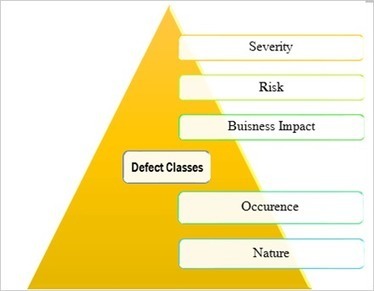
Defect Severity | Software Testing Fundamentals

ISTQB Definition
severity: The degree of impact that a defect has on the development or operation of a component or system.
DEFECT SEVERITY CLASSIFICATION

The actual terminologies, and their meaning, can vary depending on people, projects, organizations, or defect tracking tools, but the following is a normally accepted classification.

Critical: The defect affects critical functionality or critical data. It does not have a workaround. Example: Unsuccessful installation, complete failure of a feature.
Major: The defect affects major functionality or major data. It has a workaround but is not obvious and is difficult. Example: A feature is not functional from one module but the task is doable if 10 complicated indirect steps are followed in another module/s.
Minor: The defect affects minor functionality or non-critical data. It has an easy workaround. Example: A minor feature that is not functional in one module but the same task is easily doable from another module.
Trivial: The defect does not affect functionality or data. It does not even need a workaround. It does not impact productivity or efficiency. It is merely an inconvenience. Example: Petty layout discrepancies, spelling/grammatical errors.
Severity is also denoted as:

S1 = Critical
S2 = Major
S3 = Minor
S4 = Trivial
No comment yet.
Rescooped by Mickael Ruau from Gestion de projet Agile
May 27, 2015 12:50 AM
Scoop.it!

Agile Bug Management Anti-Patterns | Edge of Chaos | Agile Development Blog

Agile Bug Management Anti-Patterns | Edge of Chaos | Agile Development Blog | Devops for Growth | Scoop.it
Agile development books often skip bug management practice. However, there are several dangerous misunderstandings (anti-patterns) that are quite common. It is

Via PCSol SA
No comment yet.
Scooped by Mickael Ruau
February 1, 2015 6:32 AM
Scoop.it!

How to solve production problems

How to solve production problems | Devops for Growth | Scoop.it
At my job, I’m finding that a large percentage of the questions that come to my desk are “Hey this thing you did is broke,” or “Hey, this thing you worked with is on the fritz.” 99% of the time, I’d have no idea why the behavior they were asking about was occurring! However, I think I’ve got a great problem solving methodology, which I attribute to being key in my success. Maybe some agile writer can take the concepts here and we can develop a formal methodology for solving problems :)
Mickael Ruau's insight:

As professionals, we should accept that production problems are unavoidable. You will create defects in your code, and no amount of testing will ever weed them all out. Code is rushed, servers crash, disks fail, and datacenters overheat. Accepting the fact that production problems occur is very important, but most importantly you need to plan for them. As one of my favorite financial advisor says, “It’s not a matter of if these events will happen; it’s simply a matter of when they will happen.” Plan your week/month with hours available to investigate strange behavior, crashes or user complaints.

No comment yet.
Scooped by Mickael Ruau
September 7, 2020 1:38 AM
Scoop.it!

Zero bug policy. A fast way for paying back technical debt.

Zero bug policy. A fast way for paying back technical debt. | Devops for Growth | Scoop.it

The rigorous Zero-baseline approach will force us to clean our code. And it will force us to make the customers a little less disappointed by reducing the "buggy-ness" of the application.


If a critical bug is raised, then all hands should be on deck. This is what is know as the “Stop the line”. This means at least one team should drop the Sprint work and resolve that issue first.

image by S. montagud

When the number of bugs coming in per sprint decreases, the PO should agree with all teams to set a fixed number of bugs that the teams must resolve every Sprint. Per Sprint there we will move X number of bugs times X number of teams from the Ultimate bug-list to the PBL. This will make the zero-baseline go down. The number of bugs per sprint can be any number, but it needs to be realistic in relation to the total number of bugs on the ultimate bug-list.

No comment yet.
Scooped by Mickael Ruau
November 27, 2019 2:12 AM
Scoop.it!

How to differenciate Bugs, Software Risks and Software Failures - Part 2 - Software in Medical Devices, by MD101 Consulting

How to differenciate Bugs, Software Risks and Software Failures - Part 2 - Software in Medical Devices, by MD101 Consulting | Devops for Growth | Scoop.it
In my previous post about Bugs, Software Risks and Software Failures, I explained the concepts of bugs, defects or anomalies, and the concept of software failure. Let's continue
No comment yet.
Scooped by Mickael Ruau
November 8, 2019 5:57 AM
Scoop.it!

Defect Management by Policy: Prioritize Bug Fixes Efficiently

Many agile teams struggle to prioritize bugs efficiently. A defect management policy matrix shows at-a-glance how urgent a bug fix truly is. Learn how to implement this quick easy approach to prioritizing bugs and defects.
Mickael Ruau's insight:

Create a Defect Policy Matrix to Prioritize Bugs

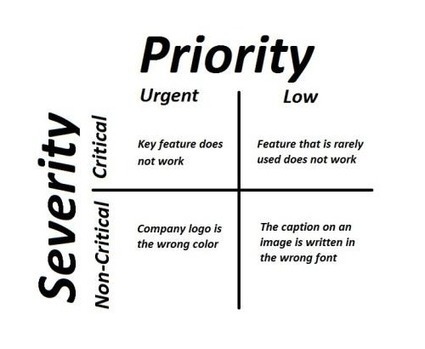
The two dimensions--severity and priority--can be combined to establish the priority policy for the defect. To do this, create a simple matrix cross referencing those two factors as I’ve done here:

  Likelihood:
Severity: < 1% of transactions 1% of transactions < 10% of transactions > 10% of transactions Easy, obvious workaround available Very Low Low High High Non-obvious workaround available or workaround available only for some users Low Medium High Very High Important functionality unavailable Medium High Very High Very High

There are many ways you can categorize likelihood and severity. Sticking with an eCommerce site example, I used the percentage of transactions affected for likelihood. Anything estimated to affect 10% or more of transactions is a pretty big deal, so I’ve set that entire column to High or Very High.

For Severity, I used whether a workaround was present or not and obvious or hard to find. On an eCommerce site perhaps there are two “Buy Now” buttons and only one is working.

The cells in the matrix indicate what policy should be in effect for defects of the indicated likelihood and severity. In this example, I used five priorities from Very Low to Very High. In some cases you can get by with as few as three. I’d be cautious of needing more than five, although I have seen it.

Here’s how I will commonly use a five-item set of policies:

Very High: Added immediately to the current iteration even at the risk of delaying that work. May very likely need the effort of more than one team member, possibly including the whole team.

High: Added immediately to the current iteration even at the risk of delaying that work. Team decides who can best address the issue.

Medium: Added to the current iteration at the discretion of the product owner.

Low: Documented. Discussed in the next iteration planning meeting at the discretion of the product owner.

Very Low: Documented in list of known issues. Revisited only if severity or likelihood increases or at the discretion of the product owner.

No comment yet.
Scooped by Mickael Ruau
November 8, 2019 4:45 AM
Scoop.it!

Agile strategies for managing bug fixes

Agile strategies for managing bug fixes | Devops for Growth | Scoop.it
On agile projects, quality comes through collaboration.
Mickael Ruau's insight:

Although some Agile teams prefer to deal with bugs in a separate backlog, teams practicing Scrum generally find that it's cheaper and more efficient to handle bugs in the product backlog itself. Dealing with bugs on the product backlog can often be done effectively via "Three Amigos" meetings, which involve a product owner (or a business analyst), a developer and a QA tester who get together (either face-to-face or on-line) to review the bug, the tests used to detect it, and any other dependencies.

No comment yet.
Scooped by Mickael Ruau
October 2, 2019 4:01 AM
Scoop.it!

Game of Bugs : réduisez drastiquement votre backlog de bugs

J’avais par le passé discuté autour d’un type d’événement similaire appelé « Rally Test Game » dont le but est de sortir des tests classiques en invitant les gens à faire du test exploratoire et à fixer en live.

No comment yet.
Scooped by Mickael Ruau
September 27, 2019 10:04 AM
Scoop.it!

De-bugize! How to plan fixing of bugs in Scrum.

De-bugize! How to plan fixing of bugs in Scrum. | Devops for Growth | Scoop.it
Are you distressed by the huge amount of defects in the product? In this article, you will learn how to plan to fix fixing bugs in agile teams.
Mickael Ruau's insight:

Well, sometimes there will be a crisis and all you can do is to cancel the content of the sprint and move on to Kanban mode in the sprint. Product owner adds up and prioritizes daily, the team fixes by the order. We do not plan a sprint, but measure and evaluate the state. Either with a burndown graph or the cumulative flow chart.

No comment yet.
Scooped by Mickael Ruau
September 17, 2019 10:55 AM
Scoop.it!

How to differenciate Bugs, Software Risks and Software Failures - Part 1 - Software in Medical Devices, by MD101 Consulting

How to differenciate Bugs, Software Risks and Software Failures - Part 1 - Software in Medical Devices, by MD101 Consulting | Devops for Growth | Scoop.it

If my PACS viewer can't read 100% DICOM compliant data, it's a defect.
If my PACS viewer can't read corrupted data, it's a software failure.
You can see in this case that, this software failure doesn't mean that the software is guilty. Data were corrupted through the network, when burning the CDROM ... not by the PACS viewer.

Mickael Ruau's insight:

IEC 62304 prefers using the term Anomaly. It is defined at the beginning of the document and is used many times in the standard. That means that IEC 62304 focuses a big part of the efforts to reduce the amount of anomalies that remains when a software is delivered to end-users.

Characterization of defect

Defects can be so numerous, diverse and annoying that software engineers have defined a lot of attributes to characterize and categorize them. A bit like entomologists do with real bugs.
A defect has a title and an explanation plus a bunch of criteria. The most used criteria are:

  • Severity: how it affects the use of software,
  • Frequency: how often it appears,
  • Version of Software: on which version of software,

Other "administrative" criteria are also useful:

  • Status: is it open (still there), closed (fixed), pending (being fixed),
  • Creation date: when it was found,
  • Creator: who found it,
  • Owner: who's in charge to fix it.

Some companies like to add a looong list of criteria in their databases to characterize defects. This is not very useful, as most of engineers only use a small set of them.

Severity, the most important criterion

Most of times, the severity is defined by values like:

  • Critical: software stops or can't be used,
  • Major: software doesn't give expected results, but there is a workaround,
  • Minor: software gives a result with a non-significant discrepancy compared to expected result.

Some engineers like to add the Cosmetic value, for very minor things. When a word is misspelled in the user interface, but the whole thing remains understandable, then that defect can be set as cosmetic.

Severity is the most important criterion for software engineers because this is the one which is usually taken to sort defects by priority. The critical defects are fixed at first. The cosmetic ones are fixed when time remains.
This way of sorting defects can lead to epic situations when beta testers and engineers review and choose the defects that have to be fixed at first.
If you are an end-user that already participate to this kind of meeting, you already had to get along with a stubborn engineer that didn't want to set a high priority to a damned annoying bug!
If you are a software engineer, you already participate to this kind of meeting, and you already had to get along with a stubborn end-user that didn't understand anything to the way your software works and wanted to break something that works pretty well!
If you are a project manager, you know how long this meeting is going to be! :-)

No comment yet.
Scooped by Mickael Ruau
January 17, 2019 4:53 AM
Scoop.it!

Scène de crime : la catégorie mystère du projet Condor

Scène de crime : la catégorie mystère du projet Condor | Devops for Growth | Scoop.it

Un opérateur télécom vend aux entreprises une solution de centre d'appels virtuels. Cette solution est développée par notre équipe agile de sept personnes. Nous avons hérité d'un code de mauvaise qualité que nous améliorons progressivement. Cependant, nous sommes confrontés à environ deux signalisations 5 par jour de nos utilisateurs finaux. Cela provoque une tension avec le management, notre commanditaire est furieux, et les relations avec les exploitants sont difficiles.

Mickael Ruau's insight:

Analyse du problème

Les trois catégories les plus volumineuses sont :

  1. formation utilisateur : les utilisateurs ne comprennent pas comment fonctionne l'application ;

  2. réseau et plateforme : pas directement liée à des défauts logiciel ;

  3. mystère : nous ne savons pas identifier l'origine de la signalisation.

Première surprise, le grand gagnant est la catégorie « mystère ». Deuxième surprise, il y a finalement une minorité de signalisations liées à la qualité logicielle. Par ailleurs, je me rends compte que de nombreux tickets sont restés sans réponse : ils étaient abandonnés dans l’outil.

Identifier l'origine

Désarçonnés par le flou de ces tickets mystère, nous décidons d'avancer sur notre problème en nous donnant les moyens d'identifier l'origine des prochaines signalisations. Nous faisons un travail important d'amélioration des logs de l'application. Les récapitulatifs quotidiens qui remontent par mail les erreurs et les warnings contiennent plusieurs centaines de lignes hétérogènes. Nous donnons un format standard à ces logs, en décrivant les informations devant y figurer (client, identifiant d'appel, raison de l'erreur avec un élément de contexte).

Nous nous rendons compte qu'il est difficile de suivre un appel téléphonique entier car certaines logs sont sur les SVI (Système Vocal Interactif) et d'autres sont sur les serveurs d'application. Nous développons un script d'agrégation pour consolider chronologiquement ces sources différentes.

Nous faisons alors diminuer drastiquement la catégorie mystère de 30% à 5%.

No comment yet.
Scooped by Mickael Ruau
December 10, 2016 3:32 AM
Scoop.it!

Commande « rm -rf » : un hébergeur supprime le contenu de plus de 1530 sites !

C’est une histoire qui devrait servir de cas d’école : un responsable d’un hébergeur anglais a effacé le contenu de tous les sites de ses clients avec une simple commande « rm -rf ». 

No comment yet.
Scooped by Mickael Ruau
November 9, 2015 3:36 AM
Scoop.it!

Defect Report | Software Testing Fundamentals

DEFECT REPORT TEMPLATE

In most companies, a defect reporting tool is used and the elements of a report can vary. However, in general, a defect report can consist of the following elements.

ID Unique identifier given to the defect. (Usually Automated)
Project Project name.
Product Product name.
Release Version Release version of the product. (e.g. 1.2.3)
Module Specific module of the product where the defect was detected.
Detected Build Version Build version of the product where the defect was detected (e.g. 1.2.3.5)
Summary Summary of the defect. Keep this clear and concise.
Description Detailed description of the defect. Describe as much as possible but without repeating anything or using complex words. Keep it simple but comprehensive.
Steps to Replicate Step by step description of the way to reproduce the defect. Number the steps.
Actual Result The actual result you received when you followed the steps.
Expected Results The expected results.
Attachments Attach any additional information like screenshots and logs.
Remarks Any additional comments on the defect.
Defect Severity Severity of the Defect. (See Defect Severity)
Defect Priority Priority of the Defect. (See Defect Priority)
Reported By The name of the person who reported the defect.
Assigned To The name of the person that is assigned to analyze/fix the defect.
Status The status of the defect. (See Defect Life Cycle)
Fixed Build Version Build version of the product where the defect was fixed (e.g. 1.2.3.9)
No comment yet.
Scooped by Mickael Ruau
May 31, 2015 11:30 AM
Scoop.it!

L'été 2015 connaîtra-t-il un nouveau «bug de l'an 2000»?

L'été 2015 connaîtra-t-il un nouveau «bug de l'an 2000»? | Devops for Growth | Scoop.it
Le 30 juin 2015, après 23:59:59, il sera 23:59:60, avant d'arriver à l'habituel minuit 00:00:00. Cette seconde en plus devrait moins nous perturber que le passage à l'heure d'été ou d'hiver. Pour nos ordinateurs, et surtout ceux qui commandent les marchés boursiers ou les avions, il pourrait en être autrement.
Mickael Ruau's insight:

Ces dernières semaines, la seconde intercalaire aura été la reine des médias. Pour certains, l'ajustement temporel prévu pour cet été «pourrait générer des problèmes informatiques» ou «filer une grosse migraine à l'Internet». Pour d'autres, cette seconde intercalaire «retournera Internet» et «risque de le casser».

No comment yet.
Scooped by Mickael Ruau
February 1, 2015 6:37 AM
Scoop.it!

10 Tips for Proper Application Logging | Java Code Geeks

10 Tips for Proper Application Logging | Java Code Geeks | Devops for Growth | Scoop.it
Our latest JCP partner, Tomasz Nurkiewicz, has submitted a number of posts describing the basic principles of proper application logging. I found them quite interesting, thus I decided to aggregate them in a more compact format and present them to you. So, here are his suggestions for clean and helpful logs:(NOTE: The original posts have been slightly edited to improve readability) 1) Use the appropriate tools for the job Many programmers seem to forget how important is logging an application's
No comment yet.