



OKR playbook : un manuel OKR pour définir et communiquer votre programme OKR au sein de votre organisation.

 Your new post is loading...
 Your new post is loading...
Your new post is loading...
 Scoop.it!
OKR playbook : un manuel OKR pour définir et communiquer votre programme OKR au sein de votre organisation. 
No comment yet.
Sign up to comment
Scoop.it!
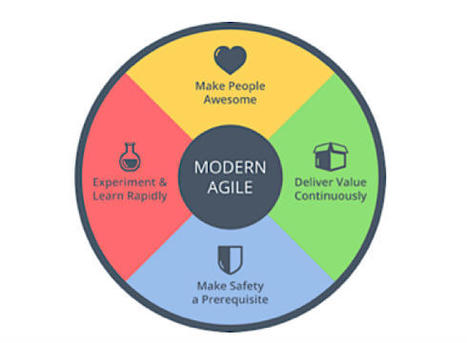
L'adoption de l’agilité dans la plupart des entreprises se concentre sur la livraison. L’utilisation de frameworks de mise à l'échelle n'aide généralement pas car ils empruntent le chemin de .....
Scoop.it!
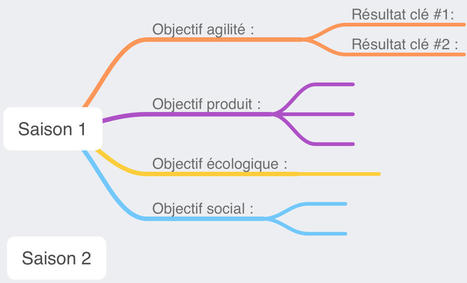
KARMA POLICE est une variante dans l’usage de KARMA, l’outil d’amélioration radicale de la maitrise agile.Basée sur les fameux OKR, elle est inspirée par le livre choisi pour le klub de lecture de demain : Succeeding wtih OKRs in Agile d’Allan Kelly...
Scoop.it!
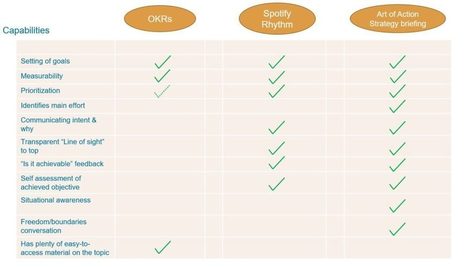
One of the strongest management trends right now in companies striving towards Agile is undoubtedly OKRs, “Objectives and Key Results”. But how do OKRs stack up against the alternatives when it comes…
Scoop.it!

OKRs (Objectives & Key Results) are great for team goal setting. This guide covers OKR basics, and teaches you how to use it with examples and a template.
Mickael Ruau's insight:
USE THIS PLAY TO...
Scoop.it!
From
upraise

One of the major challenges in adopting OKRs is how to write them effectively. In this post we provide you with an easy template for writing effective OKRs.
Mickael Ruau's insight:
Template & ExamplesAlthough there is no one size fits all template that works for all possible use cases, there is a generally acceptable way of phrasing OKRs. You are now probably writing effective OKRs but do they fit the below ‘template’?
1st blank is a placeholder for the objective & rest of the blanks (2-4) are going to hold related key results. The last blank adds a deadline to the entire OKR structure. Let us look at a few examples for writing effective OKRs. Example 1: Objective – Increase in employee engagement Key Results –
Example 2: Objective – Raise funds to fuel our growth in APAC Key Results –
Scoop.it!

Goal setting has been shown to boost performance. Objectives and Key Results (OKRs) are a way to set goals and measure progress.
Scoop.it!
OKR - WikipediaThe development of OKRs is generally attributed to Andy Grove the "Father of OKRs", who introduced the approach to Intel during his tenure there and documented this in his 1983 book "High output management". Grove explained his simple but effective concept thus: "The key result has to be measurable.
|
Scoop.it!
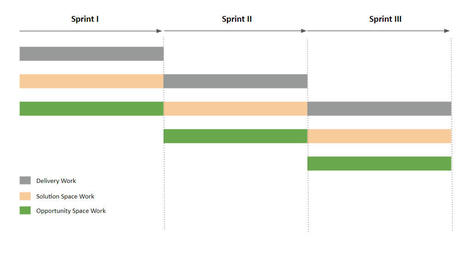
Roadmap is a pretty controversial word in tech jargon. Basically everyone agrees that we should have one — but no one agrees on what it actually is. Executives usually want the roadmap to predict the…
Mickael Ruau's insight:
Roadmaps vs OKRsTraditionally, the roadmap was a prioritized list of features with due dates and deadlines that were to be built by the technical team. It was a solution-based approach to define the tasks needed to be done. Now while the concept of a roadmap has changed a lot by the lean movement, it is still solution-based: any document labeled “roadmap” is one filled with solutions and maybe some fuzzy deadlines. OKRs on the other hand, are a problem-based approach to define the tasks that should be done. When we talk about Objectives and Key Results, we want to define which problems are best to work on, somewhat independent of what the best solution is. One can easily see that the best way to reconcile the two is to put OKRs first, dig up solutions that address both customer needs and business requirements and then put them in a document labeled the roadmap. There are quite a few models around that aspire to do just that. One of the best I’ve tried is the Opportunity Solution Tree (OST). Teresa Torres’s Opportunity Solution TreeDescribed in the fantastic read Continuous Discovery Habits, the Opportunity Solution Tree is a structured approach to build the right thing in a right way
Scoop.it!
If we could tag one apocalyptic rider for adaptive organizations, it would be "traditional performance management." It is old-fashioned performance management that keeps us in a world of humans as resources, as command-and-control takers, with rigid top-down planning, and solid prevention of curious and exploratively-minded cooperation. Its logic is plan – do – check – act.
Via Oliver Durrer swissleap.com
Scoop.it!

In this episode, I explain how OKRs can be applied in product management and I discuss the benefits and drawbacks of using them.
Scoop.it!
Qu'est-ce que l'OKR ? L'OKR pour Objectifs et Key Results, est une approche de gestion des objectifs utilisée par des entreprises comme Google, Twitter
Scoop.it!

Try out these 7 steps as a structured approach for setting team-level OKRs
Mickael Ruau's insight:
Examples of questions based on these characteristics:
Scoop.it!

Encore aujourd’hui, l’Agilité est généralement reliée au travail des équipes de développement. On remarque parfois une lacune au niveau de l’alignement du travail des équipes et des objectifs de l’entreprise. Aussi, les dirigeants peuvent tenir pour acquis que leurs volontés sont claires, connues et partagées; ce n’est pas toujours l
|






Télécharger l'OKR playbook