Your new post is loading...

|
Scooped by
heather dawson
August 29, 2024 5:17 AM
|
This working paper reviews the impact of Artificial Intelligence (AI) on equity and inclusion in education, focusing on learner-centred, teacher-led and other institutional AI tools. It highlights the potential of AI in adapting learning whil
|
|
Scooped by
heather dawson
August 29, 2024 4:53 AM
|
Royal Society publishing.
|
|
Scooped by
heather dawson
August 23, 2024 4:14 AM
|
|
|
Scooped by
heather dawson
August 20, 2024 6:53 AM
|
AI Preparedness Data dashboard
Released recently by the IMF. The AI Preparedness Index Dashboard covers 174 economies, focusing on four areas: digital infrastructure, human capital and labour market policies, innovation and economic integration, and regulation considering how they will enable or hinder the development of AI in the region.
|
|
Scooped by
heather dawson
August 14, 2024 2:57 PM
|
Generative AI tools exemplified by ChatGPT are becoming a new reality. This study is motivated by the premise that “AI generated content may exhibit a distinctive behavior that can be separated from scientific articles”. In this study, we show how articles can be generated using means of prompt engineering for various diseases and conditions. We then show how we tested this premise in two phases and prove its validity. Subsequently, we introduce xFakeSci, a novel learning algorithm, that is capable of distinguishing ChatGPT-generated articles from publications produced by scientists. The algorithm is trained using network models driven from both sources. To mitigate overfitting issues, we incorporated a calibration step that is built upon data-driven heuristics, including proximity and ratios. Specifically, from a total of a 3952 fake articles for three different medical conditions, the algorithm was trained using only 100 articles, but calibrated using folds of 100 articles. As for the classification step, it was performed using 300 articles per condition. The actual label steps took place against an equal mix of 50 generated articles and 50 authentic PubMed abstracts. The testing also spanned publication periods from 2010 to 2024 and encompassed research on three distinct diseases: cancer, depression, and Alzheimer’s. Further, we evaluated the accuracy of the xFakeSci algorithm against some of the classical data mining algorithms (e.g., Support Vector Machines, Regression, and Naive Bayes). The xFakeSci algorithm achieved F1 scores ranging from 80 to 94%, outperforming common data mining algorithms, which scored F1 values between 38 and 52%. We attribute the noticeable difference to the introduction of calibration and a proximity distance heuristic, which underscores this promising performance. Indeed, the prediction of fake science generated by ChatGPT presents a considerable challenge. Nonetheless, the introduction of the xFakeSci algorithm is a significant step on the way to combating fake science.
|
|
Scooped by
heather dawson
August 13, 2024 6:03 AM
|
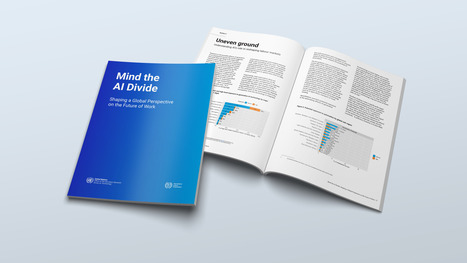
This report, co-authored by the United Nations and the International Labour Organization, addresses the critical issue of the uneven adoption of Artificial Intelligence (AI) and its implications for global equity, fairness, and social justice.Disparities in access to digital infrastructure, advanced technology, quality education, and training are deepening existing inequalities, particularly as the global economy shifts towards AI-driven production and innovation. Less developed countries risk being left behind, exacerbating economic and social divides.
|
|
Scooped by
heather dawson
August 6, 2024 4:15 PM
|
us copyright office Today, the U.S. Copyright Office is releasing Part 1 of its report on the legal and policy issues related to copyright and artificial intelligence, addressing the topic of digital replicas. This part of the report responds to the proliferation of videos, images or audio recordings that have been digitally created or manipulated to realistically but falsely depict an individual. Given the gaps in existing legal protections, the Copyright Office recommends that Congress enact a new federal law that protects all individuals from the knowing distribution of unauthorized digital replicas.
|
|
Scooped by
heather dawson
August 6, 2024 4:11 PM
|
|
|
Scooped by
heather dawson
July 25, 2024 6:24 AM
|
Florencia Coelho, New Media Research and Training Manager at La Nación , participated in the 2020 JournalismAI Collab Challenges, where she and her Collab team worked to identify and mitigate bias in gender representation in the news. Their collaboration led to using tools and insights to help news
|
|
Scooped by
heather dawson
July 24, 2024 4:06 AM
|
AI literacy is essential for navigating the rapidly evolving landscape of generative AI (GenAI). We have framed our approach around three fundamental areas—Terms, Tools, and Tasks— to create a comprehensive approach to understanding and applying GenAI effectively. Adopting this model should ensure that staff members are not only equipped with a theoretical understanding of how […]
|
|
Scooped by
heather dawson
July 17, 2024 3:49 PM
|
The integration of Generative Artificial Intelligence (GAI) and Large Language Models (LLMs) in academia has spurred a global discourse on their potential pedagogical benefits and ethical considerations. Positive reactions highlight some potential, such as collaborative creativity, increased access to education, and empowerment of trainers and trainees. However, negative reactions raise concerns about ethical complexities, balancing innovation and academic integrity, unequal access, and misinformation risks. Through a systematic survey and text-mining-based analysis of global and national directives, insights from independent research, and eighty university-level guidelines, this study provides a nuanced understanding of the opportunities and challenges posed by GAI and LLMs in education. It emphasizes the importance of balanced approaches that harness the benefits of these technologies while addressing ethical considerations and ensuring equitable access and educational outcomes. The paper concludes with recommendations for fostering responsible innovation and ethical practices to guide the integration of GAI and LLMs in academia.
|
|
Scooped by
heather dawson
July 17, 2024 3:39 PM
|
A recent UNESCO survey has revealed a concerning trend: 44% of judicial operators, including judges, prosecutors and lawyers, are utilizing AI tools such as ChatGPT in their work, yet only 9% have received proper institutional training or guidelines. This finding, from a survey of judicial actors from 96 countries, highlights a significant gap, raising serious ethical and legal concerns. The survey shows that 93% of respondents are familiar with AI technologies, such as ChatGPT, Google Bard, and Bing Chat. 44% are actively using them for tasks including summarizing texts, writing emails, drafting legal documents and conducting legal research. This high level of engagement demonstrates the growing reliance on AI in judicial systems globally. Despite the benefits of AI, its use in judicial processes carries significant risks. The survey identities potential abuse of human rights, including privacy, freedom of expression and non-discrimination. Notably, 7 out of 10 of judicial operators recognize the risks of using AI chatbots in legal work, such as inaccuracies and biases
|
|
Scooped by
heather dawson
July 17, 2024 3:38 PM
|
This report is part of a collection examining how analytics using government microdata is revolutionizing public administration throughout the world. Its focus is on government analytics in the European Union. The collection is based on “The Government Analytics Handbook”, a comprehensive guide to using data to understand and improve government.
|
|
|
Scooped by
heather dawson
August 29, 2024 4:55 AM
|
Market research firm Gartner yesterday published its 2024 Hype Cycle for Emerging Technologies, and the study revealed that generative AI (genAI) has passed the “peak of inflated expectations” and is now sliding down into the “trough of disillusionment.
|
|
Scooped by
heather dawson
August 28, 2024 3:18 AM
|
Policy for the responsible use of AI in government
Government of Australia
|
|
Scooped by
heather dawson
August 21, 2024 6:47 AM
|
Parisi V, Sutton A. The role of ChatGPT in developing systematic literature searches: an evidence summary . J Eur Assoc Health Info Libr [Internet]. 2024 Jun. 27 [cited 2024 Aug. 21];20(2):30-4. Available from: https://ojs.eahil.eu/JEAHIL/article/view/623
|
|
Scooped by
heather dawson
August 14, 2024 2:58 PM
|
medRxiv - The Preprint Server for Health Sciences
|
|
Scooped by
heather dawson
August 14, 2024 2:53 PM
|
|
|
Scooped by
heather dawson
August 6, 2024 4:20 PM
|
The Theory of Documentationrnance to mitigate risks and ensure responsible development of AI-powered systems. For example, 4chan users leveraged AI tools to create violent and explicit images of female celebrities, and Google’s Gemini generated offensive images of “historical” figures. These incidents are part of a long […]
|
|
Scooped by
heather dawson
August 6, 2024 4:13 PM
|
I report here a comprehensive analysis about the political preferences embedded in Large Language Models (LLMs). Namely, I administer 11 political orientation tests, designed to identify the political preferences of the test taker, to 24 state-of-the-art conversational LLMs, both closed and open source. When probed with questions/statements with political connotations, most conversational LLMs tend to generate responses that are diagnosed by most political test instruments as manifesting preferences for left-of-center viewpoints. This does not appear to be the case for five additional base (i.e. foundation) models upon which LLMs optimized for conversation with humans are built. However, the weak performance of the base models at coherently answering the tests’ questions makes this subset of results inconclusive. Finally, I demonstrate that LLMs can be steered towards specific locations in the political spectrum through Supervised Fine-Tuning (SFT) with only modest amounts of politically aligned data, suggesting SFT’s potential to embed political orientation in LLMs. With LLMs beginning to partially displace traditional information sources like search engines and Wikipedia, the societal implications of political biases embedded in LLMs are substantial.
|
|
Scooped by
heather dawson
August 6, 2024 1:58 PM
|
This analysis presents the results of a survey of NHS staff and the public about the use of AI in health care.
|
|
Scooped by
heather dawson
July 25, 2024 4:14 AM
|
In our previous blog, we highlighted the transformative potential of generative AI in Higher Education (HE) and called for examples of AI policies and guidance from the HE sector. The response has been fantastic, and we are excited to share more examples from our community. We hope that these will help institutions develop thoughtful, ethical, […]
|
|
Scooped by
heather dawson
July 17, 2024 3:53 PM
|
The Association of Research Libraries (ARL) and the Coalition for Networked Information (CNI) have chosen to apply scenario planning to imagine a future influenced by artificial intelligence (AI) an
|
|
Scooped by
heather dawson
July 17, 2024 3:40 PM
|
UNESCO’s Recommendation on the Ethics of Artificial Intelligence, adopted by all Member States in November 2021, is the first global policy framework for artificial intelligence (AI) and outlines different aspects of this technology that directly impact political life. The initial considerations of the Recommendation outline the potential ramifications of AI across diverse domains, notably its implications for democracy. This report builds on these analyses and recommendations, aligning with the core values and principles outlined in the Recommendation. It delves into the current and potential impact of artificial intelligence on democracy and the benefits that both artificial intelligence and digitalization, in general, could bring to enhancing collective decision-making processes. This analysis is structured around four key topics: 1. The democratic expectations and disappointments of digitization; 2. The new digital public space: the democratic conversation; 3. The democracy of data: the politics of Big Data; 4. Democracy as a form of political decision-making: algorithmic governance. Finally, this report offers recommendations for the democratic governance of artificial intelligence aimed at mitigating negative impacts and fostering a more democratic approach to AI governance.
|
|
Scooped by
heather dawson
July 17, 2024 3:38 PM
|
Generative AI is booming. It is a cutting-edge technology that is poised to disrupt various economic, social, and cultural sectors, and it extends far beyond simple human-like text generation using chatbots. Drawing on original analysis of patent and scientific data, the WIPO patent landscape report on Generative AI provides a snapshot of the patent situation for GenAI.
|


 Scoop.it!