Global Assessment of Responsible Artificial Intelligence in Cities: Research and recommendations to leverage AI for people-centred smart cities Ben Dhaou, Soumaya, Isagah, Tupokigwe, Distor, Charmaine and Ruas, Inês (2024).
The United States Secret Service (USSS or Secret Service) is conducting this Privacy Impact Assessment (PIA) because Secret Service personnel may use facial recognition technology (FRT) during law enforcement activities that fall within Secret Service’s jurisdiction.
September 2024 Higher education providers collect a wide range of data about their students such as demographics, class attendance, interaction with virtual learning environments, and attainment. This data can be used to evaluate the success of these interventions but these evaluations are often limited in scope due to issues with fragmented data infrastructures and data […]
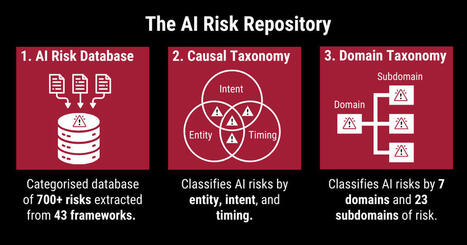
with the University of Queensland, Future of Life Institute, KU Leuven, and Harmony Intelligence, provides over 700 entries on the potential risks raised by AI . It will be updated regularly. Risks are grouped by categories including privacy, socioeconomic harm and misinformation. Each section links to academic sources and frameworks
Academic journals, archives, and repositories are seeing an increasing number of questionable research papers clearly produced using generative AI. They are often created with widely available, general-purpose AI applications, most likely ChatGPT, and mimic scientific writing. Google Scholar easily locates and lists these questionable papers alongside reputable, quality-controlled research. Our analysis of a selection of
With generative AI affecting politics worldwide, researchers face a “detection gap,” as the biases built into systems mean tools for identifying fake content often work poorly or not at all in the Global South.
Artificial-intelligence developers are buying access to valuable data sets that contain research papers — raising uncomfortable questions about copyright. Nature article.
The United Nations Secretary-General’s High-level Advisory Body on Artificial Intelligence (HLAB-AI) released its final report “Governing AI for Humanity” on 19 September 2024. It builds on months of extensive global consultations and the publication of an interim report in December 2023. The uniquely diverse Advisory Body is the world’s first and most representative expert group capable of reflecting humanity’s aspirations for AI. This groundbreaking report outlines a blueprint for addressing AI-related risks and sharing its transformative potential globally.
We need clarity about the deals between AI companies and news publishers. Here’s why “What might be good for the parties involved isn’t necessarily beneficial to either industry, let alone society at large,” argues our researcher Felix Simon OpenAI logo and AI Artificial Intelligence words are...
Today, The Future of Privacy Forum is launching the Data and the Connected Vehicle Infographic 2.0, including new updates to account for the types of data associated with connected vehicles, features in and outside of the vehicle, and data handlers who receive and process data
Introduction A funding application and assessment process that embodies a high level of integrity is critical to upholding the values of honesty, rigour, transparency and open communication within our research and innovation system.
Can we teach ChatGPT to revise metadata according to inclusive guidelines like an archivist would?
We’ll review our experiments creating a CustomGPT to revise metadata, talk about what worked, what didn't, and the process we developed. We’ll also cover ways a CustomGPT can help archivists and the ways it utterly fails.
The Speaker:
Josephine Brumfield is a second year industrial engineering student at Purdue University. She was previous a software engineering intern at FromThePage and this summer she returned as an AI intern
London, U.K. September 9, 2024. Clarivate Plc (NYSE:CLVT), a leading global provider of transformative intelligence, today launched its first Pulse of the Library™ report. The report reveals that libraries are in the early days of Artificial Intelligence (AI) implementation. Librarians are considering applications of AI that support the library mission, particularly in enhancing content discovery […]
Artificial Intelligence (AI) is rapidly transforming our world and changing the way we live, work and learn. To help education systems keep pace, UNESCO is launching two new AI competency frameworks - one for students and one for teachers.
Harnessing the Power of AI for Climate Change Impact Assessment Renee Obringer, Rohini Kumar and Kaveh Madani (2024). Harnessing the Power of AI for Climate Change Impact Assessment. United Nations University Institute for Water, Environment, and Health (UNU-INWEH).
Hundreds of millions of people now interact with language models, with uses ranging from help with writing1,2 to informing hiring decisions3. However, these language models are known to perpetuate systematic racial prejudices, making their judgements biased in problematic ways about groups such as African Americans4–7. Although previous research has focused on overt racism in language models, social scientists have argued that racism with a more subtle character has developed over time, particularly in the United States after the civil rights movement8,9. It is unknown whether this covert racism manifests in language models. Here, we demonstrate that language models embody covert racism in the form of dialect prejudice, exhibiting raciolinguistic stereotypes about speakers of African American English (AAE) that are more negative than any human stereotypes about African Americans ever experimentally recorded. By contrast, the language models’ overt stereotypes about African Americans are more positive. Dialect prejudice has the potential for harmful consequences: language models are more likely to suggest that speakers of AAE be assigned less-prestigious jobs, be convicted of crimes and be sentenced to death. Finally, we show that current practices of alleviating racial bias in language models, such as human preference alignment, exacerbate the discrepancy between covert and overt stereotypes, by superficially obscuring the racism that language models maintain on a deeper level. Our findings have far-reaching implications for the fair and safe use of language technology. Despite efforts to remove overt racial prejudice, language models using artificial intelligence still show covert racism against speakers of African American English that is triggered by features of the dialect.
Jisc, the UK's digital agency for tertiary education, research, and innovation, operates as a non-profit organisation. We are committed to the transformative power of education and research, utilising technology to enhance both. Jisc's services, fortified by expertise, are designed to drive digital transformation, and provide sector leadership. Explore our range of services, including cyber security, student services and our role as the National Centre for AI. We strive to continuously shape the digital landscape in education, promoting innovation and excellence. https://www.jisc.ac.uk/ __________________________ Follow us on social media: Instagram: instagram.com/jiscsocial/ X: x.com/jisc Facebook: facebook.com/jiscsocial/ LinkedIn: linkedin.com/company/jisc/
Join our Jisc community by hitting the subscribe button and activating the notification bell to ensure you never miss an update. __________________________ If required, you can download the full transcript as a word document.
To get content containing either thought or leadership enter:
To get content containing both thought and leadership enter:
To get content containing the expression thought leadership enter:
You can enter several keywords and you can refine them whenever you want. Our suggestion engine uses more signals but entering a few keywords here will rapidly give you great content to curate.


 Your new post is loading...


 Scoop.it!