Your new post is loading...
The Institute of Directors (IoD) is a Professional Institute with Members which promotes directors, develops corporate governance, represents our members and business to government, enhances the climate for entrepreneurial activity and provides services to our membership.
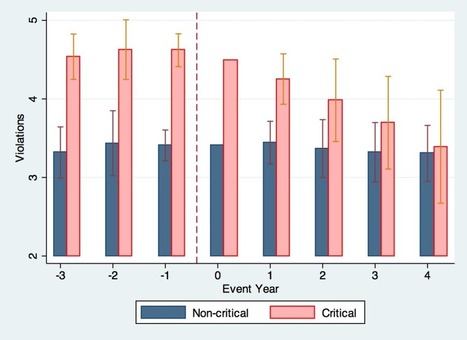
The private equity asset class has grown tremendously over the last thirty years, reaching $1.6 trillion in global transaction value between the years 2005 to 2007. At the same time, private equity (“PE”) firms generate much controversy. Critics argue that PE transactions are largely financial engineering schemes, burdening portfolio companies with high leverage and an excessive focus on short-term financial goals and cost cutting, which may adversely affect customers, employees, and long-term firm viability. In contrast, proponents argue that leveraged buyouts provide a superior governance form leading to better managed companies by mitigating management agency problems through the disciplinary role of debt, concentrated and active ownership, and high-powered managerial incentives which can lead to improved operations.
For at least the past decade, U.S. companies have been keenly focused on reducing their expenditures on outside counsel. Many have taken innovative and drastic actions to that end, such as negotiating alternative fee arrangements or making law firms compete for legal work in electronic auctions. Indeed, the conventional view remains that corporate clients are overpaying for legal services. But is that actually the case? One option for reducing legal expenditures is simply to engage a less expensive law firm. Yet surprisingly, there has been little research on whether corporate clients’ choice of law firms is value-maximizing.
Attorneys for disgruntled shareholders claim "shareholder oppression" in a 48-page lawsuit filed against Promega on Wednesday, one day after Promega held its annual stockholders meeting.
The SEC announces the agenda for the Aug. 2, 2016 meeting of the Equity Market Structure Advisory Committee.
Facebook Inc (FB.O) is growing so fast that analysts can't keep up.
The world’s biggest online retailer’s net sales rose to $30.40-billion in second quarter ended June 30 from $23.19-billion a year earlier
A large proportion of shareholder proposals contested by firms receive support from other investors when put to a vote.
The Rite Aid-Walgreens deal is still in FTC limbo, but I took the wait as time to focus on a few governance trends among the peer set.Walgreens has an unusual s
On July 13, the Securities and Exchange Commission issued a proposal aimed at eliminating or updating duplicative, overlapping and obsolete disclosure requirements. The proposal is welcome, but largely technical in nature and generally focused on duplicative requirements.
Three key groups of urban consumers with numbers and purchasing power are the ones to shape the consumer landscape over the next 15 years, write Richard Dobbs, Jaana Remes and Jonathan Woetzel in Harvard Business Review.
Corporate directors who suspect malfeasance by managers may face conflicting incentives. On the one hand, encouraging transparency and demonstrating diligence by pressing for the investigation and disclosure of problems might be rewarded with re-election, appointment to seats on other boards, and greater shareholder support. On the other hand, revealing misconduct could draw negative attention to the company and result in worse career outcomes for directors. In Do Independent Directors Face Incentives to Monitor Executives? we empirically examine whether directors who publicly demonstrate diligent monitoring are rewarded. Our findings cast doubt on whether directors face strong incentives to monitor. Instead, our results suggest that directors sometimes benefit from looking the other way when they suspect problems.
Investec Plc’s shareholders should vote against the company’s compensation policy next week because pay doesn’t match performance, according to Pensions & Investment Research Consultants Ltd.
|
Germany's statutory gender quota for supervisory boards took effect at the beginning of the year, yet the ratio of women to men is still alarmingly low. Many companies don't even seem to realize that the new law applies to them.
The numbers are sobering: nine of the Fortune-100 and 38 of the Fortune-500 companies dealt with an activist campaign in 2015. [1] And of the latter group, four were targeted more than once. [2] But hedge fund activism is not confined to only the largest public companies—all businesses, along with every industry and part of the world have become fair game.
Google parent Alphabet said quarterly profit soared 24%, the second internet giant in two days to report blockbuster earnings driven by consumers’ rapid shift to mobile devices.
So much money is flying into income strategies, Vanguard is closing its $30.6 billion Dividend Growth Fund.
Ray Dalio, the chairman of Bridgewater Associates, said the article, which reported on the culture at the hedge fund, contained “significant mischaracterizations.”
Activist Investing in Canada 2016 - Exploring the Influence of Shareholder Activism on Canadian Corporations
The IoD launches its new Director Competency Framework – a guide to standards of professionalism for directors.
Should governments be relying on corporate and securities law to promote humanitarian goals? This is the question that naturally arises when viewing the SEC’s Conflict Minerals Payment Rule, which requires corporations to disclose their conflict mineral usage as a means of curtailing th
The new “Commonsense Principles of Corporate Governance” (“the Principles”) are a welcome and thoughtful contribution to corporate governance discourse.
The Federal Reserve upgraded its assessment of the economy’s recent performance and said near-term risks to the outlook have diminished, effectively leaving the door open to raise rates later this year, possibly as early as September. Nine of 10 members of the Fed’s policy-making committee voted to leave the benchmark federal-funds rate unchanged at between 0.25% and 0.5%, but they offered a more upbeat description of the labor market and other sectors of the economy.
|