Your new post is loading...
The wild trading in shares of GameStop in early 2021 created one of the biggest paydays in history for an executive of a Canadian public company. Richard Mashaal, a vice-president of little-known Montreal-headquartered investment company Senvest Capital Inc., received just under $152-million last year. The compensation included a cash bonus of $53-million and an $82-million cut of trading profits, much of it from a wildly successful bet on GameStop. While a small number of Canadian executives have previously made more than $100-million in a year, their compensation packages were largely made up of stock awards, which can fall in value over time. Senvest’s annual compensation disclosures show that Mr. Mashaal’s 2021 pay, by contrast, was all cash. [...] Victor Mashaal, Richard’s father and Senvest’s chairman and president, started the company in 1968 as the Canadian distributor of Sensormatic electronic surveillance systems. By the 1990s, it had ditched that business in favour of real estate and stock investing.
The Corporate Governance 2022 guide covers 40 jurisdictions. The guide provides the latest legal information on environmental, social and governance (ESG) considerations; decision-making processes; board structure and composition; legal duties of directors/officers; the role of shareholders; corporate reporting; and audit, risk and internal controls.
The American Law Institute (ALI) has embarked on a Restatement of the Law of Corporate Governance. As with all Restatements, the purpose of the Restatement of corporate law is to clarify 'the underlying principles of the common law” that have “become obscured by the ever-growing mass of decisions in the many different jurisdictions, state and federal, within the United States.' Corporate law, however, does not suffer from such problems. In a majority of states, the Model Business Corporation Act provides detailed statutory guidance as to which common law functions, at most, interstitially. In addition, corporate law is virtually unique in being dominated by the law of a single jurisdiction; namely, Delaware. Given the prominence of Delaware law in this field, a Restatement of corporate law is unlikely to be influential.
A new survey sheds light on the state of automation, the benefits that automation brings, and best practices for scaling automation technologies successfully. The share of companies adopting automation technologies is steadily climbing, according to our latest McKinsey Global Survey on the topic.1 Yet few of these companies have achieved automation’s full potential: although most respondents say it’s possible to automate at least one-quarter of their organizations’ tasks over the next five years, less than 20 percent say their organizations have already scaled automation technologies across multiple parts of the business. Effectively automating such a significant portion of companies’ work won’t be easy. It will require organizations to change how they structure their technology efforts and how they train employees—no small task—but there’s substantial value at stake.
With Elon Musk attempting to terminate his $44 billion takeover of Twitter Inc. and the company vowing to force him to follow through, the social-media powerhouse and the world’s richest person appear headed for a messy courtroom battle. The company says it plans legal action and is any day expected to file a lawsuit in the Delaware Court of Chancery, arguing he is required to close the agreed-upon deal. [...] Most legal clashes over soured deals end in settlements, with both sides agreeing to a price cut or a one-time payment. Mr. Musk agreed to pay a $1 billion reverse termination fee to Twitter if the deal falls apart, though that is only triggered under certain scenarios including if his debt financing falls through or regulators try to block the deal. The agreement caps at $1 billion the amount Twitter could sue for damages for, meaning its only options right now are to sue for specific performance or a maximum of $1 billion, a tiny fraction of what it stands to lose out on should the deal fall apart.
The first quarter of 2022 presented a challenging communications terrain for business leaders as the Russian invasion of Ukraine shook markets, shattered supply chains and shocked the world. Within hours, it was clear that big businesses would have a huge role to play; what they did—and what they said about what they were doing—would shape the contours of the conflict. For the leaders of the FTSE100 companies, the world indeed was watching. Now, new analysis from Kekst CNC’s insights team reveals the data story of Ukraine, Russia, and corporate responses—and in doing so discloses a dramatic shift in executive communications. [...] We found that compared to the first edition of the report, the FTSE100 CEO social rankings have changed significantly, including new CEOs who are defining their own executive communications strategies.
The events of the summer of 2020 galvanized the country and drew attention to how systemic racism and injustice continue to burden communities of color. Business leaders throughout the country stepped up to the challenge of combatting racial injustice by pledging funds and taking action to address inequity within their workforces, local communities and society at large. The Business Roundtable launched comprehensive efforts to combat racial inequality in employment, finance, education, health and housing. Diversity, equity and inclusion (DEI) has permeated the governance landscape, as evidenced by corporate and stakeholder focus on board and workforce diversity, the emergence of racial equity and civil rights audits and the heightened number of shareholder proposals targeting the disclosure of DEI metrics. Challenges remain, particularly as macroeconomic headwinds will likely leave many people, families and communities of color vulnerable.
As the global economy faces the third year of the pandemic, manufacturers are no longer focused on figuring out when things will return to “normal.” Instead, they are applying lessons learned from the past few years to become even more agile and resilient as they evolve their operations to succeed in this “new normal.” Foley’s Manufacturing White Paper explores the shifts in the manufacturing sector in the detailed sections below. Table of Contents: - Corporate Environmental Impact: SEC Proposes Detailed Climate-Related Disclosures
- Human Rights Compliance in Supply Chains
- Hot Topics in Consumer Product False Advertising Class Actions: An Increased Focus on Ethics, Sustainability, and Safety Claims
- Flexible Strategies for Managing Uncertainty in Manufacturing Supply Chains
LONDON—Rampant food inflation is roiling the world’s least-developed nations. It is also hitting poor people in rich countries. Matsentralen Norge, a food-bank operator in oil-rich Norway, says it is distributing 30% more food compared with the same period in 2021, a year that in itself saw sharply higher demand because of the Covid-19 pandemic. Food-bank usage is on the rise in the U.S., too, while grocery stores report customers there are trading down, buying more store-brand food and avoiding more expensive meat and fish. In Britain, the pain has been especially stark. The U.K.’s overall inflation rate hit 9.1% in May, compared with the same month a year ago, the fastest rise in prices for a member of the Group of Seven, the club of rich economies. Food prices rose 8.5% in May.
SAN JOSE, Calif.—A federal jury convicted Ramesh “Sunny” Balwani, the former top lieutenant to Theranos Inc. founder Elizabeth Holmes, on all 12 charges that he helped perpetuate a yearslong fraud scheme at the blood-testing startup. The verdict is the second conviction against Theranos leadership and comes six months after a jury found Ms. Holmes guilty of fraud; it secures another major victory for the U.S. government, which brought the case against the pair in 2018. It brings to conclusion one of Silicon Valley’s most notorious startup implosions, which saw nearly $1 billion of investor money evaporate after revelations that the company delivered inaccurate blood-test results to patients, including for life-threatening conditions, and Ms. Holmes and Mr. Balwani lied about its proprietary technology. [...] At its peak, Theranos was valued at more than $9 billion, 10th-largest at the time among venture-capital-backed startups. Mr. Balwani’s stake was worth $500 million for a time, and Ms. Holmes’s was worth $4.5 billion. They never sold their shares.
As an academic who has spent decades researching and teaching sustainability, Ivey Business School Professor Tima Bansal remembers students revolting against the material she was teaching. “The first time I taught this stuff,” she notes, “many students were skeptical about climate change and even angry that it was being taught in class. They were paying high business school fees to learn how to make more money, not social and environmental issues. But things have changed radically, with business students now pushing for more sustainability in the curriculum.” However, while Bansal is delighted to see greater student awareness of issues driving sustainability, the business community has been slow to catch on.
As CEOs and boards focus on issues such as cybersecurity, crisis and risk management, supply chain resilience, and energy price volatility, there is an opportunity for them to do so through a broader ESG lens. The recent survey by The Conference Board of 750 CEOs and other C-suite executives finds that the combination of the war in Ukraine, supply chain shortages, inflation, and the prospect of recession are moving cybersecurity, crisis management, and risk management to the head of the line for CEOs. Addressing these three issues, which are traditionally grouped under the “G” in ESG, is a far higher priority than addressing “E” topics such as renewable energy and “S” topics such as suppliers’ respect for human rights. Indeed, some may read the results of the survey and be discouraged that only about a quarter of CEOs are stepping up their efforts on renewable energy or environmentally and socially responsible supply chains.
In many jurisdictions, poison pills are devised and implemented by the board of directors without shareholders being involved. Since the 2007 Supreme Court case[1] (in re Bulldog Sauce) in Japan, however, courts have largely relied on the voice of shareholders in reviewing the legality of pills. This raises several issues: how realistic it is to rely on shareholders’ resolution as a matter of corporate governance, and whether it is practically appropriate to seek shareholders’ approval when in-market purchases can be achieved in Japan in a short period of time in large quantities. [...] In this case, the courts consistently outlawed the pill by citing the lack of shareholders’ involvement.
|
A 1992 Code of Best Practice developed by a committee Sir Adrian Cadbury chaired revolutionised UK corporate governance. The Code, which introduced non-statutory best practice provisions with which listed companies could choose not to comply so long as they explained why, has evolved into the more expansive UK Corporate Governance Code of today. This paper argues that after three decades it is time to do away with the code approach and ‘comply-or-explain’. Much of the current Code’s content is now irrelevant, and disclosure and compliance expectations have escalated to levels that create substantial net costs for companies.
Information asymmetry between shareholders and corporate managers can subvert contemporary calls for increased institutional investor oversight. In jurisdictions where controlling shareholders are common, information asymmetry can also arise between minority shareholders and controlling shareholders, impeding the monitoring of the latter by the former. Shareholder inspection rights provide an important corporate governance technique that can potentially address this problem and provide a basis for enhanced investor oversight and activism. [...] The paper argues that the Australian experience is valuable in providing international law makers and researchers with important insights into the efficacy of different models of regulating shareholder inspection rights and the interface of individual shareholder inspection rights with broad market-based disclosure rules.
Special Purpose Acquisition Companies (SPACs) are a trap for unwary investors. In standard public equity securities, even the most naïve investor is protected, first, by the market price – you pay only for what you get – and, second, by the comfort that nothing else is required of an individual investor to realize the full value of the security. SPACs disable both protections. Because of SPACs’ redemption option, SPAC shareholders need to do something – decide whether to redeem – and cannot rely on the market price to ensure they are getting value for their money.
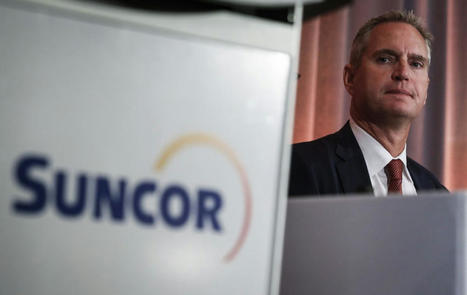
Suncor Energy Inc.’s chief executive officer has resigned, one day after the latest fatality at one of the company’s oil sands facilities. The Calgary-based company announced on Friday evening that Mark Little will step down as president and CEO and resign from the board effective immediately. Kris Smith, who is currently executive vice-president of downstream operations, has been named interim CEO. The move comes just months after activist investor Elliott Investment Management LP, a hedge fund, cited the company’s safety record in a bid for change at the pioneering oil sands producer, including an overhaul of the board and management. The death on Thursday of a contractor at the Base Mine north of Fort McMurray, Alta., was the second this year at a Suncor facility. Since 2014, at least 12 people have died at Suncor sites, more than all of the company’s oil sands rivals combined.
In September 2020, the German anti-money laundering authority launched an investigation into the German financial services provider Grenke. Fueled by fears of a new Wirecard-style scandal, the authorities were looking into suspicious money laundering reports, alleged investment fraud, insider trading, and market manipulation. In subsequent days the story quickly spiraled out of control for the company, leading to the sudden resignation of the companies’ COO and CEO, external audits by KPMG, and further investigations by the German BaFin. [...] Over the last decade, attacks like this have become common in many European countries. They pose not only an economic risk to firms of any size and industry, but also a significant reputational one as well—making it important for management to have a solid communications strategy in place.
Consciously or unconsciously, every board independently decides where it is going to focus its attention and efforts. We asked directors to reflect on their board agenda over the past 12 months and identify the top three areas where their full board has spent the most time, and we then ranked those items based on how frequently they end up in a top-three list. There was substantial movement between 2019 and 2022—no surprise, given the significant upheaval and challenges companies faced in 2020 and 2021. But there were also differences between how typical boards spend their time and how Gold Medal Boards (boards whose directors rate their board effectiveness as a 9 or 10 on a 1-10 point scale, and report the company as having outperformed relevant TSR benchmarks for two or more consecutive years) spend their time, as shown in the visual below.
Business, geopolitical and economic disruptions affect employee engagement and productivity. Make sure your surveys surface how employees really feel about work. In short: - It’s especially important to monitor employee engagement during disrupted times.
- In employee engagement surveys, avoid sentiment-based questions like, “Do you receive enough recognition?” or “Does your manager care about you as a person?”
- Instead, ask questions that will truly surface whether employees feel motivated to put energy and effort into their work.
[...] If you’re using an employee engagement survey to gauge the impact of all these trends, make sure to focus on key performance drivers and ask questions that will truly surface how employees feel about their jobs and workplace.
Written for a symposium issue celebrating the thirty-year anniversary of the publication of The Economic Structure of Corporate Law by Frank Easterbrook and Daniel Fischel (“E&F”), this essay discusses the interaction of my research over the years with their writings. [...] Below I discuss this engagement of my work with E&F’s writings, and our respective approaches, in five corporate research areas: (i) takeover policy and rules; (ii) contractual freedom in corporate law; (iii) state competition in the provision of corporate law rules; (iv) efficiency and distribution in corporate law; and (v) corporate purpose.
As U.S. companies struggle to entice workers back to offices, the Dutch parliament approved legislation to establish home working as a legal right, setting the Netherlands up to be one of the first countries to enshrine such flexibility in law. The legislation was adopted by the lower house of the Dutch parliament Tuesday, and will now head to the Senate for final approval. Under current Dutch law, employers may reject workers’ requests to work from home without giving a reason. The new legislation forces employers to consider such requests and give a reason if denying them.
Companies are being cautious and deliberative in how they factor abortion into their long-term ESG plans despite demands for swift action from shareholders, employees, and the public after the Supreme Court overturned Roe v. Wade. [...] Corporate executives and boards of directors must now plan for what consistent action they will take on reproductive health rights across their business, including responding to thorny investor questions about benefits and political spending, according to environmental, social, and governance (ESG) consultants..
We recently published a paper on SSRN, VICI Properties: Creating Value from the Ashes of Caesar’s Demise, that examines the corporate governance changes that took place with the formerly bankrupted property assets of Caesar’s Entertainment to illustrate the potential impact that thoughtful governance choices can have on corporate performance. Case studies of corporate governance often focus on failures—bankruptcies, fraud, terminations, and lawsuits. From these, consultants and researchers offer a post-mortem perspective on how failure could have been avoided if only certain best practices were adhered to. Recommendations are then cobbled together to help other corporations avoid a similar outcome.
Driving sustainable, inclusive growth requires the right mindset, strategy, and capabilities. Here are some steps that could help foster successful growth. Growth is something every CEO and business leader aspires to deliver, but for many, it remains elusive. About a quarter of companies don’t grow at all, and between 2010 and 2019, only one in eight achieved more than 10 percent revenue growth annually.1 Sustained, profitable growth is possible, however, and it comes down to “choice.” Do you, as a leader, make an explicit choice to grow? Or do you pay lip service to your growth ambitions and let your resolve falter if profit isn’t immediate?
|