Your new post is loading...
Papa John’s International Inc (PZZA.O) said on Monday it has appointed a McDonald’s Corp (MCD.N) veteran to the newly created role of chief of restaurants operations, as the pizza chain remodels itself after the departure of its scandal-hit founder.
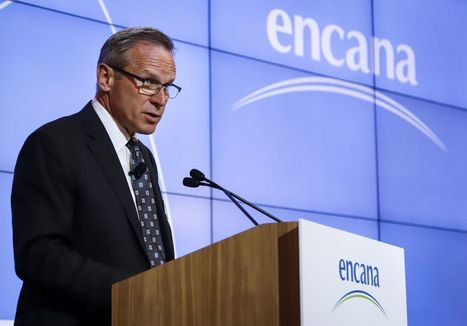
Encana Corp. says its wholly owned subsidiary, Newfield Exploration Mid-Continent Inc., has signed a deal to sell its natural gas assets in Oklahoma’s Arkoma Basin for $165-million.
When Canopy Growth Corp. fired Mr. Linton as its co-chief executive officer this week, the move surprised nearly everyone – especially investors who had long viewed the executive as crucial to the company’s future.
Her views on central-banking issues fall in line with the ECB's — that is, with at least one exception
Cannabis producer CannTrust Holdings Inc says customers may experience temporary shortages after Health Canada found that its greenhouse facility in Pelham, Ont. is non-compliant with regulations.
Bet you can't guess the biggest source of this stunning rally
Carlos Ghosn marked the 10th anniversary of the Renault-Nissan alliance in 2009 by shrugging off the global recession and issuing a self-confident statement listing 10 big achievements of the pre-eminent symbol of Franco-Japanese co-operation. In March, as the alliance crawled past its 20th anniversary, no one at Renault or Nissan even bothered emailing employees to note the milestone.
In financial markets, there's always a new reason to worry.
Vote requirements in the U.S. can be mindboggling to anyone unfamiliar with governance practices and proxy voting. This article provides an overview of some important factors to consider when assessing proxy vote results and meeting agendas in general.
Two companies, one highly disruptive business model, multiple big challenges looming. Few IPOs in recent memory have attracted more attention—or disappointed more decisively, initially—than the IPOs of ride-sharing groups Uber and Lyft. At the end of June 7, 2019, two months following its IPO, Lyft’s share price traded at 17.7% below its IPO price, while Uber’s ended that same day 1.9% lower. Could ESG considerations have played into investors’ thinking?
It's a sobering stat for any board in 2019: only 53 companies have stayed on the Fortune 500 list from 1955 to today.
Canada’s capital markets, in contrast, have been quiet for the first half of the year, with only six IPOs raising $599.1-million, according to the latest data from Refinitiv. That’s down from the first half of 2018, another slow year, when seven IPOs raised $972-million. Refinitiv’s figures do not include offerings smaller than $5-million.
Audit firm penalized in relation to audits of the 2011 and 2012 of Serco Geografix
|
China and the rest of the world must co-exist, Vice President Wang Qishan said on Monday, in an indirect jab at the United States, with which Beijing is trying to resolve a bitter trade war.
The tiny Martello Technologies Group Inc. put out an announcement last Thursday, at the request of regulators, saying it was “unaware of any material change in the company’s operations that would account for the recent increase in market activity.” Its shares, you see, were on their way to doubling in two days of trading.
Amazon asked for U.S. permission to launch 3,236 communications satellites to deliver internet service to tens of millions of consumers and businesses
And it’s not just the Bank of Canada’s moves banks have to worry about, it’s the U.S. Fed too
With some help from leading investor groups like Black Rock and T. Rowe Price, environmental, social, and governance (“ESG”) issues, once the sole purview of specialist investors and activist groups, are increasingly working their way into the mainstream for corporate America.
Saudi Arabian low-cost carrier Flyadeal picks Airbus’s A320neo jets for fleet
German lender begins its most radical strategic overhaul in two decades
Osram Licht AG’s supervisory and managing boards accepted a 3.4 billion euro ($3.8 billion) takeover bid from Bain Capital and Carlyle Group LP, ending the German lighting company’s relatively brief and at times contentious period as a standalone company.
On June 18, 2019, in Marchand v. Barnhill, the Delaware Supreme Court, in an opinion written by Chief Justice Leo E. Strine, Jr. on behalf of a unanimous court, issued a decision reversing the Court of Chancery’s dismissal of a stockholder derivative suit alleging Caremark claims that the board failed to provide adequate oversight of a key risk area and thus breached its duty of loyalty. The case arose out of a listeria outbreak in ice cream made by Blue Bell Creameries USA Inc. that sickened many consumers, caused three deaths and resulted in a total product recall.
Regulatory arbitrage refers to structuring activity to take advantage of gaps or differences in regulations or laws. Examples include everything from tax shelters and shadow banking to the cross-border mobility of corporations. Scholarly discussion of regulatory arbitrage has tended to focus on possible solutions: harmonization, conflicts-of-law rules, and anti-avoidance regimes.
For just as the weather has been wild, so has been the world of corporate governance. Over the last six months a combination of social, political, regulatory and constituent pressures have rattled conventional fiduciary wisdom in unprecedented ways, including the following:
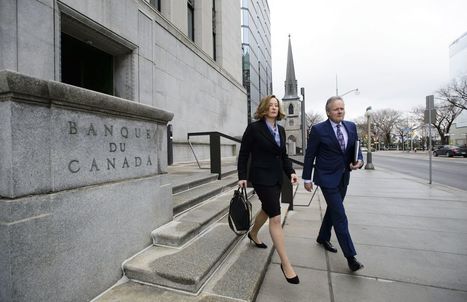
The Bank of Canada will diverge from the U.S. Federal Reserve’s expected policy easing path and keep interest rates on hold at least through this year, according to economists in a Reuters poll who said however that the risk of a recession has risen
|


 Scoop.it!