Your new post is loading...
In this Director Notes report, the authors describe research findings related to the influence of proxy advisors in US corporate governance. The authors find that boards feel, and sometimes yield to, pressure to conform to compensation practices recommended by proxy advisors despite their own preferred compensation philosophies, even in the absence of overt proxy advisor scrutiny or negative shareholder votes. They also find that proxy advisors are susceptible to conflicts of interest and generally use a one-size-fits-all approach to voting recommendations. Overall, however, such advisors are viewed as improving compensation practices by increasing transparency and accountability and fostering dialogue between firms and their shareholders.
A Facebook Inc. FB -1.32% team had a blunt message for senior executives. The company’s algorithms weren’t bringing people together. They were driving people apart. “Our algorithms exploit the human brain’s attraction to divisiveness,” read a slide from a 2018 presentation. “If left unchecked,” it warned, Facebook would feed users “more and more divisive content in an effort to gain user attention & increase time on the platform.” That presentation went to the heart of a question dogging Facebook almost since its founding: Does its platform aggravate polarization and tribal behavior? The answer it found, in some cases, was yes. Facebook had kicked off an internal effort to understand how its platform shaped user behavior and how the company might address potential harms. Chief Executive Mark Zuckerberg had in public and private expressed concern about “sensationalism and polarization.”
Risk appetite plays an important role in organizational success and should be considered carefully by leaders as they make strategic decisions. The Committee of Sponsoring Organizations of the Treadway Commission (COSO) has published new guidance on risk appetite focusing on how organizations can promote risk appetite as a key factor in decision-making. “Risk appetite is a fundamental part of setting strategy and objectives, providing context as the organization pursues a given level of performance,” COSO Chairman Paul Sobel said in a news release. “What is important is to recognize that the choice of strategies and objectives requires an understanding of the appetite for risk. While most often an organization can adjust to take on more risk, there may be times where it needs to adjust the appetite, or perhaps even strategy, to accommodate a shifting business environment such as the one we are currently experiencing.” The guidance includes six key things to remember about risk appetite.
After years of sky-high valuations, private equity funds and strategic buyers will have ample opportunity to purchase technology companies at a discount in the wake of the COVID-19 crisis. This article highlights the unique opportunities and risks associated with acquiring a distressed private technology company. [...] In addition to traditional sourcing outlets, buyers can access potential targets by purchasing debt and other claims from existing creditors. If done thoughtfully, a buyer can transform itself from a hopeful outside bidder into a creditor armed with special rights. Specifically, being a creditor may enable buyers to utilize information and inspection rights contained in credit agreements to enhance due diligence and implement special legal structures to complete an acquisition, as discussed further below.
The tragedy of the COVID-19 crisis has taken much attention away from the threat of climate change, as institutions devoted themselves to protecting lives and livelihoods. Sustaining an effective public-health response remains a top concern for many policy makers and business executives. Severe job losses and revenue declines in some sectors, along with the high likelihood of an economic recession, have also compelled policy makers to mount an unprecedented financial response, which already exceeds $10 trillion, according to McKinsey estimates. Important as it is to repair the economic damage, a swift return to business as usual could be environmentally harmful, as the world saw after the 2007–08 financial crisis. The ensuing economic slowdown sharply reduced global greenhouse-gas emissions in 2009. But by 2010, emissions had reached a record high, in part because governments implemented measures to stimulate economies, with limited regard for the environmental consequences. The danger now is that the same pattern will repeat itself—and today the stakes are even higher. The period after the COVID-19 crisis could determine whether the world meets or misses the emissions goals of the 2015 Paris Agreement, which were set to limit global warming to 1.5°C to 2°C.
BOSTON/NEW YORK (Reuters) - National Oilwell Varco Inc (NOV) has had a rough few years: Since 2017, the Houston company, whose drilling equipment is in major oilfields worldwide, has lost two-thirds of its value, costing shareholders a combined $9 billion. Despite that performance, Chief Executive Clay Williams pocketed $3.3 million in stock in late February, solely because his company’s total shareholder return over the three years ending in 2019 was not as bad as most of his beleaguered peers. [...] The reason? Energy companies, more than any other sector, measure performance only against other companies in the same industry, who tend to suffer at similar times. They use a metric called relative total shareholder return (TSR) and benchmark it against a pre-determined group of peer companies - making it possible for executives to get big payouts even if their companies’ stocks lose value. [...] In proxy votes, investors overwhelmingly approve CEO pay packages in all sectors of the U.S. economy, including energy, regardless of stock performance. Average say-on-pay support in the energy sector was 90% in 2019, according to research firm Semler Brossy Consulting Group LLC. At NOV’s May 20 annual meeting, executive compensation received more than 90% support from shareholders.
New York | US banks will not resume their share buyback programmes until executives can see “the white of the eyes of the recovery” and they will not return to pre-coronavirus levels, says Jamie Dimon, chief executive of JPMorgan Chase. The head of America’s largest bank on Wednesday (AEST) predicted another big provision for loan losses in the second quarter, on top of that taken earlier this year, as JPMorgan braced for defaults from borrowers hit by the coronavirus crisis. However, he added that the lender was also continuing to experience a boom in its trading business. Jamie Dimon: “You’ve got to see the whites of the eyes of the recovery before you start to make buybacks." [...] Eight top US banks voluntarily suspended buybacks in the middle of March as the COVID-19 crisis threatened hefty loan losses and outsize demands for additional credit. The eight companies spent $US108 billion ($162.5 billion) between them on buybacks last year.
Hertz Global Holdings Inc. paid more than $16 million in retention bonuses to senior managers, including its new chief executive, just days before it filed for bankruptcy Friday night. The car-rental company said it agreed to pay a $700,000 bonus to Chief Executive Paul Stone, who was named to the post this month. Chief Financial Officer Jamere Jackson received $600,000 and Chief Marketing Officer Jodi Allen got $189,633, according to a Tuesday regulatory filing. In all, Hertz said it would pay $16.2 million in cash bonuses to about 340 employees in recognition of uncertainty the company and its employees face as a result of the coronavirus pandemic’s impact on travel.
Academics warn that protectionism is growing under economic conditions created by the pandemic—and could undermine progress on corporate governance. Usually when the conversation turns to protectionism it’s about its ability to stymie global trade and, as a result, damage economies. But according to academics it has another effect: it undermines corporate governance. An article by Madrid-based academics Maribel Sáez and María Gutiérrez argues that protectionism is growing under economic conditions created by the pandemic. According to their research, a pairing between influential “local” business figures and government’s desperate to save their economies in Europe may produce a drive to block foreign investors and the corporate governance demands they bring with them.
Can the world pay attention to climate change--even while fighting the coronavirus? Experts say we can’t afford to do otherwise. The Earth has warmed by roughly 1.1ºC since the late 1800s. This year is on course to be the hottest since record keeping began. Further warming may be unavoidable, but limiting it to 1.5ºC above preindustrial levels would reduce its most dangerous and irreversible effects.
The growing view that corporations should take into account environmental, social and governance (ESG) issues in running their businesses, and resistance from those who believe that companies should be managed solely to maximize share price, has intensified the focus on the more fundamental question of corporate governance: what is the purpose of the corporation? The question has elicited an immense range of proposed answers. The British Academy’s Future of the Corporation Project, led by Colin Mayer, suggests that the purpose of the corporation is to provide profitable solutions to problems of people and planet, while not causing harm. The Business Roundtable has articulated a fundamental commitment of corporations to deliver value to all stakeholders, each of whom is essential to the corporation’s success. Each of the major US-based index funds has also expressed their views about the purpose of the corporations in which they invest, which, considered collectively, can be summarized as the pursuit of sustainable business strategies that take into account ESG factors in order to drive long-term value creation.
Eric Rosenfeld, president and CEO of Crescendo Partners discusses the rise in shareholder activism and how boards and shareholder can better communicate to prevent from becoming targets.
Passivism is the new shareholder activism. But the newfound humility of the most aggressive players of the investment industry may not last for long. Shareholder activists are ripping up their traditional playbook as they find it hard to follow their own, self-made rules to catalyze change at companies fighting for survival amid the economic shutdown triggered by the coronavirus pandemic. The tools that once boosted returns at target companies have become impossible to use in the current context of sinking valuations and the continuing massive government intervention in the world’s largest economies. The traditional toolbox included cash returns in the form of higher dividends or share buybacks, pressure to acquire or be acquired by competitors, and often campaigns to oust reticent management.
But the coronavirus-induced crisis has forced companies to cancel dividends and suspend stock buybacks as they turn to governments to help them stay afloat. Shareholder value is no longer the concern of the day.
|
Different countries have adopted various strategies to prevent or delay initiation of insolvency proceedings and protect businesses in the wake of the Covid-19 crisis. Global response has broadly been along the lines of providing direct financial aid (by way of loans or grants) or taking steps by way of emergency legislation to delay insolvency proceedings. Whether it is the United States or Europe, the overall aim of these strategies is to keep businesses afloat and provide them with protection, albeit temporary, from creditor action. The protection is based on the premise that, in a post-lockdown period, businesses will be able to become fully operational and profitable again and will then be able to repay loans or absorb debts accrued as a result of the lockdown.
One of Japan’s largest online brokerages will attempt to take shareholder activism into the mainstream with a new fund whose managers will “crowdsource” ideas from thousands of retail investors on how best to challenge corporate leaders. Monex hopes the unorthodox approach of “The Future of Japan” fund will prove attractive to Japan’s army of online traders, whose numbers have grown significantly since the start of the Covid-19 pandemic. The fund is set to launch in June. Oki Matsumoto, the founder and chief executive of Monex, told the Financial Times that the fund would exploit the huge base of customers already trading equities through Japan’s second-biggest online broker. The plan, he added, was to invite retail investors to come up with suggestions for what company executives could do to improve their returns on equity, market valuation and corporate strategies. Without breaking restrictions on collective engagement, Monex could then use the best of them to prompt discussions with management at target companies.
Succession planning should always be a business priority. However, during an unprecedented global pandemic with hundreds dying every day, planning for succession is simply mandatory. Some may argue that there are much more pressing problems to deal with than that which does not immediately impact the bottom line. But this is imprudent. Any business interruption due to the lack of a successor when necessary has wide ranging implications, particularly at a time when business is so disrupted already. In fact, it can be argued that the more chaotic the external environment, the more structured, prescribed and planned for internal business operations must be. For boards of directors, whose essential responsibility is CEO succession planning, this crisis should have made crystal clear the importance of a robust succession plan, not only for the CEO, but for the entire senior leadership team. There is in fact so much made of CEO succession planning. There is endless research and writing on its importance although in practice it is an imperfect art. Nevertheless, there is sound logic to the thought that leadership is best carried out with as little interruption as possible.
The Delaware Court of Chancery recently denied another motion to dismiss a Caremark claim in Hughes v. Hu. [1] Under In re Caremark International Inc. Derivative Litigation, [2] directors have a duty to exercise oversight and monitor a corporation’s operational viability, legal compliance, and financial performance and reporting. Hughes is now the second decision, after In re Clovis Oncology, Inc. Derivative Litigation, [3] to allow a Caremark claim to proceed beyond the pleadings stage since the Delaware Supreme Court reversed the Court of Chancery’s dismissal of a Caremark claim in Marchand v. Barnhill.
How to establish a cash culture that balances urgent short-term needs with longer-term competitive considerations During the COVID-19 crisis, a core priority for many companies is preserving cash. In this episode of the Inside the Strategy Room podcast, Strategy and Corporate Finance communications director Sean Brown talks with three of McKinsey’s corporate finance experts about the best ways to ensure liquidity now and manage cash and working capital as the business environment starts to stabilize. Kevin Carmody is one of the founders of McKinsey’s Transformation Practice. Tim Koller is a founder and leader of our Corporate Finance Practice, as well as the lead author of Valuation, the seventh edition of which will be published in May. Allie Owens is a consultant who focuses on growth strategy, working capital, and M&A.
BlackRock, the world’s largest fund manager, will lodge multiple votes against ExxonMobil at its annual shareholder meeting on Wednesday as it flags concern over the oil company’s failure to make progress on its climate change targets. BlackRock will vote against the re-election of two directors and in favour of a shareholder motion that proposes splitting the role of chief executive and chairman. The US investment firm is ExxonMobil’s second largest shareholder, with a stake of almost 5% in the company. It will not back the re-election of Angela Braly, the chair of Exxon’s public issues and contributions committee, nor that of Kenneth Frazier, the board’s lead independent director.
PARIS — AXA said on Tuesday it would meet the bulk of business interruption claims from some restaurant owners in France after it lost a court case that was seen as a potential precedent for coronavirus-related disputes across the world. A Paris court ruled last week that AXA, France’s biggest insurance group, should pay a restaurant owner two months’ worth of revenue losses caused by the virus pandemic. AXA had argued its policy did not cover business disruption caused by the health crisis. Stephane Manigold, the owner of four Paris restaurants who brought the case against the French insurer, told Reuters that since the court decision his team had received calls from Britain, South Africa, Spain and the United States asking for details of his contract and the court’s ruling.
By now you will have seen, perhaps on a daily basis, statistics and charts tracing the state of the Covid-19 outbreak. Confirmed cases, recovered cases, active cases, deaths, the infection curve… the list goes on. The data provide a snapshot of how nations and regions are faring in the once-in-a-century pandemic. A closer examination, however, throws up questions about how well the numbers reflect reality. Getting a better grasp of what the data do and don’t show would help us draw better conclusions and lessons. To the uninitiated, the sheer wealth of global data, collated and published daily by governments as well as institutions such as the World Health Organization and Johns Hopkins University may lend itself credibility. But factor in administrative inadequacies and political exigencies and the credibility falters.
This directory provides a cross-sector overview of how The Conference Board’s 160+ ESG Center member companies are responding to COVID-19 in the areas of corporate citizenship and philanthropy. Some initiatives include how companies are making greater investments in innovation and R&D toward a vaccine, increasing their philanthropic giving to help distribute personal-protective equipment (PPE) and ventilators to health facilities, supporting hunger relief efforts, as well as issuing emergency grants to nonprofit organizations supporting the needs of local communities. This directory will updated on an ongoing basis to reflect the rapid responses of member companies.
Well before the Covid-19 pandemic, policymakers and scholars were focused on the debate over corporate purpose and the fragility of an economic system marked by stagnation and runaway inequality. As a solution, many urged a shift from shareholder primacy (the credo that the main duty of corporate directors is to maximize wealth for shareholders) to a stakeholder approach, under which directors must create value for all constituencies of the corporation, including employees, customers, suppliers, and local communities. Such an approach – which promotes a seemingly radical change in how boards of directors make decisions – has historically appealed to two very distinct groups: progressives who welcome a switch to a more holistic view of the enterprise and incumbent executives and their supporters who believe the stakeholder approach would provide greater relief from shareholder pressures.
The Canada Pension Plan earned a return of 3.1 per cent after expenses during the financial year ended March 31, the board that manages the fund's money reported Tuesday. Net assets for Canada's national pension plan totalled $409.6 billion as of the end of March, up from $392 billion at the end of the previous financial year. The $17.6-billion year-over-year increase included $12.1 billion in net income from its investments. The other $5.5 billion came from contributions of more than 20 million Canadian workers covered by the plan. In the past five years, investment returns have added $123 billion to the fund's assets, the Canada Pension Plan Investment Board said Tuesday. While the plan made money for the year as a whole, the fourth quarter was a challenging one because of COVID-19. The fund said fixed-income assets did well as investors fled for safety, but values of stock-based investments fell.
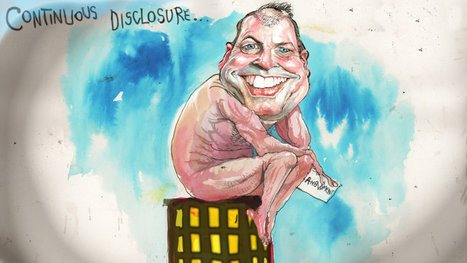
The business lobby might be celebrating Treasurer Josh Frydenberg’s decision to temporarily amend Australia’s continuous disclosure regime, but many in the market are feeling that once again COVID-19 has been used to temporarily weaken protections for investors that were hard won and are vital to long-term confidence. Not only do the changes to continuous disclosure obligations seem unnecessary, they’re also potentially risky and, in the view of at least one expert, ineffective at preventing the class actions the Australian Institute of Company Directors and the Business Council of Australia have campaigned so strongly against. The Australian Institute of Company Directors is delighted with federal Treasurer Josh Frydenberg's loosening of disclosure restrictions. [....] They may well ask why Australia has suddenly seen fit to erode shareholder rights in this way, and make different decisions around capital allocation. [...] Will that company and its executives simply be able to fall back on what essentially amounts to an "honest idiot" defence under these laws?
|