
SlideShare is the world’s largest community for sharing presentations. Discover great content and connect with like-minded individuals.
Via Arabella DeLucco


|
Rescooped by
Beth Kanter
from Lean content marketing
onto Content and Curation for Nonprofits May 24, 2013 3:38 PM
|
 Scoop.it!
SlideShare is the world’s largest community for sharing presentations. Discover great content and connect with like-minded individuals.
This is a good deck and insights -- many nonprofits and foundations are not leveraging the platform.

 Your new post is loading...
 Your new post is loading...
Your new post is loading...
Scoop.it!
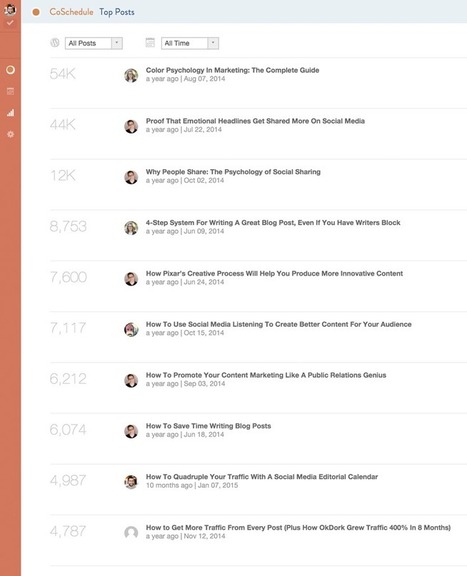
Read this post to get inspired by the top 0.023% of 4 million+ headline ideas to get the clickthroughs, shares, and search results your blog deserves.
Scoop.it!
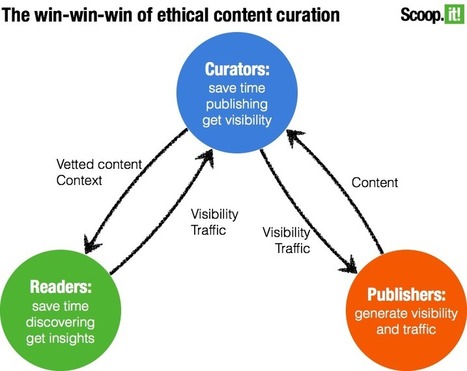
Ever since we started to work on Scoop.it, we’ve had this question: is it fair to use other people’s content for your own good: in other words, how ethical is content curation? Is it even legal?
Scoop.it!
From
medium

Twitter and Apple are both hiring journalists to curate their new news and events offerings and Twitter recently introduced their new…
Scoop.it!
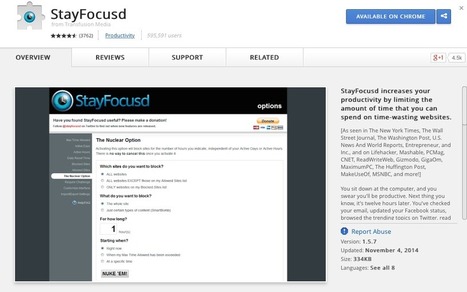
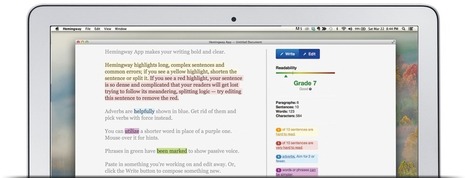
None of us were born content writers – we have to learn about SEO and how to pick a title that will drive traffic to our sites. Sometimes, we hit a slump. We just can’t seem to come up with an idea, break free of jargony language or stop writing wordy sentences. Well, luckily, we …
Beth Kanter's insight:
Useful tools
Scoop.it!

We're contractually obligated to let you know every time the Banana Bunker is featured on our site. http://gr.pn/1NcSOIt
Beth Kanter's insight:
Excellent example of engagement
Scoop.it!
Consumers Share “List” and “Why?” Posts the Most
Scoop.it!
Beth Kanter's insight:
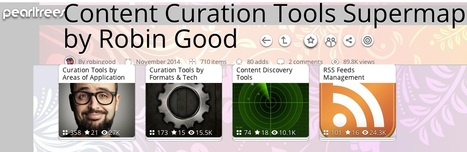
Robin Good has created a super map of content curation tools using PearlTrees, a visual list or bookmarking tool. Pearltrees lets you organize large collections because it allows for sub-categories. Robin has organized his large collection in several ways to make it easier for the user to find the right tool. This illustrates a key content curation skill - organizing material to make it useful to people. The organization of the collection makes it easy to find the right tool for the job - either by application or by format or technology. Useful

Flegconsulting's curator insight,
December 2, 2014 11:28 AM
Faire le tour des outils me permettant d'effectuer une veille documentaire sur l'activité économique
Scoop.it!

Want to know how your content and social profiles stack up? These tools can help.
Beth Kanter's insight:
How to measure your content strategy
Scoop.it!
Content is King: we've heard this sentence so much that for a lot of us it can become a factor of stress and frustration. Are you suffering content FOMO? Relax…
Beth Kanter's insight:
Good example of the work flow

socialcompany's curator insight,
August 6, 2014 6:45 AM
convincing slides to explain how scoop.it works
Scoop.it!
Have You Made the Business Case For Content Curation? If not, this data will help persuade your management to invest in content curation. Via Guillaume Decugis
Beth Kanter's insight:
Good points to make the value proposition, works for nonprofits too. Does not tackle the professional development angle.

J-Philippe Déranlot's curator insight,
August 1, 2014 4:36 AM
Voici un billet utile pour qui veut comprendre la curation ... malgré l'inutilité de ce commentaire publié dans un de mes topics Scoop.it ;-) 
Barbara Alevras, PMP's curator insight,
August 1, 2014 9:43 AM
Some great tips to help you promote the benefits of content curation as a key marketing activity. Would any of these resonate with your boss?
Scoop.it!
Content is King! Content is also EVERYWHERE... In your face with emails.. In your social streams, sponsored updates, every new app claims to be a "news feed but nobody has the time needed to read and sort through EVERY blog post! So why not use automation and dynamic apps to filter the internet based on your preferences allowing you to be more productive and read the stuff that is important to you and share that with your community! That is my focus and here are 6 of the tools I use to do this!

Ally Greer's curator insight,
July 22, 2014 6:34 PM
Great tips & tools from Scoopiteer @Brian Fanzo! 
Julia Echeverría's curator insight,
July 31, 2014 6:54 AM
Este artículo es realmente interesante, qué sería de nosotros sin la curación de contenidos?, si es lo que realmente importa en la red. |
Scoop.it!
Beth Kanter's insight:
Scoop.it!

Do you want to discover how to market your business with visual content? This article will help you create the perfect image to improve your marketing.
Scoop.it!
Alexis, Kat, Jolina & Evan from #TeamTopRank brainstorming content. Repurposing content is most often a function of efficiency. Marketers investing in
Scoop.it!
If you manage social media, creating visual content is becoming a bigger part of your job. But how do you create visual content that looks exceptional? Here are 9 tools.
Scoop.it!

CoSchedule is a drag-and-drop editorial calendar for WordPress. Schedule blog posts with your team and automatically send messages to your social networks.
Scoop.it!
Beth Kanter's insight:
AARP goes where the audience is. 1/3 of grandparents felt it was useful to connect with grandchildren online - felt it helped them understand each other better. 60% of members between ages of 50-59 have smartphones and 76% check social channels on it. Those number will trend higher as GenX becomes eligible for AARP membership this year. Data showing people over forty are using a specific platform - they read about it and then test. That means they have presence in places like Pinterest, Instagram, and Vine LInkedIN. Second largest demographic is Gen X - lloking for information re: tips for caregiving. Hyperlocal strategy to engage volunteers in an event via Twitter ... Aligned social media and broadcast TV -- full time social media trainer on their team to teach AARP staff volunteers how to stay connected. Experiment with younger audience segments.
Scoop.it!
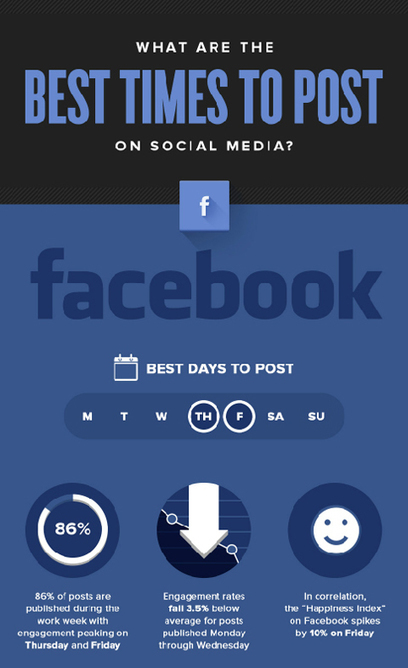
Do you know the most effective times to post on social media, send an email, or publish a blog? We've broken down the data behind the most effective times to p…

Ken Dickens's curator insight,
March 24, 2015 12:18 PM
A little long, but there are some clear directions in here. And it is not what you think! Also, think about using this info to post at times when others are not posting. Less competition! -Ken

Fred FOURNIER's curator insight,
August 9, 2015 11:38 AM
It s always a question of ...data ! Big data could make you became crazy or....help you so much !
Scoop.it!

Want to Start a Blog? This Free Guide is a blueprint that takes you from learning the basics of blogging to becoming a knowledgeable and talented blogger.
Scoop.it!
Beth Kanter's insight:
headline tester for word press
Scoop.it!
If you're on social media for any length of time, you'l…
Scoop.it!

Content marketing is now an integral element of public relations and is an extension of the notion of thought leadership. It varies the thought leadership approach in four ways:
Beth Kanter's insight:
Good summary of why content marketing - which includes content curation is valuable to enterprise and some good thoughts on the value of having employees do it - not just the marketing folks. From a pure practicality perspective, whilst thought leadership can be applied in a limited but still quite effective manner when adopting this antediluvian approach, it is simply not viable to apply it to content marketing: • A primary reason for this is that content curation is more than just retweeting or otherwise sharing. There needs to be a qualitative value-add from the organisation to some degree some of the time (actually a lot of the time, but I’m taking the low [expectation] road here) • Involving employees in content creation educates employees on their industry which, one would think, helps them contextualise their work efforts and give them information to get better at their job, increasing productivity • Employee involvement increases commitment to their organisation – likely to increase productivity – and helps them become a stronger organisational advocate • Utilising normal (non-marketing Martians?) minimises the need to hire additional marketing employees and can optimise financial investment into the program – increasing productivity. The most interesting and challenging aspect of this dimension, however, relates back to who are those doing the curating and how is this contextalised within an organisation’s branding? • What are they commenting on? • What is the nature of their value add? • Is there a comms or marketing employee facilitating all this curation, or is it the relevant individual doing it solo after, perhaps, some initial briefing and some guidelines have been set? This relates to the third point I flagged above. Fourthly, and this is perhaps the most fundamental aspect, the rationales driving the strategy will determine all of those issues noted above.
Scoop.it!

Terry Elliott's curator insight,
August 16, 2014 7:23 AM
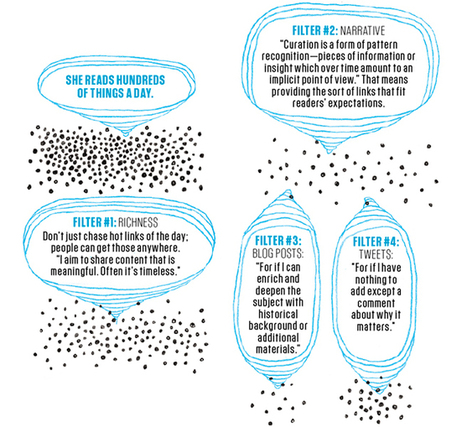
The image above amounts to a template for curating a digital space: Find something timeless to curate.Fit it into a pattern that makes sense.Find a larger context for why this matters.Share widely.I think this fits into Harold Jarche’s simpler seek-sense-share framework. Why does this matter? If curation is all that Tufte and Bhatt say it is, then why aren’t scaffolds like these being used more often for training and in learning systems? I am using the curation tool Scoop.it to do curation with my freshman comp students. They use Scoop.it as their introductory platform for beginning to acquire the skills Tufte enumerates above that are part of the academic and business spaces they will eventually live in. I am hoping they will demonstrate why it curation matters as they seek-sense-share their way to long and short form ‘texts’ that they will be writing all semester. That will include essays, tweets, G+ community posts, blog posts, research papers, emails, plusses, favs, instagrams, zeegas, slideshares, pictures, and a massive mobile presence from their own digital spaces. Wish me luck. Interesting links from article and from comments: http://curation.wikispaces.com/General+References“Digital Media and Learner Identity: The New Curatorship”: http://www.palgraveconnect.com/pc/doifinder/10.1057/9781137004864http://www.lkl.ac.uk/people/potterhttp://digitalcurationandlearning.wordpress.com/http://digitalcurationandlearning.wordpress.com/2014/02/01/curatorship-is-a-new-literacy-practice/http://luke-callahan.com/students-must-curate-create-a-portfolio/
Terry Elliott's curator insight,
August 16, 2014 7:26 AM
The image above amounts to a template for curating a digital space:
1. Find something timeless to curate. 2. Fit it into a pattern that makes sense. 3. Find a larger context for why this matters. 4. Share widely.
I think this fits into Harold Jarche’s simpler seek-sense-share framework.
Why does this matter? If curation is all that Tufte and Bhatt say it is, then why aren’t scaffolds like these being used more often for training and in learning systems? I am using the curation tool Scoop.it to do curation with my freshman comp students. They use Scoop.it as their introductory platform for beginning to acquire the skills Tufte enumerates above that are part of the academic and business spaces they will eventually live in. I am hoping they will demonstrate why it curation matters as they seek-sense-share their way to long and short form ‘texts’ that they will be writing all semester. That will include essays, tweets, G+ community posts, blog posts, research papers, emails, plusses, favs, instagrams, zeegas, slideshares, pictures, and a massive mobile presence from their own digital spaces. Wish me luck. Interesting links from article and from comments: http://curation.wikispaces.com/General+References“Digital Media and Learner Identity: The New Curatorship”: http://www.palgraveconnect.com/pc/doifinder/10.1057/9781137004864http://www.lkl.ac.uk/people/potterhttp://digitalcurationandlearning.wordpress.com/http://digitalcurationandlearning.wordpress.com/2014/02/01/curatorship-is-a-new-literacy-practice/http://luke-callahan.com/students-must-curate-create-a-portfolio/ 
Ignacio Conejo Moreno's curator insight,
February 14, 2015 7:35 AM
"A curator, therefore, whether she is a journalist-by-proxy such as Popova or a student completing an assignment in a classroom, not only collects and interprets, but also creates a new experience with it." Creo que esta definición zanja la discusión sobre si un "Content Curator" es una adaptación moderna al "Documentalista" de los medios tradicionales. De muy recomendada lectura para los que nos dedicamos a la Curación de Contenidos. |










On May 22, 2013, SlideShare’s Kevin Fisher presented “Beef-up Your Lean Content Marketing Efforts with SlideShare” at the Lean Content Meetup in San Francisco. In his presentation, he summarizes “content marketing” and applies Lean Content ideas to the use of SlideShare for B2B Marketing. His example of the tractor brand John Deere publishing content to help farmers become better at farming illustrates how providing knowledgeable and relevant information on a topic of expertise builds brand equity. At Scoop.it, we believe brands that understand the importance of engaging customers through smart content, look smart and gather communities of interests that turn into a loyal base of consumers and evangelists. Once this need to discover, publish and share relevant content is established, the Lean Content method can be applied to producing content pieces in an efficient and effective way through the Build-Measure-Learn cycle heralded by the Lean Startup.
Kevin also reviewed the SlideShare platform and showed an impressive audience of professionals. If you are looking to reach such a consumer-base, be sure to find ways to leverage SlideShare. Our team at Scoop.it has found great value in publishing presentations on SlideShare, and we even saw success on SlideShare’s video platform vs. YouTube. We tested this concept by uploading the same video on both platforms -- and the video on SlideShare performed exponentially better. This an application of the Lean methodology of testing and measuring impact.
SlideShare features a vibrant professional and educational community that regularly comments, favorites and downloads content. SlideShare content spreads virally through blogs and social networks such as LinkedIn, Facebook and Twitter. Individuals & organizations upload documents to SlideShare to share ideas, conduct research, connect with others, and generate leads for their businesses.
Anyone can view presentations & documents on topics that interest them, download them and reuse or remix for their own work.