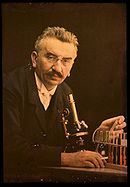
Venerable Thubten Chodron is a notable author, Buddhist monastic and the founder/abbess of Sravasti Abbey, a meditation community in Newport, Washington. She also hosts the Bodhisattva Breakfast Corner channel on YouTube which I highly encourage you to check out as well as her website which is chock full of information. It’s quite remarkable how often I’ve gone down the rabbit hole of Dharma discovery when visiting it.
Her latest book, Don’t Believe Everything You Think: Living with Wisdom and Compassion is a commentary on The Thirty-seven Practices of Bodhisattvas by Togmay Zangpo, a Tibetan monk and Bodhisattva.
There were several levels of security for the public and the media, from bomb sniffing dogs to Metro Police at the KFC Yum! Center; enough to rival a presidential visit. But unlike a Louisville Cards basketball game or concert the focus of His Holiness was love and compassion.
His Holiness, the Dalai Lama, blessed the masses and spread his inner joy. His signature laugh was heard on loudspeakers.
Without even an introduction, the 14th Dalai Lama took the stage in Louisville on Sunday to deliver a public talk at the KFC Yum! Center, the first event of his three-day Engaging Compassion visit to the city.
Taken by surprise, the diverse crowd of more than 14,000 slowly stood in ovation, then elation, as they recognized the Tibetan spiritual leader moments before he gave his hour speech.
Exiled Tibetan leader and Nobel Peace Prize winner the Dalai Lama came to Louisville on Sunday for the first time since 1994, bringing his distinctive message of compassion not just for all humans but for other species.
The Dalai Lama called for a "century of compassion," and said Americans, because they live under a system that gives them more political autonomy, have a greater responsibility to push for peace.
"Try to maintain a more peaceful mind," the spiritual leader told the crowd.
The CompassionLab is a group of organizational researchers who strive to create a new vision of organizations as sites for the development and expression of compassion. Our focus is on the expression of compassion in work and in the workplace, including emphasis on roles, routines, practices, relationships, teams, and structures that impact the experience of compassion in organizations. We are part of a broader community of scholars who are dedicated to developing a perspective on organizations as sites for human growth and the development of human strengths.
We do high quality work on compassion in a generative setting, where we can’t wait to see what comes next.
Our Principles
We attempt to live in alignment with what we study, and our research has an inner life as well as an outer life.We transform ourselves and our professional practice through the stories that we tell.We represent organizations as vibrant and alive, and paint them in their full palette of colors.We create a context in which all of our research participants can benefit from their engagement in our work
Compassion seems like a character trait that should come relatively easy for a Christ follower. I mean, we are the church. Our purpose is to spread the Good News and take care of others, specifically those who are in need. But over the last week many of us, some who call themselves Christ followers, have lacked compassion. Some have used their public voice in social media or personal blogs to tell the world (or their world) that bad things happen to those who deserve it
Have you been exercising your compassionate nature? Check out my latest article on the importance of fostering compassion in our lives in the new issue of www.az-lifestyle.com, Pages 61-63:
The Beauty of Compassion
Human beings are social creatures by nature. We were designed to live cooperatively and to assist one another in the survival of our species. But in that very design of species survival we were also given an alarm system to warn us of potential danger. So we get anxious, we get scared, or we get angry in response to any type of perceived threat. Back in cave people days, when threats happened only on occasion, that worked pretty well; fast forward to the modern digital age, when we see “threats” to our routine on not only a daily basis, but sometimes on multiple occasions throughout our day. A simple faceless text or email can send us into an orbit of upset. Relationships are impacted. Our ability to live cooperatively and compassionately has been compromised.
An experience at a conference on compassion leads this writer to consider the extent to which our thoughts can benefit those around us.
Even more than a desire to relieve the suffering of others, compassion is born of an innate recognition that we are all embraced in a universal and unconditional love. Although all too often this recognition lies buried beneath the stress of circumstance, this doesn’t mean it’s beyond our capacity to discover, uncover, and benefit from.
All it takes is a willingness to listen and the humility to respond.
I wanted to share with you some thoughts sparked in me this morning by an excerpt from a speech by Martin Luther King, Jr.
As I prepare to teach a course on self-compassion, this passage jumped out at me as profoundly wise:
The nonviolent [compassionate] approach does not immediately change the heart of the oppressor. It first does something to the hearts and souls of those committed to it. It gives them new self-respect; it calls up resources of strength and courage that they did not know they had. Finally, it reaches the opponent and so stirs his/[her] conscience that reconciliation becomes a reality. ~Martin Luther King, Jr.
Many of us assume that we only have so much compassion to spare. But research says we can build our capacity to alleviate suffering.
Compassion is a powerful moral emotion—it moves us to care for the suffering of others, and enables us to live cooperatively with one another.
Yet we live in a society of constant connection, in which the successes and sorrows of others are brought to us instantly through phones, computers, TV, radio, and newspapers. With that increased connection comes the risk of becoming overwhelmed or overburdened by our emotions. Fearing exhaustion, we turn off ourcompassion.
But my research suggests we can actually expand our compassion bandwidth without hurting ourselves. As the science of compassion develops, we can find empirically supported ways to cultivate and sustain compassion when it is needed the most.
Compassion, to me, is freely giving of myself to another with no expectation of return. True compassion is that which takes all those parts of us, such as love, humility, forgiveness, and binds us together through spiritual action. And therein lies the key; action.
Without action, compassion is nothing more a momentary pause; a hanging of the head, a tear, an ache in the heart. The momentary emotional pause, however, is only a first step. It is the pause which allows us to feel the need to act. Whether or not we act, is the next step, and where we many times fall short.
The working out of heartfelt compassion is foundational in bringing true transformation in communities and cities around the nation and world. Somebody Cares engages volunteers to reach out to the hurting in society–being the hands and feet of Jesus by offering real help. It is proven that when individuals, churches, businesses and community leaders reach out to help their neighbors, they come alive in the process. Each person helped also becomes a tangible manifestation of God’s love and hope, proclaimed to the entire community. This is Compassion Evangelism.
It is motivated by caring – being a tangible expression of God’s love through acts of compassion, and sharing the Good News of Jesus Christ through word and deed. Our faith motivates our action. It also motivates us to share the goodness of God with others. While much of the sharing is done as we live our lives and work in our communities, there are times when specific events are initiated to have a broader impact.
America's largest "Compassionate City" received instructions on Sunday from the Tibetan holy man who may be the world's living symbol of hope and forgiveness. The Dalai Lama spoke to more than 14,000 people in Louisville's KFC Yum! Center, a recently built arena on the Ohio River that, on other occasions, hosts rock concerts and University of Louisville Cards basketball games.
"Concern with others' well being: that is compassion," the 77-year-old Buddhist spiritual leader declared. "Compassion must come from there," he added, pointing toward his heart.
The Dalai Lama says people should practice tolerance and forgiveness to have a more compassionate life, which was the theme of his speech Sunday to an estimated crowd of 14,000 at the KFC Yum Center.
The Dalai Lama is on a three-day visit to Louisville, where he’s already blessed the Drepung Gomang Institute, which is helping to host the events.On Sunday, the Dalai Lama told the crowd that this is the century of compassion.
May 10-12, 2013 – Cultivating Compassion in Daily Life. In this 4 session seminar we will explore the benefits and cultivate the tools of of practicing compassion. Compassion is not the feeling of sadness for others, it is in desire to remove suffering. The practice of compassion is an active one – actively removing suffering in oneself and the world.
My grandfather was compulsively compassionate. As a child, I remember this quiet and gentle soul, offering love, understanding and a helping hand, to whomever he came across. Thieves and con men were no exception. When his family objected, he smiled and offered compassion anyway. Compassion was a trait at the center of his being.
When I started the Ali Hasan Mangi Memorial Trust in his memory in 2008, the aim was to create a model village in his ancestral hometown of Khairo Dero, a village in southern Pakistan. A model that could be replicated elsewhere in turning poverty-stricken and forgotten rural hamlets into habitable places; complete with access to clean water, a sanitation network, housing for all, education, income-generating opportunities, and health-care services.
A new study suggests mindfulness meditation can help us overcome the "bystander effect.
In the study, Paul Condon and Dave DeSteno of Northeastern University and Gaelle Desbordes of Massachusetts General Hospital assigned people with little or no meditation experience to one of two eight-week meditation classes, or put them on a wait list for a class. One class was a mindfulness meditation class geared toward focusing and calming the mind. The other covered similar terrain but also discussed compassion and suffering.
How can we define compassion, in a workable and understandable way, as a starting point to understanding the greatest weapon you and I will ever have ? Lets look to the internet, and Wikipedia, the first choice for the computer generation.
Wikipedia describes compassion as:
“Compassion is the virtue of empathy for the suffering of others. It is regarded as a fundamental part of human love and a cornerstone of greater social interconnection and humanism – foundational to the highest principles in philosophy, society, and personhood..
Why is compassion so powerful ? I believe it changes us, and our understanding of the world. Compassion reflects the non dualistic nature. We are all in this together. And nobody gets out alive. We feel compassion because, when we see suffering, we should realise that another person’s suffering is also our own suffering. And our suffering is their suffering. We are all one, so all our suffering is one too. Even the suffering of animals is also ours to share. We all exist on this planet together. As human beings, we should be working towards relieving the suffering of everyone we meet, no matter what the nature of their suffering may be, and no matter what our relationship with them.
Thinking about Health Annual Conference 26 – 28 June 2013, Woodbrooke Quaker Study Centre, Birmgingham
Can the language of compassion capture the moral problems confronted by the NHS, or might it obfuscate and distract us from more subtle and demanding issues?
Through a series of plenary addresses, workshops, panels and shared opportunities for discussion, ‘Compassion Fatigue’ will provide an opportunity to explore the language of compassion, and the impact that it has on the practice of health care provision. Workshops will address the politics of compassion; compassion and spirituality; compassion and nursing; compassion and the experience of the patient. Panels will bring together the perspectives of GPs, nurses and patients.
Previous research indicates that lower-class individuals experience elevated negative emotions as compared with their upper-class counterparts. We examine how the environments of lower-class individuals can also promote greater compassionate responding-that is, concern for the suffering or well-being of others. In the present research, we investigate class-based differences in dispositional compassion and its activation in situations wherein others are suffering.
Across studies, relative to their upper-class counterparts, lower-class individuals reported elevated dispositional compassion (Study 1), as well as greater self-reported compassion during a compassion-inducing video (Study 2) and for another person during a social interaction (Study 3).
Lower-class individuals also exhibited heart rate deceleration-a physiological response associated with orienting to the social environment and engaging with others-during the compassion-inducing video (Study 2). We discuss a potential mechanism of class-based influences on compassion, whereby lower-class individuals' are more attuned to others' distress, relative to their upper-class counterparts.
if you want others to be happy, practice compassion. If you want to be happy, practice compassion. ~Dalai Lama
I believe compassion to be one of the few things we can practice that will bring immediate and long-term happiness to our lives. I’m not talking about the short-term gratification of pleasures like sex, drugs or gambling (though I’m not knocking them), but something that will bring true and lasting happiness. The kind that sticks.
The key to developing compassion in your life is to make it a daily practice.
To get content containing either thought or leadership enter:
To get content containing both thought and leadership enter:
To get content containing the expression thought leadership enter:
You can enter several keywords and you can refine them whenever you want. Our suggestion engine uses more signals but entering a few keywords here will rapidly give you great content to curate.


 Your new post is loading...