Your new post is loading...

|
Scooped by
Mel Riddile
December 16, 2012 6:30 PM
|
Mitchell D. Chester
Massachusetts Commissioner of Education
Newly released international test scores place Massachusetts among the world leaders in eighth grade mathematics and science achievement.
On the heralded TIMSS assessment, Massachusetts eighth graders trail only their peers in Singapore in science achievement. In math achievement, Massachusetts eighth graders trail only their peers in four leading Asian countries.
|
|
Scooped by
Mel Riddile
December 14, 2012 9:36 AM
|
Common Core’s standards weigh in on the side of classics. The language in the document is unambiguous: “The standards mandate certain critical types of content for all students, including classic myths and stories from around the world, foundational U.S. documents, seminal works of American literature, and the writings of Shakespeare.”
|
|
Scooped by
Mel Riddile
December 13, 2012 10:20 PM
|
Wall-to-Wall IB schools will get kids to college, but many could end up on vocational track
But what the mayor and schools CEO have not said is that a good percentage of students in Chicago’s new wall-to-wall IB schools could actually end up in a new and untested International Baccalaureate technical education track—not in the IB Diploma Programme researchers have lauded for its success at getting low-income minority kids into selective colleges.
|
|
Scooped by
Mel Riddile
December 13, 2012 1:57 PM
|
By Valerie Strauss
“U.S. low-poverty schools do much better than high-poverty schools in international tests.”
In fact, that is true on all standardized tests. And that continues to be the real story in U.S. education, not how American students’ scores stack up against Singapore or the South Koreans.
|
|
Scooped by
Mel Riddile
December 13, 2012 10:26 AM
|
By Catherine Gewertz
Education Week
December 12, 2012
Literature vs. Informational Text: misunderstanding of the standards or faulty implementation?
"the standards value literature and give it a central place in students' learning."
"ELA classrooms are not being taken over by informational text; literature is not being left by the wayside."
|
|
Scooped by
Mel Riddile
December 12, 2012 6:21 PM
|
Deseret News
“The research is very strong in showing a correlation between what are called performance strengths — perseverance and grit — and academic success”--Scott Seider
|
|
Scooped by
Mel Riddile
December 12, 2012 6:14 PM
|
While there are achievement gaps between low-income and affluent students across content areas, none seem more vexing to close than the reading gap
|
|
Scooped by
Mel Riddile
December 12, 2012 12:01 PM
|
Florida’s remedial education needs are much greater than in many other states. Nationwide, about 40 percent of all first-year students need remedial education before they can enroll in credit-bearing courses
|
|
Scooped by
Mel Riddile
December 11, 2012 4:17 PM
|
By Stuart Singer, Author of The Algebra Miracle
"The graphing calculator has profoundly changed math education in a positive manner."
|
|
Scooped by
Mel Riddile
December 11, 2012 2:17 PM
|
Rather than having curriculum that forces teachers to race through facts and loads of content, the Common Core State Standards emphasize adjusting curriculum to help students learn more practical and critical-thinking skills that can be applied...
|
|
Scooped by
Mel Riddile
December 11, 2012 10:47 AM
|
By Kelsey Sheehy
U.S. News
December 10, 2012
The new standards will mean major changes for students and parents.
|
|
Scooped by
Mel Riddile
December 9, 2012 1:57 PM
|
The Intersection Of Technology And The Common Core Standards...
|
|
Scooped by
Mel Riddile
December 9, 2012 1:02 PM
|
As many as half of third-graders in some of Ohio’s largest urban school districts aren’t reading on grade level. “It’s alarming,” said Jim Herrholtz, an associate superintendent at the Ohio Department of Education.
|
|
|
Scooped by
Mel Riddile
December 14, 2012 9:53 AM
|
Charlotte Observer
December 13, 2012
One challenge is obvious: An item like this is much harder to grade than a bubble-sheet that can be whipped through a computer scanner.
Another is more subtle: Many students are weaker in reading than math, so they may struggle with math problems that require extensive reading and writing.
|
|
Scooped by
Mel Riddile
December 14, 2012 9:29 AM
|
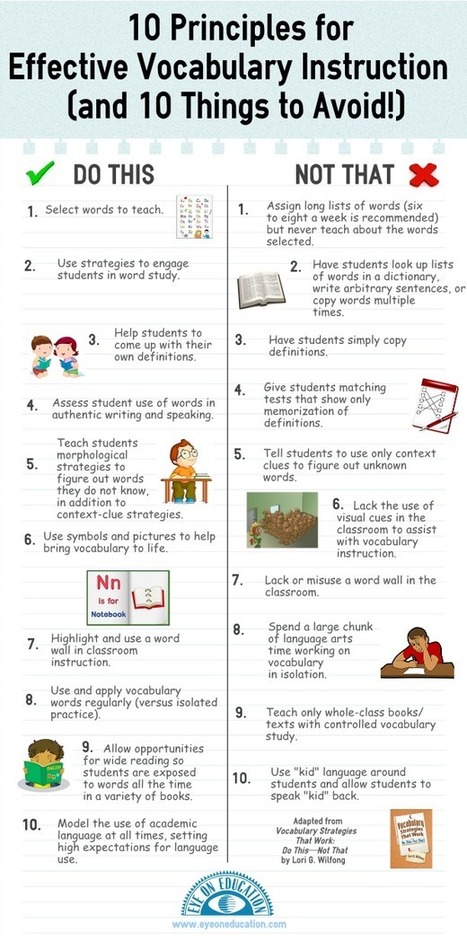
Vocabulary Strategies That Work: Do This—Not That!
by Lori Wilfong
Packed with engaging, research-based, classroom-ready strategies for teaching vocabulary.
|
|
Scooped by
Mel Riddile
December 13, 2012 2:56 PM
|
“I tend to be quite optimistic on where the U.S. performs internationally. We have a large and diverse set of kids to educate, and I think the results show we are doing quite well.” Jack Buckley, National Center for Education Statistics
The United States has gained ground against countries that are top performers in 4th grade reading, outscoring all but four in a widely watched international assessment in the 2011 PIRLS, or Progress in International Reading Literacy Skills, improving to far above the international average, the latest results show.
American 4th graders increased their average score by 16 points.
Low Income Schools
U.S. schools where fewer than 10 percent of students qualified for free or reduced-price lunches averaged 605 points, while those where more than three-quarters qualified for such assistance averaged 520.
|
|
Scooped by
Mel Riddile
December 13, 2012 1:53 PM
|
By Yong Zhao
The data show that as students progress toward higher grades, they become less confident in their math learning. More fourth graders than eighth graders have confidence in math, for example. Does this mean the more they learn, the less confident they become?
|
|
Scooped by
Mel Riddile
December 12, 2012 6:33 PM
|
By David Coleman and Susan Pimentel
Said plainly, stories, drama, poetry, and other literature account for the majority of reading that students will do in the high school ELA classroom.
|
|
Scooped by
Mel Riddile
December 12, 2012 6:18 PM
|
..the fear is that content area teachers will not do their part. For those teachers in content areas, specifically in STEM areas, educators will be tasked with how to integrate reading materials into a subject that is already crowded and doesn't seem to lend itself naturally to literary endeavors.
Left with the fact that language arts teachers shouldn't sacrifice teaching literature and that content-area teachers are not the best at teaching language arts, it seems that to properly implement Common Core, collaboration across subject areas is going to become necessary.
|
|
Scooped by
Mel Riddile
December 12, 2012 12:05 PM
|
Room For Debate
New York Times
December 10, 2012
By Terry Holiday, Kentucky Commissioner of Education
It is time to look at new funding models that ensure equity of inputs and outcomes for children.
|
|
Scooped by
Mel Riddile
December 12, 2012 7:12 AM
|
Concern is growing among teachers and parents that literary classics will go the way of the dinosaurs under a set of new national curricular standards.
"In a paper by the Pioneer Institute, a Boston-based public policy think tank that is critical of the Common Core, language arts experts Sandra Stotsky and Mark Bauerlein claim that literature will inevitably have a lesser presence in curricula, as English teachers remain the ones held accountable for meeting reading standards in fiction and nonfiction alike.
"It's hard to imagine that low reading scores in a school district will force grade 11 government/history and science teachers to devote more time to reading instruction," Stotsky and Bauerlein wrote."
|
|
Scooped by
Mel Riddile
December 11, 2012 2:32 PM
|
Getting real about the Common Core
By Chester E. Finn
|
|
Scooped by
Mel Riddile
December 11, 2012 2:08 PM
|
New York Times - Room for Debate
By RiShawn Biddle
Standardizing curricula is key to stemming the number of children who drop out of school and into poverty and prison.
|
|
Scooped by
Mel Riddile
December 10, 2012 9:17 AM
|
Common Core Big Idea 5: Consider Meaningful Assessment
By Jay McTighe
Editor's note: This is the fifth post in a five-part series which takes a look at five big ideas for implementation of the Common Core State Standards, authored by Jay McTighe and Grant Wiggins.
|
|
Scooped by
Mel Riddile
December 9, 2012 1:42 PM
|
This wordle gives us a different way to look at the Common Core State Standards. I just created it using Wordle which, in this case, offers us a useful view about what the Common Core values most at least according...
|