




Employers are looking for new hires with a broad range of skills and innovation, according to a new survey.

 Your new post is loading...
 Scoop.it! Employers are looking for new hires with a broad range of skills and innovation, according to a new survey. 
No comment yet.
Sign up to comment
Scoop.it!

"Forty-five states and the District of Columbia have adopted the Common Core State Standards and are in the early stages of implementing them. But as panelists concluded at an AEI research conference on Monday, the state-led initiative will face an uncertain future as it intersects with additional efforts to improve schooling, such as teacher accountability policies and charter schooling."
Scoop.it!

In many U.S. schools, students struggling the most in mathematics at the start of high school have the worst odds of getting a qualified teacher in the subject, new research finds. Succeeding in freshman-level mathematics is critical for students to stay on track to high school graduation, with students who make poor grades in math in 8th and 9th grades more likely to leave school entirely.
Scoop.it!

In the past I myself embraced what Fountas and Pinnel called “a balanced literacy approach.” Under this model classroom reading would be made up of the following components:
The common core call for increased text complexity seems to fit well with the “guided reading” portion of the block.

River Hill High School's curator insight,
April 14, 2013 3:14 PM
A nice article that applies to any discipline, not just English! 
Lenore Dufton-Johnstone's curator insight,
July 11, 2013 9:22 PM
This is the model for my classroom reading program.
Scoop.it!

Just about every new product to hit the edtech space is touting that it is “aligned with Common Core standards” as a prime feature. But how can schools be sure these companies aren’t just finessing existing features to fit broad CCCS definitions?
Scoop.it!
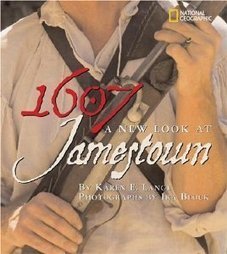
"Many people still hold to the belief that nonfiction writing is “just the facts,” often synonymous with formulaic, dull writing. Nothing could be further from the truth! For years, authors of all genres have honed their writing by reading literary nonfiction by the likes of David McCullough, Anna Quindlen, John McPhee, Susan Orlean, and so many others."

Matt Weld's curator insight,
April 14, 2013 8:30 PM
Great article that talks about how authors of nonfiction use the same skills in their craft that we are asking of students. Links at the end to other good, related articles, too. 
Gail Donahue's curator insight,
April 17, 2013 11:11 AM
This could be excellent background reading for content area teachers when trying to implement writing across the curriculum.
Scoop.it!

During a two-hour visit, Chancellor Dennis Walcott, Regents Chancellor Merryl Tisch, and State Education Commissioner John King sat in on an English class and watched sixth-graders identify specific words that illustrated the theme of a poem about mushrooms. In a math class, they saw five students present different solutions for the same problem, then heard the teacher explain that one strategy of problem-solving might make more sense for one student, or in one situation, than another.
Scoop.it!

Learning Forward is the nation's largest nonprofit membership association focused solely on ensuring success for all students through effective professional learning and school improvement.
Scoop.it!

Changes to curriculum represent a major shift in K-12 education in the U.S. How will textbooks and educational materials producers keep up?
|
Scoop.it!
Mel Riddile's insight:
Explains the history behind the development of the CCSS.
Scoop.it!

Scores will go down and the edu-politicians are trying hard to prepare the public. But their campaign of self-inoculation against widespread disappointment should not protect them. These educrats got us into this. How the system will build from this impending problem is anybody’s guess. Whenever new tests are introduced, scores go down. Then teachers adjust. Even the testing companies adjust. Scores then go up. Will children learn more? We can only hope.
Scoop.it!

Schools in Michigan and elsewhere will begin piloting online adaptive testing, which changes question difficulty based on student answers.
Scoop.it!

With the Next Generation Science Standards now finalized, two big questions are what kind of reaction they will generate and how many states will ultimately adopt them. The final version of the Next Generation Science Standards was publicly unveiled yesterday. You can find detailed analysis and early reaction in this Education Weekstory.
Scoop.it!
Public Service Announcement (PSA) by ExxonMobil
Scoop.it!

“Mounting evidence clearly shows that our educational performance is not just a challenge of poverty, it’s an American challenge. Many middle class schools in the U.S. are not yet producing students ready to compete in the global economy.” A new test from the Organisation for Economic Co-operation and Development (OECD) will let individual schools see how their achievement ranks compared to schools in other countries around the world. According to a recent report released by the nonprofit educational organizationAmerica Achieves, it’s not just low-income schools in the U.S. that have poor performance—it’s the country’s middle-class students, too.
Scoop.it!

Beginning in the fall, public school students will be encouraged to think more critically, write more convincingly and spend more time discussing the "why" of a math problem instead of just the "how-to."The new approach to teaching and learning...
Scoop.it!

Why do people insist on viewing the Standards as inconsistent with teacher creativity and choice? I am baffled by such uncreative thinking. That's like saying the architect cannot be creative becau...
Mel Riddile's insight:
Great Quote "When I hear everyone endlessly whining about what harm the Standards are doing to creative teaching it has the opposite effect on me that you intend. I think: boy, how unimaginative those teachers are. Glad my kid doesn’t have them."
Scoop.it!

Fred Sitkins takes a closer look at how teachers and other educators are integrating technology into the common core.
Scoop.it!

The Common Core State Standards will require new assessments that measure students’ abilities to design and conduct investigations, analyze data, draw valid conclusions, and report findings—the kinds of deeper learning competencies necessary in the twenty-first century. But developing these new assessments poses challenges, particularly around funding. How can states and districts support the development and implementation of new assessments that might be more costly than current tests? What might make these assessments more affordable?
Scoop.it!
The lead writers of the math common-core standards have developed new "publishers' criteria" intended to guide the development and selection of instructional materials. More than just working problems!
|






