Your new post is loading...

|
Scooped by
nrip
April 20, 2013 12:21 AM
|
The first release of Firefox with support for WebRTC is right around the corner and Mozilla is encouraging web developers to go ahead and start experimenting with what Mozilla refers to as “the real future of communications.” WebRTC is a proposed standard — currently being refined by the W3C — with the goal of providing a web-based set of tools that any device can use to share audio, video and data in real time. It’s still in the early stages, but WebRTC has the potential to supplant Skype, Flash and many device-native apps with web-based alternatives that work in your browser. WebRTC support is already baked into Firefox for Android. Both the getUserMedia API and the PeerConnection API — key components of WebRTC and the cornerstones of web-based voice chat — are already supported though you’ll need to enable them in the preferences. See theMozilla hacks blog for more details.
|
|
Scooped by
nrip
April 16, 2013 4:45 AM
|
There are benefits to rooting your Android smartphone, but it can be a tricky world for beginners. Here are some tips. For all of the flexibility and customization that comes with an Android device, there are still plenty of restrictions in place. While Android technically is an open-source platform, the final product is still the result of a phone maker's skin, the carrier or manufacturer's preloaded software, or even sometimes, a few disabled features. There isn't anything wrong with most out-of-the-box experiences, but more daring and tech-savvy users who tire of being at the mercy and discretion of carriers and handset makers might be interested in pushing theirAndroid devices to new limits. This where the practice known as rooting comes into play. What is rooting?Rooting, in a nutshell, is the process that provides users with full administrator control and access to an Android smartphone or tablet. Similar to "jailbreaking" an iOS device, this is often done in order to bypass carrier or handset maker limitations or restrictions. Once you achieve "root access," you can replace or alter applications and system settings, run specialized apps, and more. One of the more common reasons to root a phone is to replace the operating system with a ROM, another developer's version of the OS that also gives you more control over details. In rooting culture, we'd call that "flashing a custom ROM." The process of rooting an Android phone varies for each device, but seems to have been streamlined over time. Google's Nexus line of phones, such as the LG-made Nexus 4, appeals to developers and techie types and are among the most often rooted models. With that in mind, you'll also find that popular devices like the Samsung Galaxy S3 and HTC One X+ have plenty of custom ROMs to choose from. Note that rooting will void the device warranty; however, flashing a stock ROM can revert things back to their original state.
|
|
Scooped by
nrip
April 14, 2013 2:52 AM
|
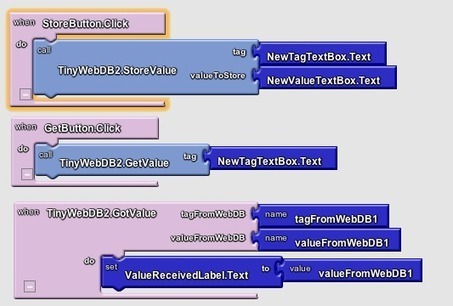
TinyWebDB is an App Inventor component that allows you to access the web from an Android app. You can use TinyWebDB to access a data source (API) or to store the app’s data persistently in a web database. These notes show you how to do the latter– set up a web database, and set it up in the cloud using Google’s free App Engine service. With the sample code provided here, you can set up a web database that lives on Google’s servers in just minutes, and you need not be a programmer to do so. Note that App Inventor also provides a TinyDB component. TinyDB stores data directly on the phone and is simpler to use. TinyWebDB is required only if data needs to be shared between phones and apps (e.g., social apps, multi-player games). By default, the TinyWebDB component stores data on a test service provided by App Inventor, http://appinvtinywebdb.appspot.com/. This service is helpful for testing, but it is shared by all App Inventor users, and it has a limit of 1000 entries. If you use it, your data will be overwritten eventually. For anything other than tests, you’ll want to create a custom web service that isn’t shared with other App Inventor apps and programmers. You need not be a programmer to do so– just follow the instructions below and you’ll have your own service within minutes.
|
|
Scooped by
nrip
April 7, 2013 1:14 AM
|
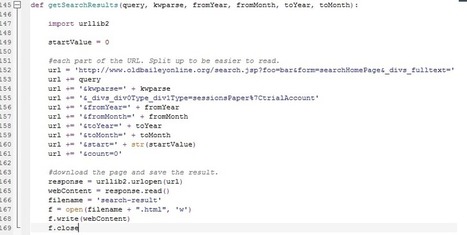
This post will take a look at our REST API by creating a Python script to interact with the entity endpoint. One of the key benefits of using standard technologies, formats, and protocols is the incredible amount of existing tooling that you get for free. Since we’ve been busy building our new service, backed by our ever changing database, we haven’t gotten around to client libraries yet. However, we do speak JSON through REST over HTTPS. Every language already has battle hardened libraries for working with those. For Python, it doesn’t get much better than the requests library. Their motto is HTTP for Humans and it makes working with RESTful services a breeze.
|
|
Scooped by
nrip
March 26, 2013 6:12 AM
|
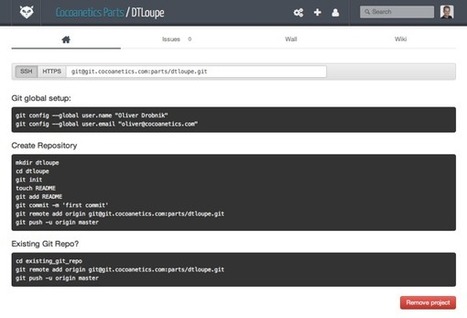
When we started with Source Code Management (SCM) – at the time – we still had a virtual Windows server running with QualityHosting.de. So a friend set up VisualSVN for us on this box. This got us started with Subversion. A few years later I got started with git. Then I got into it a bit more with git submodules. Those were the beginnings of a beautiful friendship. Two years later we decided that was enough of procrastrinating. Finally the time had come to switch to git for good. Subversion served us well, because – seriously – it had several attributes that I chose to interpret as advantages. Specifically for my components I wanted to have a central place that I am controlling acces
|
|
Scooped by
nrip
March 21, 2013 4:25 PM
|
Having grown up with a parent who is a web designer and a software engineer, gave me an early look at programming languages such as Python, Ruby, C++ and Java. Unfortunately I was never really inte...
|
|
Scooped by
nrip
March 16, 2013 3:12 AM
|
Defines descriptors, summarizes the protocol, and shows how descriptors are called. Examines a custom descriptor and several built-in python descriptors including functions, properties, static methods, and class methods. Shows how each works by giving a pure Python equivalent and a sample application. Learning about descriptors not only provides access to a larger toolset, it creates a deeper understanding of how Python works and an appreciation for the elegance of its design.
|
|
Scooped by
nrip
March 13, 2013 5:37 PM
|
Install Git To install Git under Ubuntu, it is as easy as running the following command: sudo apt-get install git-core To confirm whether it has been successfully installed, run the command below. This should return the path where git is located. which git To determine which version of git is installed: git --version Configuring Git Git configuration is stored in three different locations which is based on the three levels of configuration. System Level configuration which will be applied to every user of the system. This is stored in the/etc/gitconfig or Program Files\Git\etc\gitconfig for Windows.User Level configuration which will apply to only a single user. The path for this level is~/.gitconfig or $HOME\.gitconfig for Windows.Project Level and this will be inside the project folder like my_project/.git/config and this will be only for that project. All these files can be directly edited but we must be sure about their format and syntax. Any mistake can make big problems. Luckily we don’t have to edit them directly, Git comes with commands that will make the changes for us.
|
|
Scooped by
nrip
March 12, 2013 5:29 PM
|
Efforts like the recently launched Code.org try to make programming more appealing to students -- an admirable goal -- but if we're serious about expanding computer science in schools we need to start talking to teachers.
|
|
Scooped by
nrip
March 10, 2013 6:42 AM
|
Python is a great language that is useful for many things, among them creating web applications. There is a plethora of great web frameworks out there, and Python makes it nice and easy to do such things as parsing json or talking over HTTP out of the box. If you don’t need anyting fancy, Python even makes starting a simple HTTP server a one-liner from the command line: $ python -m SimpleHTTPServer Serving HTTP on 0.0.0.0 port 8000 ... Once you need to set up a production environment, however, you will generally require something more robust to serve your application than this, or any of the development servers included with your favorite web framework. In this blogpost I’ll explain how to set up an Apache HTTP Server to serve Python web applications.
|
|
Scooped by
nrip
March 7, 2013 4:05 PM
|
On its own, the software development process has numerous hazards and obstacles that require navigation in order to successfully launch a product. The last thing that any engineer wants is challenges resulting from the language or tool that is being used. It often makes sense or is necessary for the hardware designer to write code to test that the hardware is working or in resource constrained cases, develop both hardware and embedded software.
The language of choice is still C and despite the advances in tools and structured programming, time and again basic mistakes occur that lead to bugs and maintenance nightmares. In an attempt to avoid these C programming pitfalls, here are 10 C language tips for hardware engineers.
|
|
Scooped by
nrip
March 7, 2013 5:47 AM
|
Visual Studio Tools for Git 0.8.0.0. Install this release to get not only fixes to numerous bugs, (for details see the release notes on the gallery page), but also an enhanced conflict resolution experience.
|
|
Scooped by
nrip
March 7, 2013 5:37 AM
|
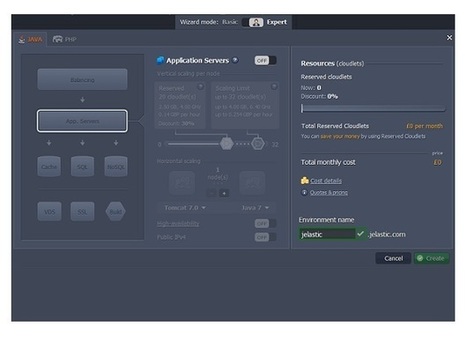
Jelastic Launches Version 1.9 of Java and PHP Cloud Platform. Cloud hosting provider Jelastic announced on Tuesday it has launched version 1.9 of its Java and PHP cloud hosting platform, following US web hosting partner...
|
|
|
Scooped by
nrip
April 20, 2013 12:21 AM
|
What is Intel up to? It has just released a set of really good HLML5 tools, potentially the best yet, that allows you to create apps that are platform independent. This raises more questions that it answers. Why is an "Intel Inside" sticker on HTML5 so important? If you are creating or thinking of creating a Web app using JavaScript then you need to know about what Intel is up to. Its latest offering makes it possible, and in fact easy, to create a web app that will work on mobile and desktop devices and then package it for all of the app stores you want to support. If this is as good as it seems to be, it is a winning tool and a way to really make apps that are write once and run everywhere. Intel took the opportunity of launching its revamped developer offering for HTML5 apps at the Intel Developer Forum in Beijing in April. The aim is very high as you can tell from the title of arecent blog post - "One Code Base to Rule Them All". You might think that this is a null claim as HTML5 is standardized, but this is to miss the point that an HTML app running on different platforms has a very different runtime environment. The APIs available in a desktop browser aren't the same as those in an Android Phone and there are even differences between a Chrome and a Firefox packaged app.
|
|
Scooped by
nrip
April 14, 2013 2:59 AM
|
Google's WebP image format promises smaller images and in turn faster web pages, but so far only a few web browsers support it. That would change though if Firefox jumps on the WebP bandwagon. Want your website to load faster? Slim your images. According to the HTTPArchive, images account for roughly 60 percent of total page size. That means the single biggest thing most sites can do to slim down is to shrink their images. We recently covered how you can cut down your website’s page load times using Google’s image-shrinking WebP format. Unfortunately, one of the downsides to WebP is that only Opera and Chrome support it. But that may be about to change — Firefox is reconsidering its decision to reject WebP. The change of heart makes sense since most of the objections Firefox developers initially raised about WebP have since been addressed. However, Firefox hasn’t committed to WebP just yet. As Firefox developer Jeff Muizelaar writes on the re-opened bug report, “just to be clear, no decision on adopting WebP has been made. The only thing that has changed is that we’ve just received some more interest from large non-Google web properties which we never really had before.” Whatever the case, if Firefox does land support for WebP it would help the fledgling format cross the line where more browsers support it than don’t, which tends to be the threshold for wider adoption. If you’d like to experiment with WebP today, while still providing fallbacks for browsers that don’t support it, be sure to check out our earlier write-up.
|
|
Scooped by
nrip
April 7, 2013 1:19 AM
|
|
|
Scooped by
nrip
April 7, 2013 1:11 AM
|
When writing a large JavaScript application, it is quite often that console.log and other debugging statements are sprinkled here and there. Obviously, at one point those extraneous statements need to be removed for the production version or even when the code needs to be checked in into the source repository. There are many different ways to do this, there exists a new tool calledgroundskeeper which can do this removal for you. Written for Node.js, groundskeeper (GitHub: github.com/Couto/groundskeeper) is created by Luís Couto to handle logging removal by understanding the syntax tree of the code and deleting the relevant parts. It is not based on regular expression at all. Groundskeeper parses the code (viaEsprima) and modify the syntax nodes (via falafel) associated with any logging. Beside a command-line tool, groundskeeper is also a library ready to be used in any other tools and build systems. Using groundskeeper is terribly simple (as its documentation explained). Let’s assume we have the following filter-debug.js:
|
|
Scooped by
nrip
March 21, 2013 4:26 PM
|
SourceTree is a free Git desktop client for developers on Windows. Say goodbye to the command line and use the full capabilities of Git through SourceTree’s beautifully simple interface (and stop being jealous of what your Mac friends are using).
|
|
Scooped by
nrip
March 19, 2013 4:25 AM
|
Without orientation, deployments of Python applications can be tiresome and even painful. This talk attempts to replace anxiety and pain through informed annoyance.
|
|
Scooped by
nrip
March 16, 2013 3:08 AM
|
When Google launched its EC2 rival, Google Compute Engine, last June, it set some high expectations. Sebastian Standil’s team at Scalr put the cloud infrastructure service through its paces — and were pleasantly surprised at what they found.
|
|
Scooped by
nrip
March 13, 2013 5:17 PM
|
While decentralized version control like Git has a lot of momentum
right now, they still seems to have a reputation of being more complex
than their centralized siblings, like SVN. I'm guessing one reason for
this is that we tend to explain Git by comparision: When you'd do X
in SVN, you'd do Y in Git. I think we should instead talk about Git in terms of what it really
is: A purely functional data structure. Learning to expertly use Git
means learning how to manipulate that data structure. If you're not familiar with purely functional data structures, this
might not seem too helpful. Turns out, we need only go briefly into
this subject in order to gain the needed insight, so lets quickly
explore this topic before bringing the discussion back to Git.
|
|
Scooped by
nrip
March 11, 2013 7:00 PM
|
Historically, HTML editors have been fairly awful. Many IDEs forced you to create dumb projects, insisted on particular doctypes, or favored deprecated tags. JavaScript editing could be worse: the editor programmers didn’t understand the language so even basic features such as function lists could fail. Fortunately, the situation has improved and NetBeans 7.3 has been released with full support for HTML5, CSS and JavaScript. The cross-platform IDE now includes an HTML project wizard which allows you to select popular boilerplate templates and JavaScript frameworks:
|
|
Scooped by
nrip
March 8, 2013 3:34 AM
|
Web Applications using applets to transfer data between the client and server are hard to manipulate using security holes, because of the simple reason that code within the applet is difficult to modify. Although the code can be recovered by decompiling the applets, it is very difficult to get them recompiled back into a jar file after making the required changes. This is because the decompilation process always leaves codes portions that are not properly recovered and hence it needs to be reconstructed manually by the analyst, which is a very error-prone method. There will be a lot of dependencies that cannot be resolved and based on the compilation process, some information may be completely lost. In this paper we’ll discuss a technique that can be used to modify code and without having to recompile the applet and it can be madeto run in a standalone manner so that it can be debugged live and the values can be manipulated to exploit security holes. We’ll use a generally occurring deployment scenario: The applets are signedThe applets run in the context of Internet Explorer, using proxy settings, etc… imported from the browser settings. In the next section we’ll discuss the basics about java virtual machine, and class file format.
|
|
Scooped by
nrip
March 7, 2013 5:48 AM
|
Even the best of us hate logging in Python sometimes. And while a lot of its problems are actually just bad docs and terrible defaults in the past, there is some pain that can be avoided. One of the big problems with logging in general is that every class and function reek of NIH in the name of cross-platform. And to make it even more fun, there are several ways to do it: standard library (which attracts most of the hate), Twisted, Logbook… For example to get useful log rotation by day (whoever came up with rotating by size may be a good idea‽), you'd go forTimedRotatingFileHandler in stdlib, but in Twisted everything works slightly differently. All of this isn't just annoying, it's also unnecessary. Your UNIX-like operating system – which you presumably use to deploy your applications – offers formidable solutions to both logging and rotating. It's out there for you to use. Since the 1980s.
|
|
Scooped by
nrip
March 7, 2013 5:43 AM
|
The W3C has put all the videos from its recent W3Conf online, offering web developers a treasure trove of tips, tricks and how-tos for using web standards. Among the highlights are Eric Meyer’s talk on Flexbox, and the future of sane layout tools — what Meyer calls “the Era of Intentional Layout.” Meyer’s talk is also notable for the reminder that, in Mosaic, styling a webpage was something users did, not page creators. Another highly recommended talk is Lea Verou’s “Another 10 things you didn’t know about CSS.” The “Another” bit in the title refers to a talk Verou gave last year entitled “10 things you might not know about CSS 3.” Also be sure to read our recent interview with Verou for more on the W3C and web standards.
|