


 Your new post is loading...


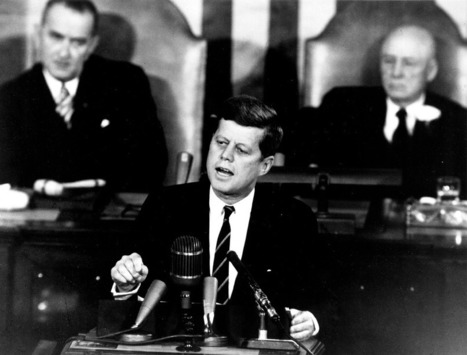

The Narrative Of JFK Shows The Difficulty In Diagnosing & Treating Spinal Disorders.
At age 43, John F. Kennedy was the youngest president elected into U.S. workplace, and has been depicted as full of youth and vitality. But he was far from healthy, and spent most of his adult life fighting with many medical issues, including back pain which started during college and continued until his death, according to a recent review article from the Journal of Neurosurgery: Spine.
John F. Kennedy's back pain is thought to have started following a football injury, while Kennedy was in undergraduate school at Harvard, clarified coauthor Justin T. Dowdy, MD, who is a neurosurgeon at Hot Springs Neurosurgery Clinic, in Hot Springs, Arkansas.
Based on 10 years of study on Kennedy's medical documents and reported symptoms, senior author T. Glenn Pait, MD, believes Kennedy had discogenic disease stemming from an accident in his childhood that began a cascade of problems in his low back. Dr. Pait is Director of the Jackson T. Stephens Spine and Neurosciences Institute at the University of Arkansas for Medical Sciences.
Kennedy was originally rejected when trying to enlist in the Army due to his medical issues, such as back pain, but was eventually accepted in the U.S. Naval Reserve during his dad's connections. "This is a testament to his decision to serve his country," Dr. Pait said. "Kennedy was originally given a desk job, but that was not enough for him, and he was later admitted into a patrol torpedo program."
Kennedy's back issues worsened when his naval boat was hit by a Japanese destroyer, and Kennedy drifted for 5 hours to a nearby island while towing an injured crewman to shore by holding the ring of the man's life jacket between his teeth, Drs. Dowdy and Pait noted in their newspaper.
The review article refers to a series of 4 ineffective surgeries, including a sacroiliac (SI) and lumbosacral fusion. Various doctors who treated Kennedy had different theories about the reason for his back pain, also suggested a variety of different treatments ranging from trigger point injections and an exercise program (swimming and weight lifting), to massage and a back brace, to methamphetamine-containing shots. The exercise program, started later in his life, produced "dramatic" improvement, according to the researchers. The program consisted of weight lifting three times each week and everyday swimming plus massage and heat therapy.
"JFK's narrative illustrates the difficulty and complexity in diagnosing and treating spinal disorders, especially in the context of chronic pain," Dr. Dowdy advised SpineUniverse. "Our spines age as we age if it's degenerative disk disease, pinched nerves, or spinal stenosis--imaging abnormalities are certain to appear later in life. Treating and preventing these disorders is just as much of an art as it's a science, particularly in determining those individuals who will probably benefit from surgery."
Dr. Dowdy noted that much progress has been made in how spinal conditions are diagnosed and treated as the time when Kennedy sought attention, such as "that the refinement of both less-invasive spine surgery methods and diagnostic imaging." Dr. Dowdy also emphasized an important point that applies to any era: "the significance of having a trusted spine surgeon who is prepared and capable of supplying the right surgery in the appropriate conditions."
John F. Kennedy's story also suggests that "the most beneficial methods to prevent chronic back pain may be accessible and affordable," Dr. Dowdy stated. "Often the most appropriate strategy for chronic low back pain is actively pursuing proper spine hygiene: maintaining healthy body weight, refraining from smoking, and pursuing a nutritious diet and exercise--especially workouts comprising yoga-style stretches," Dr. Dowdy emphasized. "It boils down to pursuing a healthy and active way of life."
"Individuals who suffer from chronic pain may hopefully be inspired to know that Kennedy remained physically energetic and driven to accomplish his goals despite his annoyance," Dr. Dowdy concluded.







John F. Kennedy was the youngest president elected. But he was far from healthy, & spent his adult life with back pain. For Answers to any questions you may have please call Dr. Jimenez at 915-850-0900