


When India overtook China as the world's largest producer of rice this year, the country's politicians and agriculture lobby marked the moment by praising resilient farmers and innovative government policy.


 Your new post is loading...
 Scoop.it! When India overtook China as the world's largest producer of rice this year, the country's politicians and agriculture lobby marked the moment by praising resilient farmers and innovative government policy.

No comment yet.
Sign up to comment
Scoop.it!

Türkiye’s agricultural sector faces climate risks in 2025 while accelerating reforms in water management, digital farming, food safety and rural investment
Scoop.it!

Chinese state-backed money is remaking the hemisphere’s ports — from Santos to Chancay — reshaping grain routes to Asia and squeezing U.S. farmers as tariffs deepen the split with Washington.
Scoop.it!

C’est en grande pompe que le prince héritier et leader de facto d’Arabie saoudite, Mohammed Ben Salman, a été reçu à la Maison Blanche le 18 novembre dernier, entre tapis rouge, déclaration d’amitié et dîner de gala. De quoi défier ceux qui avaient prédit que la relation stratégique des États-Unis et du royaume saoudien mourrait avec l’indépendance énergétique des États-Unis. Car, à son retour à la présidence, ce n’est pas la même région du Golfe que Trump a retrouvée, et certainement pas la même Arabie. Celle-ci, en pleine révolution, portée par sa Vision 2030, n’est plus l’économie pétrolière en bout de course, ni l’État « paria »[1] dénoncé par son prédécesseur.
Scoop.it!

La crise népalaise, qui a vu l’effondrement de l’ordre politique établi et l’émergence d’un gouvernement intérimaire dirigé par l’ancienne Présidente de la Cour Suprême Sushila Karki, s’inscrit dans un contexte plus large de tensions géopolitiques croissantes, de désillusion sur un processus démocratique inabouti et de revendications identitaires non résolues.
Scoop.it!

Donald Trump’s trade tariffs have failed to hold back China’s export dominance, which scaled new heights in November.
Scoop.it!

L'usine de dessalement de Rizhao, située dans la province chinoise du Shandong, produit non seulement une eau moins chère que celle qui sort du robinet, mais également de l'énergie sous forme d'hydrogène. Quant à la saumure restante, celle-ci alimente l'industrie en minéraux.
Scoop.it!
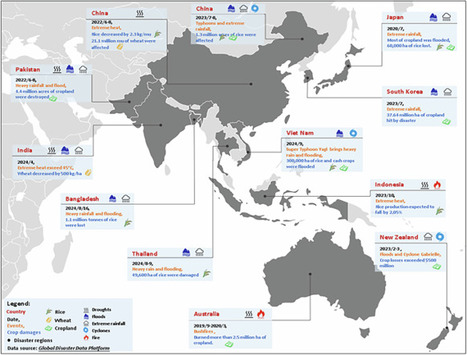
Climate-related extreme events are exerting significant pressure on food security in the Asia-Pacific Region, home to over half of the world’s population. China, Thailand, Vietnam, and many Southeast Asian countries are major producers and exporters of food globally. Recent climatic extremes associated with El Niño have caused significant crop losses, further compounded by war and trade embargoes that threaten food security. To address these challenges, four measures are essential: (i) Taking action on climate adaptation; (ii) Coordinated, rules-based regional food-aid mechanisms; (iii) Protecting domestic production and conserving soils, and (iv) Advancing zero-carbon farming practices. Together, these strategies are necessary to sustain future food security in the region.
Scoop.it!
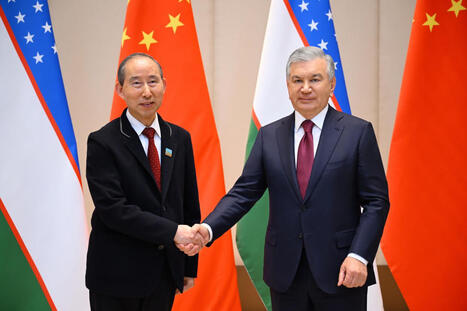
TASHKENT, Uzbekistan, December 5 . Uzbekistan and China are rolling up their sleeves to kick off new projects in geology and agriculture, with a hefty price tag of $1 billion on the table, Trend reports via the press service of the President of Uzbekistan.
Scoop.it!

Mangroves in the Philippine city of Tacloban, the area hit hardest by one of the most powerful typhoons ever recorded, have recovered and even expanded beyond their pre-disaster extent, thanks largely to community-led reforestation. But scientists caution that ongoing coastal development could threaten the recovering forests. In a recently published study, Hiroshi Takagi, a professor […]
Scoop.it!
Les fonds souverains du Golfe sont devenus des acteurs incontournables de la finance mondiale. Investissant des sommes colossales dans des secteurs stratégiques, ils contribuent à la fois au développement local et à l’influence grandissante des monarchies du Golfe dans l’économie et la politique internationales. Dans un avenir proche, ils feront face à un double défi : celui du capital humain et celui de leur positionnement géopolitique entre « Nord » et « Sud global ».
Scoop.it!
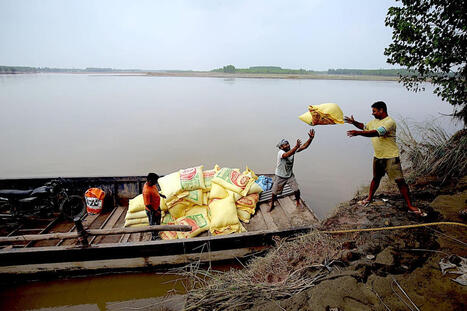
Following devastating floods that destroyed crops in the breadbasket region of India and Pakistan, food insecurity continues to loom large
Scoop.it!

C’est l’aboutissement d’une procédure évoquée dès l’indépendance du Timor-Leste en 2002 : son adhésion à la grande organisation de l’Asie du Sud-Est.
|
Scoop.it!

Le Vietnam a officiellement lancé, le 26 décembre à Hanoï, son Système national de traçabilité des produits agricoles, une initiative majeure visant à accélérer la transformation numérique du secteur agricole et à renforcer la valeur ajoutée des produits vietnamiens sur les marchés intérieur et international.
Scoop.it!

A valuation of ecosystem services across six interventions reveals where private incentives align with public environmental gains, and where they do not
Scoop.it!

Too often opportunities concentrate within capital cities or designated special economic zones, and thereby render the rest of the country peripheral.
Scoop.it!

Japan's PM Sanae Takaichi wants to spend big to boost sluggish growth, despite the country's already huge debt load. With bond yields already rising, a sudden spike could shock the financial world well beyond Japan.
Scoop.it!

The conservative Islamic kingdom’s approach to social policy change is often silence and ambiguity. Legalizing alcohol has been no different.
Scoop.it!
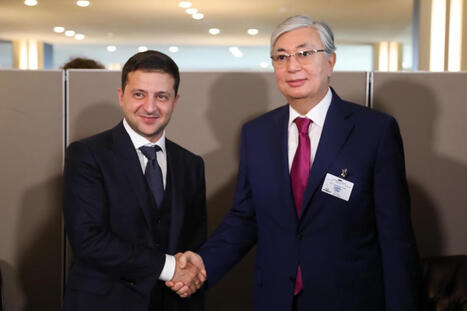
L'Asie centrale est-elle un vivier à Middle powers aptes à reconstruire une gouvernance mondiale fragilisée par les grandes puissances ?
Scoop.it!

At the 11th session of the General Assembly of the IRENA Saudi Arabia pledged to generate 50% of its electricity from renewable sources by 2030.
Scoop.it!

Following devastating floods that destroyed crops in the breadbasket region of India and Pakistan, food insecurity continues to loom large.
Scoop.it!

India achieved a historic milestone in 2025, producing 357 million tonnes of foodgrains. This marks a significant increase of 100 million tonnes over the past decade. Prime Minister Narendra Modi highlighted this achievement during his Mann Ki Baat address.
Scoop.it!

Meth production and opium poppy cultivation are growing and expanding in Myanmar, according to the UN, with many armed groups using the profits to buy weapons.
Scoop.it!

Russian and Indian leaders agree to reshape their defence ties to take account of New Delhi’s push for ‘self-reliance’.
Scoop.it!
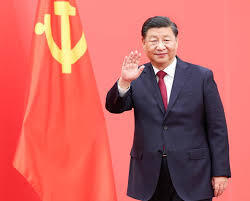
Pendant que les tensions commerciales avec Washington pèsent sur les ventes chinoises vers les États-Unis, un autre marché connaît une dynamique inverse, soit une augmentation presque spectaculaire : l’Afrique. En 2025, le continent est devenu le moteur le plus rapide de la croissance des exportations chinoises, redessinant au passage une partie du commerce mondial.
|




