

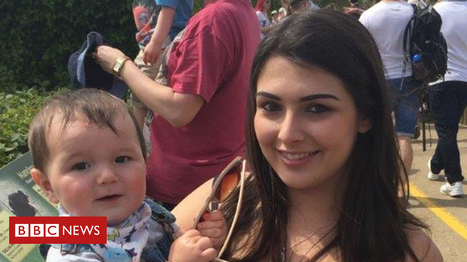

The judge tweeted on an official account urging Ellie Yarrow-Sanders to return home with her son Olly.

 Your new post is loading...
  Scoop.it! The judge tweeted on an official account urging Ellie Yarrow-Sanders to return home with her son Olly. 
No comment yet.
Sign up to comment
Scoop.it!

Fostering Network accuses politicians of ‘inertia’ as recruitment falters...
Scoop.it!

Demystifying the language of the courtroom.
Scoop.it!

This is a review by Rodney Noon of a book co-written by myself, Julie Doughty and Paul Magrath.It originally appeared in Nagalro’s Seen & Heard (Vol 29, Issue 1, 2019) and is reproduced …...
Scoop.it!

Correcting, clarifying or commenting on media reports of family court cases Explaining or commenting on published judgments of family court cases Highlighting other transparency news MEDIA (MIS)REPORTS OF FAMILY COURT CASES A press release was agreed with judicial approval in the case of Olly Sheridan, who is missing with his mother, following family court proceedings. TP member Alice Twaite attended the hearing under the legal bloggers pilot and we hope to be able to write more on this soon. We haven’t this week seen the sort of uninformed speculation about the case that we wrote about earlier. The Metro and other papers published stories about a mother who ‘lost custody’ of her three children after coaching them to say negative things about their father. None of the reports we saw linked to the BAILII judgment here. Nor do they refer to the judge’s comments at the outset: ‘I would like to express my thanks and appreciation to all the lawyers, and indeed all the professionals in this case for their very considerable assistance to the court.’ Surprisingly, the finding that the judge made that the mother had falsely alleged that the father had tried to poison the children was also omitted from the media coverage. In a judgment of 150 paragraphs, HHJ Charles Atkins sets out a detailed analysis of emotional abuse by the mother, and his reasons for ordering a transfer of residence to the father. Community Care, as it usually does, linked to BAILII when it reported on 22 January that Herefordshire council’s independent reviewing officer (IRO) service is being externally assessed in the wake of ‘two blistering judgments published in late 2018’, which described the council as “utterly failing” to safeguard children’s best interests. We wrote about Louse Tickle’s reports on this meeting in our Roundup on 21 January. Similarly, Community Care also reported , this time about Greenwich Council: ‘Judge blasts council’s failure to include family member in care planning: Court told Greenwich council neglected to explore placing children with aunt, and compounded errors by breaching adopters’ confidentiality’. This is the case of The Royal Borough of Greenwich v A & Ors (Adoption: Special Guardianship) [2018], where Mrs Justice Theis lists a catalogue of mistakes made by the local authority, and a failure on the part of its IROs. Worryingly, the judge commented: “One of the tragedies in this case is that had C. [the children’s aunt] been assessed prior to the children being placed with prospective adopters, there is every likelihood the children would have been with her.” In the Law Gazette, Monidipar Fouzda reported on a ‘Lackadaisical approach to case’ have in been ‘attacked by family judge’ in case called K & C (Children: Finding of Fact), Re [2018] EWFC B85. The mistake and delays criticised by HHJ Moradifar in this fact-finding hearing as to who had deliberately burnt a seven-week-old baby appear to stem from the fact that the lawyers acting for the mother were immigration specialists who did not understand evidence in family proceedings. This led to the other professionals involved having to go to an inordinate amount of extra effort, according to the judge. We wrote an update on our complaints about the various news outlets that had minimised an awful case of domestic abuse. Only the Independent responded to us in a meaningful and constructive way. Meanwhile the serious problem of domestic abuse was in the news largely based only on a press release from Women’s Aid about the new draft Domestic Abuse Bill. This mentions that one of the aims of the Bill is to stop victims of abuse being cross-examined by the perpetrator in family court proceedings. We didn’t find an extensive explanation of the Bill in the mainstream media at all, but it is analysed in a guest blog post written for us by researcher Jess Mant. On 5 January, we flagged up a linkless story in the Sun headlined ‘Britain’s worst dad?’ This was C v D and another [2018] EWHC 3312 (Fam) Family Law Online has now featured the case, where an order was made to remove a father’s parental responsibility in the unusual circumstances where no less drastic an order would fully protect the child from the father’s intimidating, controlling and harmful behaviour. NEWLY PUBLISHED CASES FOR EXPLANATION OR COMMENT In A (Children) [2019] EWCA Civ 74, the Court of Appeal heard a really interesting appeal by a mother about ‘stranding’. In the family court rules and directions about domestic abuse, Practice Direction 12J explains that: “abandonment” refers to the practice whereby a husband, in England and Wales, deliberately abandons or “strands” his foreign national wife abroad, usually without financial resources, in order to prevent her from asserting matrimonial and/or residence rights in England and Wales. It may involve children who are either abandoned with, or separated from, their mother”. Re G-P (A Child) [2019] EWCA Civ 56 is a tragic case where a two-year-old child has been found to have been physically abused in two homes, not just by her parents but also by a childminder. HHJ Hallam sitting in the Family Court at Middlesbrough had made findings of fact after a hearing lasting 21 days, during which she heard evidence from 31 witnesses. The parents and the childminder blamed each other for the injuries. The mother, father and the childminder gave evidence for seven days, two days and five days respectively. The Court of Appeal judges agreed with her – ‘The judge did not believe any of them and in a notably thorough judgment she made serious findings against them all’. An unusual decision was made by Mr Justce Cohen in Re C 2019 EWHC 131 Fam that the father of a baby who was to be adopted should not be notified of the baby’s birth. This was a concealed pregnancy where 14-year-old schoolgirl had relinquished her baby for adoption. The judge decided that she had genuine fears as to the consequences of the baby’s father (also under age) being informed, and that the father and his family were not in a position to offer the baby a safe and secure home. However, details would be included in the history made available (known as life story work), should they seek out the father when older. Mr Justice Holman is notable for holding most of his hearings in public. In Dagur v Bangur [2018] EWFC 91, a financial dispute between a divorced couple, he said: “I heard the case throughout in public, without objection being taken by or on behalf of either party. When the wife’s father attended voluntarily to give oral evidence on the second day, as I will later describe, he did ask to be permitted to do so in private. But I made clear that I would not permit the slightest inquiry into his own financial or business affairs; and, in a case in which all else was being heard openly and with transparency, it did not seem to me justifiable to make an exception for him.” Holman J comments that it is tragic that between them, the couple has spent more than £1m on legal costs. IN OTHER TRANSPARENCY NEWS The Association of Lawyers for Children published a report by Dr Julia Brophy on settlement conferences. This is an idea piloted by the courts about holding more informal meetings in a care case in front of a judge. It never really took off, as the ALC report indicates. There’s a succinct but clear analysis by Suesspicious Minds here . In Court of Protection news, the HL Committee called for evidence on the controversial Mental Capacity (Amendment) Act, currently going through parliament. This proposes bringing 16 and 17 year olds into a new administrative system for authorisation of deprivation of liberty. For anyone interested in the ongoing debates about adoption and contact, we recommend this fascinating talk by Dr Mandi Macdonald about open adoption in Northern Ireland. Unlike England and Wales, judges in NI are expect adopters to facilitate face-to-face contact between the child and their birth family. The case studies that quote adopted people are especially thought provoking. Professor Anne Barlow’s research @ProfAnneBarlow with NatCen on the ‘common law marriage’ myth received attention with new survey data showing that 46% of people questioned still think there is such a thing. The Transparency Project has published a guide to the law for unmarried partners, available here. A report by Justice called for clearer language to be used in courts and Lucy Reed discussed legal jargon with Michael Rosen on BBC Radio 4 ‘Word of Mouth’ programme. And finally, the President of the Family Division, Sir Andrew McFarlane, issued his first ‘View’ (his predecessor issued rather a lot of these) focusing on the unsustainable workload of the family courts. He encourages local dialogue between lawyers and each head family judges in their area to set some new some parameters on what is sensible and acceptable in terms of working practices.
Scoop.it!

I first became aware of the case of Victoria Haigh in about 2013, when my concern about the activities of the then MP John Hemming began to mount up. In 2018 I noticed Victoria Haigh on Twitter. She was supported by a number of self styled campaigners who were linked by their shared belief that the family justice system was fundamentally a tool of misogynistic oppression against women, favouring the rights of violent men over the women they abused. I have written about this before. I don’t think its true. My position simply is this: the Children Act is the statutory expression of the need to put the welfare of the child first and foremost in any decision making process. Neither sex has the monopoly on bad behaviour and my experience in practice shows a pretty equal split between emotionally abusive behaviour by both mothers and fathers. However, as is unsurprising given mens greater physical strength, they are more likely to be physically aggressive to their partners than women. The fact that I am insulted, threatened and blocked online pretty equally by Mens Rights Activitists and Female DV campaigners suggests to me that I must be doing something right. When I questioned the validity of Victoria Haigh as any kind of campaigner against the family courts, given the very clear findings made against her that she had subjected her own child to serious emotional harm, I was met with instant vilification and told to ‘fuck off’ as I was a ‘narc’. So far, so internet. I was however extremely alarmed to see this a few weeks later. If you don't know who Vicky Haigh is – Google. In a nutshell she lied about her daughter's father having abused her and was found to have abused her own child. And here she is trawling the web for 'victims'. Will anyone in the DV sector speak up about this @ZDronfield ? pic.twitter.com/hh2rduvuqY — Sarah Phillimore (@SVPhillimore) February 3, 2019 A lot of people saw this tweet – at least by my standards. My tweets usually get about 300 ‘impressions’ with an ‘engagement rate’ of about 2%. This one (at time of writing February 4th 2019) 2,449 people have seen it and 279 engaged. A rate of 11.3 %. So clearly a topic that attracted more attention than I usually get on line. But no comments. No one replied to say ‘well, that looks a bit worrying.’ Silence. So I asked again. Why the silence? did no one in the DV sector see the obvious problems with affording moral authority to a woman found to be a child abuser? Who had been fairly tried and rightly punished by the legal system? Did anyone think that this was the way to work to achieve necessary change in this area? Zoe Dronfield replied by simply posting a link to something called The Red Mother: An interview with Victoria Haigh. The thrust of this article is immediately apparent from the first paragraph During the proceedings Victoria reported that her daughter had told her that her father is sexually abusing her. The response of the system was swift and cruel – the girl was taken away from Victoria and her father got sole custody of her. Victoria was accused of coaching the girl and being an emotionally abusive mother (see also this article in the UK Telegraph). Never one to buckle under, she then went public with her case and stressed further investigations. For an alledged breach of a no-contact order (no contact with her daughter that is) Victoria was eventually put on trial and sentenced to 3 years in prison. After her release she moved to France with her youngest daughter (not related to the alledged molester of her older daughter) to re-start her career as horse-trainer. This sounds shocking. But it is not true. The truth is this. Victoria Haigh was found to have told lies about her ex sexually abusing their daughter. She was found to have tried to abduct her from a garage forecourt and she was sent to prison. She was found, on evidence, to be a child abuser. See for example Doncaster MBC v Haigh, Tune and X [2011] EWHC B16 (Fam) where – very unusually – the LA asked the court to make its judgment public and to name Ms Haigh because of the amount of misleading information that she was putting out into the public domain Family Law week summarised these proceedings in this way This case had begun as a private law contact dispute between Victoria Haigh, who was the mother of X and the child’s father, David Tune. Following a court hearing of this dispute in respect of which Ms Haigh was clearly unhappy, she made allegations that David Tune had sexually assaulted X. These allegations were duly investigated and at a fact-finding hearing, HHJ Robertshaw had concluded that X had not been abused and that she had been coached by Ms Haigh. At that hearing, the mother’s stance was not that X had been sexually abused, but rather that X had made these allegations as a reaction to the stressful relationships around her. The judge disagreed, however, and found that the allegations were false and had originated in the mind of the mother. The mother refused to accept the findings, despite her stance at the fact-finding hearing. Her views about the alleged abuse hardened to become a certainty which she expressed dogmatically. At a subsequent hearing, HHJ Jones concluded that the mother had continued to influence X and to manipulate her feelings whilst in fact ‘placing her own as the priority’. HHJ Jones concluded that it would be contrary to X’s best interest to live with her mother. A decision was made that X should reside with her father. The local authority offered supervised contact between the mother and X but Ms Haigh felt unable to attend and decided she would not see X at all. The mother’s attention then turned towards a media and internet-based campaign designed to remedy what she claimed was a miscarriage of justice. Assisted by an Elizabeth Watson, who described herself as a private case investigator, she put a large number of highly critical comments and information about the case and all of the professionals involved into the public domain. She also contacted the father’s employers and colleagues and parents of children who attended X’s school and falsely alleged to them that Mr Tune was a paedophile. This was in breach of orders made by the High Court prohibiting the publication of any information that would lead to the identity of the child or any other family members. On 25 February 2011 Baker J made an order prohibiting the mother and Ms Watson from communicating via the internet, media or otherwise “any information relating to the proceedings under the Children Act concerning X”. The author of the interview asks Why are a mother and child punished so severly for simply talking about sexual abuse and saying that it has occured? Why is a woman sentenced to 3 years in prison for saying hello to her own child? And to what extent was this mother surveillanced, by whom and why? The answers to these questions would have been found easily in the judgment cited above. But she clearly doesn’t think it worth checking any other source than the narrative offered to her by Victoria Haigh. Victoria Haigh goes on to expressly assert that the findings against her were the result of deliberate corruption, a campaign ‘to cover up the truth’. They do what they do. The police do not investigate the crimes. If one complains, the complaints are investigated by those one lays the complaint against and one is sent in a spin cycle of chaos. Then it is the complainant or victim or associate of the victim who begins to have court orders put on them! An innocent person can soon become a criminal, just like me! It was all a complete smoke screen to avoid achieving any kind of justice… My retrial was an overall tactic by the judiciary, police, ministry of justice at the highest level, to shut me down once and for all with their utmost effort of propaganda, blackmail and whatever else they threw at me. I was not going to stay silent therefore they used their well trodden tactic of pulling my reputation to pieces. To discredit a witness is how the criminals defendthemselves. I was the mouthpiece for my child so by shutting me down, my child was shut down too. I am quite prepared to accept that miscarriages of justice occur. That wrong decisions are made. It is certainly not impossible that Victoria Haigh has been a victim of such a miscarriage of justice, although I note she has not chose to appeal against any of the court judgments made against her. However, when asked WHY she thinks the family court system acted against her in the way it did, she gives this answer. I find this shocking. There is absolutely no evidence from any credible source that this is happening. This is delusional conspiracy theorising of the worst kind. There is evidence through MOSAC (Mothers of Sexually Abused Children, a Charity) that women are being groomed to have babies and the babies are being ‘won’ in a ‘custody battle’ by the peodophile father. If a paodophile father uses this as a template which according to the patterns we have seen, these men are using, very successfully, the length and breadth of the UK the same tactic applying for contact through these secret courts accusing the mother of alienating them from their child, in most cases they win custody, never get prosecuted and have freedom and the law on their side to rape their own children under complete protection of the State through the court orders they achieve. The mothers in all of these cases are gagged and prevented from having any contact with their children, knowing at the same time their children are not safe from child sexual abuse. It is torture for the child and the mother. She goes on to describe family lawyers as ‘cowards or paedophiles’. This is deeply worrying and depressing. I do not doubt that some men sexually abuse children and women. I do not doubt some men are violent. I do not doubt the family court system could do a better job of dealing with such cases quickly and fairly. I do not doubt that many women find it hard to provide the evidence a court will insist on to prove that they are the victims of coercive or controlling behaviour. I do not doubt that many women fear the family court system I do not doubt that many do not understand what is going on. I do not doubt that many criticisms are well made, and I have made many myself. Not everything Haigh says in this interview sounds insane. What she says, for example about the women she met in prison strikes a chord. The women in prison ALL had crimes committed against them that were much worse than the crimes they had committed to be imprisoned including myself. This again sums up the terrible treatment of women in the UK. “It truly is a terrible country to live in. I looked around at these women and realised instantly that these women needed help and certainly not locking up. Many were products of the UK care system and it goes without saying were sexually abused in care. I was very saddened by what I saw in that place. But I reject any allegation that the family court system is deliberately set up to oppress women or is part of some ‘baby farm’ for paedophile fathers. Either lawyers don’t do a good enough job of explaining or the removal of legal aid has left more and more floundering as litigants in person. When I engage with those who criticise the family justice system and ask them what processes they would have in place other than the testing of allegations by a Judge, I get no answer. Victoria Haigh is a mother who was found by a variety of judges over the years to have lied and manipulated her daughter into reporting abuse about her father that never happened. She did not appeal against those judgments. They stand as the truth. This is the operation of the rule of law. So I put the question again to those in the ‘DV Sector’ who stand behind those such as Haigh and promote such narratives that women are being groomed to have babies who will be ‘won’ by a paedophile, that family lawyers are ‘cowards or paedophiles’ do you think this is true? If so, where is your evidence that this is true? If you accept you have no evidence, what real or lasting change do you think you will secure by campaigning in this way? To what degree does financial self interest motivate your promotion of such lurid fantasies about the family justice system? I am sorry to be so cynical as I offer the last question. But when I dare to raise polite inquiry a to the wisdom of promoting Victoria Haigh as a campaigner against the family justice system and I am told to ‘fuck off narc’ by prominent campaigners who have a link to their book or their agent in their Twitter bio, I do wonder. I wonder quite a lot. Further reading Judgment of Sir Nicholas Wall August 2011 A note on the Vicky Haigh Case Stowe Family Law August 2011 A cautionary lesson: The Vicky Haigh and Liz Watson judgments Carl Gardener Head of Legal September 2011
Scoop.it!

The Home Office is cutting support for children who fall prey to ruthless “county lines” drug-dealing gangs despite a surge in youngsters being exploited in the UK, it has emerged.Specialised one-to-one support is to be denied to those trafficked within Britain, leaving young people exploited by ...
Scoop.it!
Matthew Warmoth, a barrister at Fourteen, looks at the general principles and current law regulating the use of covert recordings in finance and private children cases touching on: Practical considerations in all cases including whether or not permission is required to rely on covert recordings, what to look for when faced with covert recordings provided by the client etc. Covert recordings in finance cases: WG v HG [2018] EWFC B66 (by Francis J) General approach to recordings of professionals such as experts (money or private children proceedings) and Cafcass/ Social Workers (private children proceedings); General approach to recording family members General approach to recording children When? 1-2pm, Wednesday, 6th March 2019 Where? Any computer with sound and broadband How much? Free to listen in on the day Matthew Warmoth, Fourteen
Scoop.it!

29 January 2019 5.30pm, Gresham College, London Next week I’ll be running this Transparency Project training workshop for lawyers. Please do come if you can.More information: In light of the…...
Scoop.it!

Home > Judgments G (Declaration of Parentage - Removal of Person Identified as Mother from Birth Certificate) (No 2) [2018] EWHC 3361 (Fam) (16 October 2018) Case summary coming soon This judgment was delivered in private. The judge has given leave for this version of the judgment to be published on condition that (irrespective of what is contained in the judgment) in any published version of the judgment the anonymity of the children and members of their family must be strictly preserved. All persons, including representatives of the media, must ensure that this condition is strictly complied with. Failure to do so will be a contempt of court. Neutral Citation Number: [2018] EWHC 3361 (Fam) IN THE HIGH COURT OF JUSTICE FAMILY DIVISION Case No. FD17P00553 Royal Courts of Justice Date: Tuesday, 16 October 2018 Before: MR JUSTICE WILLIAMS (In Private) - - - - - - - - - - - - - - - - B E T W E E N : NG Applicant - and - (1) AV (2) RB (3) NV (A CHILD, BY HER GUARDIAN MS RODDY) Respondents Re G (Declaration of Parentage: Removal of Person Identified as Mother from Birth Certificate) (No 2) - - - - - - - - - - - - - - - - - - - - - - - - - - - - - - - - DR R. GEORGE (instructed by Goodman Ray Solicitors) appeared on behalf of the Applicant. THE FIRST RESPONDENT did not appear and was not Represented. THE SECOND RESPONDENT did not appear and was not Represented. MS M, CAREW (Solicitor) appeared on behalf of the Child. - - - - - - - - - - - - - - - - J U D G M E N T MR JUSTICE WILLIAMS: 1 On the last occasion this was before me I gave a full judgment, which I approved on 4th October. In that I concluded that NG was the biological and psychological father of a child who in these proceedings I am calling Naomi. I concluded that RB was Naomi's gestational mother with a donated egg, and that AV, whilst she had been registered as Naomi's mother on the English birth certificate and became her psychological mother, had no genetic or gestational connection with her. I made a declaration pursuant to Section 55A of the Family Law Act 1986 that the applicant, NG, was Naomi's father. The consequence of that has been that the Registrar General has amended the Register to now show NG as Naomi's father. 2 On the last occasion I declined to go the next step, which was to make the declaration that AV was not Naomi's mother and that RB was Naomi's birth mother, because under Section 55A (5) the court can decline to hear or determine an application if it considers that it is contrary to the child's best interests. At that point in time I considered that AV ought to be given a further opportunity to engage in these proceedings, given that I had made clear throughout my involvement in this case, which now goes back to late last year, that the court had reached no conclusions as to who Naomi should live with and what relationship she should have with the other parent, or indeed what country she should live in. 3 Following on from my judgment, the order provided for Naomi's guardian, Ms Roddy, to communicate with AV via family members in order to inform her of the outcome of the last hearing and the court's desire that she engage with the process. At that point in time it was believed that AV and Naomi were still in Greece, she having left Bulgaria, according to the authorities, in or about February of this year. In compliance with the order, Ms Roddy sent letters to AV, which seemed to initially gain no response, but early in October it came to the father's attention first of all that AV had married the man who is her older son's father and that she had made an application for him to adopt Naomi, either alone or jointly with her. The understanding of the father is that such an order, which I think was made in early October, can only follow on from a period of six weeks having preceded it, which suggests that the application was made in Bulgaria in about mid-August, which would tie in chronologically with AV perhaps having received the letter from Ms Roddy informing her of the outcome of the last hearing. The inference therefore is that in response to information about the outcome and the declarations I made, but also in response to my invitation to AV to co-operate in these proceedings, she has done diametrically the opposite and has married and has then issued an application to adopt Naomi, thus potentially eradicating NG permanently from Naomi's life and permanently removing the legal status that he has in connection with her as a result of being declared to be her father. As I understand it, the current order in Bulgaria is effectively a provisional or nisi order which can be made permanent, and indeed is due to be made permanent at some point in the relatively near future. 4 I had listed a further hearing in this matter to review the developments and in particular whether the psychological mother had been traced and whether she had decided to engage in the proceedings, which I believe is listed for next week. As a result of the imminent final adoption hearing in Bulgaria, I agreed to convene an earlier hearing to consider what orders should be made, in particular to assist the Bulgarian court in understanding the legal position in this court and to assist it in pausing, potentially, in the proceedings before it to establish a fuller understanding of how Naomi has come to be subject to that application before the Bulgarian court. It certainly is not my intention to trespass in any way upon the Bulgarian court's jurisdiction because the Bulgarian court has its own jurisdiction, in relation in particular to adoption, which is not subject to the reciprocal arrangements covered by Brussels IIA, but plainly this court has primary jurisdiction in matters of parental responsibility and has made various orders, including return orders, as well as the declaration as to parentage. 5 Contact was made with AV's adult son and I think also with a lady who is his girlfriend, and also with perhaps AV's sister – but most importantly, earlier today Ms Roddy received a voicemail message from a woman purporting to be AV, now known as AM following her marriage, asking Ms Roddy to call her. Ms Roddy did so, and had a conversation the contents of which are summarised in an e-mail which I have been shown. In that call, AV said that she intended to remain in Bulgaria, and that Naomi is in school. She repeated the allegations of – or at least intimated at allegations of – sexual abuse made against the father, which were investigated by police and social services in the UK, and which were considered to be without foundation. She made it blindingly clear that my invitation to her to participate in these proceedings was rejected, and that she intended to litigate anything in relation to Naomi in the courts in Bulgaria. 6 Dr George, on behalf of NG, supported by Ms Carew on behalf of Ms Roddy, invite me to now make the declaration that AV is not Naomi's mother and that RB is her birth mother. That would have the consequence of the birth certificate being further amended, which would be transmitted to Bulgaria so that the Bulgarian authorities' records, which appear to be based on the original English birth certificate, would be corrected. That, it is hoped, would protect Naomi from a final adoption order being made given that it would be seen that AV is not in fact her biological or birth mother. 7 In addition, an order requiring AV to return Naomi to this jurisdiction was made last year and has been outstanding for all of that period of time. The police had declined to become involved because NG was not named on the birth certificate. They are now engaged and there is the possibility that the CPS will agree that a European arrest warrant should be issued. The Hague Child Abduction Convention proceedings, which were initiated on the basis I think originally of the court's rights of custody in Bulgaria, were transferred to Greece and are now being transferred back to Bulgaria. Although the Court of Appeal in Re S (Abduction: Hague Convention or BIIA) [2018] EWCA Civ 1226 said earlier this year that in most cases where the Brussels IIA Regulation applied, return orders should not be made by the English courts, but rather the 1980 Hague Convention process should be left to run its course in that country, that does not, in my view, apply to this case. That dealt with the generality of cases; this is a case unique in the issues raised by it, and in any event return orders were made right at the outset of these proceedings when AV fled England in October 2017. 8 So it seems to me that it is perfectly legitimate to seek to deploy a return order in the Bulgarian courts by using the reciprocal enforcement mechanisms in the Brussels IIA Regulation. I believe that the original order required AV to return Naomi to this jurisdiction. It seems to me it is clear that she will not co-operate in the return of Naomi. She has set her face against co-operation with the English court by abducting Naomi on the very day of a hearing in front of MacDonald J, and by then disappearing from Bulgaria to Greece, such that the father and the authorities were unable to pursue the Hague Convention or other proceedings in Bulgaria. In her conversation with Ms Roddy, AV has made clear that she will not co-operate with the English court. Indeed, in every way she has sought to frustrate this court's attempts to determine Naomi's welfare, and the evidence over- whelmingly suggests that she will continue to do so, and so it seems to me that it is appropriate today to make further orders. 9 It is in Naomi's interests for a declaration of parentage now to be made which identifies that AV is not her birth mother and that RB is. It is in her interests because it appears to be one of the few routes, and perhaps the most effective route, left in order to prevent AV pursuing an application which will have the effect of eradicating the father from Naomi's life. So although I held back from it on the last occasion for the reasons I explained, I now consider it appropriate to make that declaration, albeit I am making it a week earlier than I might otherwise have done at the hearing I scheduled on the last occasion. It is plainly appropriate to do so given the imminent Bulgarian hearing and AV's failure to co-operate with this process. I will also vary the previous return order so that it requires that Naomi is returned to this country. In the event that AV chooses to accompany her, she may return with her. If AV does not choose to accompany her, then Naomi will return with the father. I am satisfied that the allegations made by AV of sexual abuse by the father have been considered by the state authorities in this jurisdiction, and, as Ms Carew says, the outcome of that investigation and the other evidence suggests that there is no reason to believe that the father poses a risk to Naomi. So NG will return Naomi to this jurisdiction if AV refuses to do so. CERTIFICATE Opus 2 International Ltd. hereby certifies that the above is an accurate and complete record of the proceedings or part thereof. Transcribed by Opus 2 International Ltd. (Incorporating Beverley F. Nunnery & Co.) Official Court Reporters and Audio Transcribers 5 New Street Square, London EC4A 3BF Tel: 020 7831 5627 Fax: 020 7831 7737 civil@opus2.digital This transcript has been approved by the Judge
Scoop.it!
Correcting, clarifying or commenting on media reports of family court cases Explaining or commenting on published judgments of family court cases Highlighting other transparency news MEDIA (MIS)REPORTS OF FAMILY COURT CASES The Times -The launch of Sammy Woodhouse’s campaign for legal reform caught the attention of the public, the media and politicians in recent weeks. The way the Times (then others) reported it, (Jailed rapist given chance to see his victim’s child: Council investigated over ‘perverse’ decision), caught the attention of lawyers, social workers, press reform campaigners, and The Transparency Project. We explained the law and procedure on who must normally be told of, or automatically joined as a party to, care proceedings being issued about a child, to help those considering whether (and if so how) they should change or be better implemented, and to help people decide whether the Times and others reported accurately. See Did a council ‘act perversely’ to offer a jailed rapist a chance to see his victim’s child?, and The Sammy Woodhouse Story and Associated Campaigns – An Update. We also offered some guidance for victims, social workers and lawyers grappling with such situations in When should I apply for permission not to notify a father about a court case concerning his child? See also Lucy Reed, Chair of the Transparency Project on the Victoria Derbyshire Show (44 mins in) and at BBC News. (Sorry no catch-up clips for Sky News or Talk Radio). There are various views on what reform is called for, let alone required and achievable, (as well as on whether Rotherham and / or the Times got this right – The Yorkshire Post now report No blame for social workers in latest Rotherham controversy). There does appear to be a broad consensus (even among some family lawyers), that a fresh look at how the rules are applied, with victims in mind, is warranted, and that Sammy Woodhouse’s willingness to speak out about her own personal traumatic experiences has begun that process. Interesting insights also emerged on the different ways lawyers tend to engage and their priorities, compared to journalists and the public; see Louise Tickle’s I’d have written that article too at The Transparency Project. (See also Louise Haigh, shadow police and crime minister in the Guardian; the House of Commons briefing paper on the draft Domestic Violence & Abuse Bill and measures in the Courts Bill on suspects cross-examining victims; comments in the Commons; and opinion at Rights Info and Byline): The bravery of @sammywoodhouse1 in speaking out has revealed just how much the family courts need to change. For a start, convicted rapists should have no parental rights.https://t.co/bZ4nfmA9jy — Louise Haigh MP (@LouHaigh) November 30, 2018 The law may well need to be changed but it's not right for a local authority to be damned for following law as it stands. let's move on from clickbait headlines for proper discussion about the family procedure rules & the rights of women & children when a child is born after rape https://t.co/WWeB2PKmzn — Dr Shona Minson (@ShonaMinson) November 28, 2018 This looks really useful for LA social workers and legal teams in the light of this week's story about @sammywoodhouse1's campaign to prevent men with a child conceived by rape from applying for contact with them https://t.co/6FmbqrRT7N — CCInform (@CCInform1) November 30, 2018 No blame for social workers in latest Rotherham controversy https://t.co/UV92NoFa6O — transparency project (@seethrujustice) December 8, 2018 The Daily Mail and the Times – Reported Family Court Anonymisation Practice Guidance issued by the President, Sir Andrew McFarlane, on safer anonymisation when publishing judgments. The guidance appears to be the recommendations in a report published by the Association of Lawyers for Children and the Nuffield Foundation in 2016. Blog to follow. (See also our guidance note on publication of judgments including safer anonymisation which we’ll update in light of the President’s new guidance): It is sometimes necessary to prevent a child being identified in their local community but it shouldnt be the default imho, which is what this guidance appears to suggest. — Lucy Reed (@Familoo) December 8, 2018 The Guardian – Why do we separate the mother and child victims of domestic abuse? by Louise Tickle (Transparency Project member) in the Guardian, also provoked radically different perspectives. The Transparency Project hosted How do social workers approach domestic abuse?, guest post by a social work team leader in response: Thank you to @louisetickle and the social work manager for writing this. It has been a brilliant talking point with social work students today and really assisted in the wider critical thinking @WarwickSocWork embed within the masters programme. https://t.co/WDg2CwgGxL — Jess (@jess_L81) November 27, 2018 Transparency Positives The British Medical Association – Facilitated an investigation into the removal of a newborn from a mother and junior doctor, experiencing mental ill health), and hosted the report in strikingly accessible format here. Guest blog post to follow on this unusual collaboration between the BMA, a doctor/parent and a journalist, featuring an application to lift usual family court privacy rules and report in the public interest: Superb investigation and reporting of the mental health struggles of a mother whose baby was removed at birth, by @keithcooper1973 for @theBMA https://t.co/5oAgEKpRJh Why was no Mother and Baby unit place made available, to keep them together? — The open family court (@openfamilycourt) November 27, 2018 Channel 4, BBC Radio 5Live, BBC Radio 4and BBC News – Lots of positive twitter responses to media reports (particularly broadcasts) on important topics for children’s social work and family justice in the last couple of weeks. Channel 4 – Lemn Sissay’s Superkids:Breaking Away from Care; BBC5Live on the need to support birth parents who’ve had children removed from their care, featuring some parents. (The Born Into Care report (22 mins in) from the Nuffield Observatory, confirms what many have anecdotally reported for some time about rising numbers of removals of babies at birth (22 mins in); BBCR4 – In the child’s best interests on how and when decisions should be made to end the life of critically ill children; BBC News – Forced marriage law could stop victims reporting crime, getting beyond the obvious in thinking about victims. #Superkids I asked permission to share this other private message with you. I have too many messages like this to read tonight. I will tomorrow. pic.twitter.com/HCAw5pOHzB — lemn sissay MBE (@lemnsissay) November 28, 2018 Very good BBC coverage of 'breaking the cycle' this morning - excellent contribution from birth mothers on turning lives around@bbc5live @FamilyRightsGp @Familoo @familylaw @afteradoption https://t.co/EobpWgYsQa — Karen Broadhurst (@KarenB_LU) December 3, 2018 The adoption discussions with Anna Foster on @bbc5live this morning really show the links between supporting birth parents and positive experiences of contact: good contact helps parents cope and good BP support enables good contact - great work @afteradoption! — Beth Neil (@prof_beth_neil) December 3, 2018 Linkers of the (fortnight) BBC News – Made the effort to link readers of their report, Herefordshire Council provided ‘woeful’ care for girls to the family court judgments in BT & GT and A & B Care Orders (albeit one link needs updating): Big thanks @BBCNews for links to the family court judgments under report. Though we think you meant the first link to be to: https://t.co/jFFNptv6aF Herefordshire Council provided 'woeful' care for girls https://t.co/hZAsaNGnRk — transparency project (@seethrujustice) December 8, 2018 BuzzFeed News – Linked Emily Dugan’s report of Sir James Munby, former President’s speech to the National Association of Child Contact Centres, as soon as they realised it had been published in full at the Transparency Project: Exclusive: Former head of the family court, Sir James Munby, has given a damning assessment of the impact of legal aid cuts and the government's failed attempts at encouraging mediation https://t.co/2dXRI0NDws #TheLawIsBroken — Emily Dugan (@emilydugan) November 27, 2018 NEWLY PUBLISHED CASES FOR EXPLANATION OR COMMENT Re D parental alienation 2018– We updated on the controversial issue of ‘parental alienation’ in response to: HHJ Bellamy’s judgment in Re D (See Making Sense of Parental Alienation: Part 2); the Cafcass Child Impact Assessment Framework, Cardiff University research (commissioned by Cafcass Cmyru), and a podcast featuring Sarah Parsons of Cafcass with Julie Doughty (Cardiff University & Transparency Project). (See Making Sense of Parental Alienation: Part 2): Huge thanks to the team for raising awareness on this. An incredibly emotionally fraught space, particularly where there is a child being exposed to harm and a victim of abuse. Really tough for the authorities to effectively handle this. Hopefully things will improve. https://t.co/mmPvNiftyi — Jon Irwin (@JonIrwinLD) December 5, 2018 HRH Louis Prince of Luxembourg v HRH Tessy Princess of Luxembourg & Anor (Application for Financial Remedy) [2018] – Polly Morgan wrote about this case at an earlier stage for @seethrujustice in Privacy and the Princess. Blog to follow on the judgment from the latest decision which has raised some twitter eyebrows: Judgment of McDonald J in the Luxembourg divorce case: https://t.co/blmJgupc6u Surprising decision that declaration of trust in TR1 can be outflanked by proof that someone else paid for the property #tolata — Mike Horton (@mhbarrister) December 5, 2018 M & Ors v Liverpool City Council [2018] – Suespicious Minds explained this family court decision featuring a challenge to the use of a screen during cross-examinatoin as a special measure to protect a victim. Global Corporate Ltd v Hale 2018 – The Law Society Gazette reported the judgment from this (non family) Court of Appeal decision that the High Court had crossed the line by leading the evidence from a litigant in person. IN OTHER TRANSPARENCY NEWS Media Regulation – See our roundup of recent developments in Media Regulation Update: New for @seethrujustice from @Maggotlaw MEDIA REGULATION UPDATE (Leveson 2 JR; a new Leveson resource for better public understanding; the government plan to implement s.44 LASPO on costs in media cases now too & more..): https://t.co/68ypxVCM1W pic.twitter.com/GC3SmrQ5aj — transparency project (@seethrujustice) December 7, 2018 Allegations of domestic abuse : are family courts working for children & families? – We marked the launch of a guidance tool on how the family courts treat domestic abuse at a packed panel event. We wrote it up here and will post the recording to our website once available: With huge thanks to our Chair @louisetickle & our remarkable panel @King_Barrister @MyCafcass @JudiciaryUK @OnlyDads @rightsofwomen @FredaFvg here's our write-up of our latest event around domestic abuse with a link to our new Guidance note.https://t.co/8dptKclwdf pic.twitter.com/INcqDAlXwc — transparency project (@seethrujustice) November 27, 2018 The FJC Debate on covert recording – Lucy Reed (Transparency Project Chair) spoke at the What’s wrong with covert recordings debate. See her write-up at Pink Tape: I would like to see all meetings openly recorded, minutes (if you get them )rarely include family view/ concerns , I often wonder if I was at a different meeting. https://t.co/nk6oRgo8sD — Frances steepe (@auntyfrances) December 5, 2018 A privilege to take part in this debate and in such company!! @Familoo - there is a clear and pressing need to present guidance on this difficult issue of management of covert recordings in family proceedings. https://t.co/XYqsGWV91o — Hannah Markham (@hannahmeg) December 3, 2018 The legal blogging pilot – We attended again under the legal blogging pilot. See Legal Blogging in Leeds More information here: Legal blogging in Leeds by @familoo : https://t.co/0Jkfv7tUYf pic.twitter.com/kvhpfBtkgJ — transparency project (@seethrujustice) December 4, 2018 Transparency and appeal rules – David Burrows flagged and discussed new Family Procedure Rule 2010 r 30.12A in force from 10th December in Open court for appeals to family judges: Many thanks to @dbfamilylaw for his guest post on "Open court for appeals to family judges". Your thoughts welcome on this contentious matter:https://t.co/6D6eDtHeus pic.twitter.com/EyXGM0d58j — transparency project (@seethrujustice) December 3, 2018 Online Courts – We attended an International forum on online courts hosted jointly by HMCTS and the Society for Computers and Law. Blog to follow. See an overview of The Cutting Edge of Digital Reform event, with links to speeches and presentations including from the Lord Chief Justice at Gov.UK. See also David and Goliath or cat and mouse? Prising information on digital court reform out of the Ministry of Justice For those interested in the genesis of the digital court reform programme, I have published (linked in blog) the management consultants' report commissioned by the gov in 2016 which suggested the programme prioritised cost saving over access to justice https://t.co/LrDREu52Py — Penelope Gibbs (@PenelopeGibbs2) December 4, 2018 such an important Q. How are other jurisdictions consulting and involving users? My view - design and development must be as open as possible and not limited to commercial sector interests #OnlineCourtsForum18 https://t.co/AUcSak9wIZ — Judith Townend (@JTownend) December 3, 2018 Feature pic: Courtesy of Flickr Lauri Heikkinen via Creative Commons licence – with thanks
Scoop.it!

A controversial opponent of vaccination and sceptic about child abuse has given evidence in British trials as calls mount for curbs on incompetent expert witnesses.David Ayoub, an American radiologist, has given evidence in three child abuse trials in Britain including one this year in which the ...
Scoop.it!

New research has emerged which confirms that women who have their children removed from them and placed into foster care, are more likely to commit suicide than mothers whose children are not fostered.
|
Scoop.it!

Our 2017 State of Child Health report revealed alarming health inequalities between the UK’s most disadvantaged children and young people and their more affluent peers. Two years on, our scorecard for England assesses progress made against our State of Child Health policy recommendations.
Scoop.it!
Home > News Mr Justice Williams makes appeal for return of Olly Sheridan The High Court has considered the case of a toddler, Olly Sheridan, who has now been missing with his mum, Ellie Yarrow-Sanders, for more than six months. The judge, Mr Justice Williams, said that he was gravely concerned that a child had been missing for so long and has made an appeal directly to Ellie to bring him back, promising to deal with her case fairly. The judge has appointed a senior social worker to act in the case to seek to promote Olly's welfare, making it clear that this does not mean that there is any chance of Olly being placed in foster care. Such are his concerns for Ellie and Olly's welfare, Olly's father, Patrick Sheridan, who wants only the return of his son, has agreed that if Olly is brought back by his mother before the next hearing, then he will not ask for Ellie or her mother, Donna, or sister, Maddie, to be punished for having any part in Olly's disappearance. Ellie's mother and sister, who were both present at court and who spoke to the judge, fully support the judge's appeal and are also urging Ellie to bring Olly back and to have confidence in the court process. In a joint statement, Patrick, Donna and Maddie said: "We just want to know that Olly is safe and we plead for Ellie to return home as soon as possible. We all agree that Olly needs to come home to his normal life surrounded by family and friends." Any member of the public with any information which might help to find Olly is asked to contact Essex police on telephone number 101. 3/2/19
Scoop.it!

The number of parents forced to represent themselves in child custody battles at family courts has more than doubled in six years in the wake of legal aid cuts.
Scoop.it!

The case was A v A, decided in the High Court back in 2004 (hence the difficulty in recalling it). It related to a private law dispute between the parents concerning their two children, then aged 11 and 9.
Scoop.it!

Published by Professional Social Work magazine - 4 February 2019 Myth 1: FGM is on the decline in the UK Whilst this devastating practice has been illegal in the UK since the mid-1980s, women and children are still at significant risk. FGM ‘parties and gatherings’ continue to take place in the UK where girls are cut. Statistics suggest there are 11 cases of FGM taking place daily in the UK. Between 2015 and 2017, 15,000 patients with FGM were treated in the NHS, and it was recently reported that the number of child victims of FGM, and those at risk, has more than doubled in a year in England and Wales. Many cases remain unreported, which means these statistics are very likely to be higher, demonstrating the prevalence of this cruel practice. Myth 2: FGM is not something most social workers will ever have to deal with Social workers play a key role in promoting a collaborative partnership approach to managing and protecting girls from FGM, and are increasingly dealing with this dangerous practice. They are well placed to spot signs and symptoms that FGM has occurred. Frequency of passing urine, complaints of abdominal pain, a child being withdrawn or angry can be key signs that FGM has been carried out. Furthermore, social workers also play a crucial role in identifying children who are at risk, or go missing and do not return after the school holidays. Myth 3: FGM is practiced for religious purposes FGM is practiced for cultural and traditional reasons. It is carried out as part of a celebration of a passage of Rite (to womanhood). A fundamental difficulty for health and social care professionals are the cultural and language barriers and fear of being labelled racist by practising communities. Where language barriers exist, social workers must use recognised interpreters and never use family members or people from the community that may place girls in danger. They must also use sensitive language. Additionally, a significant issue for social workers is the lack of trust and confidence that practising communities have with statutory agencies. Working in partnership with black and minority ethnic (BME) groups who possess expertise and knowledge will assist statutory agencies in engaging positively with communities. Understanding the views and perceptions of practising communities is essential. Remember, the perpetrator of FGM is usually also an FGM survivor and a sensitive approach is important. NHS England recommends that all FGM survivors should undergo psychological support. Social workers must therefore be aware of FGM physical and psychological services that are available and the referral process for survivors. Myth 4: Tackling FGM is a police matter Social workers play a strategic role in helping to tackle the issue and must be knowledgeable about FGM law. The Serious Crime Act compels all health and social care professionals to report all disclosures of FGM in a girl under 18 years of age to the police. However, reporting FGM to the police under the Serious Crime Act (SCA), is still not well understood and many social workers remain unaware about invoking and policing FGM protection orders. Following an FGM protection order, local authorities must work with the victim and other support services to ensure the highest level of protection. Breach carries a custodial sentence of up to five years. Myth 5: If it happens abroad it’s outside UK jurisdiction Under the UK FGM Act 2003, it is illegal to take a girl aboard to have FGM performed. An FGM Protection Order can be used to protect a girl from being taken out of the UK to have FGM performed and also protects a girl who is at risk in the UK. Myth 6: FGM Protection Orders can only be applied for by the police FGM Protection Orders can be applied for by the person who is to be protected by the order, a relevant third party, or any other person with the permission of the court. Myth 7: there’s little chance of getting a prosecution for FGM so what’s the point of highlighting it? The first prosecution for FGM in the UK shows criminal conviction is possible. It is a reminder that FGM is unlawful in this country and there is a mandatory duty for health and social care professionals to report it to the police if a child is affected. FGM practising communities I work with have not see UK law as a deterrent. Perpetrators are well known to do their upmost to ensure that the practice remains secret and underground. Furthermore, speaking out about FGM is a taboo within practising communities and this may pose problems when interviewing women or girls affected. Children will not report parents, and a major obstacle to prosecution is proving where FGM took place, in the UK or abroad. Myth 8: what we do isn’t going to make a difference Partnership working is vital. No one agency will solve FGM. As an example, annually I take part in Operation Limelight at Stansted Airport with Essex Police and UK Border Force. Social workers joined the latest event and it was a pleasure to provide training as part of the operational briefing. It is a partner approach to tackling FGM by raising awareness during what we know as the “cutting season” where perpetrators take girls aboard to be cut. It is not just about raising awareness to the public, it is also about encouraging people to report any concerns to the police. Such examples of good practice have yielded excellent results and should be mirrored across the sector to share learning. FGM is a complex multifaceted issue to manage and a joint response is crucial. Social workers play a key role in the coordinated response to safeguarding girls following disclosure or concerns of FGM. Myth 9: FGM has no health consequences FGM results in long term physical and psychological problems. It is a form of abuse, and a risk to the lives of thousands of women and children. There are many serious health consequences and complications from severe pain, swelling, excessive bleeding, and infection to infertility and death in some instances. It is a very dangerous practice. Myth 10: We don’t have training in FGM so are unable to deal with it I would urge all social workers to ensure they are aware of their mandatory duties to report FGM in under 18s to the police. In addition, they should be fully aware of what is required of them to ensure that they meet the necessary requirements to safeguard and provide a person-centred approach to managing FGM in line with statutory guidance and legislation. If we are serious in our duty to protect girls from the abuse of FGM, education, training and empowerment is essential for social workers who manage the risks and safeguarding aspect of FGM to fill the existing knowledge gaps and help tackle this growing issue. Over the past four years I have delivered training to over 1,500 professionals. Specialist training of this type is invaluable and greatly increases awareness as it allows participants to probe and scrutinise sensitive issues. This inevitably will help them to overcome cultural barriers and fears of racism managing safeguarding risks and disclosure, to protect girls. It’s important that training is conducted face-to-face and not online, a view supported in a report by Her Majesty’s Inspectorate Constabulary, the police watchdog that conducted the first ever inspection of policing Honour Based Violence, Forced Marriage and FGM throughout 43 police forces. Angie Marriott is a trainer with The Training Hub which delivers FGM training nationwide to local authorities, independent fostering agencies and children’s homes. It will be the first company in UK to offer an accredited FGM Train the Trainer course. For further information visit www.thetraininghub.co.uk or call 0161 884 3000 This article is published by Professional Social work magazine which provides a platform for a range of perspectives across the social work sector. It does not necessarily reflect the views of the British Association of Social Workers
Scoop.it!
Scoop.it!
Home > News Child maintenance: changes to powers of entry and information requests DWP consults on proposed changes The Department for Work and Pensions is seeking views on proposed changes to the powers the Child Maintenance Scheme (CMS) use to calculate child maintenance and enforce payments. The proposals in this consultation seek to strengthen the current CMS, which was introduced in 2012. The proposals include: an increase to the level of protection for the public when a CMS agent needs to use their powers of entry to premises expanding the list of organisations that must comply with requests for information to include pension providers and mortgage lenders. The proposal on powers of entry applies to England, Wales and Scotland only. The proposal on the information strategy applies to England, Wales, Scotland and Northern Ireland. The consultation closes on 11 February 2019. For the consultation document, click here. 19/1/19 Keywords:child maintenance
Scoop.it!

Emma Lewell-Buck has attacked the government's record in a debate in Parliament...
Scoop.it!

Herefordshire Council has held an extraordinary meeting in public after a Family Court judge issued two heavily critical rulings regarding its fostering and adoption services. A report for the meeting on Friday (18 January) set out the actions taken and planned in response to the judgments issued on 7 December by Mr Justice Keehan. In BT & GT (Children : twins - adoption) [2018] EWFC 76 Herefordshire committed serial breaches of the human rights of twins who were placed for adoption by different prospective adopters. It has agreed to pay them £20,000 each in damages. It has also agreed to pay £5,000 each to their adoptive parents. The judge’s principal criticisms, as summarised by Hertfordshire’s report, were: A lack of adherence to court approved care plan to pursue foster placement together for three-month period A lack of completed and signed social work “together/apart” assessment to inform decision making to separate twins The inappropriate paraphrasing of psychologist report in social work assessment, altering original psychologist opinion on separation A lack of independent review officer challenge to decision to separate twins and ensure adherence to court approved care plan. Poor, delayed case recording, in some instances up to two years out of date A lack of management action to address delay in case recording The apparent deletion of vital information pertaining to children, so not disclosed to prospective adopters in the child permanency report A delay in providing all relevant paperwork to the court. The report to the extraordinary meeting added that it was “important to note the recognition given by Mr Justice Keehan to the very high quality of care the two children received from their respective prospective adoptive parents”. In the second case, A & B (care orders and placement orders - failures) [2018] EWFC 72, the judge described Herefordshire’s care for two young women as “woeful” and said he was “appalled” by failures of social workers and managers. Herefordshire’s report said the judge had highlighted the following key issues in this case: A lack of follow through on adoption plan The failure to revoke placement orders as required Poor standard of case recording and chronology, making case history difficult to follow A lack of clarity in decision making, particularly decision not to place sisters together The high number of moves of placement for each sister, detrimental to good outcomes The high turnover of social workers, managers and Independent Review Officers involved with the sisters The particularly poor standard of care leaver accommodation for sister 1 in October 2018. The report said that since a change in senior management earlier in 2018, stronger supervision and decision making arrangements had been put in place across children and family services, and that Mr Justice Keehan had recognised this in his findings. The steps taken or to be taken – as set out in Hertfordshire’s report – include: a) The Assistant Director Safeguarding and Family Support and the Director for Children and Families has offered to meet the young people and the adopters in 2019 to offer apologies in person and also to find out what more the council could do to improve its services from their perspectives. b) The Assistant Director Safeguarding and Family Support now chaired the Placement Panel every Tuesday that reviews individual child cases and also looks at cohorts of children, for example those placed with parents or in kinship care. This includes children who are the subject of placement orders who will be reviewed on a six-monthly basis. c) The agenda for Adoption Reviews has been amended to reflect that the review takes place in the light of the guidance set out in section 1 of the Adoption and Children Act 2002 to establish if the court approved care plan has been changed. d) The legal department holds six-monthly legal review meetings of all children under placement orders. “This should ensure that decisions are not made without Adoption Decision Maker (ADM) consideration.” e) A sibling separation tool is being introduced for managers to ensure the decision to recommend to separate considers all relevant matters before it is presented to the ADM and is clearly recorded on the Mosaic system. The completed sibling separation tool will be required at panel. f) The current expected practice is not to remove any information from MOSAIC but to update information in a new font. “This means that changes are recorded as changes rather than deleting previous information.” g) The judgments raised particular concerns about the effectiveness of the council’s independent review officers (IRO) service. “The primary task of the IRO is to ensure that the care plan for the child fully reflects the child’s current needs and that the actions set out in the plan are consistent with the local authority’s legal responsibilities towards the child. Their duty is to challenge poor corporate parenting.” h) The council had already taken steps to strengthen the IRO service by increasing management oversight and implementing robust processes to ensure any concerns are raised. It has also arranged for an externally led review of the service as part of its work with Doncaster Council, taking place in January 2019. i) All IROs have been provided with legal guidance for IROs on challenging decisions of the local authority. “The guidance stresses that the individual IRO is personally responsible for activating the dispute resolution process. There is now a clear expectation on IROs to record their work, including any dispute resolution concerns and activity. A more effective escalation process is in place.” j) A learning exercise on the cases is underway, some sessions having taken place before Christmas with all involved. The wider learning will be taken to all staff. “We will adopt this approach for any cases in the future that we need to get a clear understanding on the presenting issues, what may have happened in the past and what may need to change in terms of current practice.” The report also revealed that Herefordshire’s Cabinet had recognised the need to support the children’s and legal services with additional investment of £1.6m in 2018. “This additional investment has led to an increase in early help support, business support and family support to reduce the need for social worker involvement, and also providing additional agency social workers to fill permanent posts during a very difficult period of recruitment nationally and locally.” In a statement Herefordshire said: “Following this meeting the council will share the actions with Ofsted and with the scrutiny task group as part of the overall improvement plan. This will provide assurance that the council had taken action to address the issues prior to the publication of the judgments, and plans had been put in place to ensure the ongoing improvement in the council’s children’s safeguarding services. “It is important to note that there has been and is a lot of good work carried out by Herefordshire Council’s children’s services. An Ofsted inspection in June 2018, highlighted a number of areas of work where this is the case, as well as areas for improvement.” On the commissioning of Doncaster, the council said: “We regularly invite challenge from peers through the Local Government Association, and the 2018 corporate peer challenge found that as a council we had an appetite to learn, a desire to improve, and an awareness of key areas for change. It also noted that a range of externally supported arrangements have been put in place to assist our improvement journey, including externally-led reviews. “The council remains committed to providing high standards of service to children and young people and their families and will continue to strive for excellence and to be publically open, transparent and accountable. Where things go wrong, the council will be open about the fact, and take action to understand the causes of any problem or failure, as well as the immediate action we need to take to make things better.”
Scoop.it!

This is a guest post by Keith Cooper, who is a senior staff writer for The Doctor magazine. Keith kindly agreed to write a post at our request when we saw his extraordinary writing about a family court case, and realised that a huge amount of work must have gone into both the writing of the piece and into obtaining the necessary permissions to publish it at all. Last month, The Doctor magazine published Born of Injustice,a piece based on papers we obtained from a family court. It raises serious questions about the treatment of Carrie Adams*, a mother with mental ill health whose baby had been removed at birth for nine months, questions we couldn’t have raised without sight of those papers. In short, it reveals that the mother had been denied three times a bed on a psychiatric mother and baby unit where she could have been kept together with her daughter, Evie*. There was evidence of prejudice against her because of her mental ill health and that a physical cause for her confusion, one day after a caesarean-section delivery, was assumed to be of psychiatric origin without a physical cause being ruled out. It was the second of a two-part series and the result of almost a year’s research. This aided our successful application for court papers. As a publication of the British Medical Association, our work on this story was motivated by doctors’ desire to push for better help for anyone with mental ill health. Our research included: some six hours of interviews and scores of emails with the mother over several months; further interviews with her friends; e-mail exchanges with one of her doctors; interviews with senior perinatal psychiatrists (the doctors specialising in the care of mothers and mothers-to-be with mental ill health). None of the independent specialists were surprised by the details of the case. Other women faced similar situations ‘painfully often’, one said, despite their best efforts to intervene. There were more interviews with psychologists, with charities which offer peer support to mothers while they’re waiting for NHS care, and with other mothers whose children had been removed (such as ‘Ms R’, from the recent Parliamentary and Health Service Ombudsman report.) When writing the first part of the series, Separated at Birth,we were very aware of the restrictions of reporting a case involving the family courts. These meant that we were not allowed sight of the papers in Dr Adams’ case. In the absence of those details we did further research into the public policy context around the time when Evie was removed for explanations it might offer for what had happened to this family. Here, we found plenty of evidence which we realised would be useful for the public interest arguments we would later have to make in our application to the courts for access to the papers. We looked at: press cuttings, interviewed academics, read their papers (notably the work of Lancaster University’s Professor Karen Broadhurst and colleagues who had access to hundreds of case files for their Nuffield Foundation-funded research); court rulings, such as those made public by Bristol family court judge Stephen Wildblood QC. We looked at how the family courts and council-run social services were faring under austerity and increasing workload (not very well by many, if not all, accounts). And we looked at the state of NHS services available to mothers and mothers-to-be. Research by the Maternal Mental Health Alliance showed us that there were no specialist services in many areas in England and Wales. From our own previous investigation we knew that waiting times for psychological therapies were too long in many areas and that patients with more severe or complex ill health were barred from widely available ones, such as IAPT (Increasing Access to Psychological Therapies). From all this research it seemed obvious that themes evident in the experience of Carrie Adams were common to other cases: those made public by judges, seen by researchers or worked on by doctors involved. Children were being removed from mothers after the NHS was unable to provide services – such as psychological therapies. Social services and courts were also making decisions in care cases under increasingly pressured conditions and sometimes without access to the best specialist advice. The months of investigation which began with that first interview with Carrie Adams appeared to reveal a wider public interest issue. There looked to be significant gaps in public service provision which could lead to children being removed from mothers unnecessarily. And so, in April this year, we applied to the relevant family court for an order to release papers relating to Carrie Adams’ proceedings and retained a barrister to represent us. We helped draft the first skeleton argument for the case, drawing on all the research we’d done to date to make what we hoped were compelling public interest arguments in favour of the documents’ release. In the first of two days in court in July, after hours of talks, we agreed a way forward with all parties and the judge. Over the next few months we helped prepare a second skeleton argument including an outline of measures we would take to safeguard the identities of the mother and child, as well as the authors of any reports we obtained. On the second day of the hearing, the papers we wanted were released to us by a court order. This stated the agreed measures to protect the identity of the mother, child, professionals, and organisations involved. We also agreed to a request from one party that the judge review our final piece to flag any risks of identification of the mother and child. Any reporting restrictions are challenging. But giving the judicial arm of the state the chance to review copy? It was a new one on me. To understand why I agreed to it, is to put yourself in the position of a journalist in a family court, a largely unfamiliar territory for us. We’re used to turning up to criminal and other courts with a notepad and pen and face relatively rare battles against bids to restrict reporting. We face prison if we get it wrong. We were asking the mother to return to the court which removed her baby. Each point of contention between parties takes time to resolve, so you choose your battles. Even those you think you might win, given the time. Our aim was to get hold of the papers, get answers for the mother, ones we could share in the public interest. On balance, at the time, it didn’t feel like a point worth contesting. In the end, it wasn’t an issue. All acknowledged the public interest arguments. It all felt weirdly congenial. It took weeks to review the papers and write up the piece, in which we constructed a timeline and what I believe was a balanced and fair narrative of the how Carrie Adams came to be separated from her first child for nine months of her life. Anyone involved in family court cases will know that those papers contained some incredibly personal intimate details. I hadn’t realised how much trust Dr Adams had placed in me to tell her story with respect for her privacy. It felt like a heavy and difficult burden to bear and balance. On the one side is the weight of a responsibility to tell a fair story. On the other, the need to report respectfully on a mother who had been through so much already. I feel we achieved this. There is no doubt – and the mother doesn’t deny – that she had severe and complex mental ill health during pregnancy. She acknowledged that she needed help. She was desperate for it to the extent of admitting to suicidal thoughts in an attempt to get it. Professor Broadhurst’s research tells us that other mothers resort to similar ‘desperate acts’. But Carrie Adams was an NHS junior doctor. She’d had faith in public service to help her. What our months of investigation and court action helped show was how the pressures, flaws and poor provision in services contributed significantly towards Dr Adams being separated from her baby, as it has done for many other mothers, and just as perinatal psychiatrists, academics and judges had warned, and continue to warn. Without access to these previously private court papers, we would never have been able to report this. Without all the months of research we might not have had the public interest case to convince the courts to release them. And without the backing and resources of a large, understanding and supportive institution, the British Medical Association, this story would certainly not have been possible. It started out with us listening to one mother recounting the awfulness of being separated from her baby, when she had expected support. It has ended, we hope, with a series of stories to convince others, the public, politicians and officials, to fix the flaws and ease the pressures in public services which we have identified. So far fewer women experience such awfulness. *Not their real names. Feature pic : courtesy of Abhijit Chendvankar on Flickr (via Creative Commons Licence). Thanks!
Scoop.it!

Help for teachers and social workers to help tackle poorer outcomes of children in need of help and protection from social care...
|






