 Your new post is loading...

|
Scooped by
Mary Reilley Clark
June 19, 2014 1:25 PM
|
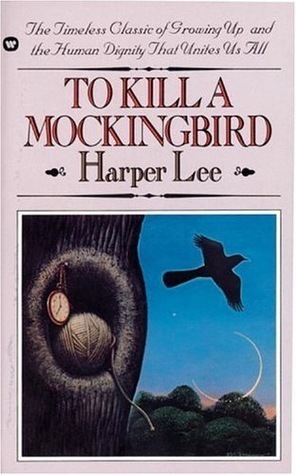
Application of Common Core State Standards comparing observations, characters and closing arguments from two trials using non-fictional accounts dealing with the Scottsboro Boys trials of 1931 and 1933 and the fictional trial narrative in To Kill a Mockingbird.
|
|
Scooped by
Mary Reilley Clark
June 10, 2014 11:33 AM
|
Innovative teachers are using eBooks as projects, allowing students to gain Common Core skills while letting their creativity to shine.
|
|
Scooped by
Mary Reilley Clark
April 16, 2014 10:38 AM
|
Educators are responding to the close reading mandate with strategies that help students better understand complex texts. Our resource roundup has the links.
NowComment is fast, powerful, and feature-rich: you can sort comments, skim summaries, create assignments, hide comments, reply privately, and much more.
Via Nik Peachey
|
|
Scooped by
Mary Reilley Clark
February 19, 2014 4:01 PM
|
Do you wish your students could better understand and critique the images that saturate their waking life? That's the purpose of visual literacy (VL), to explicitly teach a collection of competencies
|
|
Scooped by
Mary Reilley Clark
February 10, 2014 8:32 PM
|
"Like thinking, reading in the 21st century is different than in centuries past, endlessly linked in an increasingly visible web of physical and digital media forms. So in this context of media abundance, what does the modern, 21st century look like? How can we appeal to their interests?"
|
|
Scooped by
Mary Reilley Clark
February 7, 2014 12:28 PM
|
What’s In a Word? On Vocabulary Instruction by Kathleen Stern As a middle school reading teacher, I constantly find myself thinking, “If my students knew the meaning of more words, they would be be...
|
|
Scooped by
Mary Reilley Clark
February 7, 2014 10:24 AM
|
Explore math and ELA video lessons and resources for grades 2-12. Search by Common Core domain, topic, or grade. Includes Additional Practice and Director's Commentary videos.
The ‘jobs’ that drive the literature circle have not changed much over the years, but the means of accomplishing those jobs has. I sat in on Tiffani Brown’s presentation on Literature Circles at the CUE Conference. She has infused different web-based applications into the jobs, making them more fun and engaging for the students. Here are some of her suggestions:
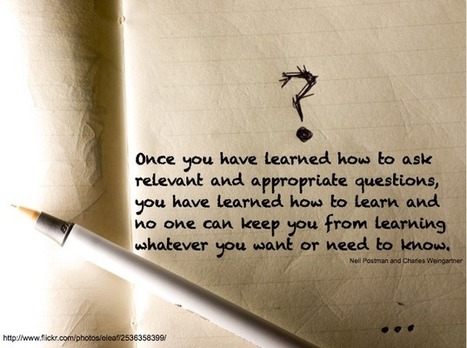
"Being good at asking questions is the art of identifying those gaps, sorting them, and figuring out how to fill them. Considered that way, it is a strange skill: “the ability to organize your thinking around something you know nothing about,” said Rothstein."
Via Beth Dichter, KarMa_C4
Many school districts are going through a painstaking process of writing new curricula to meet the Common Core State Standards. One of the biggest changes for English language arts teachers working to refine and update curricula is the need to incorporate larger amounts of nonfiction texts. As ELA teachers, we are experts in teaching literature — but nonfiction? Having recently gone through the process of writing a new middle-school ELA curriculum, I fully understand this challenge. Below are some of the ways our middle school ELA teachers worked to more organically integrate nonfiction texts into our teaching.
Via Deb Gardner
|
|
Scooped by
Mary Reilley Clark
January 4, 2014 11:45 AM
|
A fond childhood memory of mine was going to the library once a week to check out some of my favorite types of books - the Choose Your Own Adventure series. They were created by Edward Packard and ...
|
|
|
Scooped by
Mary Reilley Clark
June 11, 2014 2:45 PM
|
"The sum of our advice: Give teachers time to plan and talk together. Build local networks within schools and districts to create a curriculum that engages both adults and students as learners. Think creatively. Map classroom activities back to the standards. Use a range of texts to juxtapose student thinking on content."
|
|
Scooped by
Mary Reilley Clark
June 10, 2014 11:16 AM
|
Lindsey Fuller writes: "I have cross-referenced my technology lessons with the ELA CCSS for 6th grade. Although these are grade specific, the standards follow a continuum that should allow for easy adaptation to other grade levels. (Science and Social Studies alignments coming soon!)"
|
|
Scooped by
Mary Reilley Clark
April 11, 2014 3:49 PM
|
Sets of primary sources on baseball, Jamestown, Jim Crow laws, the Civil War, immigration, Spanish exploration, and the Dust Bowl from the Library of Congress including photos, maps, manuscripts, audio files, films, sheet music, and cartoons.
|
|
Scooped by
Mary Reilley Clark
February 27, 2014 11:36 AM
|
Teachers frustrated by Common Core directions to ignore prior knowledge when teaching text analysis can show students how to do it themselves, says Laura Robb.
|
|
Scooped by
Mary Reilley Clark
February 19, 2014 10:45 AM
|
In an earlier post, I wrote about both the Common Core Standards and what I call the "common sense" standards. Teaching ethical academic behavior online seems to hit both. When I talk about ethical academic behavior, I'm not talking about manners so much as giving credit where credit is due. After all, just because the kids can access information within two clicks doesn't give them the right to claim information as their own.
|
|
Scooped by
Mary Reilley Clark
February 7, 2014 10:39 PM
|
For a coming student contest in which teenagers are invited to write on an issue they care about, we have gathered a list of 200 writing prompts on a wide range of issues.
|
|
Scooped by
Mary Reilley Clark
February 7, 2014 12:22 PM
|
When I was a student, nothing helped me become more skilled at writing history than learning about journalism -- news reporting, in particular. I don't mean to undervalue my fabulous teachers in high
"News literacy education has the potential to engage students and ignite their critical thinking. More importantly, it can empower them to make better-informed choices in their lives as they move beyond the classroom and into the world."
|
|
Scooped by
Mary Reilley Clark
January 23, 2014 9:34 AM
|
"If there is just one message I could share with parents, educators, and managers, it would be about the transformative power of interest."
|
|
Scooped by
Mary Reilley Clark
January 8, 2014 1:42 PM
|
Teaching students how to think and analyze are important goals of today's teacher. See how one high school teacher uses a two day lesson to get students to analyze texts and develop more critical ways of thinking.
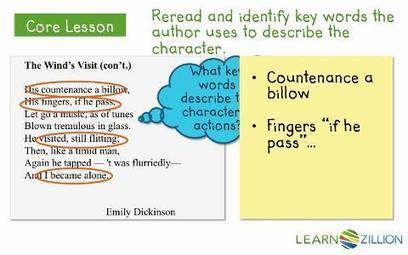
Close reading is one of the buzz words that is being emphasized with the Common Core Learning Standards. By close reading I am interpreting as the reading, rereading, and analysis of text for the p...
Via Dr. Dea Conrad-Curry
|
|
Scooped by
Mary Reilley Clark
January 5, 2014 6:09 PM
|
In today's post I'm sharing information I gave to my students about the differences between summarizing and synthesizing information in terms of reading strategies and research.
|




























Great lesson here, and an opportunity for collaboration between language arts and history classes.