 Your new post is loading...
One health system closed utilization management gap by adopting Xsolis' AI-driven Dragonfly platform, improving peer reviews and inpatient appeals.
Burnout in nursing affects nurses’ mental health, job satisfaction, care quality, and patient safety. This collection welcomes original research examining the prevalence, key risk factors, outcomes, and underlying mechanism across nursing settings.
Patient complexity continues to rise due to multimorbidity, co-occurring behavioral health needs, and persistent health-related socia
Rural Health Transformation Program Insights (Download) Maternal and child health (MCH) outcomes continue to raise national concern despite ongoing targeted initiatives, community-based interventions, and executive measures aimed at improving population health and saving lives. Although maternal mortality rates have decreased in recent years, the United States has seen maternal deaths well above global rates compared […]
Discover why nurses should be treated as critical infrastructure and how workforce shortages, retention, and long-term investment impact patient care.
Experience is broad, created through every interaction an employee has with a leader, a team, a patient, a process and the organization itself.
Many enrollees don’t know they’ll need to report work, education or volunteer hours starting in less than six months in order to stay covered, according to a recent survey from the Health Management Academy.
It is a well-known and well-discussed fact that all of the best decisions are backed by data. In the payer-provider ecosystem, the big areas that use a lot of data-backed decisions are claims management, utilization review, and care coordination. To get a better understanding of the specifics on data analytics' role, we reached out to
Intelligent patient flow management reduces length of stay and boarding by integrating capacity, admission, and discharge planning with AI-driven insights.
Bionic Bloom and Neurodivergent Empowerment Institute Launch Integrated Case Management Services to Close Gaps in Patient Care INDIANAPOLIS, IN / ACCESS Newswir
The Case Manager Healthcare in general is undergoing a profound transformation—in this article, I wanted to look at an area many of us don’t think about because we live in an urban or suburban area. Rural areas across the country are set to be hit the hardest as the Big Beautiful Bill is implemented after | WorkersCompensation.com
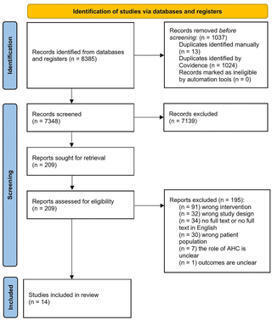
Introduction Older adults experience several transitions in care, which can be challenging and stressful. Transitional care ensures continuity of care by addressing patients’ healthcare needs before discharge and providing ongoing community support. Although transitional care improves patient outcomes and reduces hospital readmissions, its role in addressing mental health (MH) needs in older adults remains underexplored. This scoping review describes the literature on the integration of allied healthcare (AHC) professionals in transitional care for older adults with MH needs. Method Following PRISMA-ScR guidelines, we analyzed 14 peer-reviewed articles (2010–2024) on transitions for older adults with cognitive impairment, dementia, depression, or suicide risk. Thematic analysis identified key roles, lessons, and patient needs in transitional care provided by AHC professionals. Results AHC professionals, including social workers, occupational therapists, pharmacists, and physical therapists, contributed through discharge planning, physiotherapy, medication reviews, MH counseling, and resource navigation. For caregivers, they provided education on dementia care, behavior management, and psychosocial support, improving caregiver well-being and interactions with persons with dementia. Transitional care interventions reduced caregiver stress and, in some cases, hospital readmissions. Challenges included suboptimal medication management for persons with dementia. Key facilitators were flexible delivery methods (e.g., telehealth), tailored interventions, and dementia-specific education. Conclusion AHC professionals are vital to transitional care for older adults with MH needs, offering tailored support to patients and caregivers. Enhanced integration, interdisciplinary collaboration, caregiver education, and addressing systemic barriers could improve care quality. Future research should focus on standardizing interventions and optimizing medication management.
Care managers are overworked. Increased caseloads, complicated patients, and shrinking care teams have made an already challenging job even more difficult. AI
|
Even skilled nurses can make mistakes when systems are badly designed. Human factors training could help nurses recognise and reduce these risks.
What makes patients see care as efficient? Our survey of 254 patients uncovered three insights on communication, access, and coordination that can improve both patient experience and operational performance.
What if there were a free, portable tool you could use almost anywhere to help reduce stress and emotional overwhelm?
In this episode, Terry and Bridget explore Emotional Freedom Technique (EFT) — commonly known as tapping — with EFT expert Brad Yates.
Tapping combines gentle stimulation of acupressure points with focused attention on thoughts and emotions. Supporters of the technique describe it as a way to calm the body's stress response while creating space for emotional healing.
Brad explains:
What EFT tapping is How tapping may help reduce stress and anxiety Why acknowledging difficult emotions is important How stress can become intertwined with depression Why small improvements matter How tapping can create hope when you feel stuck
Listeners are guided through a complete tapping session focused on depression, self-compassion, gratitude, and emotional relief.
Whether you're curious about EFT, looking for new depression coping tools, or simply interested in practical mental health techniques, this episode offers a guided introduction you can follow along with in real time.
As Brad reminds listeners:
Even moving from a "9" to an "8.75" is evidence that change is possible.
Primary Topics Covered:
EFT (Emotional Freedom Technique) Tapping for depression Tapping for anxiety Stress reduction techniques Self-help tools for depression Gratitude practices Emotional regulation Self-compassion Managing overwhelming emotions Hope and resilience
Timestamps:
00:01:28 – Introduction to EFT tapping and why listeners requested coping tools00:02:14 – What EFT is and how it combines emotional and physical stress relief00:04:06 – Research on stress reduction and cortisol00:04:30 – Why EFT is free, portable, and accessible00:05:13 – Small improvements create hope00:05:59 – Step-by-step explanation of tapping points00:06:44 – Why EFT starts by acknowledging difficult feelings00:09:13 – Stress, depression, and unresolved emotional experiences00:10:20 – Guided EFT session for depression begins00:13:43 – Opening to the possibility of feeling better00:14:05 – Gratitude as part of emotional healing00:15:13 – Choosing happiness in the present moment00:16:04 – Worthiness, self-love, and releasing old beliefs00:17:14 – Evaluating emotional shifts after tapping00:17:48 – Why EFT can be useful when depression makes everything feel difficult
Explore mental health and addiction treatment options at recovery.comFacebook Community: https://www.facebook.com/GivingVoiceToDepression/Terry's LinkedIn: https://www.linkedin.com/in/givingvoicetodepression/
Medicaid insurers are counting on pay raises from states about to be squeezed by nearly $1 trillion in federal budget cuts.
Advance care planning has always been personal. It is one of the most human conversations that occurs in healthcare. It asks patients, families, caregivers, and clinicians to talk about goals, values, fears, treatment preferences, and what should happen if the patient is no longer able to speak for themselves. But advance care planning is also […]
The following is a guest article by Adam Byer, Chief Delivery Officer at iTech AG The implementation of technology in healthcare has driven incredible scientific discoveries and improved outcomes. However, the rise of connected devices and integrated systems has also created increasingly complex environments to manage. Historically, healthcare technology management has treated clinical devices as static
The No Surprises Act is a federal law designed to protect patients from unexpected medical bills that arise when they unknowingly receive care from
At Tallahassee Memorial Hospital, a patient remained in her inpatient room for months after being formally discharged in October 2025. The hospital ultimately filed a lawsuit to have her removed.
Acute surgical and medical emergencies constitute a major cause of morbidity and mortality, placing demands on healthcare systems due to sudden onset, rapid progression, and the requirement for immediate intervention. Optimal outcomes depend on early recognition, structured assessment, and coordinated multidisciplinary care involving emergency medicine, surgical teams, and critical care services. This structured narrative review provides an evidence-informed overview of contemporary approaches to the assessment, diagnosis, and management of acute surgical and medical emergencies, with emphasis on clinically applicable pathways. The review addresses key domains including epidemiology and risk stratification, principles of initial assessment and stabilisation, and diagnostic strategies incorporating laboratory biomarkers and advanced imaging modalities. Management of common acute surgical and medical emergencies is examined, alongside current pharmacological interventions such as antimicrobial therapy, analgesia, sedation, and anticoagulation within high-acuity settings. The role of interdisciplinary integration, post-intervention monitoring, and timely escalation of care is highlighted as a determinant of continuity and outcome optimisation. Emerging innovations, including artificial intelligence-based clinical decision support systems, tele-emergency medicine, and minimally invasive emergency procedures, are discussed for their potential to enhance diagnostic accuracy, triage efficiency, and therapeutic precision. Persistent challenges include heterogeneous presentations, inconsistent guideline implementation, and unequal access to emergency services. Future efforts should prioritize standardized pathways, validated technologies, and integrated care models.
MedPAC opens April meeting with deliberations on data that will be part of June report to Congress.
When 57-year-old Brooklyn resident Timothy Rhonda visited Park Ridge Family Health Center at NYU Langone with dangerously high blood pressure, he worried he might once again end up in the hospital.
If there's ever been a team sport in healthcare, it's value based care. As much as a healthcare organization thinks they can do it alone, value based care requires coordination across the entire care continuum. That's the reality that University of Maryland Medical System faced when they were working on their value based care efforts.
|



















Improving Access, Reducing Delays: How AI Is Transforming Provider Data Management
Reducing delays
Please also review AIHCP's Case Management program. Please click here