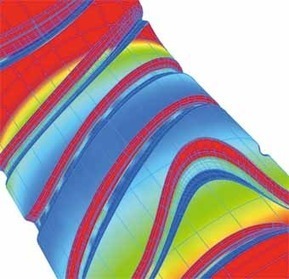
I had stumbled into one of the big questions termites pose, which is, roughly, what is “one” termite? Is it one individual termite? Is it one termite with its symbiotic gut microbes, an entity that can eat wood but cannot reproduce on its own? Or is it a colony, a whole living, breathing structure, occupied by a few million related individuals and a gazillion symbionts who collectively constitute “one”?
Add more biology to IoT. Looking at nature brings great solutions to the table. Nature had billions of years to do R&D. Every single problem has been evolved into great solutions. The variety nature gives us is too valuable to ignore and with biomimicry we can do just that. By looking at nature’s solutions and imitating it in our day to day lives we can get unexpected and great products around us. With IoT great new solutions surround us on this day and with Biomimicry we can enhance these and come up with some great new ones. In the design phase of your IoT solution: bring a biologist to the table! Let’s use nature to: reduce traffic jams communicate as effective as possible create new materials build new IoT solutions
Radiolaria are one-celled microorganisms that take their name from the radial symmetry of their spines; they are found in the ocean as zooplankton and while they may be tiny, they served as big inspiration for designer Lilian van Daal, who takes her inspiration from the intersection between natur
Technological advances often involve exploiting nature for the benefit of humanity. While these advances certainly improve the quality of life for people around
In the popular imagination, carnivorous plants are staples of horror films, high-school theater productions, and science-fiction stories. Many a child has pleaded with her parents to buy yet another Venus’ fly-trap to replace the one she has just killed by over-stuffing it with raw hamburger rather than the plant’s natural diet of flies, ants, and other small insects. Botanists likewise have been fascinated by these evolutionary oddities that have seemingly turned the natural order of things on its head. Rather than being eaten by herbivores, these plants have evolved a bewildering away of adaptations to attract, capture, kill, and digest animal prey—usually insects—and then to use the digested and absorbed nutrients to enhance the plant’s growth and development. These adaptions—which so fascinated Charles Darwin that he wrote an entire book on what he referred to as ‘the most wonderful plants in the world’—include the sundew’s moveable tentacles coated with sticky glues to ensnare passing insects; the slippery, waxy coatings of the inside of pitcher plants’ pitchers that prevent prey from escaping their watery grave; the fluid-filled leaves of the Venus’ fly-trap that change their shape when an insect touches them, buckling closed in less than a tenth of a second; and many, many more. These adaptations also are inspiring biotechnologists to create biomimetic devices that are finding a variety of uses in our daily lives and novel drugs to treat a broad spectrum of diseases. In recent years, researchers have looked to the myriad ways that carnivorous plants trap and digest insects to develop biomimetic materials with a surprisingly diverse range of uses. For example, one of the primary attractors of prey to pitcher plants is the fleshy, often brightly-colored ‘peristome’ (literally ‘around the mouth’) that surrounds the gaping mouth of the plant. When the peristome is dry, insects can walk about it with abandon. But when it gets wet, from rain, fog, dew, or secretions of nectar by the plant itself, it becomes super-slippery and insects ‘aquaplane’ off of it and fall into the pitcher. Not only has the peristome led to the development of a range of natural, non-stick surfaces called ‘slippery liquid-infused porous surfaces’ (SLIPS)—think Teflon without the PFOAs—but because water flows in only one direction along the peristome, it also is leading to the development of controllable microfluidic devices, including drug-delivery systems, self-lubricating machines, and new types of agricultural drip-irrigation systems. The ‘snap-buckling’ Venus’ fly-trap provides similar inspiration. Although scientists have been studying the fly-trap for more than a hundred years, it is only in the last decade that a detailed understanding of its inner workings. Briefly, when the trap is open, the leaf is curved outward, bent and stretched in two directions across the leaf. But when an insect touches the trigger hairs at the base of the trap—not just once, but at least twice, to avoid false alarms—the stretched leaf relaxes, causing the leaf to quickly buckle and snap shut. Snap-buckling is a low-energy way to change the shape of a variety of structures. For example, microscopic lenses can be fabricated that use snap-buckling to shift between convex and concave states. Because convex and concave lenses have different focal points, users of these micro-lenses could quickly re-tune micro-optical devices on the fly (so to speak). At a much larger scale, snap-buckling has been suggested as a way to design and develop complex shades for the outer, free-form façades of modern buildings. Medical devices often deliver medicines, and as evolutionary biologists uncover the biochemical secrets by which carnivorous plants kill and digest prey, they have also revived interest in their pharmacopeia. Extracts of sundews (Drosera species) have been used since at least the 16th century to treat respiratory diseases, including tuberculosis. A sundew was the first carnivorous plant to be illustrated in Rembert Dodoens’ 1554 L’Histoire Des Plantes, although Dodoens did not remark on its medicinal properties. In 1636, the English botanist John Gerard summarized its known ‘vertues,’ in his Herbal, including its use for `treating consumption.’ Native peoples and early colonists of North America alike were familiar with the curative properties of the American pitcher plants (Sarracenia species). For example, the Cree First Nation of Eeyou Istchee in Northern Quebec use a decoction of the leaf of the northern pitcher plant (S. purpurea) to treat Type-2 diabetes. In 1849, the South Carolina botanist, physician, and secessionist Francies Peyre Porcher made a detailed study of the uses of roots of the yellow pitcher plant (S. flava) to treat gastric upset, including indigestion, nausea, headache. And most Sarracenia species synthesize coniine, which may both attract insects and stun them once they are captured by the plant. Although coniine is perhaps better known as the poison that most likely was used to kill Socrates, it also is being studied as a next-generation, non-addictive pain reliever. As carnivorous plants have moved from the fanciful, across the scientists’ workbenches, and into everyday utility, it is imperative that we conserve them in the wild and take care of their natural habitats. Poachers regularly deplete or extirpate natural populations, and carnivorous plant enthusiasts often plant them in sites where they would not otherwise occur (and yes, like John Wyndham’s triffids, real carnivorous plants can become noxious weeds with knock-on effects on native fauna, including our native bumble bees). So, while you’re enjoying carnivorous plants in books, the stage, and the big screen, or learning to cultivate them on your windowsill, remember that nature not only has value to us, but also simply has value. Featured image: “Carnivorous Plant Nature Macro 217187” by PublicDomainPictures. CCO Creative Commons via Pixabay. Podcast: Play in new window | Download
When it comes to blending in, cuttlefish are like chameleons of the sea. In fact, their color-changing and shape-shifting feats are far better than those of the chameleon, as they can change their appearance almost immediately. They can even alter the texture of their skin to mimic the textures of the corals, rocks, and plants around them. Cuttlefish — which aren’t fish, but rather cephalopods, like octopuses and squids — have long amazed and bemused scientists for their unparalleled camouflage and intelligence. Researchers have begun to unravel the mysteries of these creatures, and have now identified the neural mechanisms that give them their incredible shape-shifting abilities. In a recent study published in the journal iScience, the research team explored how cuttlefish skin is made up of two types of small muscular organs, and how these organs are connected to its nervous system. One type, known as “chromatophores,” receive signals from the brain, directing them to change color. The other organs can be controlled to create nipple-like protrusions, called “papillae,” along the cuttlefish’s skin. In their study, the researchers revealed just how the instructions for the cuttlefish camouflage are sent from the animal’s brain, through its peripheral nerve center, and to its specialized muscle organs. The nerve circuitry they uncovered mirrors that found in squids, which enable them to make their skin iridescent. “Cuttlefish are able to hold their papillae without sending neural signals — this is very different to most muscles — and the circuit that controls papillae is very different to the chromatophore colouration pathway, meaning it evolved differently and potentially uses skin sensors to direct its activity,” University of Cambridge researcher Trevor Wardill, told Digital Trends. Wardill analyzes skin signaling in cephalopods and is the lead author of the recent study. Cuttlefish still have their fair share of secrets, however. One of their most perplexing talents is their ability to interpret their surroundings and change their appearance accordingly. Nonetheless, Wardill thinks his team’s recent research will help inform biomimetic structures and materials that can adapt to their surroundings, just like the cuttlefish. “[This] research will inspire products that could mimic the texture and shape of their surroundings,” he said, “but also may find medical application due to their soft actuator capabilities. Currently we cannot build anything like a papillae that can change from entirely flat to various 3D shapes within one second and remain flexible.” Editors' Recommendations
Using 3D printing, scientists at the University of Southern California are able to replicate the microscopic structure of plants found in tropical areas of America, Eurasia and Africa. With hydrophobic leaves, the Salvinia genus, commonly known as Watermoss, has the capability of micro manipulating droplets of water. Secret egg-beaters The secret to Salvinia’s remarkable magic trick is in the shape of the hairs neatly packed on the surface of its leaves. Resembling microscopic egg-beaters, the hairs effectively “clutch” droplets of water. USC postdoctoral researcher Yang Yang explains, “I think the reason the plant’s surface is super-hydrophobic is because it lives on the water and requires air to survive,” “If it weren’t for the long-term evolution of this plant, the plant could be submerged in water and would die.” Separating oil and water By combining 3D printed plastic and carbon nanotubes, USC researchers were able to create “egg-beater” samples that could hold water when turned on their side and upside down. Xiangjia Li, a PhD student an co-author of the study comments, “You can have a robotic arm with a gripper made to mimic ‘Salvinia effect,'” “NO MATTER WHICH WAY YOU MOVE THE ARM, THE GRIPPING FORCE IS SO LARGE THAT A DROPLET WILL STAY ATTACHED.” The team also gave the structure oil absorbing properties. “We tried to create one functional surface texture that would be able to separate oil from water,” adds USC Associate Professor and lab-lead Yong Chen. “Basically, we modified the surface of the materials by using a 3D printing approach that helped us achieve some interesting surface properties.” The samples were made using a technique called immersed surface accumulation 3D printing (ISA-3D Printing) specially developed in the USC lab. Immersed surface accumulation 3D printing ISA-3D printing is a type of vat polymerization. Unlike commercially available methods of this kind (e.g. SLA, DLP, CDLP and CLIP) ISA-3D printing is also designed to delicately pattern an object after printing. This is what enables the USC team to create such fine features of the “egg beaters” and instil them with inspiring properties. So far, ISA-3D printing has been used to make a prototype that the teams hopes to scale and use for oil separation in vast quantities of water. On a microscopic level, the material has a number of breakthrough lab applications in medicine, chemical synthesis, and pharmaceutical trials. The future is natural 3D printing and biomimetic design combined creates some fascinating possibilities in the world of materials. Previously, researchers at MIT succeeded in replicating the innate toughness of a conch shell. Owl wings are inspiring next generation aircraft design. And studying the structure of butterfly wings may yield the secret to true, full-color 3D printing. A paper, “3D‐Printed Biomimetic Super‐Hydrophobic Structure for Microdroplet Manipulation and Oil/Water Separation“, detailing further specifics of the USU oil and water Salvinia study is published online in Advanced Materials journal. It is co-authored by Yang Yang, Xiangjia Li, Xuan Zheng, Zeyu Chen, Qifa Zhou and Yong Chen. For more related research and news subscribe to the 3D Printing Industry newsletter, follow us on Twitter, and like us on Facebook. Looking to get involved in a new project? Join 3D printing jobs for the latest vacancies in software, hardware and materials. Vote now in the 2018 3D Printing Industry Awards for research/academic of the year and more. Want to design the trophy? Enter the 2018 3D Printing Industry Awards design competition. sponsored by Protolabs now. Featured image shows a Salvinia leaf mimicking sample made by ISA-3D printingas USC. Photo via University of Southern California
For years, scientists have been inspired by nature to innovate solutions to tricky problems, even oil spills—manmade disasters with devastating environmental and economic consequences. A new USC study takes a cue from leaf structure to fabricate material that can separate oil and water, which could lead to safer and more efficient oil spill clean-up methods. In addition, the material is capable of "microdroplet manipulation," or the transfer of miniature volumes of liquid. Droplet-based microfluidics is a tool used in various applications like cell cultures, chemical synthesis and DNA sequencing. Using 3-D printing, Associate Professor Yong Chen and his research team at the Daniel J. Epstein School of Industrial and Systems Engineering at the USC Viterbi School of Engineering have successfully mimicked a biological phenomenon in plant leaves called "Salvinia effect." Their study focuses on a floating fern native to South America called Salvinia molesta. The unique leaves are super-hydrophobic, meaning "water-fearing" and retain a surrounding air pocket when submerged in water due to the presence of water-resistant hairs. "I think the reason the plant's surface is super-hydrophobic is because it lives on the water and requires air to survive," Yang Yang, a postdoctoral researcher on Chen's team, said. "If it weren't for the long-term evolution of this plant, the plant could be submerged in water and would die." Water-repellent structure On a microscopic level, the leaf hairs align in a structure resembling an egg-beater, or cooking whisk. Chen explains that Salvinia's leaf surface is comprised of this so-called "egg-beater" structure that is super-hydrophobic. Using a method called immersed surface accumulation 3-D printing (ISA-3D printing), the research team successfully created the egg-beater microstructure in samples made from plastic and carbon nanotubes. Chen explains that the method allowed the team to demonstrate the fabrication of a material with both super-hydrophobic and olephilic (oil-absorbing) properties that, when combined, generate capillary forces capable of highly efficient oil and water separation. "We tried to create one functional surface texture that would be able to separate oil from water," Chen said. "Basically, we modified the surface of the materials by using a 3-D printing approach that helped us achieve some interesting surface properties." The team has 3-D printed a prototype, citing a growing demand for materials that can separate oil and water mixtures efficiently in vast bodies of water. Eventually, they hope the technology can be applied to manufacture materials in large scale to accommodate massive oil spills in the ocean. Current methods require tremendous energy in the form of an electric field or mechanically-applied pressure. Microfluidics application "Salvinia effect" also has potential for liquid-handling technology that executes "microdroplet manipulation" —a breakthrough where the adhesion of liquid to a robotic arm can be tuned accordingly and result in non-loss transfer for very tiny amounts of liquid. The technique can be applied in myriad ways, some of which include droplet-based microreactors (devices used in chemical synthesis), nanoparticle synthesis, tissue engineering, drug discovery and drug delivery monitoring. Xiangjia Li, a PhD student on Chen's team and co-first author of the study, says one example of high-performance microdroplet manipulation could lead to more efficient blood analyses for patients. A robotic gripper could move to different stations and dispense microdroplets of blood that are then evenly mixed with different chemicals for various tests. In addition, the tests could be designed to control the ratio of chemical to droplet and result in significant conservation for source materials and chemical reagents. "You can have a robotic arm with a gripper made to mimic 'Salvinia effect,'" Li said. "No matter which way you move the arm, the gripping force is so large that a droplet will stay attached." Led by Chen, the research team also included Yang, Li, Professor Qifa Zhou of the Department of Biomedical Engineering, and graduate students Xuan Zheng and Zeyu Chen. Their study titled "3D-Printed Biomimetic Super-Hydrophobic Structure for Microdroplet Manipulation and Oil/Water Separation" has been published in the Vol. 30, March 2018 issue of Advanced Materials. Explore further: New microscope sets a record for visualizing surface wetting properties More information: Yang Yang et al. 3D-Printed Biomimetic Super-Hydrophobic Structure for Microdroplet Manipulation and Oil/Water Separation, Advanced Materials (2017). DOI: 10.1002/adma.201704912
Using less material for PET bottles requires the construction of horizontal structures or ribs – the more you add, the stronger and lighter the bottle will be; however, the drawback of this recipe is that it ends with an industrial-looking bottle, where brand values become secondary. To depart from this route, Logoplaste Innovation Lab looked to Nature for inspiration. The Portugal-headquartered rigid plastic packaging manufacturer is perhaps the first to ever use biomimicry to design a PET bottle, and to tap AskNature, the website created by The Biomimicry Institute and the online inspiration source for the biomimicry community.
"Settled in a picturesque landscape and spread over 12,500 acres is a town of Lavasa which is about 2 hours drive from Mumbai. It is a town that is soon becoming a holistic and planned destination where visitors throng in large numbers. HOK International has worked on the township planning with biomimicry as their guiding principle to design this wide-spread development."
Self-healing smart coatings could someday make scratches on cell phones a thing of the past. But researchers often have to compromise between strength and the ability to self-repair when developing these materials.
Published on Sep 15, 2018 Dragonflies can catch prey with near perfect accuracy, the best among all predators. But how does something with so few neurons achieve such prowess? Neuroscientist Greg Gage and his colleagues explore how a dragonfly unerringly locks onto its preys and captures it within milliseconds using just sensors and a fake fly.
Nature-Inspired Living And Building. Biomimicry - Imitating Sustainable Concepts From Nature For A Healthier Life. ✅ Check Out The Latest Developments.
50shares5000New research published in Materials & Design journal applies natural materials to 4D printing for truly bioinspired objects. In this development, a team from the University of Bristol and University of Bath, creates a 3D printed ink that harnesses cellulose fibers to transform in response to water. The research is inspired by the natural behavior of pine cones, …
From biomimicry to data analytics, Singapore is developing new technology to produce clean water without sinking the environment, Tommy Kevin Lee and Cecilia Tortajada write. Earlier this month, PUB, Singapore’s national water agency, issued a grant call for three categories of projects worth a collective total of S$30 million (US$22.6 million).The money will go to improving energy efficiency in water production, optimising water efficiency in industrial processes, and using data analytics in water resource management. Singapore is well-known for seeking new methods of producing water and keeping it clean to sustain its overall development. Rainfall accounts for about 10 per cent of water supply in the city-state, followed by recycled used water and desalination, which have capacities of up to 40 per cent and 25 per cent respectively. The aim is to increase their capacities to 55 per cent and 30 per cent, for a total of 85 per cent by 2060, the year before Singapore’s water treaty with Malaysia ends. At present, water imported from the Malaysian state of Johor can supply up to half the total demand. As part of its water demand management policy, and in preparation for the expiry of its water agreement with Johor, PUB has further strengthened research and development on processes that will provide Singapore with more clean water. These include biological processes; chemical and redox technologies; desalination and water reuse; sludge and brine management; automation and robotics; watershed management; water quality analytics and water distribution; groundwater and underground caverns; decentralised water treatment technologies; and industrial water technologies. With the bulk of produced water coming from energy-intensive methods, PUB has been seeking to reduce the energy requirements of these processes. Therefore, the first request for proposal is on how to use less energy to produce water. There is the idea to use techniques inspired by nature to produce water – this is known as biomimicry. For instance, mangrove plants and animal species living in saltwater can filter the salt to produce freshwater for themselves. There are two ways biomimicry can be applied here. The first is to draw genetic material known as aquaporins from the specific plant and animal species and incorporate them into membranes. The second is to produce synthetic versions of these aquaporins that have similar properties and can, therefore, function the same way. Another way to produce water more efficiently is from wastewater, using processes that do not require additional inputs of energy – net zero energy water production. The best example is the Marselisborg Wastewater Treatment Plant in Aarhus, Denmark. At present, it produces more than 150 per cent of the electricity it needs for the plant. The surplus is used to pump drinking water to other parts of the city. The second request for proposal is about water efficiency through process optimisation. In cities, especially those in the tropics like Singapore, the most margin to save water is from buildings’ cooling towers. In the city-state, these can easily take up more than 30 per cent of the water consumption of a skyscraper and shopping malls. For industries, cooling needs can account for 25 per cent of total water use. After cooling towers, the largest potential for savings comes from industrial processes in the wafer fabrication, refineries and chemicals sectors. PUB is thus seeking a technological solution that can achieve a reduction of at least 300 cubic metres per day, or 5 per cent savings of water consumption. Even though the documented best practices in Singapore can already achieve beyond these targets, the number of firms doing so are in the minority among the large water users. The intent here is to provide State assistance to encourage more companies to use water more efficiently. The last project is on data analytics. At present, data analytics are used on a small scale for operational efficiency by leveraging on smart technologies. The objective is to use them on a larger scale. In the private sector, a few analytics companies are working with utilities on applying big data to optimise water use efficiency. In Singapore, data analytics is also used to improve the organisational operations of PUB. All three of these projects involve technologies that have originated and been applied elsewhere to varying degrees. Anammox, invented at the Delft University of Technology, is used in several water treatment plants in the Netherlands. Small-scale biomimicry demonstration projects exist, but so far not on a large scale. Achieving water efficiency in industrial processes is very common, and has been a policy in many cities in the US, Australia, and in Singapore. Our work currently focuses on building controls and the green building movement as part of water efficiency policies. As technologies become more affordable and feasible, Singapore has made itself one of the first countries to incorporate the use of new research into its water demand management policy. The end objective: clean water that is produced with less energy and less environmental costs. The next generation in water policy efforts relies as much on management as on technology. With increasing water scarcity all over the world, more water authorities, as well as water businesses, would do well to play a more proactive role in the development of efficiency technologies and their use in the creation of water efficiency policies.
How do bees make a beeline for home? European scientists may have found the answer—paving the way for everything from better bee conservation to building smarter robots. Despite wandering far in search of food, bees head straight for their hive using a process called “path integration”: they remember each time they take a new path and put these memories together to plot a course home. Researchers from Lund University in Sweden, along with colleagues in the United Kingdom and Australia, discovered exactly how this is done by studying the brains of nocturnal Megalopta genalis bees. Researchers are studying the brains of Megalopta genalis bees to help build smarter robots. “[This study] has practical importance in understanding the challenges bees may face in navigating an anthropogenic landscape.” said John Stotskopf Ascher, a melittologist (or bee researcher) at the National University of Singapore who was not involved with the study. “It shows how bees, like many insects, have great potential as a model for biomimetics.” By hooking the bees up to a flight simulator and looking at their brains under a microscope, the researchers were able to identify neurons that keep track of speed and direction using information from the insects’ eyes. “Direction neurons” act like compasses, keeping track of sources of polarized light in the environment—such as from the moon and stars—to remember where the bee is in relation to the light source. Meanwhile, “speed neurons” track movement and serve as a kind of odometer to let the bee know how fast it’s moving. The researchers devised a computational model of how these neurons interact, which they then plugged into a smartphone-powered robot equipped with a 360-degree camera, which mimicks how bees see. “We sent [the robot] out on a random route and the model of the bee’s navigation system that we implemented allowed it to find the direct path back to its starting point,” said Lund University biologist Stanley Heinze, one of the researchers. It was no easy feat to find and identify the neurons responsible for this behavior. “There are about one million cells in the bee brain, out of which there are exactly four speed neurons. Finding these cells repeatedly in many individuals while blindly probing the brain with an electrode was a huge challenge,” Heinze said. As for compass neurons, “we recorded from over 160 bees and found [only] ten compass neurons,” he said. It took several years to accumulate enough raw data for the study, and the translation into a working robot required extensive cooperation between the biologists and roboticists. The effort, though, could pay dividends in bee conservation and robotics. Vicki Wojcik, the research director of Pollinator Partnership, said that the study may help scientists understand the subtle effects of pesticide on bees. Bees, she says, are not necessarily dying from exposure to pesticides. “It’s that they’re encountering pesticides and being subjected to these chronic sub-lethal effects that can impact either their ability to grow and reproduce…or their cognitive ability to forage and find home.” Heinze is hopeful that his team’s work might lead to more efficient robots in the not-too-distant future. As it stands, not even the latest state-of-the-art drone technology can hold a candle to the elegant simplicity of bee brains. “The brain of a bee is way smaller and less complex than ours but still a factor more powerful than drone brains,” said Matthew Cua, the founder and CEO of private drone operator Skyeye Analytics, Inc. But Heinze’s team is showing just how bees are able to do more with less, and how this makes for hardier robots. “The advantage of our circuit would be that it only consists of very few neurons that perform a robust computation—it’s very resilient to disturbance—and that it only requires visual input,” Heinze said. Cua said that nature still has much to teach us about efficient engineering. “We may have the most powerful hardware, but our software can’t maximize it,” he said.
Posted: Jan 19, 2018 A nanophenomenon that triggers the bone-repair process (Nanowerk News) Researchers at the Institut Català de Nanociència i Nanotecnologia (ICN2), a Severo Ochoa research centre located in the Universitat Autònoma de Barcelona (UAB) Campus and member of the Barcelona Institute of Science and Technology (BIST), have discovered that bone too is flexoelectric. They posit the possible role of flexoelectricity in the regeneration of bone tissue in and around the kind of microfractures incurred in bones on a daily basis. The ICN2 Oxide Nanophysics Group led by ICREA Prof. Gustau Catalan reports these findings today in Advanced Materials ("Flexoelectricity in Bones"), with lead author Fabián Vásquez-Sancho. The work has potential implications for the prosthetics industry and the development of biomimetic self-healing materials. Strain gradients can be large around small defects such as micro-cracks in bone mineral, so gradient-induced electricity (flexoelectricity) is also expected to be large around such defects. Bones were already known to generate electricity under pressure, stimulating self-repair and remodelling. First reported in the late fifties, this was initially attributed to the piezoelectricity of bone's organic component, collagen. However, studies have since observed markers of bone repair in the absence of collagen, suggesting that other effects are at play. In this work ICN2 researchers have revealed just such an effect: the flexoelectricity of bone's mineral component. Flexoelectricity is a property of some materials that causes them to emit a small voltage upon application of a non-uniform pressure. This response is extremely localised, becoming weaker as you move away from the point of maximum stress. In microfractures it is localised to the leading edge or tip of the crack, an atomically small site that, by definition, concentrates the maximum strain a material is able to withstand before full rupture. The result is a flexoelectric field of such magnitude that, in the immediate vicinity of the crack, it eclipses any background collagen piezoelectric effect. By studying strain gradients in bones and pure bone mineral (hydroxyapatite), the researchers have been able to calculate the precise magnitude of this electric field. Their findings indicate that it is sufficiently large within the required 50 microns of the crack tip to be sensed by the cells responsible for bone repair, directly implicating flexoelectricity in this process. Furthermore, since the cells responsible for synthesising new bone tissue (osteoblasts) are known to attach close to the tip, it would appear that the electric field distribution signals this point as the centre of damage, becoming a moving beacon for repair efforts as the crack is healed. These results hold promise for the prosthetics industry, where new materials that reproduced or amplified this flexoelectric effect could be used to guide tissue regeneration, leading to a more successful assimilation of implants. Source: ICN2 Subscribe to a free copy of one of our daily Nanowerk Newsletter Email Digests with a compilation of all of the day's news. These articles might interest you as well:
Move aside Harry Potter, science has invisibility cloaks too. The non-magical version was inspired by polar bear fur and works by having, excellent thermal insulating properties. Polar bear hair has a hollow core which effectively prevents the infrared emission, or heat signature, of the polar...
Posted: Mar 26, 2018 Artificial bio-inspired membranes for water filtration (Nanowerk News) From a desire to develop breakthrough technologies for water filtration and purification, researchers have developed membranes with artificial channels inspired by the proteins that form the pores in biological membranes: aquaporins. Using an innovative spectroscopic technique, they have been able to observe that, in the very restricted space in these channels, water molecules organize in a very regular manner, in an oriented molecular wire structure : the water has become "chiral" (Science Advances, "Oriented chiral water wires in artificial transmembrane channels"). Schematic representation of water molecules with a wire-like structure oriented in a single direction in the core of a channel, shown as transparent. Formed from histamine derivatives, this chiral channel forms spontaneously within the phospholipid bilayer (in white) stabilized in aqueous medium (in blue). It generates a driving force for water transport. (Image: CNRS) Identifying the chiral water in the artificial channels in these lipid membranes, under physiological conditions similar to natural pores, was a tour de force. This very regular arrangement of molecules had already been observed in solid structures of natural or artificial compounds, but is difficult to observe in solution, where the water molecules are very mobile. This "wire" arrangement of water molecules is explained by the polarity of the water molecule conjugated with the asymmetry of the channels. Water, via hydrogen bonds, interacts with the walls of the artificial channels. In the resulting superstructures, the molecules forming the channels transmit their chiral character to the water threads, and give the water molecules a preferred direction. This led to the researchers' hypothesis: this collective orientation of water molecules probably plays an important role in the activation or the selection of transport through the membrane. And indeed, laboratory experiments, supported by molecular dynamics calculations, confirmed that these chiral arrangements present greater transfer properties than their non-chiral equivalents, where water presents random molecular arrangement. In other words, the water's chirality causes greater mobility in nano-channels, boosting material transports, with a reduced exterior energy input. This discovery opens a vast area of application for water filtration and purification. Currently, the researchers are developing reverse osmosis membranes, commonly used to desalinate sea water. They have already obtained promising results in terms of improved membrane permeability and selectivity, which are both indispensable criteria for filtration. Source: CNRS Subscribe to a free copy of one of our daily Nanowerk Newsletter Email Digests with a compilation of all of the day's news. These articles might interest you as well:
I have recently developed a slight obsession around barrel cactus. They have become my go to organism when introducing biomimicry, especially in workshop exercises that gets an audience engaged in Biomimicry.
Imitating nature has become a meaningful approach for contemporary architects and design futurists to the built environment, especially for those who foster a future that doesn’t compete with nature but coexist with it. At the light of recent natural disasters around the world, especially those geologically associated such as tsunamis and earthquakes, which have proven its destruction power over the current built environment; architects and structural engineers have found in biomimicry an ecological approach in order to improve future building’s disaster resilience
"[...] people are also starting to look to nature not just for technical assistance, but for system-wide strategic solutions. Whether it is working out the best strategy to deal with economic recessions or contemplating the best way to lay out a new town, problem solvers are looking to nature for deeper insights. And little wonder. Over millions of years nature has managed thousands of interrelated components and living systems that collaborate to deliver a sustainable and self-generating system that benefit all its members. It is the way that nature organises itself to deal with this complexity that is the key for a new way of thinking about our problems according to Tim Winton, the founder of Pattern Dynamics. “Biomimicry takes the tactics of nature to make actual physical mechanisms, but Pattern Dynamics uses the patterns in nature to develop high level principles that can be used to build generative strategies,” he said."
To get content containing either thought or leadership enter:
To get content containing both thought and leadership enter:
To get content containing the expression thought leadership enter:
You can enter several keywords and you can refine them whenever you want. Our suggestion engine uses more signals but entering a few keywords here will rapidly give you great content to curate.


 Your new post is loading...