A new type of fire-safe coating is turning to nature for inspiration, using a skin-like design to overcome a major weakness of many flame-retardant materials: poor durability in humid environments.According to researchers led by Wendong Liu at Dalian University of Technology in China, conventional...
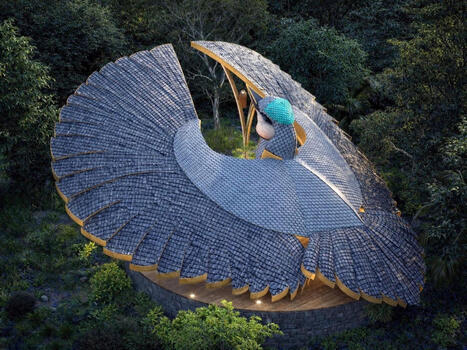
Biomimicry in architecture usually means borrowing structural logic from nature. Honeycomb patterns for strength, lotus leaves for water repellency, termite mounds for passive cooling. Thilina Liyanage takes a different approach.
Biomimetic camouflaged nanocarriers coated with cancer cell membranes (CCMs) have attracted considerable research attention for drug delivery application. CCM-camouflaged nanocarriers have inherent tumor-homologous targeting ability.
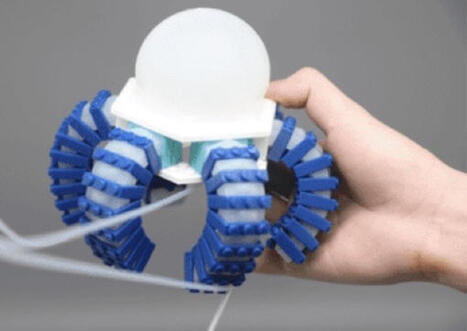
Biomimicry, which is a method for developing new technology inspired by nature, has been one of humanity’s greatest assets. But systems reliant on soft tissue, such as an octopus’s tentacles, have been notoriously difficult to reproduce in the robotics world.
Deep tech founders face a unique challenge: turning breakthrough science into a scalable startup. From navigating academia and IP to fundraising, manufacturing, and product-market fit, the path from research lab to real-world impact is anything but straightforward.
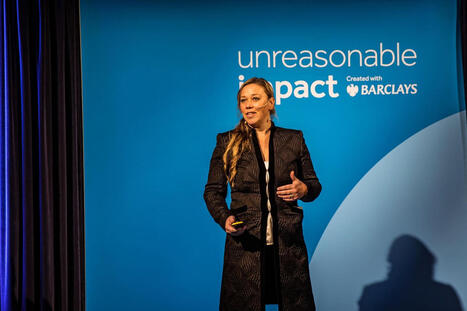
This week on Build Mode, Isabelle Johannessen sits down with Capella Kerst, founder and CEO of @geCKoMaterials and 2024 Startups Battlefield runner up. geCKo Materials is building a bio-inspired adhesive with applications across robotics, manufacturing, and even space. In this episode, they explore how she turned a Stanford PhD breakthrough into a venture-backed deep tech company.
This conversation covers: 🧩How to turn academic research into a scalable startup 🧩The challenges of moving from Stanford PhD to founder and CEO 🧩What it takes to raise capital as a deep tech and hardware startup 🧩Why commercialization and manufacturing are the hardest parts of innovation 🧩How to identify real-world use cases and achieve product-market fit
Following recent episodes on building teams, this conversation focuses on the foundation behind every startup: transforming breakthrough technology into a viable business.
Apply to Startup Battlefield: We are looking for early-stage companies that have an MVP. So nominate a founder (or yourself): techcrunch.com/apply. Be sure to say you heard about Startup Battlefield from the Build Mode podcast. TechCrunch Disrupt: If you're thinking about applying to Startup Battlefield, then October 13 to 15 in San Francisco, we're back for TechCrunch Disrupt, where the Startup Battlefield 200 takes the stage. So if you want to cheer them on, or just network with 1000s of founders, VCs, and tech enthusiasts, then grab your tickets.
Use code buildmode15 for 15% off any ticket type.
Chapters: 00:00 The Breakthrough Moment 01:45 From Startup Battlefield to Scale 02:42 What Gecko Materials Actually Does 05:18 Turning a PhD Into a Company 07:44 The Big Vision for Gecko Materials 09:19 From Wild Ideas to Real Use Cases 11:16 Spinning Out of Stanford 14:49 Raising Capital (and a 36-Hour Round) 17:54 Breakthroughs and Momentum 18:00 Building a World-Class Team 22:19 Owning the Founder Role 24:21 Finding Product-Market Fit in Deep Tech 26:54 Why More Research Doesn’t Become Startups 29:15 What’s Next for Gecko Materials
New episodes of Build Mode drop every Thursday. Hosted by Isabelle Johannessen. Produced and edited by Maggie Nye. Audience development led by Morgan Little. Special thanks to the Foundry and Cheddar video teams.
The battery powering your EV, your city's grid, your country's defense all depend on one critical component. Virginia Klausmeier founded Sylvatex to make it better, cleaner, and American.
An article in Science reports an exceptionally warm and thin sweater knitted from stretchy aerogel fibres, whose core–shell structures are inspired by the fur of polar bears.
Biological fish often swim in a schooling manner, the mechanism of which comes from the fact that these schooling movements can improve the fishes’ hydrodynamic efficiency. Inspired by this phenomenon, a target-following control framework for a biomimetic autonomous system is proposed in this paper.
In the realm of infant nutrition, breastfeeding is universally acknowledged not only for its nourishment but for its profound physiological and developmental advantages. However, in numerous situations, infants are unable to breastfeed directly due to medical or practical reasons, necessitating...
This study investigates the unsteady aerodynamic mechanisms underlying the efficient flight of birds and proposes a biomimetic flapping-wing aircraft design utilizing a double-crank double-rocker mechanism.
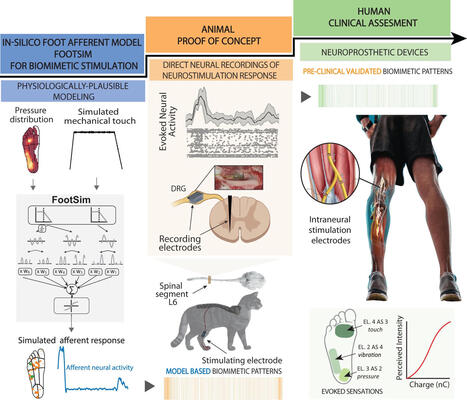
A few years ago, a team of researchers working under Professor Stanisa Raspopovic at the ETH Zurich Neuroengineering Lab gained worldwide attention when they announced that their prosthetic legs had enabled amputees to feel sensations from this artificial body part for the first time.
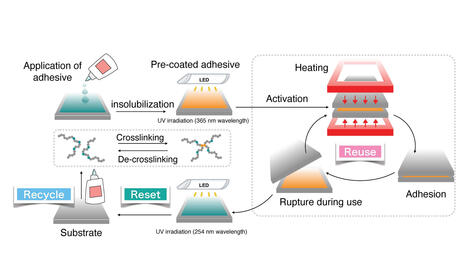
The National Institute for Materials Science (NIMS) has developed a renewable adhesive that allows for repeated bonding and debonding, and can reset the substrate and adhesive to their original state when needed.
On the iconic BBC radio show Desert Island Discs guests are asked for one book they would take with them if they were cast away on an a faraway island. And it's true to say that anyone choosing Designing Regenerative Cultures by Daniel Christian Wahl would return home, with it, and them, changed...
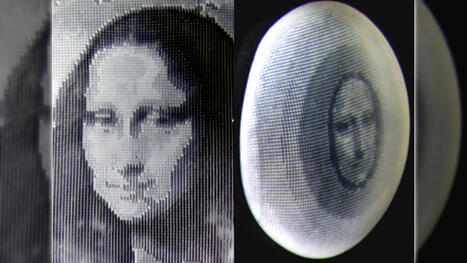
Inspired by the shape-shifting skin of octopuses, Penn State researchers developed a smart hydrogel that can change appearance, texture, and shape on command. The material is programmed using a special printing technique that embeds digital instructions directly into the skin.
A white stork, Ukraine's national bird, outmaneuvered a Russian interceptor, showing us both not only why birds have the edge but also what future drone might looks like.
Yulia Sandamirskaya (ZHAW / Auroniq) presents “Neuromorphic computing: from brain-inspired perception to service robots” as part of the MaP Robotics, Vision, and Controls Talks series hosted by ETH Zürich.
In this talk, Yulia Sandamirskaya introduces the history, core ideas, and applications of neuromorphic computing: an approach inspired by biological brains and nervous systems not only at the algorithmic level, but also in computing hardware. She discusses why neuromorphic AI is relevant for robotics, highlighting its power efficiency, speed, and support for continual learning as a promising alternative to large deep-learning models. The talk also explores how biological principles can inspire perception, state estimation, motion planning, and control for service robots.
Speaker bio: Yulia Sandamirskaya is Full Professor and head of the Cognitive Computing research center at ZHAW in Wädenswil. She leads the Neuromorphic Computing Lab, which develops AI technologies for service robotics. She previously led research teams at INI (UZH/ETH) and Intel’s Neuromorphic Computing Lab, and is also a co-founder of Auroniq Robotics.
Recorded on March 13, 2026.
MaP Robotics, Vision, and Controls Talks ETH Zürich
Every organism you have ever seen, every ecosystem you have ever walked through, is the ongoing output of an algorithm that has been running without interruption.
In an extraordinary leap forward for cellular biology and biomaterials science, researchers have unveiled a novel biomimetic peptide self-assembly platform that intricately interfaces with biomacromolecules to regulate cellular signaling pathways.
This review focuses on the innovative use of laser techniques in developing and functionalizing biomimetic surfaces, emphasizing their potential applications in the medical and biological fields. Drawing inspiration from the remarkable properties of various natural systems, such as the...
Rubina Singh says deep tech startups are crucial to address 21st century challenges and here is how Octopus Ventures is investing to build a sustainable world...
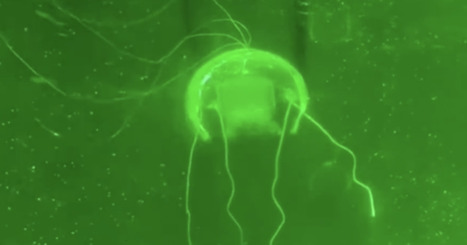
Discover China's new biomimetic jellyfish robot, an "underwater ghost." This low-energy device with AI and camera offers covert, long-range deep-sea surveillance and exploration.
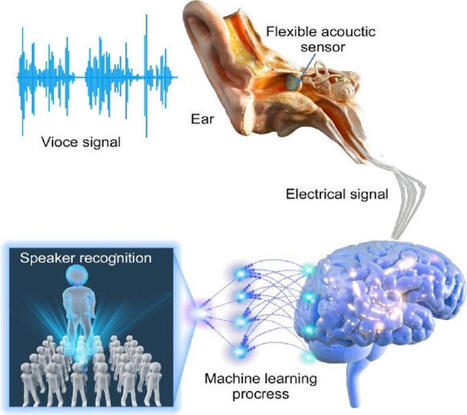
Auditory systems are the most efficient and direct strategy for communication between human beings and robots. In this domain, flexible acoustic sensors with magnetic, electric, mechanical, and optic foundations have attracted significant attention as key parts of future voice user interfaces...
To get content containing either thought or leadership enter:
To get content containing both thought and leadership enter:
To get content containing the expression thought leadership enter:
You can enter several keywords and you can refine them whenever you want. Our suggestion engine uses more signals but entering a few keywords here will rapidly give you great content to curate.


 Scoop.it!


 Your new post is loading...