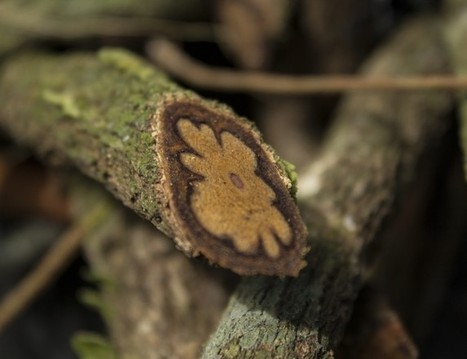
Por Juarez Duarte Bomfim Mestre Raimundo Irineu Serra adotou o lema do Círculo Esotérico da Comunhão do Pensamento que hoje adorna as portas de entrada de muitas casas e centros daimistas - e os unifica: Hei de Vencer. Significa a continuidade da tradição esotérica, já há mais de um século. O Círculo Esotérico da Comunhão…
Un colega terapeuta me explicaba a modo de anécdota la "justificación" de una de sus clientes ante la situación que vivía en sus relaciones. Llevaba varios años sin hablarse con su familia
Neuroscience News has recent neuroscience research articles, brain research news, neurology studies and neuroscience resources for neuroscientists, students, and science fans and is always free to join. Our neuroscience social network has science groups, discussion forums, free books, resources, science videos and more.
The anthropologist and author Jeremy Narby hit the intellectual freak scene in 1998 when he published The Cosmic Serpent, an audacious, intriguing, and entertaining dose of righteous mind candy that grew out of his decades-long explorations—both personal and scholarly—of the ayahuasca-swilling tribes of the upper Amazon. A Canadian living in Switzerland—at least when he’s not researching in the jungle or working on indigenous rights—Narby is no bug-eyed hippie prophet of “the tea.” He is a grounded, sensible fellow with a dry wit, an unromantic but respectful view of shamanism, and an allergy to vaporous supernatural claims. (In Europe he also sometimes performs with the guys behind the Young Gods, a seminal Swiss industrial band that led the Wax Trax pack back in the day.) While Narby’s head has definitely been broken open, his book does not spend a lot of time on the “spiritual” import of the jungle brew. Instead, Narby focuses on one of the biggest claims made by the Amazonian shamans: that their ritual ingestion of the hallucinogenic brew not only brought them contact with the spirits of animals and healing forces, but actually gave them knowledge—actual data—about the workings of the jungle around them.
I majored in physics at Princeton. I’m a lawyer who graduated from Georgetown Law. I clerked for a Federal Judge. I held an important job lobbying for big business. And, of course, I had a positive, life-changing trip on LSD.
Entre más de 100.000 posibles fármacos, sólo uno, la harmina, hizo que las células beta humanas productoras de insulina se multiplicaran según un estudio publicado en 'Nature Medicine'. Noticias, última hora, vídeos y fotos de Salud - Enfermedades en lainformacion.com
Muy interesante noticia del 2015, donde dice que la harmina, el principio activo de la banisteriopsis caapi (planta para preparar la ayahuasca) tiene utilidad para regenerar células pancreaticas y por tanto servir para tratar la diabetes, en el artículo se infiere que podría servir para la regeneración celular de otros órganos, puesto que la enzima con la que interacciona DYRK1A se encuentra también en otras células del cuerpo. La noticia comete el error de llamar a la harmina un fármaco.
Psychological insight, spiritual healing, life-changing revelations. Such are the promises that lure the curious to a medicinal mix of plants called Ayahuasca.
Mediumship, the art of apparently communicating with discarnate entities is an ancient culturally universal activity that probably has its roots in ancestral shamanic practices. Shamanism the art of going into altered states of consciousness to access otherwise hidden information, communicate with spirits and perform healing for the members of one's community. It appears similar to mediumship in many ways but often includes features otherwise unseen in mediumship.
THIS TALK AIMS TO INDICATE HOW MEDIUMSHIP AND SHAMANISM TYPICALLY DIFFER.
Recently, one of the most prestigious scientific journals, Nature, highlighted research conducted by a team of Brazilian from the University of São Paulo on the antidepressant effects of a single dose of ayahuasca on a group of six individuals suffering from major depression. In that study, researchers demonstrated that ayahuasca was able to alleviate symptoms of depression within hours of intake and that the antidepressant effects persisted for weeks afterward.
I first met Terence in the early 90s, and I feel blessed to have been able to spend some time getting to know him a little better during the last six months of his life. I found him kind, generous, and unpretentious, although he clearly had a potent dark side. He was even more brilliant and well-read than I had expected, with fistfuls of references at his command. But most remarkable for me was how he seemed to face his situation: with an admirable blend of humor, compassion, stoicism, and a willingness to stay open and awake in the midst of the big awful questions without trying to console yourself with answers. And that, for my money, is the ultimate lesson of the psychedelic path — not the Gaian mind, or the onrushing apocalypse, or those ridiculous elves, but a radical openness to ambiguity and the unknown.
The spiritual superhero of the baby boomers was the guru. But where the guru once hovered with his beatific smile, the shaman now shakes his stuff: an earthier, more pragmatic icon of mystical powers more suited to our era’s green anxieties. Now a significant figure for scholarly discourses as well as popular ones, the shaman, and especially the ayahuasca-swilling Amazonian variety, has not only stepped forward as a vehicle of archaic spirituality but has become—as the gazillions of bedazzled Avatar initiates can attest—a seductive site of fantasy and projection. For many of the aya tourists now hustling down to Peru in droves, or the untold thousands dropping 300 bucks or so to drink in their own Euro-American backyard, the man with the rattle (and his less common female compatriots) has become a visionary Rorschach blot: a New Age therapist, an avatar of environmentalism, a psychedelic captain fantastic.
No offense to Nancy or the U$ government cocaine-smuggling rings that thrived under the regime of her anti-communist ideologue of a husband, but drugs are endemic to life.
The Ayahuasca Defense Fund (ADF) unites expertise and community resources to turn the tide of increasing ayahuasca prosecution into a platform of opportunity for legal precedent and sensible policy.
The ADF aims to 1) work with people facing prosecution worldwide to assure the best legal strategy and defense; 2) advocate for sensible and tolerant legislation and public policy; and 3) educate and protect the global community by providing a hub of resources and information.
Una cabaña octogonal de techo de paja situada entre otros bungalows al lado de un lago en medio de una selva, que forma parte de un proyecto de desarrollo
IQUITOS, PERU—Saying he was trying not to think about how awful the next few days would be, master ayahuasca shaman Piero Salazar expressed his sense of dread Tuesday as he confirmed his week would once again be spent guiding American tech CEOs to spiritual oneness.
Psychedelics and psychoactive plants and fungi have been used for millennia by people and cultures across the globe for healing, insight, reconnecting, expanding consciousness, and spirituality. Today, these long-known benefits are also being validated through the lens of scientific research.
Despite this, in the United States and most countries, unless you’re in a protected religious group, psychedelics are banned and listed under Schedule I (“no currently accepted medical use”) or the equivalent, making them completely illegal, punishable by lengthy imprisonment, or worse.
It’s time to speak out using the tools we have at our fingertips: social media. Add your voice to the campaign to bring depth, diversity, and vision to the conversation around #PsychedelicsBecause these substances hold tremendous promise when used responsibly.
This campaign aims to actively:
Share stories humanizing the diversity of psychedelic users
Increase awareness around the benefits of psychedelics
Shift public attitudes and Reverse decades of negative stigma surrounding psychedelic and psychoactive drugs
Educate people about current scientific research
Promote psychedelic harm reduction by understanding the true risks and how to manage them
Help end arrests, incarceration, and criminalization associated with global drug prohibition
Unite psychedelic, drug policy reform, and harm reduction movements
The prevailing neuroscientific paradigm considers information process-ing within the central nervous system as occurring through hierarchically organized and interconnected neural networks. The hierarchy of neural networks doesn’t end at the neuroaxonal level; it incorporates subcellular mechanisms as well. When the size of the hierarchical components reaches the nanometer range and the number of elements exceeds that of the neuroaxonal system, an interface emerges for a possible transition between neurochemical and quantum physical events. ‘Signal nonlocality,’ accessed by means of quantum entanglement is an essential feature of the quantum physical domain. The presented interface may imply that some manifestations of altered states of consciousness, unconscious/ conscious shifts have quantum origin with significant psychosomatic implications. Healing methods based on altered states of consciousness and common in spiritual or shamanic traditions escape neuroscientific explanations based on classical cognition denoted here as ‘perceptual-cognitive-symbolic’ (characteristic of ordinary states of consciousness). Another channel of information processing, called ‘direct-intuitive-nonlocal’ (characteristic of non-ordinary states of consciousness) is required to be introduced for interpretation. The first one is capable of modeling via symbolism and is more culturally bound due to its psycho-linguistic features
To get content containing either thought or leadership enter:
To get content containing both thought and leadership enter:
To get content containing the expression thought leadership enter:
You can enter several keywords and you can refine them whenever you want. Our suggestion engine uses more signals but entering a few keywords here will rapidly give you great content to curate.


 Your new post is loading...