


Two studies used psilocybin to see if the drug could reduce depression and anxiety in cancer patients. The results were striking.


 Your new post is loading...
 Scoop.it! Two studies used psilocybin to see if the drug could reduce depression and anxiety in cancer patients. The results were striking. 
No comment yet.
Sign up to comment
Scoop.it!

From
zoom

Join us in an exploration of how the international drug control regime is being influenced by ayahuasca globalization. Presenter Jeffrey Bronfman will share with us the lessons learned from the União do Vegetal historic legal success in the USA.
Jerónimo M.M.'s insight:
Don't miss! Starts in 2 hours!

Jerónimo M.M.'s curator insight,
January 18, 2017 7:07 AM
A fantastic beginning for the Ayahuasca Defense Fund webinar series!
Jerónimo M.M.'s curator insight,
February 1, 2017 8:21 AM
There's still space, don't miss this chance
Scoop.it!

Does the science on ayahuasca support the hype? As part of a small cohort of Brazilian scientists undertaking the world’s first clinical trials on ayahuasca and treatment-resistant major depressive disorder, I’m here to say: maybe, but it’s too soon to tell.
Jerónimo M.M.'s insight:
scientists speak
Scoop.it!

So, the snowball is rolling, it seems. Ayahuasca in Ecuador is kicking off (although it was most likely where it all began) with a Natural Medicine Gathering, in Tena, April 11-15, 2017. That’s Easter, so a good chance to get away for some sunshine and medicine. Ayahuasca ceremonies with groups of shamans in sacred places, all organised collectively by an association of traditional, Ecuadorian healers called CYRAE. Should be good! More info here:
Jerónimo M.M.'s insight:
I'm really hoping I can attend this gathering
Scoop.it!

En El esplendor de Yana Puma, la primera individual de Harry Pinedo (María Belén Soria Casaverde, curadora), se hace patente la inmersión del artista en la tradición de la pintura shipiba —sus padres, Elena Valera y Roldán Pinedo, son conocidos artistas shipibos— y su diálogo con otros universos culturales (el artista vive en la comunidad de Cantagallo).
Scoop.it!

Has LSD sold out? Has it finally been domesticated and put to work by ‘the Man’ it was supposed to overthrow? Is the microdose the final, ignominious nail in the coffin of the psychedelic revolution?
Jerónimo M.M.'s insight:
Food for thought about the microdose "revolution"
Scoop.it!

“Nadie debería morir por proteger la naturaleza”, señaló el director ejecutivo del Programa de las Naciones Unidas para el Medio Ambiente (PNUMA). Muerte de líder indígena enciende alarma entre los activistas ambientales en Latinoamérica.
Jerónimo M.M.'s insight:
Qué pena y qué rabia
Scoop.it!

When I sat down to write this, I was a millennial about to tackle one of many adulthood markers – college graduation – and I struggled with the feeling of bouncing back and forth from being an adult one second and a child the next. Legally, I was an adult and had been since I was 18. My doctor said I had reached my maximum adult height. But I still called my parents on a weekly basis, and at one point I had planned to move back home after graduation.
Scoop.it!

“We are also ISIS — an ISIS of life. ISIS is Indigenous Standing in Solidarity… one day it just came to me in my dream. We are ISIS. Life givers. We protect the water. Water is the most important thing that sustains life on this planet… And that’s what drove me here.”
Scoop.it!

ías antes de que culmine el 2016 y hasta la primera semana de enero, el Gobierno emitió más de cien decretos legislativos. Las implicancias de cada uno recién se están conociendo. En el siguiente artículo se analizan tres de estos decretos, los cuales representan una amenaza tangible a los derechos colectivos de los pueblos indígenas.
Scoop.it!

“I was calm and peaceful. I felt exactly as though I was marching with spirits of those same Native warriors that fought to protect and guarded this very land here.” Julius Tulley’s job has always been to protect and serve. First, as a 22-year Army veteran. Then, as…
Scoop.it!
The hallucinogenic tea could curb drug addictions, and act "as your therapist".
Scoop.it!
Los invito a que vean en línea esto bello documental hecho por Titus Moser, el hijo de Brian Moser . Muestra el regreso de Brian, y de Stephen y Christine Hugh-Jones a las comunidades que visitaron y documentaron en película por primera vez en 1960 (y luego en 1970 y 1981).
No sólo es un documento conmovedor, sino también una revelación en cuanto al grado de control de sus vidas que los indígenas han logrado en estas últimas dos décadas, gracias en parte a la Constitución de 1991.
Jerónimo M.M.'s insight:
Estupendo documental
|
Scoop.it!

Pero unos días después, el resultado de la autopsia realizada en el Centro Forense de Loja dio un giro a la investigación y fue una puñalada para la madre: según el forense la causa de la muerte fue trauma cervical, un fuerte golpe en la mandíbula le rompió dos vértebras del cuello, y su cuerpo tiene varios moretones a la altura de los riñones, pulmones y espina dorsal. En la sangre se encontraron rastros de un calmante. No hay signos de abuso sexual. Luego de tomar las muestras de tejidos que fueron enviados a analizar al INSPI, en Guayaquil, el cuerpo fue cremado y el fiscal de Gualaquiza, Fernando Nantipia, decidió abrir una investigación contra el shamán M.C., quien hoy es sospechoso de homicidio culposo, una figura legal que se usa para los homicidios involuntarios.
Jerónimo M.M.'s insight:
Más datos sobre este evento, de hace un año, relacionado con la ayahuasca
Scoop.it!
A survey published by Johns Hopkins researchers reveals that, out of 2,000 respondents who said they have had a ‘bad trip’ from magic mushrooms, 10% believed their experience put themselves or others in harm’s way. Also, a substantial majority described the experience as one of the top ten distressing experiences in their lives. But there is evidence to suggest that legalising and regulating psychedelic drugs would minimise the frequency at which bad trips occur.
Scoop.it!

In this week’s episode Tim Freke speaks with Joanna: Love is how oneness feels; a pure, naked sense of being; the three maturations; awakening in the 21st century; a knowing before words; working for a better world from a deep acceptance; Walt Whitman, an ecstatic inspiration for our times; reaching oneness through our individuality; time to update an outdated spirituality; the key of paralogical thinking; know yourself and show yourself; a love that goes to each cell of the body; waking up through deep safety.
Scoop.it!

Ocurrió una noche de Navidad cuando un líder del pueblo guaraní-kaiowá quiso regresar a las tierras de las que habían sido expulsados hacía unos días. Quería recoger algo de su huerto para dar de comer a su familia y así se lo explicó al pistolero que custodiaba la entrada de la hacienda y que no dudó en matarlo a tiros en el momento que atravesó la linde. Al líder indígena lo acompañaba su hijo, que no pudo volver a dormir aterrorizado por el recuerdo. Aguantó 15 días antes de colgarse de un árbol. Solo tenía 12 años.
Scoop.it!

Más de 156,000 hectáreas de selva desaparecieron en 2015 en la Amazonía peruana, un 11 % menos que la deforestación registrada el año anterior, que fue de 177,000 hectáreas, anunció hoy en un comunicado el Servicio Nacional Forestal y de Fauna Silvestre (Serfor) en un comunicado.
Scoop.it!
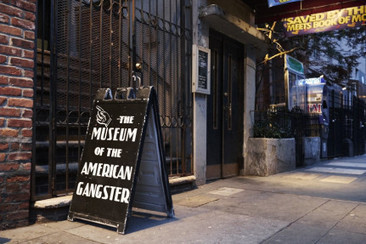
Yet for most historians, the “antihero vs. villain” narrative is as anachronistic as Prohibition itself. Recent works such as Lisa McGirr’s The War on Alcohol: Prohibition and the Rise of the American State (Norton, 2016) have shown that temperance enforcement was far from either a risible game or a dead letter in many communities. Rather, middle-class Anglo-Saxon Protestant reformers and the state wielded the weight of the law as a weapon against the poor, the non-white, the urban, and the foreign-born—all seen as threateningly “un-American.” Meanwhile, despite the romantic myths that have come to surround gangsters, most were neither swashbuckling icons of bravado and wealth nor benevolent Robin Hoods, but rather violent, sometimes pathological menaces to lawful as well as mob society.
Scoop.it!

Scoop.it!

Este libro reúne 24 textos relacionados con la medicina tradicional andina, seguidos de un conjunto de paratextos compuestos por el colofón sobre el 25 o aniversario del Centro de Medicina Andina del Cusco y cuatro anexos. A partir de ese conjunto, los editores peruanos, el antropólogo Rodolfo Sánchez Garrafa y el químico Ricardo Sánchez Garrafa, desean mostrar la “relación existente y posible entre la medicina tradicional y la medicina académica”, siguiendo el ansiado proyecto global para las Américas impulsado por la Organización Mundial de la Salud (OMS) y la Organización Panamericana de la Salud (OPS), implantado desde la segunda mitad del siglo XX y vigente hasta la actualidad. De partida, recupera textos dispersos, escritos entre 1922 y 2006, poniéndolos al alcance del lector. El 50% por ciento proviene de una diversidad de libros extranjeros o peruanos, seguido de un 33% por ciento de textos redactados, al parecer para el volumen, quedando un 17% restante de artículos tomados de revistas o de comunicaciones internacionales especializadas. Un 63% por ciento de todo ese material fue redactado por autores peruanos y un 37% por ciento por autores europeos y norteamericanos. Ese cuerpo reflexivo heterogéneo ofrece una visión panorámica en cuatro partes distintas y complementarias: las nociones introductorias al estudio de la medicina tradicional; los diagnósticos y las terapias de los especialistas; la articulación de la medicina tradicional y académica en los sistemas formales de salud y, finalmente, la significación de la medicina tradicional para los organismos reguladores de la salud. Sin lugar a dudas, todas esas problemáticas son claves y actualmente clásicas, pues permiten entender el marco que debe ser tomado en cuenta para el análisis de una articulación de la medicina tradicional con la biomedicina de Los Andes. Sin embargo, hay más, pues el libro presenta una gama de temáticas que han preocupado a los antropólogos y biomédicos a lo largo del siglo XX. Por ejemplo, varios autores alertan acerca de la falta de uniformidad conceptual al emplear categorías muy diversas para denominar a la “otredad médica”, llamada de manera equivalente medicina folclórica, popular, naturista, indígena, natural o tradicional (p.19-27). La falta de consenso y el uso indiscriminado de categorías disímiles se mantiene como un problema absolutamente vigente no solo entre los propios terapeutas, que alguna vez emplearon de manera intercambiable estas categorías para legitimar su practica, sino también por los pacientes y hasta los especialistas que en épocas pasadas no dieron la importancia necesaria a las definiciones conceptuales y sus significados. Pero, resulta que si bien la terminología utilizada es problemática, muchos autores, particularmente biomédicos, habrían enfatizado en averiguaciones acerca de la etiología de las enfermedades identificadas por los indígenas y la población popular, razón por la cual elaboraron listas con causales explicativas para entenderlas. Una clara ilustración de esa tendencia es el texto de David Frisancho Pineda (p.111-128). Asimismo, la reiteración de que la teoría médica tradicional es distinta de la biomédica genera una literatura que enfatiza la labor de traducción terminológica, establece equivalencias y parecidos entre ambas medicinas (p.119-128). En suma, el corpus permite comprender que, en distintos periodos, quienes se ocuparon de estudiar la medicina tradicional relegaron las voces de los terapeutas y de sus pacientes. Mientras que en otros períodos la situación cambia de manera contrastante, incorporando no sólo aquellas voces sino visibilizando las representaciones que ellos tienen de la enfermedad, la salud y la curación (p.77-96; 143-163; 199-214).
Jerónimo M.M.'s insight:
superinteresante
Scoop.it!

Consideran que es tiempo suficiente para que el gobierno nacional y los diez gobiernos regionales amazónicos evalúen los daños que ocasionan estas obras en la vida de los pueblos indígenas y también revisen el paquete de normas ambientales que afectan sus derechos.
Scoop.it!

Nuevo fragmento de la conferencia que dictó J.MªF. el pasado jueves en el Museo Mindalae, de Quito, sobre la espiritualidad shuar, una espiritualidad en peligro de extinción. "La espiritualidad, la conexión con el corazón como dicen los sufíes y como decía santo Tomás, es una experiencia humana trascendente, no es un tema de análisis abstracto…
Scoop.it!

On May 31, 1778, the Reverend Joseph Easterbrook, Anglican vicar of the now-abandoned Temple Church in Bristol, England, was called in on what would become the most bizarre case of his clerical career.
Jerónimo M.M.'s insight:
Off-topic, but fascinating
Scoop.it!
Ten years ago women in the Amazon were not allowed anywhere near the rituals.
Jerónimo M.M.'s insight:
Read with caution! It is full of -ahem- inaccuracies, to put it lightly
|




