


Organising and documenting a rare gathering of 66 indigenous elders in the Colombian Amazon | Check out 'The Encounter of the Elders - Encuentro de Mayores' on Indiegogo.


 Your new post is loading...
 Scoop.it! Organising and documenting a rare gathering of 66 indigenous elders in the Colombian Amazon | Check out 'The Encounter of the Elders - Encuentro de Mayores' on Indiegogo. 
No comment yet.
Sign up to comment
Scoop.it!

¡Andy Bichlbaum necesita tu ayuda hoy mismo! Stop Trump, jump-start the future - Help the Yes Men do their biggest (and most important) project ever! It's secret, but: 1. It'll build on the 2018 midterm elections, and will be a kick in the pants towards a future we can all be excited about. 2. It'll put a smile on your face, and an ugly orange grimace on someone else’s
Jerónimo M.M.'s insight:
if you know the Yes Men you know that whatever this is, it will be awesome. If you don't know the Yes Men, google it now.
Scoop.it!

Dogs were introduced into Indigenous Amazonian groups by the whites during the Conquest of the Americas, and they have since been ubiquitous in the region's villages. Having quickly spread throughout the South American lowlands, there are few groups which have not established relations with dogs. Even though early travellers and chroniclers and, later, a few anthropologists have reported on the role of these animals in villages, the relations between Indians and dogs remains understudied. However, many researchers have informally recorded ethnographic experiences on the theme. Relying on data obtained through interviews with various ethnographers of lowland South America, and also on secondary sources, this dissertation seeks to address this gap in Amazonian ethnology. First, I will focus on the processes that led to the introduction of the dog in the lowlands, and on how the animal is conceived, treated and fed by Amerindian people. Lastly, I will turn to the techniques through which these foreign animals are qualified for hunting and predatory activity. Contrary to what has been described for familiarized pets or (other) domesticated animals (such as chickens), it is necessary to produce dogs as auxiliary animals, or, in other words, as animals whose predatory potential, desired by enemies, is put in the service of human-kinspeople
Jerónimo M.M.'s insight:
Interesting topic, I knew the Aztecs had dogs, I always assumed the Amazonians did as well
Scoop.it!

La muerte de una curandera y el linchamiento de un canadiense actualizaron la discusión sobre el brebaje alucinógeno y su atractivo para miles de viajeros. Todos los rastros de sangre han sido raspados y retirados de entre la suciedad, debajo de la palmera fuera de la casa de madera endeble de Olivia Arévalo, en un
Jerónimo M.M.'s insight:
Articulo antiguo pero interesante sobre la muerte de Olivia Arévalo
Scoop.it!

It is the temperature at which human cells start to cook, animals suffer and air conditioners overload power grids. Once an urban anomaly, 50C is fast becoming reality
Scoop.it!
¿Por qué los llaman “primitivos”? ¿Es tan sorprendente que algunos pueblos no quieran unirse a la sociedad mayoritaria?
Jerónimo M.M.'s insight:
Por el día mundial de los pueblos indígenas
Scoop.it!
A story about family ties, gardening, and youth leadership.
Scoop.it!
A story about salmon, the wisdom of elders, and family bonds.
Jerónimo M.M.'s insight:
beautiful story
Scoop.it!
A story about fishing, environmental change, and the urgency of protecting our earth.
Scoop.it!

From
aeon

Do psychedelics give access to a universal, mystical experience of reality, or is that just a culture-bound illusion?
Scoop.it!

There are now twice as many people as 50 years ago. But, as EO Wilson has argued, they can all survive – in cities
Jerónimo M.M.'s insight:
this is an interesting idea
Scoop.it!

El aullido de Allen Ginsberg y el paso de los beats por el Perú en coloquio de la PUCP.
Jerónimo M.M.'s insight:
Increíble articulo sobre el paso de Allen Ginsberg por Peru en los 60 y como le conseguía la ayahuasca la hermana de Alejandro Jordorowski!
Scoop.it!

Relato de un indígena harakbut contactado por los sacerdotes dominicos.
|
Scoop.it!

Procedencia, evolución y perspectivas de futuro de los consumos asociados a las sustancias psicoactivas de origen botánico
Jerónimo M.M.'s insight:
Un panel espectacular
Scoop.it!
En este webinar serán comparados desde el punto de vista biomédico los efectos de la DMT y los de la ayahuasca. La DMT es el principio psicoactivo de la ayahuasca, que ejerce sus efectos por la acción inhibitoria de la MAO endógena inducida por los compuestos de acción IMAO presentes en la liana B. caapi. Serán desmitificados algunos conceptos asentados acerca de cada una de las dos sustancias, como: que la DMT es la responsable de los sueños porque se segrega en la glándula pineal mientras dormimos, que el hecho de que la DMT esté presente en la naturaleza la convierta en una sustancia segura, espiritual o especial, que la ayahuasca es una cura para casi todo, o que los efectos negativos que puede inducir la ayahuasca no se deben a la propia ayahuasca sino a razones de otro tipo (como por ejemplo porque se toma con personas que no saben llevar las sesiones, o porque había otras sustancias mescladas a la ayahuasca).
Jerónimo M.M.'s insight:
Repost, esta charla lo merece
Scoop.it!
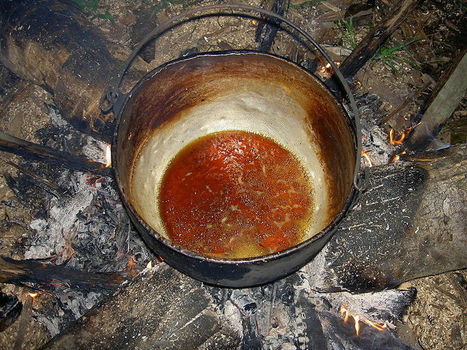
The man was recommended to buy the infusion for medical purpuses, but he did not know that the liquid contained several ingredients that were banned in the Russian Federation
Jerónimo M.M.'s insight:
This is really bad news :-(
Scoop.it!

La Policía sorprendió a 11 personas en una ceremonia y secuestró drogas y dinero. La Fuerza Policial Antinarcotráfico de Córdoba realizó este fin de semana un operativo en Córdoba capital en el que frenaron la realización de un ritual con ayahuasca.Los efectivos policiales sorprendieron a 11 personas que estaban en u
Jerónimo M.M.'s insight:
Otro arresto en Argentina
Scoop.it!

Es el único superviviente de su pueblo indígena. No sabemos quién es, el nombre de su tribu o qué lengua habla.
Scoop.it!
Ernie LaPointe, Sitting Bull's lineal great grandson, tells his great grandfather's oral history. In this film clip he tells who the family holds most responsible for the death of Sitting Bull. Full two part DVD series available at www.reelcontact.com. This clip is from part two of 'The Authorized Biography of Sitting Bull By His Great Grandson".
Scoop.it!
A story about water, activism, and the lessons imparted by grandfathers.
Scoop.it!
A story about huckleberries, community feasts, and changing traditions.
Jerónimo M.M.'s insight:
Global warming as experienced by indigenous peoples
Scoop.it!
A story about the loss of traditions, the importance of ceremonies, and efforts to bring back the old ways.
Scoop.it!

The story we have been telling ourselves about our origins is wrong, and perpetuates the idea of inevitable social inequality. David Graeber and David Wengrow ask why the myth of 'agricultural revolution' remains so persistent, and argue that there is a whole lot more we can learn from our ancestors.
Jerónimo M.M.'s insight:
Another take on the origins of inequality, this time based on facts
Scoop.it!

Homem e duas mulheres foram levados para delegacia após moradora se incomodar com os pelados em frente à sua casa, segundo Polícia Civil. Uma das jovens, que não teria bebido chá, fala em 'Lei Cósmica'.
Jerónimo M.M.'s insight:
Apparently three people in Brazil drank ayahuasca and decided to meditate naked
Scoop.it!

Dijeron que no está tipificado por la ley para hacer operaciones en ese sentido.
Jerónimo M.M.'s insight:
Interesante, parece que alguien pidió permiso para importar legalmente a Paraguay y los mandaron directamente al ministerio de salud…. Curioso tb lo bien y mal informados que están según para qué cosas..
|





I just backed this AMAZING project, you should too