


Quand l’Homme moderne a-t-il migré vers l’Asie ? La question anime nombre de débats depuis des décennies. Des scientifiques remettent de l’huile sur le feu.

 Your new post is loading...
  Scoop.it! Quand l’Homme moderne a-t-il migré vers l’Asie ? La question anime nombre de débats depuis des décennies. Des scientifiques remettent de l’huile sur le feu. 
No comment yet.
Sign up to comment
Scoop.it!
Microraptor, ce petit dinosaure volant aux plumes irisées, qui peuplait les forêts il y a environ 130 millions d’années, mangeait des poissons.
Scoop.it!

On pensait - à tort - que la domestication de la vigne s'était imposée rapidement. L'étude de dix-sept sites romains du sud de le France, menée notamment par Laurent Bouby, ingénieur de recherche CNRS au Centre de bio-archéologie et d'écologie de Montpellier (CNRS/Université de Montpellier 2/EPHE/INRAP), montre que la vigne domestiquée a mis du temps à supplanter la vigne sauvage dans les cultures.
Scoop.it!

Le maïs était largement consommé au Pérou pendant la Période Archaïque.
Scoop.it!

After decoding the Iceman's genetic make-up, a research team has now made another major breakthrough in mummy research: Using just a pinhead-sized sample of brain tissue from the world-famous glacier corpse, the team was able to extract and analyze...
Scoop.it!

Un equipo de investigadores de EE.UU. y Croacia descubrieron evidencias del tumor de huesos más antiguo que se tiene constancia en los restos de un Neanderthal de hace más de 120,000 años, según es...
Scoop.it!

The paper describes the background and some preliminary results of the author’s project of the same name, funded by the European Research Council. It outlines the different elements of the cultural evolution research programme, from theory-building to understanding the past, and explains why demography is central to both the programme and the project. The specific objectives of the project are then described, revolving around the reconstruction of regional demographic patterns in the European Neolithic and assessing the extent to which cultural, social and economic changes are related to them as causes or consequences. Demographic patterns in the British and southern Scandinavian Neolithic show evidence of major fluctuations that seem to be related to changes in other domains, such as monument building.
Scoop.it!

From
phys

Researchers from the University of Valencia and the Natural History Museum of Berlin have studied the fossilised remains of scales and bones found in Teruel and the south of Zaragoza, ascertaining that they belong to a new fish species called...
Scoop.it!

Un manuscrit du 12ème siècle contient les plus anciennes recettes de cuisine médiévales européennes connues, selon une nouvelle étude.
Scoop.it!

Une structure de pierre mystérieuse, découverte au fond de la mer de Galilée en Israël il y a neuf ans, pourrait être un tumulus d'origine humaine.
Scoop.it!

Canterbury Archaeological Trust: Largest professional unit working in Kent archaeology. Cosultation, evaluation, excavation, surveys, building recording, education service
Scoop.it!

From
phys
The first-known definitive case of a benign bone tumor has been discovered in the rib of a young Neandertal who lived about 120,000 years ago in what is now present-day Croatia.
Scoop.it!

From
phys
An international team of paleontologists that includes Northern Illinois University anthropologist Dan Gebo is announcing the discovery of a nearly complete, articulated skeleton of a new tiny, tree-dwelling primate dating back 55 million years.
|
Scoop.it!

Le célèbre naturaliste s'est fait devancer par un jeune inconnu ! Beau joueur, il soutient sa publication et accélère la rédaction de son propre ouvrage.
Scoop.it!

Europe's oldest mummy likely suffered a brain injury, a protein analysis shows.
Scoop.it!
L’analyse du matériel de mouture concerne les meules depuis leur extraction dans les carrières jusqu’à leur abandon sur les sites archéologiques. Elle comprend les étapes de façonnage, de transport, d’utilisation et d’entretien.
Scoop.it!

Fue descubierta accidentalmente por unos pescadores en el espigón de Poniente
Scoop.it!

The oldest and most widespread collection of prehistoric cave and rock art in the United States has been found in and around Tennessee, according to a new paper in the journal Antiquity that documents the art.
Scoop.it!

The fertile plains of central and western Macedonia are of key importance for early Greek prehistory, and Nea Nikomedeia, dated to the end of the seventh millennium BC, has long been considered one of the earliest farming settlements in Europe (Rodden 1965: 83). In recent years, surveys carried out along the periodically exposed shores of the artificial lake of Polyphitos, and rescue excavations imposed by large-scale public works in the region, have revealed over 30 Early Neolithic sites. They offer a welcome opportunity to examine the material remains, cultural preferences and origins of early farming groups moving from the south-east into Europe (Karamitrou-Mentessidi 2005: 524).
Scoop.it!

Construit au début du IVe millénaire avant J.-C., mille ans avant les pyramides d’Egypte, le cairn de l’île de Gavrinis, face à Larmor-Baden dans...
Scoop.it!

Les hommes auraient vécu en Amérique des milliers d'années plus tôt qu'on ne le croyait.
Scoop.it!

Les restes sont presque imperceptibles près du petit village de Rakhigari dans le nord de l'Inde.
Scoop.it!

Réalisée par des spécialistes suisses en paléopathologie et publiée récemment dans l’European Journal of Oral Sciences, l’étude approfondie de la denture d’Ötzi, « l’Homme des glaces », offre un assez vaste échantillon des maladies bucco-dentaires dont souffraient les gens du Néolithique.
Scoop.it!

Many people think modern technology is very advanced, but according to Dr. Peter J. Lu, post-doctoral research fellow at Harvard University, Chinese people in 4,500 B.C. did a better job making flat and smooth surfaces than we can nowadays with our best polishing technologies.
Scoop.it!
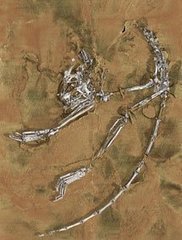
Los primates más antiguos que conocemos aparecieron casi de repente hace unos 56 millones de años. Era el inicio de la época conocida como Eoceno, un momento que ha sido bautizado como el Máximo Térmico Paleoceno-Eoceno en el que la Tierra vivía un periodo de calentamiento global debido al efecto invernadero, igual que sucede en la actualidad, aunque por causas muy diferentes. El planeta estaba cubierto por selvas tropicales y las palmeras crecían hasta las latitudes que hoy ocupa el norte de Alaska.
|





