


Australia will be the first country in the world to display publicly specimens of Guanlong wucaii, a relative of Tyrannosaurus rex that helped confirm the link between dinosaurs and birds.

 Your new post is loading...
  Scoop.it! Australia will be the first country in the world to display publicly specimens of Guanlong wucaii, a relative of Tyrannosaurus rex that helped confirm the link between dinosaurs and birds. 
No comment yet.
Sign up to comment
Scoop.it!
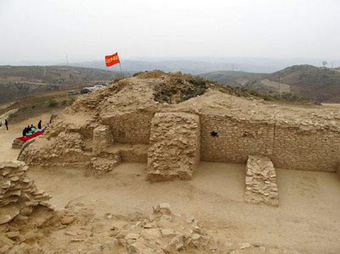
The neolithic Shimao Ruins are believed to be the biggest prehistoric city ruins found in China. The find has had a significant impact in changing historical studies about Chinese civilisation.
Scoop.it!

Mesolithic populations throughout Europe used diverse resource exploitation strategies that focused heavily on collecting and hunting wild prey. Between 5500 and 4200 cal BC, agriculturalists migrated into northwestern Europe bringing a suite of Neolithic technologies including domesticated animals. Here we investigate to what extent Mesolithic Ertebølle communities in northern Germany had access to domestic pigs, possibly through contact with neighbouring Neolithic agricultural groups. We employ a multidisciplinary approach, applying sequencing of ancient mitochondrial and nuclear DNA (coat colour-coding gene MC1R) as well as traditional and geometric morphometric (molar size and shape) analyses in Sus specimens from 17 Neolithic and Ertebølle sites. Our data from 63 ancient pig specimens show that Ertebølle hunter-gatherers acquired domestic pigs of varying size and coat colour that had both Near Eastern and European mitochondrial DNA ancestry. Our results also reveal that domestic pigs were present in the region ~500 years earlier than previously demonstrated.
Scoop.it!

Las poblaciones nómadas de cazadores-recolectores del norte de Europa comenzaron a domesticar cerdos de diferentes tamaños y colores hace unos 7.000 años, 500...
Scoop.it!

Des poteries révèlent que nos ancêtres chasseurs-cueilleurs consommaient des plantes pour leur goût autant que pour leur apport énergétique.
Scoop.it!

Une sépulture à Basur Höyük, en Turquie, a révélé des jetons de jeu de plateau.
Scoop.it!
Bereits 1.000 Jahre bevor die alten Ägypter ihre Pyramiden bauten, errichteten in Europa Menschen Großsteingräber oder Steinkreise, wie die Kultstätte Stonehenge. Aber auch in Deutschland gibt es geheimnisvolle Steinkreise.
Scoop.it!

Greece's Culture Ministry has warned against 'overbold' speculation that an ancient artificial mound being excavated could contain a royal Macedonian grave or even Alexander the Great.
Scoop.it!

PLOS ONE: an inclusive, peer-reviewed, open-access resource from the PUBLIC LIBRARY OF SCIENCE. Reports of well-performed scientific studies from all disciplines freely available to the whole world.
Scoop.it!

The mechanisms of the human foot are not as unique as originally thought and have much more in common with the flexible feet of other great apes.
Scoop.it!

Die Dürre des Sommers macht es möglich: Bodenverfärbungen in Stonehenge liefern den Beweis, dass auch in den großen Lücken in den berühmten Steinkreisen einst Megalithe standen.
Scoop.it!

When you share your lunch with someone less fortunate or give your friend half of your dessert, does that act of generosity flow from the milk of human kindness, or is it a subconscious strategy to assure reciprocity should you one day find...
Scoop.it!

A researcher describes how his mathematical model based on heat diffusion reveals the critical role played by large animals in dispersing nutrients
|
Scoop.it!

Mesolithic hunter-gatherers likely acquired the pigs through trade with their farmer neighbors to the south.
Scoop.it!

European hunter-gatherers acquired domesticated pigs from nearby farmers as early as 4600 BC, according to new evidence.
Scoop.it!

Genetic analysis revealed the domestic pigs had coats of varied colors and spots that likely would have seemed exotic and strange to the hunter-gatherers and may have attracted them to the swine.
Scoop.it!
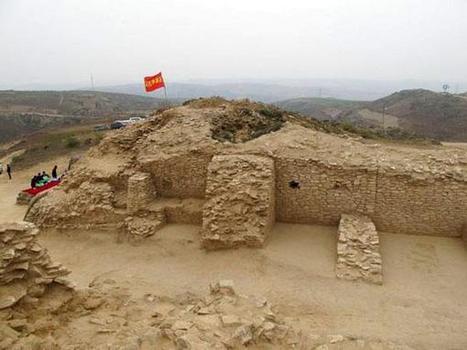
The neolithic Shimao Ruins are believed to be the biggest prehistoric city ruins found in China. The find has had a significant impact in changing historical studies about Chinese civilisation.
Scoop.it!

European hunter-gatherers acquired domesticated pigs from nearby farmers as early as 4600 BC, according to new evidence.
Scoop.it!

The skeletal remains of the biggest fish ever to have swum the seas have revealed just how massive the prehistoric creature could grow.
Scoop.it!

S'il est difficile aujourd’hui d’imaginer un plat sans épices, l’origine de leur utilisation est méconnue. Une nouvelle étude suggère que les Hommes assaisonnent leurs plats depuis la fin de l’âge de pierre...
Scoop.it!

Our early ancestors had a taste for spicy food, new research led by the University of York has revealed.
Scoop.it!

Mineral grains from garlic-mustard seeds found in 6,000-year-old cooking pots.
Scoop.it!

Researchers have shown that ancient Egyptian iron beads held at the UCL Petrie Museum were hammered from pieces of meteorites, rather than iron ore. The objects, which trace their origins to outer space, also predate the emergence of iron smelting by two millennia.
Scoop.it!

This Thinker, not by Rodin, was created between 5250 and 4500 BC.
Scoop.it!

California's rich diversity of Native American ethnic-and-language groups took shape during the past 12,000 years as migrating tribes settled first on the lush Pacific coast and then in progressively drier, less-vegetated habitats, says a new study.
|




