Aux origines
33.2K views | +4 today
Aux origines
Aux origines de l'univers de la vie et de l'humanité...
Your new post is loading...
Scoop.it!

An Asian origin for human ancestors?

An Asian origin for human ancestors? | Aux origines | Scoop.it
Researchers agree that our immediate ancestors, the upright walking apes, arose in Africa. But the discovery of a new primate that lived about 37 million years ago in the ancient swamplands of Myanmar bolsters the idea that the deep primate family tree that gave rise to humans is rooted in Asia.
No comment yet.
Scoop.it!

Les ancêtres de la lignée humaine étaient-ils Asiatiques ?

Les ancêtres de la lignée humaine étaient-ils Asiatiques ? | Aux origines | Scoop.it
Les primates anthropoïdes ont entre autres donné naissance à la lignée humaine en Afrique. Pourtant, leurs plus vieux fossiles ont été trouvés en Asie.
No comment yet.
Scoop.it!

Did the Earliest Human Relatives Originate in Asia and Not Africa?

Did the Earliest Human Relatives Originate in Asia and Not Africa? | Aux origines | Scoop.it
Reports Jennifer Viegas in Discovery News: The ancestors of humans, apes and monkeys evolved first in Asia before moving on to Africa, suggests a new fossil find from Myanmar.
No comment yet.
Scoop.it!

Ancient history of circumarctic peoples illuminated

Ancient history of circumarctic peoples illuminated | Aux origines | Scoop.it
Two studies led by scientists from the University of Pennsylvania and National Geographic's Genographic Project reveal new information about the migration patterns of the first humans to settle the Americas. The studies identify the historical relationships among various groups of Native American and First Nations peoples and present the first clear evidence of the genetic impact of the groups' cultural practices.
No comment yet.
Scoop.it!

L’archéologie contredit-elle à la Bible ?

L’archéologie contredit-elle à la Bible ? | Aux origines | Scoop.it

Avec Estelle Villeneuve, Maison de l’archéologie et de l’ethnologie René-Ginouvès, Nanterre, Jean-Baptiste Humbert, Ecole biblique et archéologique française de Jérusalem, et Ronny Reich, de l'Israël Antiquities Authority.


No comment yet.
Scoop.it!

Une importante chambre funéraire découverte à Pachacamac

Une importante chambre funéraire découverte à Pachacamac | Aux origines | Scoop.it

Une équipe d'archéologues de l'Université Libre de Bruxelles (ULB) a découvert un tombeau spectaculaire contenant plus de quatre-vingts squelettes d'âges différent au Pérou. Cette découverte, provisoirement datée de près de 1000 ans, a été faite sur le site de Pachacamac, qui est actuellement à l'étude pour obtenir le statut de patrimoine mondial de l'UNESCO. Pachacamac est situé sur la côte Pacifique, à environ trente kilomètres de Lima, et est l'un des plus grands sites pré-hispaniques d'Amérique du Sud.

No comment yet.
Scoop.it!

First look at the face of a woman dead for 2000 years

First look at the face of a woman dead for 2000 years | Aux origines | Scoop.it

For most Egyptologists of the golden era of discovery in the 19th and early 20th centuries, it was a temptation to which they succumbed. Not so Alexander Rhind, who in 1857, aged 24, discovered what became known as the Rhind mummy in a tomb dating to 10 BC in the ancient city of Thebes. He shipped it home and it resides, intact, at the National Museum of Scotland in Edinburgh, UK.

No comment yet.
Scoop.it!

Évolution : les oiseaux sont-ils des dinosaures immatures ?

Évolution : les oiseaux sont-ils des dinosaures immatures ? | Aux origines | Scoop.it
Les oiseaux, ces dinosaures des temps modernes, ressembleraient beaucoup à leurs ancêtres mais à l'état juvénile. Un exemple de pædomorphose qui leur a donné un crâne bien plus grand comparativement à leur corps.
No comment yet.
Scoop.it!

La propriété se transmettrait de père en fils depuis le Néolithique

La propriété se transmettrait de père en fils depuis le Néolithique | Aux origines | Scoop.it
Publiant ses travaux le 28 mai dans PNAS, une équipe internationale dirigée par des chercheurs britanniques, après avoir étudié des tombes néolithiques et leurs occupants, suggère un fort lien entre accès à des terres riches et statut : le début des inégalités sociales, dès -7.000 ans ?
No comment yet.
Scoop.it!

En Egipto descubren tumba faraónica de 4.000 años de antigüedad.

En Egipto descubren tumba faraónica de 4.000 años de antigüedad. | Aux origines | Scoop.it
Una tumba faraónica de un gobernante regional de Egipto, identificado como Haguti Najt (1994-2150 a.C.), ha sido descubierta en la localidad monumental de Deir al Barsha, en la provincia de Minia, en el sur, anunciaron hoy las autoridades.
No comment yet.
Scoop.it!

Why Earth is not an ice ball: Possible explanation for faint young sun paradox

Why Earth is not an ice ball: Possible explanation for faint young sun paradox | Aux origines | Scoop.it
More than 2 billion years ago, a much fainter sun should have left the Earth as an orbiting ice ball. Why we avoided the deep freeze is a question that has puzzled scientists, but one astronomer might have an answer.
No comment yet.
Scoop.it!

Sex: it's a good thing, evolutionarily speaking

Sex: it's a good thing, evolutionarily speaking | Aux origines | Scoop.it

Sure, sex may be fun, but it’s a lot of work, and the payoff is by no means certain. Scientists have speculated for a long time on why all living things don’t simply make like amoebas and split.

No comment yet.
Scoop.it!

L'histoire Maya suggère que la structure du commerce a joué un rôle clé dans son effondrement

L'histoire Maya suggère que la structure du commerce a joué un rôle clé dans son effondrement | Aux origines | Scoop.it

L'évolution des habitudes d'échange offrent une nouvelle perspective sur la chute des centres Mayas des Basses Terres en Amérique centrale il y a environ 1000 ans.

"Notre recherche suggère fortement que les schémas de l'évolution du commerce ont joué un rôle en entrainant l'effondrement Maya" a déclaré Gary Feinman, conservateur d'anthropologie au Field Museum; il a collaboré avec l'Université de l'Illinois à Chicago sur l'étude.

No comment yet.
Scoop.it!

Des mutations ont-elles sauvé l’humanité de la disparition ?

Des mutations ont-elles sauvé l’humanité de la disparition ? | Aux origines | Scoop.it
Alors que l’humanité était réduite à quelques milliers d’âmes il y a 100.000 ans, des mutations dans deux gènes impliqués dans le système immunitaire auraient protégé nos ancêtres contre des bactéries pathogènes. Ces mutations auraient pu éviter une hypothétique extinction au sein de cette population alors fragile.
No comment yet.
Scoop.it!

Une mutation génétique à l'origine d'Homo sapiens

Une mutation génétique à l'origine d'Homo sapiens | Aux origines | Scoop.it
Une mutation survenue chez une petite partie de nos ancêtres  il y a 200 à 100 000 ans aurait pu leur permettre d'échapper à des épidémies : un agent sélectif ayant favorisé l'émergence et le développement d'Homo sapiens.
No comment yet.
Scoop.it!

Monkey lip smacks provide new insights into the evolution of human speech | Machines Like Us

Monkey lip smacks provide new insights into the evolution of human speech | Machines Like Us | Aux origines | Scoop.it
Scientists have traditionally sought the evolutionary origins of human speech in primate vocalizations, such as monkey coos or chimpanzee hoots.
No comment yet.
Scoop.it!

Comment la famille moderne serait née

Comment la famille moderne serait née: Une des caractéristiques modernes de notre espèce est que nous montrons une grande propension à l'attachement à une compagne ou un compagnon spécifique.
No comment yet.
Scoop.it!

Migration pressures on Neolithic Norway

Migration pressures on Neolithic Norway | Aux origines | Scoop.it

The oldest surviving indication of human activity in Norway dates to around 10,000 years ago when the Glaciers at last began to retreat. But today’s Scandinavians are not direct descendants of these early hunter-gatherers.

No comment yet.
Scoop.it!

Archéologie : la grotte préhistorique du Mas d'Azil

A l’occasion d’un projet de réaménagement touristique, des archéologues de l'Inrap mènent une fouille dans la monumentale grotte-tunnel du Mas d’Azil en Ariège, un des sites majeurs du Paléolithique supérieur.
L’immense réseau de galeries du Mas d’Azil n’a pas encore livré tous ses secrets...

No comment yet.
Scoop.it!

Vertebrates share ancient neural circuitry for complex social behaviors: study

Vertebrates share ancient neural circuitry for complex social behaviors: study | Aux origines | Scoop.it
Humans, fish and frogs share neural circuits responsible for a diversity of social behavior, from flashy mating displays to aggression and monogamy, that have existed for more than 450 million years, biologists at The University of Texas at Austin found.
No comment yet.
Scoop.it!

Le statut social en héritage depuis 7.500 ans

Le statut social en héritage depuis 7.500 ans | Aux origines | Scoop.it
Si les sociétés humaines sont hiérarchisées depuis 11.000 ans avec les premières communautés agricoles, les chercheurs supposent que le rang social est devenu héréditaire il y a au moins 7.500 ans.
No comment yet.
Scoop.it!

Turkey: Göbekli Tepe

Turkey: Göbekli Tepe | Aux origines | Scoop.it

Towering over the vast Harran plain on the highest point of the Germus mountain range in south-eastern Turkey, Göbekli Tepe dominates the surrounding landscape. This mound is no natural phenomenon, but a man-made tell with sediments deposited over millennia.

No comment yet.
Scoop.it!

L'histoire Maya suggère que la structure du commerce a joué un rôle clé dans son effondrement

L'histoire Maya suggère que la structure du commerce a joué un rôle clé dans son effondrement | Aux origines | Scoop.it

L'évolution des habitudes d'échange offrent une nouvelle perspective sur la chute des centres Mayas des Basses Terres en Amérique centrale il y a environ 1000 ans.

No comment yet.
Scoop.it!

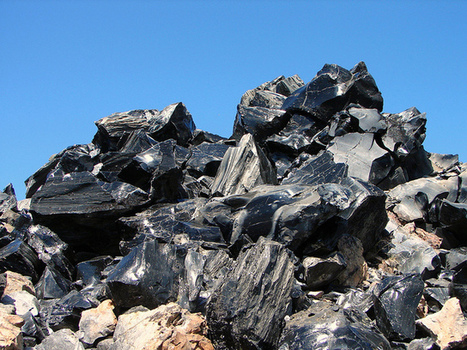
Effondrement maya : sur la route de l'obsidienne

Effondrement maya : sur la route de l'obsidienne | Aux origines | Scoop.it
Le réseau commercial de l'obsidienne reconstruit Le site de Copán, situé à l'ouest du Honduras actuel, a été abandonné vers 820.
No comment yet.
Scoop.it!

Researchers find first Prehistoric Iberian twins

Researchers find first Prehistoric Iberian twins | Aux origines | Scoop.it
Researchers at the Autonomous University of Barcelona (UAB) have discovered the remains of newborn twin girls in the archaeological site of Olèrdola in Barcelona. They date back to between the middle of the 4th century B.C.
No comment yet.