Your new post is loading...

|
Scooped by
Gilbert C FAURE
April 19, 2022 3:15 AM
|
Information on a number of conditions that are associated with diabetes including coeliac disease, thyroid disease and dental health complications.
|
|
Scooped by
Gilbert C FAURE
January 7, 2022 3:24 AM
|
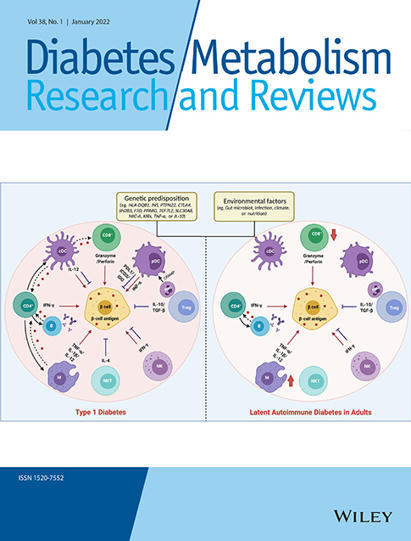
Summary. Type 1 diabetes (T1D) results from autoimmune destruction of insulin-producing beta cells in pancreatic islets. Various immune cell populations are inv
|
|
Scooped by
Gilbert C FAURE
December 3, 2021 5:39 AM
|
The presence of Intrinsic Factor Antibodies (IFAB) as well as megaloblastic anaemia and low serum vitamin B12 are diagnostic of pernicious anaemia. A positive Intrinsic Factor antibody result can exclude the need for further testing, such as the Schillings test. The following autoimmune disease states are associated with pernicious anaemia and the presence of intrinsic factor antibodies: Hashimoto’s thyroiditis, insulin dependent diabetes mellitus, Grave’s disease, rheumatoid arthritis, myasthenia gravis, hypoparathyroidism and Lambert-Eaton syndrome.
|
|
Scooped by
Gilbert C FAURE
November 1, 2021 6:23 AM
|
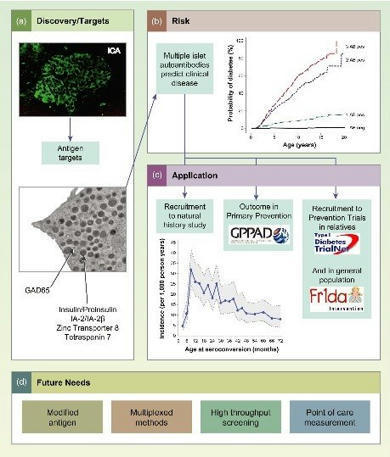
The role of autoantibodies in the early diagnosis of type-1 diabetes. The discovery of a new CD4 T cell autoantigenic target that facilitates this. The mechanisms by which immune cells subsequently infiltrate the pancreas.
|
|
Scooped by
Gilbert C FAURE
August 2, 2021 5:12 AM
|
Immunology of Diabetes Society Review Series: Insights into Pathogenesis of Type 1 Diabetes Series Editors: F. Susan Wong and Timothy I. Tree A wave of exciting research in recent years has given us greater insight into the immunological processes involved in the pathogenesis of type-1 diabetes. In this issue of Clinical & Experimental Immunology, Guest Editors F. Susan Wong, of Cardiff University, and Timothy I. Tree, of King’s College London, present a new Review Series exploring key focus areas in this developing field of immunology. The series papers were commissioned in collaboration with the Immunology of Diabetes Society, and encompass new findings presented at their 2018 IDS conference in London. The role of autoantibodies in the early diagnosis of type-1 diabetes. The discovery of a new CD4 T cell autoantigenic target that facilitates this. The mechanisms by which immune cells subsequently infiltrate the pancreas. Finally, the destructive interactions of immune cells with islets in diagnosed patients. These four reviews provide a detailed coverage from the original to latest discoveries into these areas of the immunology behind type-1 diabetes. We invite you to read the freely accessible series papers below. Part One Editorial: Historical and New Insights into Pathogenesis of Type 1 Diabetes F.S. Wong, T.I. Tree Series papers: Birth and coming of age of islet autoantibodies Bonifacio, P. Achenbach Islet-Immune Interactions in Type 1 Diabetes: The Nexus of Beta Cell Destruction Peters, A. Posgai, T. Brusko Immune cell trafficking to the islets during type 1 diabetes A.M. Sandor, J. Jacobelli, R.S. Friedman HIPs and HIP-reactive T cells T.A. Wiles, T. Delong Part Two Editorial: Historical and New Insights into Pathogenesis of Type 1 Diabetes (2) F.S. Wong, T.I. Tree Series papers: Identifying the ‘Achilles heel’ of type 1 diabetes M. Battaglia, J. H. Buckner, M. K. Levings, S. J. Richardson, F. S. Wong and T. I. Tree Spliced HLA‐bound peptides: a Black Swan event in immunology P. Faridi , M. Dorvash, A. W. Purcell
|
|
Scooped by
Gilbert C FAURE
July 9, 2021 9:07 AM
|
Abstract Different lymphocyte subsets are involved in autoimmune pathogenesis of Type 1 Diabetes (T1D). Previous studies suggested a role of CD5 expressing T and B cells including rare unconvention...
|
|
Scooped by
Gilbert C FAURE
April 22, 2021 1:45 PM
|
As part of the centennial celebration of insulin’s discovery, this review summarizes the current understanding of the genetics, pathogenesis, treatment, and outcomes in type 1 diabetes (T1D). T1D results from an autoimmune response that leads to destruction of the β cells in the pancreatic islet and requires lifelong insulin therapy. While much has been learned about T1D, it is now clear that there is considerable heterogeneity in T1D with regard to genetics, pathology, response to immune-based therapies, clinical course, and susceptibility to diabetes-related complications. This Review highlights knowledge gaps and opportunities to improve the understanding of T1D pathogenesis and outlines emerging therapies to treat or prevent T1D and reduce the burden of T1D.
|
|
Scooped by
Gilbert C FAURE
January 28, 2021 9:26 AM
|
Abstract Type 1 diabetes (T1D) is a chronic metabolic disease caused by the autoimmune destruction of insulin‐producing β‐cells. Ever since the 1920s, the fate of patients suffering from T1D was dr...
|
|
Scooped by
Gilbert C FAURE
December 28, 2020 8:07 AM
|
Summary Recent studies in Type 1 Diabetes (T1D) support an emerging model of disease pathogenesis that involves intrinsic β‐cell fragility combined with defects in both innate and adaptive immune c...
|
|
Scooped by
Gilbert C FAURE
December 8, 2020 12:14 PM
|
Nonalcoholic fatty liver disease (NAFLD) prevalence is high, especially in patients with obesity and type 2 diabetes, and is expected to rise steeply in the coming decades.We estimated NAFLD prevalence in patients with type 1 diabetes and explored associated ...
|
|
Scooped by
Gilbert C FAURE
October 16, 2020 2:14 PM
|
Your pancreas is studded with cell clusters called islets. In most people, special beta cells live snug in the islets, happily making the insulin that the body uses to regulate blood sugar. But in people with type 1 diabetes, the body's T cells mistakenly move into the islets and kill the beta...
|
|
Scooped by
Gilbert C FAURE
June 21, 2020 8:59 AM
|
Tocilizumab (TCZ) in New-onset Type 1 Diabetes - Full Text View.
|
|
Scooped by
Gilbert C FAURE
April 20, 2020 3:05 AM
|
Autoantibody Reversion: Changing Risk Categories in Multiple-Autoantibody–Positive Individuals Michelle So, Colin O’Rourke, Henry T. Bahnson, Carla J.Greenbaum, Cate Speake Diabetes Care Apr 2020,…...
|

|
Suggested by
LIGHTING
January 8, 2022 2:41 AM
|
Abstract Emerging evidence indicates a bi-directional relationship between SARS-CoV-2 and diabetes. The possibility exists that SARS-CoV-2 could induce diabetes, but it is not yet clear whether thi...
|
|
Scooped by
Gilbert C FAURE
December 29, 2021 3:40 AM
|
Commemorating 100 years since the discovery of insulin The discovery of insulin 100 years ago heralded a dramatic shift in the treatment of type 1 diabetes (T1D). Until that point, T1D had been a fatal disease with no treatment options, but the discovery of insulin transformed T1D into a chronic disease that could be managed by insulin therapy.
|
|
Scooped by
Gilbert C FAURE
November 27, 2021 12:19 PM
|
A new treatment using stem cells that produce insulin has surprised experts and given them hope for the 1.5 million Americans living with the disease.
|
|
Scooped by
Gilbert C FAURE
August 19, 2021 2:20 PM
|
A new study has shown that treating type 1 diabetes-prone mice with the small protein MOTS-c prevented the immune system from destroying insulin-producing pancreatic cells, effectively preventing the onset of the autoimmune disease.
|
|
Scooped by
Gilbert C FAURE
July 12, 2021 1:38 PM
|
The phenotype of autoreactive T cells in type 1 diabetes is described as Th1, Th17 and/or Th21, but is largely uncharacterized.We combined multi-para…...
|
|
Scooped by
Gilbert C FAURE
May 12, 2021 3:57 AM
|
Understanding the pathogenesis of type 1 diabetes (T1D), in order to direct therapy for prevention and treatment is a major goal of research into T1D. At the International Congress of the Immunolog
|
|
Scooped by
Gilbert C FAURE
March 13, 2021 8:50 AM
|
|
|
Scooped by
Gilbert C FAURE
January 10, 2021 5:29 AM
|
Type 1 diabetes (T1D) is an auto-immune disorder characterized by a complex interaction between the host immune system and various environmental factors in genetically susceptible individuals. Genome-wide association studies (GWAS) identified different T1D risk and protection alleles, however,...
|
|
Scooped by
Gilbert C FAURE
December 26, 2020 4:39 AM
|
Type 1 diabetes (T1D) is a chronic metabolic disease characterized by insulin deficiency, generally resulting from progressive autoimmune-mediated destruction of pancreatic beta cells. While the phenomenon of beta cell autoimmunity continues to be an active area of investigation, recent evidence...
|
|
Scooped by
Gilbert C FAURE
November 25, 2020 6:16 AM
|
Immune cell migration to the pancreatic islets during type 1 diabetes occurs by transendothelial migration, through a series of steps including rolling, arrest, and crawling on the vascular wal
|
|
Scooped by
Gilbert C FAURE
June 25, 2020 6:42 AM
|
Evidence from tissue studies and some people with COVID-19 shows that the virus damages insulin-producing cells.
|
|
Scooped by
Gilbert C FAURE
April 20, 2020 3:06 AM
|
Type 1 diabetes (T1D) is an autoimmune disease, which is characterized by the destruction of islet β cells in the pancreas triggered by genetic and environmental factors. In past decades, extensive familial and genome‐wide association ...
|




 Scoop.it!