


NIH announces network to accelerate medicines for rheumatoid arthritis and lupus
Phys.Org
RA and lupus are relatively common, severe autoimmune diseases.


 Your new post is loading...
 Scoop.it! NIH announces network to accelerate medicines for rheumatoid arthritis and lupus 
No comment yet.
Sign up to comment
Scoop.it!
PubMed comprises more than 23 million citations for biomedical literature from MEDLINE, life science journals, and online books. Citations may include links to full-text content from PubMed Central and publisher web sites.
Gilbert C FAURE's insight:
Over the last 25 years, several investigators have consistently shown that autoantibodies precede the clinical onset of cognate diseases by years or decades. This phenomenon, regularly observed in the natural history of autoimmune diseases, indicates that autoimmunity develops through successive stages across a variable period of time until the characteristic manifestations of disease are clinically apparent.
Scoop.it!

Eli Lilly v Human Genome Sciences Ltd
Scoop.it!

Cancer cells with defects in DNA repair are highly susceptible to DNA-damaging agents, but delivery of therapeutic agents into cell nuclei can be challenging.
Scoop.it!

Purpose of reviewTo describe our current understanding of the role of T cells in the pathophysiology of systemic lupus erythematosus (SLE). Via Krishan Maggon
Scoop.it!

by Allison Sang, Ying-Yi Zheng, Yiming Yin, Igor Dozmorov, Hao Li, Hui-Chen Hsu, John D.
Scoop.it!

Autoantibodies to proliferating cell nuclear antigen (PCNA) are specifically, if rarely, present in systemic lupus erythematosus (SLE) patient sera. Even SLE patients lacking PCNA reactivity often...
Gilbert C FAURE's insight:
anti-PCNA
Scoop.it!
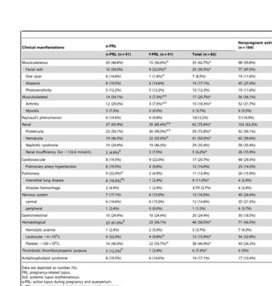
by Huaxia Yang, Hui Liu, Dong Xu, Lidan Zhao, Qian Wang, Xiaomei Leng, Wenjie Zheng, Fengchun Zhang, Fulin Tang, Xuan Zhang Objective To investigate the clinical features, outcome, and risk factors of disease flares in patients with...
Scoop.it!
Gilbert C FAURE's insight:
The new PEPperCHIP® Autoimmune Epitope Microarray 2.0 now covers 3,359 linear autoimmune epitopes including 192 citrullinated peptides as well as the corresponding arginine variants. The IEDB-derived epitopes correlate with a variety of autoimmune diseases including Crohn’s disease, diabetes mellitus, multiple sclerosis, rheumatoid arthritis, Sjögren’s syndrome, systemic lupus erythematosus, vitiligo and many more.
Scoop.it!

New B-Cell Drug Disappoints in Lupus
Scoop.it!

‘That Obscure Object of Desire’: in systemic lupus erythematosus B-cell activating factor/B-lymphocyte stimulator... http://t.co/yl432MOyX8
Scoop.it!
Investigations of patients with systemic lupus erythematosus have applied insights from studies of the innate immune response to define IFN-I, with IFN-α as the dominant mediator, as central to the pathogenesis of this prototype systemic autoimmune...
Scoop.it!

From BioPortfolio: Bruce Richardson, M.D., Ph.D., of The University of Michigan, has been selected as the second recipient of the Lupus Insight Prize. The award... (News: Dr.
|
Scoop.it!
PubMed comprises more than 23 million citations for biomedical literature from MEDLINE, life science journals, and online books. Citations may include links to full-text content from PubMed Central and publisher web sites.
Scoop.it!
PubMed comprises more than 23 million citations for biomedical literature from MEDLINE, life science journals, and online books. Citations may include links to full-text content from PubMed Central and publisher web sites.
Scoop.it!
Systemic lupus erythematosus (SLE) is a type I IFN (IFN-I)–driven autoimmune disorder with exaggerated B and Th cell responses. Th17 cells, a recently identified Th cell subset, have been strongly implicated in the pathogenesis of SLE.

Krishan Maggon 's curator insight,
September 22, 2014 12:56 AM
Published online before printAugust 22, 2014, doi:10.4049/jimmunol.1401322The Journal of ImmunologyOctober 1, 2014vol. 193 no. 7 3288-3295 Complement Component C5a Permits the Coexistence of Pathogenic Th17 Cells and Type I IFN in LupusSudesh Pawaria*, Kritika Ramani*, Kelly Maers*, Youhua Liu†, Lawrence P. Kane‡,Marc C. Levesque* and Partha S. Biswas*
+Author Affiliations *Division of Rheumatology and Clinical Immunology, Department of Medicine, University of Pittsburgh, Pittsburgh, PA 15261;†Division of Pathology, Department of Medicine, University of Pittsburgh, Pittsburgh, PA 15261; and‡Department of Immunology, University of Pittsburgh, Pittsburgh, PA 15261Address correspondence and reprint requests to Dr. Partha S. Biswas, Division of Rheumatology and Clinical Immunology, University of Pittsburgh, BST S725, 3500 Terrace Street, Pittsburgh PA 15261. E-mail address: psb13@pitt.edu
Scoop.it!

Abstract Purpose of review Systemic lupus erythematosus (SLE) is characterized by autoantibodies directed against nuclear autoantigens normally concealed from immune recognition in healthy individuals. Here, we summarize recently identified mechanisms of abnormal cell death leading to exposure and aberrant processing of nucleoprotein self antigens, and discuss their role in the SLE pathogenesis. Recent findings.
During the past few years, the unveiling of several new forms of cell death has expanded our understanding beyond the simple view of ‘apoptotic’ versus ‘necrotic’ cell death. SLE patients show abnormalities in cell death at several levels, including increased rates of apoptosis, necrosis, and autophagy, as well as reduced clearance of dying cells. These abnormalities lead to an increased autoantigen burden and antigen modifications, such as nucleic acid oxidation that increases the inflammatory properties of self antigens. Recent investigations have highlighted the role of opsonins in determining the immunogenic versus tolerogenic characteristics of self antigens. Summary Dysregulation of different forms of programmed cell death contributes to increased exposure, availability, and immunogenic characteristics of intracellular self antigens, which all participate in development of lupus autoimmunity. As our understanding of abnormalities of cell death in SLE advances, potential therapeutic opportunities await human implementation. Via Krishan Maggon
Krishan Maggon 's curator insight,
August 22, 2014 10:25 PM
Current Opinion in Rheumatology:September 2014 - Volume 26 - Issue 5 - p 459-466doi: 10.1097/BOR.0000000000000083SYSTEMIC LUPUS ERYTHEMATOSUS AND SJOGREN'S SYNDROME: Edited by Mariana J. Kaplan
Scoop.it!

Purpose of reviewRenal involvement is a major cause of morbidity and mortality in systemic lupus erythematosus. In this review, we provide an update on recent discoveries in the pathogenesis, diagnosis, and treatment of lupus nephritis. Via Krishan Maggon
Krishan Maggon 's curator insight,
August 22, 2014 10:41 PM
Current Opinion in Rheumatology:September 2014 - Volume 26 - Issue 5 - p 502-509doi: 10.1097/BOR.0000000000000089SYSTEMIC LUPUS ERYTHEMATOSUS AND SJOGREN'S SYNDROME: Edited by Mariana J. KaplanThe pathogenesis, diagnosis and treatment of lupus nephritis
Schwartz, Noaa,∗; Goilav, Beatriceb,∗; Putterman, Chaimc,d
Scoop.it!
AM14 rheumatoid factor (RF) B cells in the MRL/lpr mice are activated by dual BCR and TLR7/9 ligation and differentiate into plasmablasts via an extrafollicular (EF) route.
Scoop.it!
IL-2, a cytokine with pleiotropic effects, is critical for immune cell activation and peripheral tolerance.
Scoop.it!
Dr. Mark Wener from the University of Washington discusses recent trends in autoantibody testing, which includes testing for such conditions as lupus, rheumatoid arthritis, and other autoimmune...
Scoop.it!
Systemic lupus erythematosus (SLE) is a human chronic inflammatory disease generated and maintained throughout life by autoreactive T and B cells.
Scoop.it!

Anti-dsDNA, surface-expressed TLR4 and endosomal TLR9 cooperate to ...
Gilbert C FAURE's insight:
bis?
Scoop.it!

Anti-dsDNA, surface-expressed TLR4 and endosomal TLR9 cooperate to ...
Scoop.it!
Blood monocytes from children with systemic lupus erythematosus (SLE) behave similar to dendritic cells (DCs), and SLE serum induces healthy monocytes to differentiate into DCs in a type I IFN–dependent manner.
|






