


The Noongar people number more than 40,000 but with less than 250 fluent speakers of Noongar the language is considered endangered. But an online project to record the language in its entirety may well save the language

 Your new post is loading...
 Scoop.it! The Noongar people number more than 40,000 but with less than 250 fluent speakers of Noongar the language is considered endangered. But an online project to record the language in its entirety may well save the language 
No comment yet.
Sign up to comment
Scoop.it!

Created on Fri, 08/08/2014 - 16:22 by Maggie Walter With over 500 Indigenous nations in Australia, and around 50,000 years of history, there is a lot to be learnt about Australia's First Nations Peoples.
Scoop.it!

The Australian Indigenous Communications Association (AICA) is the national peak body for the Australian Aboriginal and Torres Strait Islander broadcasting, media and communications sector, encompassing print, film, television, on-line and radio.
In collaboration with our members, AICA formulates national policy covering all aspects of the Indigenous media, broadcasting and communications sector, seeking to serve the interests of individual practitioners as well as over 130 Indigenous media outlets in remote, regional & urban Australia. AICA is governed by a board of nationally elected representatives, comprised of sector experts from each of the mediums, a remote sector representative and 4 executive office members.
Scoop.it!
First Australians - Making a Nation History Webquest and Lesson Plan - Australian Curriculum Lessons
Summary of Lesson Plan/Webquest: This WebQuest is one activity in an integrated History/English unit, based on the Australian Curriculum History elective: Making A Nation, for Year 9. This activity is only one component of a unit that will encourage students to think about different contexts, perspectives and interpretations from the past, and how people from ...
Scoop.it!

Just one generation ago Australian schoolkids were taught that Aboriginal people couldn’t count beyond five, wandered the desert scavenging for food, had no civilisation, couldn’t navigate and peacefully…
Scoop.it!

We’re building a youth-led movement to recognise Aboriginal and Torres Strait Islander peoples in the Australian Constitution. Join us.
Scoop.it!

The project recognises the dynamic nature of language in general and the team believes that Noongar people regard further development of the language as an important cultural issue. Professor Collard is collaborating on the development of a Noongar internet site with UWA's Assistant Professor Clint Bracknell and with Professors Kim Scott, John Hartley and Niall Lucy at Curtin University.
Scoop.it!

In 2013, CAN WA set out to inspire a group of Noongar teenagers in Narrogin to learn to write and speak their traditional Noongar language. The workshop program involved bringing together a team of talented Aboriginal artists, performers and role models to use contemporary music and media to teach language. The project was such a success; the students produced 4 video clips and 5 songs using their newly learnt Noongar words.
Scoop.it!

A grant of $5.6 million will support the creation of the National Centre for Cultural Competence at the University of Sydney, establishing it as the first university in the world to address cultural understanding at a whole of university level.
The Minister for Higher Education and Skills, the Hon Sharon Bird today announced two major grants totalling $11.3 million to the University of Sydney.
The second grant, to the Breadwinners project, is aimed at increasing Aboriginal and Torres Strait Islander participation at the University.
"The essence of cultural competence is having the ability to think, thrive, work and communicate ethically and effectively in spaces where there is more than one culture in play," said Professor Shane Houston, the University's Deputy Vice-Chancellor (Indigenous Strategy and Services).
The National Centre for Cultural Competence (NCCC) will work with other universities, industry, the public sector and government to increase cultural competence within organisations and in the wider community.
Kim Flintoff's insight:
Job opportunities: National Centre for Cultural Competence http://bit.ly/1eZsvGS
Scoop.it!

NATIONAL: Award winning investigative journalist John Pilger’s new film Utopia will be a powerful weapon to raise awareness about Aboriginal Australia, according to Arrente writer Celeste Liddle*.On flicking through the UK reviews of John Pilger’s new documentary film “Utopia”, one thing quickly becomes apparent: Pilger has created a hard-hitting film that is of extraordinary importance.
Scoop.it!

Welcome to the Indigenous Scholarships website. This is where you'll find information about all the undergraduate and postgraduate scholarships, available in Australia and overseas, designed for Indigenous students.
On the website you'll find plenty of information about the scholarships, along with heaps of other kinds of support to get you into university and to help you stay there while you complete your degree with flying colours!
A university education was once considered something that few of our people could aspire to or even dream about. That is changing for the better.
Scoop.it!

Mick Gooda and Kirstie Parker: Health inequality between Indigenous and other Australians is a stark reminder of the great divide in our nation, and a cause of terrible suffering and grief
Scoop.it!

There have been so many declarations of good intentions followed by minimal progress that it is hard to dare hope real advancement might be made in Aboriginal affairs in the next few years. Yet, we have…
|
Scoop.it!

A Noongar historian is leading a team to record the Noongar language online in a Wikipedia format where words and phrases can be added over time. Professor Len Collard from the University of Western Australia has teamed with Curtin University to record the language. While around 40,000 First Nations people identify as Noongar, there are less than 250 fluent speakers of the language. Professor Collard believes the new tool will preserve and revitalise the Noongar language.
Scoop.it!

Northern Australia is by no means exempt from the constant buzz around governance which has been a feature of Australian public life for the last decade. That’s particularly so in the area of Indigenous…
Scoop.it!

The latest generation of the world's oldest living culture.
Scoop.it!

As an Aboriginal person who had family serve in World War I, I am acutely aware that there are many Aboriginal families who had relatives who fought at Gallipoli. I am nevertheless always deeply concerned each Anzac Day about the way in which Gallipoli has become so politicised in the evolving memory of so many Australians. As historian Don Watson has written, “the more politicians and media commentators talk of the values of Anzac Day, traduce it for convenient contemporary instruction and daub themselves with the soldiers’ moral courage, the more like a kitsch religion it becomes".
Scoop.it!

Attitudes and policies relating to Australian Indigenous languages are in a state of flux. The Northern Territory government is reportedly again aiming to banish Aboriginal languages from the classroom…
Scoop.it!
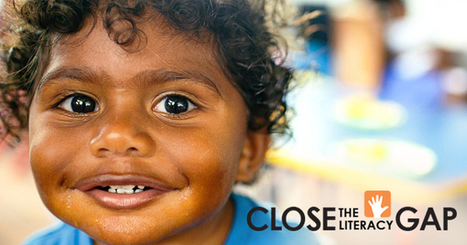
In 2014, to have a literacy gap is unacceptable. Enough is enough. Sign this petition now and pledge your support to Close the Indigenous Literacy Gap!
Scoop.it!
The Close The Gap was launched seven years ago to achieve Indigenous health equality within a generation. The generation of our children. National Close the ...
Scoop.it!

Our Water Our Country An information manual for Aboriginal people and communities about the water reform process
The Aboriginal Water Initiative program aims to improve Aboriginal involvement and representation in water planning and management within NSW. The program allows the NSW Office of Water to monitor the success of water sharing plans in meeting their statutory requirements for Aboriginal specific performance indicators including: providing water for Native Title rightsrecognising spiritual, social, customary and economic values of water to Aboriginal people
Kim Flintoff's insight:
Indigenous perspectives are very often overlooked in water management strategies - In some cases in Australia Indigenous communities do have pathways to be heard.

Kim Flintoff's curator insight,
March 9, 2014 11:09 PM
Indigenous perspectives are very often overlooked in water management strategies - In some cases in Australia Indigenous communities do have pathways to be heard.
Scoop.it!

The resources on this site have been developed in response to requests from teachers for information about the report 'Bringing them home: National Inquiry into the Separation of Aboriginal and Torres Strait Islander Children from Their Families'. There are a variety of worksheets that can be used in either the classroom or in the community.
Via Glenda Gregory, CAS ITEC
Scoop.it!

Researchers are hoping that by making traditional Indigenous music available online, it will help preserve dying languages. Academics from the University of Sydney, the Sydney Conservatorium of Music and Charles Darwin University have collected songs from a genre of Indigenous music known as Wangga from northwest Australia. Joint author Linda Barwick says Wangga is performed in various languages in the Daly region in northwest Australia.

CAS ITEC's curator insight,
March 10, 2014 12:46 AM
Really exciting possibilities for caputuring and retaining language - the first steps in keeping language alive.
Scoop.it!

The latest international assessment of students’ mathematical, scientific and reading literacy – the Programme for International Student Assessment (PISA) – shows that the gap between Indigenous and non-Indigenous students has remained the same for the last decade. In short, Indigenous 15-year-olds remain approximately two-and-a-half years behind their non-Indigenous peers in schooling.
Scoop.it!

The sixth annual Closing the Gap statement, delivered to federal parliament earlier this week, had the same message as previous years. There is some progress, some regress and more work needed to achieve…
|






