
Hésitations Vaccinales: Observatoire HESIVAXs
31.2K views |
+94 today


 Your new post is loading...
 Your new post is loading...
Your new post is loading...
 Scoop.it!

From
www

Honored to have my article featured in MedPage Today! It describes my experience as a new mom facing ‘parent Instagram’ for the first time — and how powerful that algorithm is in serving you up unfiltered health advice. 
Scoop.it!
|

|
Scooped by
Gilbert C FAURE
July 20, 4:10 AM
|
Scoop.it!

From
www
Which social media platforms act as ‘superspreaders’ of hate speech? (Straight Arrow News):
https://lnkd.in/dZbKAbFk
Glimpse: According to a recent study by the Global Project Against Hate and Extremism (GPAHE), TikTok, Instagram, and YouTube react to extremist and offensive content associated with the Identitarian movement very differently. The majority of flagged accounts were deleted from TikTok, while YouTube and Instagram continued to be "superspreaders." Due to laxer content-moderation policies on major platforms, the Identitarian movement, which is associated with extremist violence and the Great Replacement conspiracy theory, has increased its online presence by 70% in recent years. Enforcement discrepancies can be partially explained by policy differences: YouTube has inconsistent hate speech bans, TikTok has more stringent removal criteria, and Meta has narrowed its hate speech regulations. According to GPAHE, inconsistent enforcement makes it possible for terrorist-inspired content to reach millions of people. As a result, platforms are urged to tighten their moderation systems and execute their regulations consistently.
|
|
Scooped by
Gilbert C FAURE
July 5, 9:07 AM
|
Scoop.it!

From
www
We analysed the TikTok history of 142 men. Here’s what it taught us about the manosphere (VOX-Pol):
https://lnkd.in/d7n-Pbwd
Glimpse: In order to better understand how young men in Australia, the US, and the UK interact with and navigate the manosphere—a network of online content ecosystems centered around masculinity—this research examines their TikTok watching histories. After analyzing more than 2,000 films, the researchers discovered that 44% of them had themes related to masculinity that divided into three ascending tiers: demeaning health content (misogyny, risky activity, guideline-violating material), masculine status content (self-improvement framed through rigid gender norms), and cultural touchpoints (gym, fashion, dating). The study demonstrates how seemingly harmless content may progressively mainstream negative storylines, giving extreme messages a familiar feel. It suggests using this classification paradigm to provide early, customized interventions, enhance recommender systems, and promote healthier digital environments for young males, arguing that the existing moderation is too reactive.
---
Free articles and analyses on soft counter-extremism, against online hate, and on the theory of mis-/disinformation (usually third-party content).
The most recent LinkedIn posts on the above subjects, with glimpses, can be accessed via:
• https://lnkd.in/eBarZAew
Two-week reviews available via the following three Policyinstitute.net websites:
• counter-terrorism.org
• preventhate.org
• strategism.org
The views expressed in this post is that of the author(s) of the source content and do not necessarily represent those of Policyinstitute.net and its staff. While we carefully produce the glimpses to the articles, documents, or recordings that we hyperlink, we are not responsible for textual changes nor for imponderable parts of the original items.
#policyinstitutenet #preventradicalization #preventextremism #counterextremism #preventhate #disinformation #misinformation
|
|
Scooped by
Gilbert C FAURE
June 22, 5:51 AM
|
Scoop.it!

From
fr
📲 Alors que les réseaux sociaux sont devenus le principal point d'entrée vers l'information pour une partie croissante des jeunes générations, certains professionnels de santé choisissent d'investir ces espaces pour y diffuser des messages de prévention.
C'est le cas de Leevan Decou. À 31 ans, ce pharmacien installé en Dordogne a vu ses vidéos cumulées atteindre plusieurs millions de vues en quelques mois seulement. Une visibilité inattendue qui lui permet aujourd'hui de sensibiliser un public parfois éloigné des circuits traditionnels d'information, mais aussi de faire découvrir un métier dont les missions restent largement méconnues.
🐙 À lire sur le-cluster.fr : https://lnkd.in/e2d29U5Z
|
|
Scooped by
Gilbert C FAURE
May 28, 4:35 AM
|
Scoop.it!
From
www
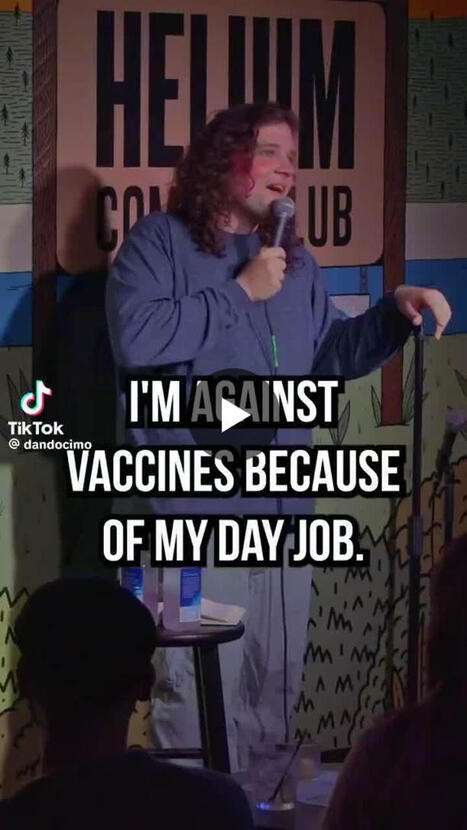
Either you believe in evidence-based medicine, or you don't.
Credit: Dan Docimo
|
|
Scooped by
Gilbert C FAURE
May 5, 9:16 AM
|
Scoop.it!
From
www
I had my Digital Health class do informal content analyses of the top 10 most viewed TikTok videos on a health topic of their choice. Students (N=100 undergrads) are mostly allied health science majors---our future healthcare professionals! I wanted them to understand what type of health content the algorithm rewards and the importance of science communication. What they found was fascinating and occasionally horrifying. ⬇️ ⬇️
Obesity – the top videos were of two types: healthcare professionals debunking misinformation (yay!) and fat phobic influencers (UGH!). It was a shame to see the algo promoting such mixed messages.
Diabetes – top videos were dominated by healthcare professionals and influencers and contained mixed messages about diet and causes of diabetes. Diabetes content had more misinformation than other topics.
Breast cancer – the misinformation on this subject was bad. One top video was of a patient with breast cancer discouraging people from traditional therapies (e.g., chemo, radiation) and another was of an influencer promoting breast cream that "prevents" cancer. Thankfully, half of the top videos were by healthcare professionals providing evidence-based education about prevention and treatment.
Skin cancer – this was the topic in which the experts were leading the narrative. Nearly all top videos were docs showing folks what different types of skin cancer look like and how to prevent and treat them. Gross pics get views! Go derms! 💚
Depression and ADHD: patients dominated the top videos. Mental health professionals rarely appeared. Patients did a great job of debunking myths and destigmatizing these conditions. Go patients! ❤️
Key issues:
❓ Creator confusion: Students sometimes confused who the creator was because the person in the video was not always the person who posted it. Influencers often used expert and patient voices to elevate and legitimize their content.
💲 HCPs were the most likely to be selling stuff: Promotional content was almost always by healthcare professionals and they were typically peddling supplements and peptides. Students who noticed the creator was selling something downgraded their credibility, but many students did not notice that the creator was selling something.
❌ Evidence for claims was rare: Healthcare providers almost never provided evidence or links to evidence for their health claims. This made it difficult for students to assess the credibility of claims made.
🤡 Who dis? Some top videos were from accounts with cryptic bios and cartoon profile pics that made it impossible to know the identity of the creator.
🏥 Where’s public health? Of many hundreds of top videos, only ONE was from a public health org (WHO). 😮 | 22 comments on LinkedIn
|
|
Scooped by
Gilbert C FAURE
April 11, 2:43 AM
|
Scoop.it!

Scientists and medical experts are countering climate denialism, vaccine scepticism and wellness pseudoscience on social media.
|
|
Scooped by
Gilbert C FAURE
February 24, 4:59 AM
|
Scoop.it!

📢 « Go Muscu » : comment TikTok façonne les corps (et les esprits) ?
Le #CSA publie sa première étude sur le sujet et a analysé 400 vidéos de créateurs et créatrices de la Fédération Wallonie-Bruxelles (audiences allant de 50.000 à plus de 5 millions d’abonné·es).
Pourquoi le CSA s’y intéresse-t-il ?
Parce que les créateurs et créatrices occupent désormais une place centrale dans l’écosystème audiovisuel et dans l’influence auprès des jeunes publics. En Belgique, 7 personnes sur 10 déclarent avoir modifié certains comportements sous l’influence de contenus en ligne, notamment en matière d’alimentation et d’exercice.
Si les constats de cette étude peuvent être qualifiés de « modérés » (aucune incitation explicite à des comportements dangereux n’a été relevée dans l’échantillon étudié), elle soulève des questions importantes :
✔️ confusion entre expertise et expérience
✔️ identification des contenus publicitaires
✔️ responsabilité des créateurs et créatrices
✔️ influence sur la santé et le bien-être des publics
Un « coup de sonde » qui appelle à approfondir la réflexion sur la régulation et la responsabilité dans l’économie de l’influence.
🔗 Découvrez Go Muscu : https://lnkd.in/ezgqYTeH
🗣️ 3 minutes pour comprendre avec Emma Puma, chercheuse au #CSA ↘️
Gilbert C FAURE's insight:
c'est pas de la vaccination mais on peut s'en inspirer?
|
|
Scooped by
Gilbert C FAURE
February 13, 4:05 AM
|
Scoop.it!

Covid misinformation remains on site for months adding to concern over impact of social media on young people
|
|
Scooped by
Gilbert C FAURE
November 29, 2025 4:47 AM
|
Scoop.it!
Across platforms, accounts that have repeatedly shared misinformation receive more interactions per post per followers than high-credibility accounts; LinkedIn being the exception.
Gilbert C FAURE's insight:
déjà posté, mais oublié
𝗖𝗲 𝗾𝘂𝗲 𝗹𝗲 𝗿𝗮𝗽𝗽𝗼𝗿𝘁 𝗿𝗲́𝘃𝗲̀𝗹𝗲 :
Le faux circule mieux que le vrai.
_Sur les plateformes grand public, la désinformation bénéficie d’un avantage systémique.
_Les comptes peu crédibles génèrent jusqu’à 8× plus d’interactions que les sources fiables sur YouTube, et 7× plus sur Facebook.
_La viralité récompense l’émotion, pas la véracité.
_Le système d’attention privilégie le bruit plutôt que la connaissance.
✅ 𝗨𝗻𝗲 𝗲𝘅𝗰𝗲𝗽𝘁𝗶𝗼𝗻 : 𝗟𝗶𝗻𝗸𝗲𝗱𝗜𝗻
_Seulement 2 % de contenus trompeurs.
_Aucun avantage algorithmique pour les comptes diffusant de fausses informations.
_Un environnement où le signal crédible reste compétitif.
_Alors que TikTok atteint 20 %, Facebook 13 % et X 11 %, LinkedIn apparaît comme la plateforme la plus résiliente face à la désinformation, une donnée rare et encourageante dans l’écosystème numérique actuel.
|
|
Scooped by
Gilbert C FAURE
Today, 9:44 AM
|
Scoop.it!

From
www
🎂 10 ans de TikTok : en une décennie, la plateforme a bien changé.
D’abord pensé comme un espace de divertissement, TikTok est devenu bien plus qu’une succession de vidéos virales.
🔎 Un moteur de recherche et de découverte
#BookTok, #FinTok, #Excel… Les contenus pédagogiques transforment TikTok en véritable canal de recherche et d’apprentissage
👤 Un large panel de communautés
Influenceurs, experts, médias, institutions… et personnalités politiques comme Jean-Luc Mélenchon, arrivé en 2020, qui compte aujourd’hui 3,1 millions d’abonnés sur le réseau social
🍔 Un terrain de jeu pour les marques
McDonald’s France y rassemble 1,3 million d’abonnés, contre 415 000 sur Instagram. Les marques ne se contentent plus d’y reproduire leurs campagnes : elles adaptent leurs contenus aux codes de la plateforme
🚨 Et un nouvel espace de crise
Sur TikTok, un bad buzz peut rapidement dépasser la communauté initiale d’un créateur de contenu. L’affaire Air France en 2023 en est une illustration : la vidéo à l’origine de la polémique a dépassé 11 millions de vues
En 10 ans, TikTok est donc passé du divertissement à la découverte, de l’influence à l’expression publique, du contenu de marque à la gestion de réputation.
Décryptage complet → urlr.me/HUbDDg
Gilbert C FAURE's insight:
Antivaxxer
On dirait que tu recherches des informations sur les vaccins.
Pour t'assurer d'avoir des informations faisant autorité auprès d'experts en santé publique, consulte le site de l'Organisation mondiale de la santé (https://www.who.int/health-topics/vaccines-and-immunization) ou les ressources de ton agence locale de santé publique (https://www.tiktok.com/lhr). Et n'oublie pas de signaler tout contenu qui, selon toi, pourrait enfreindre nos Règles communautaires.
|
|
Scooped by
Gilbert C FAURE
July 30, 3:01 AM
|
Scoop.it!
TikTok Fake news vaccinations
Aperçu IA
TikTok serves as a major vector for vaccine misinformation, largely driven by its hyper-personalized algorithm and unique audio-sharing features. While the platform explicitly prohibits anti-vaccine disinformation, misleading content frequently bypasses moderation filters and reaches millions of users. [1, 2, 3]
How Misinformation Spreads on TikTok
- Trusted Peer Networks: Misinformation often spreads through seemingly relatable influencers or everyday creators rather than official organizations, making the false claims feel more authentic and trustworthy. [1]
Platform Interventions and Countermeasures
- Information Banners: TikTok automatically applies educational tags to vaccine-related content. These banners direct users straight to authoritative public health information. [1]
Effective Debunking Strategies
Many creators use the "Truth Sandwich" method to change minds without causing defensiveness. This approach requires validating a user's initial safety concerns with empathy, presenting the verified scientific facts, dislodging the specific lie, and providing links to trusted medical organizations. [1]
|
|
Scooped by
Gilbert C FAURE
July 24, 5:24 AM
|
Scoop.it!

After GPAHE Reporting, TikTok Deplatforms Some Identitarian Accounts While YouTube and Instagram Remain Great Replacement Superspreaders (GPAHE):
https://lnkd.in/dCbwCkMT
Glimpse: The "Great Replacement" conspiracy theory, a white supremacist narrative connected to violent extremist and terrorist (VET) assaults that cause serious harm, fatalities, and breaches of human rights, is examined in this article along with how YouTube and Instagram continue to spread it. The investigation, which is based on data from the Global Project Against Hate and Extremism (GPAHE), reveals that while YouTube and Instagram kept the great majority of detected profiles live, TikTok deleted some Identitarian accounts following reports. These accounts sustain international networks associated with groups like Generation Identity and encourage "remigration," a euphemism for ethnic cleansing. The essay demonstrates how big social media firms continue to publish content that propagates extremist ideology and fuels actual violence, highlighting the uneven implementation of platform standards. It comes to the conclusion that uneven moderation contributes to the Great Replacement narratives' continued virality and emphasizes the necessity of more robust, consistent platform governance to stop the spread of extremism online.
|
|
Scooped by
Gilbert C FAURE
July 15, 7:59 AM
|
Scoop.it!

From
www
The psychology of viral disinformation: Decoding the rhetorical package of hate (newtral.es):
https://lnkd.in/dniXwX8H
Glimpse: The current study examines the psychological factors that contributed to the spread of false information during the disturbance in Torre Pacheco, Spain, in July 2025. Eight recurrent mechanisms—cherry-picking, in-group/out-group framing, false consensus, unjustified causal inferences, emotional activation, dehumanization, and calls to action—are found in the study, which analyzes 288,347 social media messages and 175 TikTok videos by combining Newtral's fact-checking expertise with researchers from the University of Granada. The majority of posts on X (74.4%), TikTok (71.4%), and Telegram (83.6%) used at least one such technique, according to the results, and almost all calls to action (99–100%) included dehumanizing or disparaging language. Particularly on X and Telegram, a tiny fraction of users produced a disproportionate amount of damaging content. In order to accurately identify these mechanisms, the research also created a validated AI classification model (Spanish RoBERTa) that was trained on expert-annotated samples. Overall, the study provides a paradigm for comprehending and combating the cognitive dynamics of disinformation by illuminating how psychological cues incorporated into online messages intensify prejudice, incite violence, and hasten the dissemination of false narratives.
|
|
Scooped by
Gilbert C FAURE
June 27, 7:30 AM
|
Scoop.it!

From
www
Dennis Thompson’s coverage for HealthDay News via U.S. News & World Report highlights a useful nuance from new PLOS research by Alessandro R Marcon, Marco Zenone, Vincenza Boniface, @Cheryl Peters and Timothy Caulfield, with affiliations across University of Alberta, The University of British Columbia, BC Centre for Disease Control and BC Cancer.
They found that a small cluster of critique-focused videos on TikTok can attract outsized likes, shares and comments, even when most visible videos promote sunscreen use.
That matters for public health communication. Counting claims is only part of the job. The harder task is seeing which claims are gaining emotional traction, which audiences they are reaching and where clearer context could reduce confusion before engagement becomes belief.
This is the kind of video claim environment Crickit.ai was built for: turning fast moving video claims into checkable, sourceable context that helps people verify what they watch. We're rolling out to TikTok later this summer.
What health claim would be worth checking next?
Reshare if your team/students/clients would benefit. Follow Crickit.ai for more.
https://lnkd.in/g7naGtWB
|
|
Scooped by
Gilbert C FAURE
June 18, 4:36 AM
|
Scoop.it!

From
www
It was leucovorin. And now it is stem cell therapy being pushed by MAHA and RFK Jr as treatment for autism. There was no science for the first. And there is no data for stem cell therapy. It is terrible that it is being pushed by TikTok, the internet, MAHA and RFK Jr. Parents are paying tens of thousands of dollars for this unproven therapy
|
|
Scooped by
Gilbert C FAURE
May 31, 7:36 AM
|
Scoop.it!

From
fr
Les réseaux sociaux ont longtemps vécu sur une l'ambiguïté d'être des infrastructures publicitaires qui empruntaient les codes de la sociabilité, tout en laissant croire que la conversation restait leur finalité. Cette ambiguïté devient plus difficile à maintenir au moment où les plateformes cessent progressivement d’organiser des relations entre personnes pour organiser des flux de contenus.
Le point intéressant n’est d’ailleurs pas tant la disparition relative du “social” que le changement de logique qu’elle traduit. Pendant longtemps, les plateformes reposaient sur une architecture relationnelle : on voyait ce que publiaient des gens que l’on connaissait, suivait ou fréquentait vaguement. Les recommandations existaient déjà, mais elles restaient périphériques. Aujourd’hui, l’algorithme devient l’interface principale et la relation sociale un simple signal parmi d’autres.
TikTok a largement imposé cette logique, puis les autres plateformes ont suivi avec une rapidité qui dit beaucoup sur la fragilité de leurs modèles initiaux. Ce qui compte désormais, ce n’est plus tellement qui parle mais la capacité d’un contenu à produire de l’engagement mesurable, immédiatement exploitable et réinjectable dans le système de recommandation.
Le paradoxe est que cette évolution intervient au moment où les plateformes parlent plus que jamais de communauté, de créateurs ou de conversations. Or plus les systèmes deviennent performants dans la distribution algorithmique, moins la relation sociale directe a d’importance structurelle. Le réseau devient un média personnalisé à très grande échelle, avec cette particularité qu’il conserve encore le vocabulaire de la sociabilité pour désigner des mécanismes qui relèvent de plus en plus de la programmation éditoriale.
Cela change aussi la nature de la présence en ligne. Publier n’a plus grand chose à voir avec le fait de parler à un réseau de relations. On produit désormais pour une infrastructure de diffusion qui sélectionne, teste, amplifie ou ignore les contenus selon des critères largement opaques. Beaucoup d’utilisateurs continuent d’utiliser ces plateformes comme des espaces relationnels alors même que leur architecture les traite déjà comme des producteurs de signaux comportementaux.
La conséquence dépasse largement les réseaux sociaux eux-mêmes. Toute l’économie numérique s’est construite autour de la promesse d’intermédiation sociale. Lorsque la couche relationnelle perd de son importance, c’est aussi une certaine idée de l’engagement, de la fidélité et même de la communauté qui devient plus instable. On découvre alors qu’une plateforme peut conserver une activité énorme tout en produisant de moins en moins de liens sociaux au sens ordinaire du terme.
Ce qui, au fond, oblige peut-être simplement à appeler les choses par leur nom.
|
|
Scooped by
Gilbert C FAURE
May 27, 10:07 AM
|
Scoop.it!

From
fr
🚨 Pourquoi les marques médias doivent repenser leur stratégie sociale en 2026
Les plateformes sociales changent vite. Mais le plus important n’est peut-être plus l’audience visible. Lors de la conférence Social Fresh à New York, plusieurs tendances ont émergé : la logique de découverte prend le dessus sur la logique de fidélisation classique. Et cela change profondément la manière de penser l’engagement.
Le premier basculement concerne les plateformes elles-mêmes. Instagram, TikTok et YouTube concentrent désormais l’essentiel de la dynamique culturelle et de la distribution d’audience. TikTok « structure aujourd’hui la culture », tandis qu’Instagram et YouTube amplifient cette diffusion vers différents publics.
💎 Le vrai changement : l’engagement ne se mesure plus comme avant
Le point le plus structurant concerne les métriques. Pendant des années, les équipes social media ont piloté leurs stratégies autour des likes, des commentaires ou du nombre d’abonnés. Cette logique s’essouffle.
Social Fresh défend désormais une approche centrée sur deux catégories de contenus : “discovery content” et “trust content”.
Le “discovery content” vise la portée large. Ce sont les contenus capables de capter l’attention rapidement : tendances, formats viraux, hooks puissants, contenus très partageables.
Le “trust content”, lui, sert un autre objectif : créer une relation durable avec l’audience. Il s’agit des formats récurrents, des rendez-vous éditoriaux, des contenus qui incarnent la promesse de marque et donnent une raison de revenir.
Selon les données présentées pendant la conférence, 60 % à 80 % des contenus devraient désormais être pensés pour la découverte, contre 20 % à 40 % pour la confiance et la fidélité.
Tout savoir :
👉 https://lnkd.in/dPxVB9nj
|
|
Scooped by
Gilbert C FAURE
April 18, 2:52 AM
|
Scoop.it!

TikTok knows exactly how much time it takes to get you addicted to their algorithm : 35 minutes.
According to internal documents revealed in a lawsuit, a user is likely to become addicted after 260 videos.
At 8 seconds per video, that's ~35 minutes.
We only know this because of a legal accident. In 2024, 14 US attorneys general sued TikTok for deliberately addicting teenagers.
In one of the lawsuits, the redactions were faulty and 30 pages of internal documents became public.
What they revealed is hard to read.
TikTok's own research found that “compulsive usage correlates with loss of analytical skills, memory formation, contextual thinking, conversational depth, empathy, and increased anxiety”.
They knew, they documented it and chose to keep building anyway.
Instead of trying to reduce screen time among teenagers, they built time-management tools to improve "public trust in the TikTok platform via media coverage."
The tobacco industry used the same playbook for 40 years, they called it "problematic use" too and tried to shift responsibility to the consumers.
But we now have the documents, and the courts are starting to use them.
TikTok is not an isolated case: Meta, YouTube and others use the same logic. They all have the same type of internal documents, and make the same choice everyday.
When an entire market is designed to exploit human cognitive weaknesses at scale, it’s no longer a market in the economic sense (ie optimal allocation of resources and best benefits for consumers), it’s just a predatory system.
I now call it « predatory design ».
Of course, regulation is necessary. But laws are not enough alone, and fines cannot undo a decade of engineered addiction.
The only answer to a systemic problem is a systemic solution: technology that puts human autonomy back at the center of digital design.
We need Human Safety Tech, to protect all citizens and especially the youngest, that are more vulnerable.
That's what we're building at Fairpatterns, and we’re only starting! | 135 comments on LinkedIn
|
|
Scooped by
Gilbert C FAURE
April 6, 11:38 AM
|
Scoop.it!

From
fr
1 Français sur 2 utilise YouTube : dans le classement des plateformes hebdomadaires, YouTube arrive en deuxième position derrière Facebook (60%). Elle devance largement Instagram (41%), TikTok (26%), Snapchat (23%), X (13%), Twitch (8%) ainsi que BeReal (3%)
https://lnkd.in/e-x8b-UF
|
|
Scooped by
Gilbert C FAURE
February 13, 4:05 AM
|
Scoop.it!

UChicago researchers analyzed health information on TikTok to identify trends in video quality — how much misinformation is out there, and does it come from specific sources?
|
|
Scooped by
Gilbert C FAURE
December 24, 2025 4:39 AM
|
Scoop.it!

Certains patients font plus confiance à une vidéo TikTok qu'à leur médecin et on doit se justifier pour prouver que ce qu’on dit est vrai
J'ai reçu une patiente atteinte d'un cancer du sein. Comme toujours, je lui ai expliqué le traitement, ses bénéfices et les éventuels effets secondaires. J’ai donc précisé que les brûlures étaient possibles mais pas systématiques.
Sauf qu’elle était persuadée qu’elle allait être brûlée. Elle avait vu sur TikTok une vidéo affirmant que la radiothérapie provoquait des brûlures chez tous les patients. Et j’avais beau expliquer le contraire, elle restait perplexe.
Ce moment reflète une réalité à laquelle de nombreux médecins sont confrontés. Les réseaux sociaux diffusent beaucoup d'infos mais ce n’est pas toujours la vérité. Et la peur s'imprime plus vite qu'une donnée médicale fiable.
On doit donc rassurer, expliquer, donner des exemples concrets pour lever la méfiance que certains contenus peuvent engendrer. C’est un défi supplémentaire qui nous oblige à faire preuve de patience et de pédagogie.
Et c’est peut-être l’occasion, pour nous médecins, d’être plus présent sur les réseaux sociaux pour parler santé et diffuser des contenus médicaux basés sur des sources solides.
En somme, aujourd’hui, la médecine ne lutte plus seulement contre la maladie, elle combat aussi la désinformation qui fragilise la confiance entre le soignant et son patient.
| 75 comments on LinkedIn

m_c_'s curator insight,
January 14, 8:42 AM
Ce médecin explique que certains patients font davantage confiance aux informations vues sur les réseaux sociaux qu’à leur médecin. Il raconte le cas d’une patiente persuadée que la radiothérapie provoque forcément des brûlures après avoir vu une vidéo TikTok, malgré ses explications. Cela illustre le défi croissant de la désinformation médicale, qui oblige les médecins à rassurer davantage et à redoubler de pédagogie. Il souligne enfin l’importance pour les professionnels de santé d’être présents sur les réseaux sociaux pour diffuser des informations fiables.
Pour la population générale, les réseaux sociaux sont une source d’information rapide et rassurante, surtout face à la peur de la maladie. Les témoignages et vidéos semblent accessibles et humains, mais ils peuvent aussi exagérer ou généraliser des cas particuliers, ce qui peut créer de l’anxiété et de la confusion.
Du côté des médecins, cette désinformation fragilise la confiance et peut compliquer la prise en charge. Le soignant doit non seulement traiter la maladie, mais aussi déconstruire des idées fausses, ce qui demande du temps, de la patience et une pédagogie renforcée. Cela souligne l’importance d’une communication médicale claire et d’une présence plus active des professionnels de santé sur les réseaux sociaux.





curation 2026
https://www.scoop.it/topic/assim-actualites?tag=Tik%20Tok