Your new post is loading...

|
Scooped by
Gilbert C FAURE
May 6, 2024 3:46 AM
|
Attitudes to paediatric COVID-19 vaccination from Taiwan 🇹🇼
Traditional media is still a common source of information, thankfully, but with strong evidence…
|
|
Scooped by
Gilbert C FAURE
April 17, 2024 5:23 AM
|
Identifying determinants of vaccination uptake is critical for public and community health. The population became divided in regard to preventative measures and vaccinations during the COVID-19 pandemic.
|
|
Scooped by
Gilbert C FAURE
April 10, 2024 8:41 AM
|
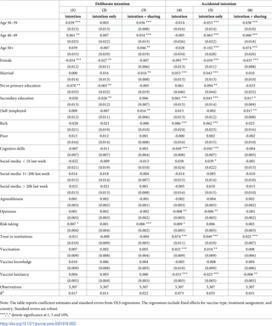
The widespread dissemination of misinformation on social media is a serious threat to global health. To a large extent, it is still unclear who actually shares health-related misinformation deliberately and accidentally.
|
|
Scooped by
Gilbert C FAURE
April 2, 2024 4:37 AM
|
Prior research identifies trust as critical to increase vaccine acceptance and uptake. However, few intervention studies have sought to develop or test strategies for bolstering vaccine-related trust.
|
|
Scooped by
Gilbert C FAURE
March 21, 2024 6:21 AM
|
Vaccine hesitancy has been included among the top ten threats to global health by the World Health Organization. Pharmacists can play a pivotal role in removing the individual barrier to vaccination, because of the relationship of trust they have with citizens and their ease of access.
|
|
Scooped by
Gilbert C FAURE
March 1, 2024 11:44 AM
|
Interesting study. We keep landing at the same place - it’s no so much safety and efficacy of vaccines as trust.
“trust in government is a key variable”
So…
|
|
Scooped by
Gilbert C FAURE
February 24, 2024 8:02 AM
|
Widespread acceptance of a vaccine for severe acute respiratory syndrome coronavirus 2 (SARS-CoV-2) will be the next major step in fighting the coronavirus disease 2019 (COVID-19) pandemic, but achieving high uptake will be a challenge and may be impeded by online misinformation. To inform successful vaccination campaigns, we conducted a randomized controlled trial in the UK and the USA to quantify how exposure to online misinformation around COVID-19 vaccines affects intent to vaccinate to protect oneself or others. Here we show that in both countries—as of September 2020—fewer people would ‘definitely’ take a vaccine than is likely required for herd immunity, and that, relative to factual information, recent misinformation induced a decline in intent of 6.2 percentage points (95th percentile interval 3.9 to 8.5) in the UK and 6.4 percentage points (95th percentile interval 4.0 to 8.8) in the USA among those who stated that they would definitely accept a vaccine. We also find that some sociodemographic groups are differentially impacted by exposure to misinformation. Finally, we show that scientific-sounding misinformation is more strongly associated with declines in vaccination intent. A randomized controlled trial reveals that exposure to recent online misinformation around a COVID-19 vaccine induces a decline in intent to vaccinate among adults in the UK and the USA.
|
|
Scooped by
Gilbert C FAURE
February 24, 2024 7:56 AM
|
The main objective of this study was to determine whether one of the most commonly employed pro-vaccination strategies based on the “myths vs. facts” format can be considered an effective tool to counter vaccines misinformation. Sixty parents were randomly presented with either a control message or a booklet confronting some common myths about vaccines with a number of facts. Beliefs in the autism/vaccines link and in vaccines side effects, along with intention to vaccinate one’s child, were evaluated both immediately after the intervention and after a 7-day delay to reveal possible backfire effects. Data provided support for the existence of backfire effects associated with the use of the myths vs. facts format, with parents in this condition having stronger vaccine misconceptions over time compared with participants in the control condition. The myths vs. facts strategy proved to be ineffective. Efforts to counter vaccine misinformation should take into account the many variables that affect the parents’ decision-making.
|
|
Scooped by
Gilbert C FAURE
February 21, 2024 2:59 AM
|
|
|
Scooped by
Gilbert C FAURE
February 20, 2024 3:15 AM
|
A journal is retracting a paper on the purported harms of vaccines against COVID-19 written in part by authors who have had similar work retracted before. The article, “COVID-19 mRNA Vaccines: Lessons Learned from the Registrational Trials and Global Vaccination Campaign,” appeared late last month in Cureus, which used to be a stand-alone journal but…
|
|
Scooped by
Gilbert C FAURE
February 8, 2024 11:25 AM
|
Objectives France and Germany have different approaches towards childhood immunisation. The aim of this study was to determine the similarities and differences between France and Germany in terms of heath policies, vaccination rates and public opinion as far as infant vaccinations were concerned. Study design Literature review. Subject and methods We used the databases of the Robert Koch Institute (RKI) and of Santé publique France (SpF) to compare the vaccination rates of children in the year 2017. The state of public opinion was principally assessed by comparing data from SpF and the German Federal Center for Health Education (BZgA). Results Vaccination rates were higher in French pre-school children in 2017 for the hexavalent and anti-pneumococcal vaccines, whereas Measles–Mumps–Rubella and anti-meningococcal vaccination rates were higher in Germany. Public opinion was more favourable towards vaccines in Germany than in France. Some vaccines, especially against seasonal influenza and hepatitis B, were viewed with criticism in France, whereas German parents considered hepatitis B immunisation to be important for their children. Moreover, both countries showed higher immunisation rates in northern regions. This correlated with the state of vaccine confidence in France. In Germany, eastern regions were more favourable towards vaccines, which correlated with higher immunisation rates in these regions. Conclusions The state of vaccine confidence seemed to correlate with immunisation rates in both countries. The need for information about vaccines is still high in both countries and trust in the medical community as well as in the immunisation policymakers should be reinforced as a priority.
|
|
Scooped by
Gilbert C FAURE
January 27, 2024 3:08 AM
|
Antivaxxers just published another antivax review about "lessons learned" claiming that COVID-19 vaccines cause more harm than good. Yawn.
|
|
Scooped by
Gilbert C FAURE
January 12, 2024 2:50 AM
|
À l’occasion de l’examen de la loi sur les fake news, qui débute au Parlement ce jeudi 7 juin 2018, The Conversation France a décidé – en partenariat avec le centre de recherche de l’université de Lorraine, le CREM – de compiler une sélection de leurs meilleurs articles sur cette thématique, afin...
|
|
|
Scooped by
Gilbert C FAURE
April 22, 2024 1:07 PM
|
Background: Throughout the COVID-19 pandemic, social media has served as a channel of communication, a venue for entertainment, and a mechanism for information dissemination.
Objective: This study aims to assess the associations between social media use patterns; demographics; and knowledge, perceptions, and self-reported adherence toward COVID-19 prevention guidelines, due to growing and evolving social media use.
Methods: Quota-sampled data were collected through a web-based survey of US adults through the Qualtrics platform, from March 15, 2022, to March 23, 2022, to assess covariates (eg, demographics, vaccination, and political affiliation), frequency of social media use, social media sources of COVID-19 information, as well as knowledge, perceptions, and self-reported adherence toward COVID-19 prevention guidelines. Three linear regression models were used for data analysis.
Results: A total of 1043 participants responded to the survey, with an average age of 45.3 years, among which 49.61% (n=515) of participants were men, 66.79% (n=696) were White, 11.61% (n=121) were Black or African American, 13.15% (n=137) were Hispanic or Latino, 37.71% (n=382) were Democrat, 30.21% (n=306) were Republican, and 25% (n=260) were not vaccinated. After controlling for covariates, users of TikTok (β=–.29, 95% CI –0.58 to –0.004; P=.047) were associated with lower knowledge of COVID-19 guidelines, users of Instagram (β=–.40, 95% CI –0.68 to –0.12; P=.005) and Twitter (β=–.33, 95% CI –0.58 to –0.08; P=.01) were associated with perceiving guidelines as strict, and users of Facebook (β=–.23, 95% CI –0.42 to –0.043; P=.02) and TikTok (β=–.25, 95% CI –0.5 to -0.009; P=.04) were associated with lower adherence to the guidelines (R2 0.06-0.23).
Conclusions: These results allude to the complex interactions between online and physical environments. Future interventions should be tailored to subpopulations based on their demographics and social media site use. Efforts to mitigate misinformation and implement digital public health policy must account for the impact of the digital landscape on knowledge, perceptions, and level of adherence toward prevention guidelines for effective pandemic control.
|
|
Scooped by
Gilbert C FAURE
April 17, 2024 5:23 AM
|
Read the original article in full on F1000Research: Sentiment analysis of Indonesian tweets on COVID-19 and COVID-19 vaccinations...
|
|
Scooped by
Gilbert C FAURE
April 3, 2024 9:46 AM
|
The debate around vaccines has been going on for decades, but the COVID-19 pandemic showed how crucial it is to understand and mitigate anti-vaccine sentiments. While the pandemic may be over, it is still important to understand how the pandemic affected the anti-vaccine discourse, and whether the...
|
|
Scooped by
Gilbert C FAURE
March 23, 2024 11:40 AM
|
|
|
Scooped by
Gilbert C FAURE
March 6, 2024 4:44 AM
|
|
|
Scooped by
Gilbert C FAURE
February 24, 2024 8:35 AM
|
Authors Thamyres Maria Silva Barbosa Stefany Medeiros Castello Branco Amanda Soares do Amaral Lucas Ramos Maran Eriselma Alves Correia Adriana Siqueira de Sá Alexandre Maslinkiewicz Geoeselita Borges Teixeira João Pedro Neto de Sousa DOI: https://doi.org/10.55905/revconv.17n.2-136 Keywords:...
|
|
Scooped by
Gilbert C FAURE
February 24, 2024 7:59 AM
|
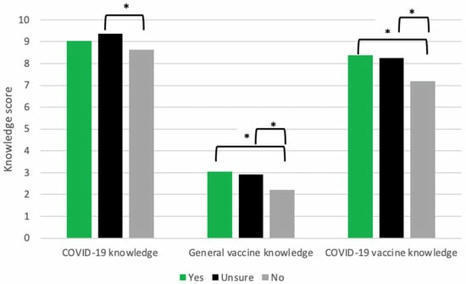
The current study examined various types of misinformation related to the COVID-19 vaccines and their relationships to vaccine hesitancy and refusal. Study 1 asked a sample of full-time working professionals in the US (n = 505) about possible misinformation they were exposed to related to the COVID-19 vaccines. Study 2 utilized an online survey to examine U.S. college students’ (n = 441) knowledge about COVID-19 vaccines, and its associations with vaccine hesitancy and behavioral intention to get a COVID-19 vaccine. Analysis of open-ended responses in Study 1 revealed that 57.6% reported being exposed to conspiratorial misinformation such as COVID-19 vaccines are harmful and dangerous. The results of a structural equation modeling analysis for Study 2 supported our hypotheses predicting a negative association between the knowledge level and vaccine hesitancy and between vaccine hesitancy and behavioral intention. Vaccine hesitancy mediated the relationship between the vaccine knowledge and behavioral intention. Findings across these studies suggest exposure to misinformation and believing it as true could increase vaccine hesitancy and reduce behavioral intention to get vaccinated.
|
|
Scooped by
Gilbert C FAURE
February 21, 2024 10:51 AM
|
Avant la pandémie de Covid-19, l’Organisation mondiale de la santé (OMS) avait placé le refus vaccinal au rang de l’une des trois plus grandes urgences de santé publique mondiale. L’OMS a constaté une chute régulière de la couverture vaccinale contre la rougeole et une recrudescence des épidémies dans le monde. Dans le même temps, les sites Internet antivaccin ont proliféré et ont fait de nombreux adeptes en usant de désinformation et de théories du complot. Ces « antivaccin », du parent a
|
|
Scooped by
Gilbert C FAURE
February 20, 2024 7:08 AM
|
|
|
Scooped by
Gilbert C FAURE
February 19, 2024 4:26 AM
|
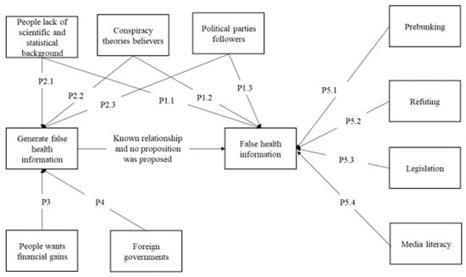
The COVID-19 pandemic heightened concerns about health and safety, leading people to seek information to protect themselves from infection. Even before the pandemic, false health information was spreading on social media.
|
|
Scooped by
Gilbert C FAURE
February 5, 2024 11:49 AM
|
La population française reste l’une des plus méfiantes, à l’échelle mondiale, vis-à-vis des vaccins. La désinformation se répand aujourd’hui d’autant plus vite avec l’essor des réseaux sociaux – et les médias ne sont pas en reste –, pouvant atteindre des personnes auparavant acquises à la vaccination. Que peut faire le médecin pour…
|
|
Scooped by
Gilbert C FAURE
January 24, 2024 10:47 AM
|
Kai Ruggeri, professor1, Samantha Vanderslott, associate professor2, Yuki Yamada, associate professor3, Young Anna Argyris, associate professor4, Bojana Većkalov, doctoral student5, Paulo Sergio Boggio, director6, Mosoka P Fallah, programme manager7, Friederike Stock, doctoral student8, Ralph Hertwig, professor91Department of Health Policy and Management, Mailman School of Public Health, Columbia University, New York City, NY, USA2Vaccines and Society Unit, Oxford Vaccine Group, Centre for Clinical Vaccinology and Tropical Medicine, Churchill Hospital, NIHR Oxford Biomedical Research Centre, Oxford, UK3Faculty of Arts and Science, Kyushu University, Fukuoka, Japan4Department of Media and Information, Michigan State University, East Lansing, MI, USA5Department of Psychology, University of Amsterdam, Amsterdam, Netherlands6Cognitive and Social Neuroscience Laboratory, Mackenzie Presbyterian University, São Paulo, Brazil7Saving Lives and Livelihoods, Africa Center for Disease Control, Addis Ababa, Ethiopia8Center for Adaptive Rationality, Max Planck Institute for Human Development, Berlin, Germany9Max Planck Institute for Human Development, Berlin, GermanyCorrespondence to: K Ruggeri kai.ruggeri{at}columbia.eduKey messagesSubstantial evidence shows the negative effects of vaccine misinformation on social mediaEvidence on the effectiveness of interventions to correct or mitigate misinformation is considerably more limited and rarely includes measures of true vaccine uptakeThe evidence available does indicate ways forward to develop better methods, particularly those that would be less likely to backfire in the way that blanket social media bans haveThe need for such actions is urgentVaccine misinformation on social media has strong effects on behaviour, and the evidence base for interventions to reduce these effects is limited, but better approaches to evidence generation are possible, say Kai Ruggeri and colleaguesEffective population level vaccination campaigns are fundamental to public health.123 Counter campaigns, which are as old as the first vaccines,4 disrupt uptake and can threaten public health globally.4 In 2019, public health researchers linked increases in measles cases with the proliferation of global anti-vaccine campaigns.5 Some of these campaigns originated offline but were later amplified and expedited through social media, resulting in real world harms.6 Though crises and genuine safety concerns can also lower vaccine uptake,78 the return of measles after aggressive anti-vaccine campaigns prompted the World Health Organisation to list vaccine hesitancy among the greatest threats to global health (box 1).14Box 1 Vaccine hesitancyHere, we use the term “vaccine hesitancy” as originally defined by WHO9: a “delay in acceptance or refusal of vaccination despite availability of vaccination services.” This definition, plus the expanded description of variation based on time, place, and population, gives a broad understanding but also allows us to distinguish vaccination behaviour from the underpinning psychological, environmental, and structural aspects influencing behaviour. This definition is most commonly used in literature pre-dating covid-19. Though there are debates about the most appropriate terms (“vaccine demand” is an alternative, for example) or updated definitions (including the updated WHO version) to use, applying the original WHO definition ensured that we captured relevant insights and evidence from the literature.10111213 We also identify disinformation as a form of misinformation that deliberately seeks to mislead or otherwise disrupt understanding, although we cover both broadly under misinformation for the purposes of this paper.RETURN TO TEXTAnti-vaccine campaigns proliferated during the covid-19 pandemic15 with undeniable effects including substantial increases in covid related illness and death.151617 Even before March 2020, vaccine hesitancy was directly linked to misinformation (false, inaccurate information promoted as factual) spread on social media.18 Once covid-19 reached pandemic status, social media was acknowledged as the epicentre of misinformation leading to hesitancy,1920 and consequently, interventions to tackle hesitancy have globally focused on delivery through social media.2122Despite unprecedented levels of vaccine access and nearly real time communication on the development and availability of vaccines in 2020-21, public health officials struggled to keep pace with misleading or inaccurate content online.23 As guidelines shifted with the emergence of new information, policy decisions were often perceived by individuals and groups who are prone to distrust or refute government messaging as a response not to evidence but to mistakes or lack of expertise.2425 A 2021 randomised controlled trial (RCT) found that exposure to misinformation about covid-19 vaccines lowered the intent of recipients to vaccinate, even among those reporting before exposure that they would “definitely” accept vaccination.21 Similar findings globally indicate that social media dynamics exacerbated the sharing of misinformation, reduced vaccination rates, undermined trust in reliable information, magnified polarisation, and damaged the perceived credibility of institutions.2627282930 These challenges remain today.Approaches to reducing vaccine hesitancyStandard behavioural approaches to encourage vaccination include mandatory vaccination and regulation for healthcare professionals, incentives, public health communication campaigns, and engaging trusted leaders.31 Contemporary methods have started to be implemented on social media,10313233 including debunking (fact checking specific claims after they have reached social media users) and “pre-bunking,” a behavioural approach in which users are taught about how “fake news” works before exposure.34 Other intervention types include warning (“inoculating”) people about manipulation tactics using non-harmful exposure as a tool to identify misinformation, and using accuracy prompts to trigger people to consider the truthfulness of material they are about to share on social media platforms, without stopping them from posting.35 Recognising the intense effect of social media on vaccine hesitancy,36 the Africa Centres for Disease Control and Prevention developed a toolkit to assist countries in social media strategies aimed at encouraging vaccination.37Such behavioural approaches to misinformation on social media have shown promise in reducing the sharing of disinformation and misinformation (box 1) and in changing people’s beliefs,38 but less clear is their effect on vaccination uptake. Investigating the success of such interventions on uptake is essential because there is an established link between social media exposure and offline beliefs that vaccines are unsafe.39 It is clear, however, that providing fact based probabilistic information alone fails to meaningfully increase uptake40 and might even backfire.41 Factors such as low trust in governments and health institutions are likely to be instrumental in derailing effective immunisation programmmes.42 Multiple drivers and barriers to vaccine uptake must therefore be considered when developing effective tools.Evaluating interventions to reduce vaccine hesitancyWe identified 30 studies evaluating interventions to tackle misinformation on social media that explicitly captured real world behavioural outcomes (see supplementary information on bmj.com). After excluding 19 studies for lack of external validation, only 11 published interventions were left (table 1; box 2; fig 1). There is clearly insufficient evidence from field studies on social media interventions. Only two interventions that met all criteria came from outside the US (Israel43 and Nigeria53), with a recent study conducted in Nigeria producing perhaps the most robust level of evidence.Table 1 Interventions to reduce vaccine hesitancy through social media that assessed real world vaccine behavioursView popupView inlineBox 2 A robust research agenda for social media interventions is neededStudies on reducing vaccine hesitancy can inform broader vaccination messaging campaigns. We recommend some critical features that should be included for all interventions (fig 1). Details about the type of vaccine and the target group should be highly specific, as should the form of hesitancy and misinformation,54 the misinformation source, and details of the method (especially for RCTs). Real world effects (ideally direct and broader public health indicators) must be captured. These aspects are relevant for better understanding of what might work and for what reasons and for comparison between methods and social media platforms. The most informative approach would cover the first three levels of evidence under the THEARI system (theoretical, empirical, and real world).55 Over time, these would accumulate to the fourth (replicated) and fifth (well established impact) levels, maximising the potential for predictive validity of applications to public policy (for example, greater confidence in anticipated effects). Doing so would exceed the criteria listed in a recent call for a gold standard for trials tackling vaccine hesitancy.56RETURN TO TEXTFig 1 Critical aspects of studies that are necessary to better understand and compare possible interventions that tackle vaccine hesitancy on social media (described in box 2). The examples of what specifically to measure and observe are non-exhaustive. All aspects should be included for maximum value, though behavioural and population health outcomes should be prioritised. Boxes with thick outlines and darker shading are considered absolutely necessary, though all boxes are strongly recommended.Download figure Open in new tab Download powerpoint Some evidence exists from field studies that did not directly target misinformation but provided accurate and useful information about vaccines. These were typically posted on interactive websites or directly in social media feeds. Changes in attitudes, knowledge, and social media engagement were reported for several information campaigns using social media advertisements in before and after designs and designs without control groups.44454748 But these studies showed no changes in vaccination behaviours. Only two studies, both RCTs, showed that tackling vaccination concerns and providing information in interactive formats on a website increased vaccination46 and reduced days undervaccinated.51Two interventions that increased vaccination uptake used targeted messages through Facebook adverts57 and personalised influencer content.58 But each had limitations. In the first, vaccination rates increased only among families of medium-low socioeconomic status, indicating narrow effectiveness. In the second, the measures were primarily attitudinal, and behavioural outcomes were self-reported.Linking online campaigns to true behaviours in field studies is a major challenge. This is partly because running well controlled studies is simpler in laboratory experiments and surveys, and because capturing distal effects (true behaviours) of web based studies is often impossible. But showing some measures of success in increasing uptake is necessary to justify investment to develop interventions at scale. Therefore, it is critical that researchers of vaccine behaviours and associated campaigns engage directly with clinics and public health agencies to improve the ecological and external validity (that is, real world, observed outcomes) of interventions (box 2).Developing better interventions to confront vaccine hesitancy on social mediaFew interventions among those we evaluated captured evidence about real world behaviours, so there is currently no gold standard toolkit that public health agencies can refer to.56 But the evidence available can inform future tool development. We provide 10 insights based on the existing evidence that should help provide a clearer and more specific, evidence driven toolkit of approaches to reduce vaccine hesitancy.Negative sentiments on social media might increase vaccine hesitancy faster than interventions reduce it3959—Although vaccine hesitancy can stem from many sources, including mass media and political rhetoric as well as genuine safety concerns, there is ample evidence of a proliferation of anti-vaccine messages on social media leading to organised offline actions and increased hesitancy.60 This is driven by several social and individual factors, as well as foreign disinformation campaigns and bots.6162 There is less evidence that efforts to specifically mitigate misinformation have had a reliable effect on real world vaccine uptake.Messaging seems to work best when it is tailored to what groups know and care about—Two relatively large vaccination interventions, one for flu, one for human papillomavirus (HPV), found modest effects through targeting specific groups. Broad campaigns through all forms of media tend to be generally effective. But once misinformation and conflicting views are prevalent, speaking directly to audiences, knowing the reasons for hesitancy, and framing information in a way that matters to individuals are critical.546364Simple messaging about benefits and risk based on probabilities is not enough—Filling vaccine knowledge gaps has direct benefits, such as supporting informed decisions,63 but messaging with information about benefits, harms, and associated probabilities is insufficient to resolve vaccine hesitancy.40 Some possible explanations include lack of trust and cultural values, which have a major effect on how scientific data are interpreted and accepted through social media.65 Messages must be conveyed in a way that affirms individual cultural values,66 dealing with topics of importance to individuals, not only health facts, using credible sources of information.67 Visual imagery also helps deliver effective messages,68 and other components should be considered, such as health literacy, simplified language, and context specific features like age or language.Correct misinformation to both parents and their children—Parents, especially mothers, play a major part in child vaccination.58 One large campaign carried out on Facebook directed at mothers of teens had some positive effects in specific income groups, but the overall effect was minimal to null. Addressing parents is clearly of value, but young people also seek out information online for themselves.69 Thus, the information teens are presented with online likely needs similar but unique safeguards against misinformation to the ones discussed. Directly involving parents and young people in the design of messaging might strengthen the effectiveness of these campaigns.70Trust matters: the message,71the messenger,63and the (vaccinated) provider57—Substantial amounts of anti-vaccine messaging comes from non-medically qualified, or non-expert, voices on social media.72 Thus, medical professionals are under-represented when it comes to legitimate and accurate information about vaccines on social media,73 despite typically being the most trusted sources (especially among parents74). Trust is potentially the most distinct characteristic of successful vaccination campaigns,5075 and this includes ones delivered on social media.76 Ultimately, the source of the message—whether a healthcare provider, a politician, or a social media influencer—is likely to have a major role in whether individuals and communities deem information to be credible.5763 These interventions have great potential when delivered to the right population.30 The US state of New York, for example, was a stronghold of anti-vaccine sentiment before 2020, which pivoted after the arrival of covid-19 vaccines. Despite intensifying hesitancy and misinformation waves, the state outpaced the national average for vaccination rates, benefiting both public health77 and economic returns.78 This success is attributed to strategies that, on top of tackling misinformation, also cultivated trust in the source of the vaccine, the messenger, and the provider, involving use of the military (a highly trusted organisation in the US), diverse community messengers (including community health workers and faith leaders), and a broad network of vaccination locations.79808182 These aspects must be ensured in public campaigns aimed at specific groups, especially those who are vaccine hesitant.64Debunking efforts have shown mixed effects on social media—Distributing information from public institutions or providing objective information from third parties might help to counter misinformation, reduce the intention to spread misinformation, and promote health behaviours, but the process is not always smooth. The backfire effect is a concerning pattern in which disproving misinformation reinforces it and deepens false beliefs.83 But this phenomenon is not consistently observed in practice. Effects of debunking might be highly dependent on the recipient’s background knowledge and beliefs, methods of presentation, and what other information is viewed.8485 For now, the immediate priority for this approach is to determine if inoculation based on pre-bunking can reliably reduce the noxious effects of next widespread waves of misinformation and resulting misbeliefs.Raising the quality and visibility of reliable health information can counter misinformation—Providing simple probabilistic information is not likely to completely counteract misinformation on its own, but providing information on how, where, and when to get a vaccine does.76 The high volume of misinformation appearing in online searches, however, can override more reliable sources,86 limiting the effectiveness of high-quality information campaigns.87 To increase campaign effectiveness, interactive designs and visual aids such as posters or videos help target populations see and engage with accurate, accessible information throughout a campaign.51 Making it easier to find such materials is paramount, starting with search engine optimisation to increase visibility of campaigns.Framing of vaccine messages matters—How public campaign messaging is framed affects health decision making. A public campaign can’t cover all vaccines, diseases, populations, and reasons for hesitancy; framing messages to be directly relevant to a populations’ needs (benefits and risks specific to their group) have resulted in significant increases in uptake.88 Positive and negative framing effects are not equivalent,89 however, and this should be factored into messaging decisions.Blanket bans can drive groups and activities underground—Broad social media bans of individuals or of specific content can paradoxically result in the spread of misinformation and can galvanise problematic echo chambers by driving discussion into private social media groups or closed forums.9091 Such closed environments are unlikely to include different viewpoints or corrective information, so misinformation is more likely to be reinforced. Rather than rely on outright bans, policy makers and content managers should explore methods that limit the spread and influence of misinformation.92Social media platforms need to be part of the solution—If social media platforms are the epicentre of misinformation, then social media companies need to be part of the solution.39 During the covid-19 pandemic, social media platforms took a more interventionist approach to content moderation than before (and, in some cases, removed or limited covid-19 misinformation and conspiracies).93 Some of these approaches are now being rolled back, and social media researchers’ access to data about behaviour on the global platform X (formerly Twitter) is being limited. Content labelling and corrective actions have produced some positive effects,94 but social media companies should be more proactive in dealing with the proliferation of misinformation on their sites.95 We endorse calls39 to make data available and to work with researchers and regulators in all countries to enable developing effective solutions.It is worth it to get these campaigns rightMisinformation is not new and its noxious consequences are not insurmountable, but its effect on vaccine hesitancy through social media is an urgent global threat to public health. Increasingly robust evidence has shown the drivers and effects of this phenomenon, but few successful, let alone replicated, interventions exist. One important step towards developing more effective interventions is the close monitoring of public perceptions and opinions about vaccination and services. Digital technologies make it possible to analyse large quantities of “social listening data” in real time.96 Such information would complement the evidence we already have from a variety of study types, improving the design of new, robust, and appropriately targeted interventions. Because most published interventions focused on attitudes and intentions rather than on actual vaccination, however, there remains an urgent need for direct partnerships between behavioural researchers with healthcare clinics and public health agencies.77 Meaningfully developing those partnerships promises direct benefits for more reliable scientific insights that would improve the health and well being of entire populations.AcknowledgmentsWe thank Valentina Cafarelli for assistance with reviewing interventions identified during the search.FootnotesContributors and sources: KR conceived the idea. BV and FS were involved in the conceptualisation and delivery of the literature search, with support from YAA. KR and FS reviewed and extracted information from studies. YY, RH, SV, YAA contributed to the first draft of the manuscript. All co-authors reviewed and provided insightful comments to subsequent manuscript drafts. KR and PSB provided earlier drafts of the figure in box 2. All authors approved the final report. KR is responsible for the overall content as the guarantor of this work.Provenance and peer review: Commissioned; externally peer reviewed.Patient and public involvement: No patients or general members of the public were asked to participate given this Analysis did not relate to clinical care or health services. The focus of the article was to summarise available evidence and provide directions for future research.Competing interests: All authors confirm that they have no conflicts or competing interests in contributing to this manuscript.The article is part of a collection that was proposed by the Advancing Health Online Initiative (AHO), a consortium of partners including Meta and MSD, and several non-profit collaborators (https://www.bmj.com/social-media-influencing-vaccination). Research articles were submitted following invitations by The BMJ and associated BMJ journals, after consideration by an internal BMJ committee. Non-research articles were independently commissioned by The BMJ with advice from Sander van der Linden, Alison Buttenheim, Briony Swire-Thompson, and Charles Shey Wiysonge. Peer review, editing, and decisions to publish articles were carried out by the respective BMJ journals. Emma Veitch was the editor for this collection.http://creativecommons.org/licenses/by-nc/4.0/This is an Open Access article distributed in accordance with the Creative Commons Attribution Non Commercial (CC BY-NC 4.0) license, which permits others to distribute, remix, adapt, build upon this work non-commercially, and license their derivative works on different terms, provided the original work is properly cited and the use is non-commercial. See: http://creativecommons.org/licenses/by-nc/4.0/.References↵Carter A, Msemburi W, Sim SY, et al. Modeling the impact of vaccination for the immunization Agenda 2030: Deaths averted due to vaccination against 14 pathogens in 194 countries from 2021 to 2030. Vaccine2023;S0264-410X(23)00854-X. doi:10.1016/j.vaccine.2023.07.033 pmid:37537094OpenUrlCrossRefPubMed↵Centers for Disease Control and Prevention. Why CDC is involved in global immunization. 2023. https://www.cdc.gov/globalhealth/immunization/why/index.html.↵Sim SY, Watts E, Constenla D, Brenzel L, Patenaude BN. Return on investment from immunization against 10 pathogens in 94 low- and middle-income countries, 2011-30. Health Aff (Millwood)2020;39:1343-53. doi:10.1377/hlthaff.2020.00103 pmid:32744930OpenUrlCrossRefPubMed↵Mutombo PN, Fallah MP, Munodawafa D, et al. COVID-19 vaccine hesitancy in Africa: a call to action. Lancet Glob Health2022;10:e320-1. doi:10.1016/S2214-109X(21)00563-5 pmid:34942117OpenUrlCrossRefPubMed↵Hotez PJ, Nuzhath T, Colwell B. Combating vaccine hesitancy and other 21st century social determinants in the global fight against measles. Curr Opin Virol2020;41:1-7. doi:10.1016/j.coviro.2020.01.001 pmid:32113136OpenUrlCrossRefPubMed↵Dyer O. Measles outbreak in Somali American community follows anti-vaccine talks. BMJ2017;357:j2378. doi:10.1136/bmj.j2378 pmid:28512183OpenUrlFREE Full Text↵Lam E, McCarthy A, Brennan M. Vaccine-preventable diseases in humanitarian emergencies among refugee and internally-displaced populations. Hum Vaccin Immunother2015;11:2627-36. doi:10.1080/21645515.2015.1096457 pmid:26406333OpenUrlCrossRefPubMed↵Cooper S, Gadanya M, Kaawa-Mafigir D, et al. Using social media to build confidence in vaccines: lessons from community engagement and social science research in Africa. BMJ2023;383:e075564↵MacDonald NE, SAGE Working Group on Vaccine Hesitancy. Vaccine hesitancy: definition, scope and determinants. Vaccine2015;33:4161-4. doi:10.1016/j.vaccine.2015.04.036 pmid:25896383OpenUrlCrossRefPubMed↵Larson HJ, Gakidou E, Murray CJL. The vaccine-hesitant moment. N Engl J Med2022;387:58-65. doi:10.1056/NEJMra2106441 pmid:35767527OpenUrlCrossRefPubMed↵Dudley MZ, Privor-Dumm L, Dubé È, MacDonald NE. Words matter: vaccine hesitancy, vaccine demand, vaccine confidence, herd immunity and mandatory vaccination. Vaccine2020;38:709-11. doi:10.1016/j.vaccine.2019.11.056 pmid:31836257OpenUrlCrossRefPubMed↵Bussink-Voorend D, Hautvast JLA, Vandeberg L, Visser O, Hulscher MEJL. A systematic literature review to clarify the concept of vaccine hesitancy. Nat Hum Behav2022;6:1634-48. doi:10.1038/s41562-022-01431-6 pmid:35995837OpenUrlCrossRefPubMed↵World Health Organization. Understanding the behavioural and social drivers of vaccine uptake WHO position paper—May 2022. https://www.who.int/publications-detail-redirect/who-wer9720-209-224.↵Nohynek H, Arora N, Binka F, et al. Report of the Expert Advisory Group on SAGE Evaluation (EAGSE). https://cdn.who.int/media/docs/default-source/immunization/sage/sage-evaluation-2019/sage_evaluation_report_2019_print_final.pdf↵Unicef. New data indicates declining confidence in childhood vaccines of up to 44 percentage points in some countries during the covid-19 pandemic. https://www.unicef.org/press-releases/sowc_2023_immunization↵Karafillakis E, Van Damme P, Hendrickx G, Larson HJ. COVID-19 in Europe: new challenges for addressing vaccine hesitancy. Lancet2022;399:699-701. doi:10.1016/S0140-6736(22)00150-7 pmid:35123665OpenUrlCrossRefPubMed↵Council of Canadian Academies. Fault lines. The Expert Panel on the Socioeconomic Impacts of Science and Health Misinformation. 26 Jan 2023. https://cca-reports.ca/reports/the-socioeconomic-impacts-of-health-and-science-misinformation/.↵Burki T. Vaccine misinformation and social media. Lancet Digit Health2019;1:e258-9doi:10.1016/S2589-7500(19)30136-0OpenUrlCrossRef↵Razai MS, Chaudhry UAR, Doerholt K, Bauld L, Majeed A. Covid-19 vaccination hesitancy. BMJ2021;373:n1138. doi:10.1136/bmj.n1138 pmid:34016653OpenUrlFREE Full Text↵Solís Arce JS, Warren SS, Meriggi NF, et al. COVID-19 vaccine acceptance and hesitancy in low- and middle-income countries. Nat Med2021;27:1385-94. doi:10.1038/s41591-021-01454-y pmid:34272499OpenUrlCrossRefPubMed↵Loomba S, de Figueiredo A, Piatek SJ, de Graaf K, Larson HJ. Measuring the impact of COVID-19 vaccine misinformation on vaccination intent in the UK and USA. Nat Hum Behav2021;5:337-48. doi:10.1038/s41562-021-01056-1 pmid:33547453OpenUrlCrossRefPubMed↵Arechar AA, Allen J, Berinsky AJ, et al. Understanding and combatting misinformation across 16 countries on six continents. Nat Hum Behav2023;7:1502-13. doi:10.1038/s41562-023-01641-6 pmid:37386111OpenUrlCrossRefPubMed↵Ruggeri K, Stock F, Haslam SA, et al. A synthesis of evidence for policy from behavioral science during covid. Nature2023; https://doi.org/10.1038/s41586-023-06840-9↵Wegwarth O, Hertwig R, Giese H, Fineberg HV. The impact of nontransparent health communication during the covid-19 pandemic on vaccine- hesitant people’s perception of vaccines. Preprint. 2023doi:10.31219/osf.io/znwyx. ↵Stephenson-Hunter C, Yusuf Y, Larson R, Campanella J, Gutnick DN. What matters to us: bridging research and accurate information through dialogue (BRAID) to build community trust and cultivate vaccine confidence. Prev Med Rep2023;34:102253. doi:10.1016/j.pmedr.2023.102253 pmid:37252070OpenUrlCrossRefPubMed↵Pierri F, Perry BL, DeVerna MR, et al. Online misinformation is linked to early COVID-19 vaccination hesitancy and refusal. Sci Rep2022;12:5966. doi:10.1038/s41598-022-10070-w pmid:35474313OpenUrlCrossRefPubMed↵Fridman A, Gershon R, Gneezy A. COVID-19 and vaccine hesitancy: A longitudinal study. PLoS One2021;16:e0250123. doi:10.1371/journal.pone.0250123 pmid:33861765OpenUrlCrossRefPubMed↵Yang K-C, et al. The covid-19 infodemic: Twitter versus Facebook. Big Data Soc2021;8:20539517211013860doi:10.1177/20539517211013861OpenUrlCrossRef↵Wallace J, Goldsmith-Pinkham P, Schwartz JL. Excess death rates for Republican and Democratic registered voters in Florida and Ohio during the covid-19 pandemic. JAMA Intern Med2023;183:916-23. doi:10.1001/jamainternmed.2023.1154 pmid:37486680OpenUrlCrossRefPubMed↵Larsen BJ, Ryan TJ, Greene S, Hetherington MJ, Maxwell R, Tadelis S. Counter-stereotypical messaging and partisan cues: Moving the needle on vaccines in a polarized United States. Sci Adv2023;9:eadg9434. doi:10.1126/sciadv.adg9434 pmid:37467319OpenUrlCrossRefPubMed↵Cameron-Blake E, Tatlow H, Andretti B, et al. A panel dataset of covid-19 vaccination policies in 185 countries. Nat Hum Behav2023;7:1402-13. doi:10.1038/s41562-023-01615-8 pmid:37414885OpenUrlCrossRefPubMed↵Pluviano S, Watt C, Della Sala S. Misinformation lingers in memory: Failure of three pro-vaccination strategies. PLoS One2017;12:e0181640. doi:10.1371/journal.pone.0181640 pmid:28749996OpenUrlCrossRefPubMed↵Lazer DMJ, Baum MA, Benkler Y, et al. The science of fake news. Science2018;359:1094-6. doi:10.1126/science.aao2998 pmid:29590025OpenUrlAbstract/FREE Full Text↵Basol M, et al. Towards psychological herd immunity: Cross-cultural evidence for two prebunking interventions against COVID-19 misinformation. Big Data Soc2021;8:20539517211013868doi:10.1177/20539517211013868OpenUrlCrossRef↵Pennycook G, Rand DG. Accuracy prompts are a replicable and generalizable approach for reducing the spread of misinformation. Nat Commun2022;13:2333. doi:10.1038/s41467-022-30073-5 pmid:35484277OpenUrlCrossRefPubMed↵Osuagwu UL, Mashige KP, Ovenseri-Ogbomo G, et al. The impact of information sources on COVID-19 vaccine hesitancy and resistance in sub-Saharan Africa. BMC Public Health2023;23:38. doi:10.1186/s12889-022-14972-2 pmid:36609264OpenUrlCrossRefPubMed↵Africa CDC. Covid-19 social media support kit. https://africacdc.org/download/covid-19-social-media-support-kit/↵Pennycook G, Rand DG. Nudging social media toward accuracy. Ann Am Acad Pol Soc Sci2022;700:152-64. doi:10.1177/00027162221092342 pmid:35558818OpenUrlCrossRefPubMed↵Wilson SL, Wiysonge C. Social media and vaccine hesitancy. BMJ Glob Health2020;5:e004206. doi:10.1136/bmjgh-2020-004206 pmid:33097547OpenUrlAbstract/FREE Full Text↵Dubé E, Laberge C, Guay M, Bramadat P, Roy R, Bettinger J. Vaccine hesitancy: an overview. Hum Vaccin Immunother2013;9:1763-73. doi:10.4161/hv.24657 pmid:23584253OpenUrlCrossRefPubMed↵Nyhan B, Reifler J. Does correcting myths about the flu vaccine work? An experimental evaluation of the effects of corrective information. Vaccine2015;33:459-64. doi:10.1016/j.vaccine.2014.11.017 pmid:25499651OpenUrlCrossRefPubMed↵Goldenberg MJ. Vaccine hesitancy: public trust, expertise, and the war on science.University of Pittsburgh Press, 2021doi:10.2307/j.ctv1ghv4s4OpenUrlCrossRef↵Chodick G, Teper GR, Levi S, et al. The impact of a Facebook campaign among mothers on HPV vaccine uptake among their daughters: A randomized field study. Gynecol Oncol2021;160:106-11. doi:10.1016/j.ygyno.2020.10.037 pmid:33162176OpenUrlCrossRefPubMed↵Brandt HM, Sundstrom B, Monroe CM, et al. Evaluating a technology-mediated HPV vaccination awareness intervention: a controlled, quasi-experimental, mixed methods study. Vaccines (Basel)2020;8:749. doi:10.3390/vaccines8040749 pmid:33321975OpenUrlCrossRefPubMed↵Bonnevie E, Rosenberg SD, Kummeth C, Goldbarg J, Wartella E, Smyser J. Using social media influencers to increase knowledge and positive attitudes toward the flu vaccine. PLoS One2020;15:e0240828. doi:10.1371/journal.pone.0240828 pmid:33064738OpenUrlCrossRefPubMed↵O’Leary ST, Narwaney KJ, Wagner NM, Kraus CR, Omer SB, Glanz JM. Efficacy of a web-based intervention to increase uptake of maternal vaccines: An RCT. Am J Prev Med2019;57:e125-33. doi:10.1016/j.amepre.2019.05.018 pmid:31471001OpenUrlCrossRefPubMed↵Ortiz RR, Shafer A, Cates J, Coyne-Beasley T. Development and evaluation of a social media health intervention to improve adolescents’ knowledge about and vaccination against the human papillomavirus. Glob Pediatr Health2018;5:X18777918. doi:10.1177/2333794X18777918 pmid:29872667OpenUrlCrossRefPubMed↵Mohanty S, Leader AE, Gibeau E, Johnson C. Using Facebook to reach adolescents for human papillomavirus (HPV) vaccination. Vaccine2018;36:5955-61. doi:10.1016/j.vaccine.2018.08.060 pmid:30172634OpenUrlCrossRefPubMedSundstrom B, Brandt HM, Gray L, Young Pierce J. It’s my time: applying the health belief model to prevent cervical cancer among college-age women. J Commun Manag (Lond)2018;22:161-78doi:10.1108/JCOM-06-2016-0044OpenUrlCrossRef↵Huang JJ, Francesconi M, Cooper MH, Covello A, Guo M, Gharib SD. Community health workers on a college campus: Effects on influenza vaccination. J Am Coll Health2018;66:317-23. doi:10.1080/07448481.2018.1440582 pmid:29447623OpenUrlCrossRefPubMed↵Glanz JM, Wagner NM, Narwaney KJ, et al. Web-based social media intervention to increase vaccine acceptance: a randomized controlled trial. Pediatrics2017;140:e20171117. doi:10.1542/peds.2017-1117 pmid:29109107OpenUrlCrossRefPubMedShropshire AM, Brent-Hotchkiss R, Andrews UK. Mass media campaign impacts influenza vaccine obtainment of university students. J Am Coll Health2013;61:435-43. doi:10.1080/07448481.2013.830619 pmid:24152021OpenUrlCrossRefPubMed↵Evans WD, Bingenheimer JB, Long M, et al. Outcomes of a social media campaign to promote covid-19 vaccination in Nigeria. PLoS One2023;18:e0290757. doi:10.1371/journal.pone.0290757 pmid:37713381OpenUrlCrossRefPubMed↵Fasce A, Schmid P, Holford DL, Bates L, Gurevych I, Lewandowsky S. A taxonomy of anti-vaccination arguments from a systematic literature review and text modelling. Nat Hum Behav2023;7:1462-80. doi:10.1038/s41562-023-01644-3 pmid:37460761OpenUrlCrossRefPubMed↵Ruggeri K, van der Linden S, Wang YC, Papa F, Riesch J, Green J. Standards for evidence in policy decision-making. Nature Research Social and Behavioural Science. 5 Jun 2020. go.nature.com/2zdTQIs↵van der Linden S. We need a gold standard for randomised control trials studying misinformation and vaccine hesitancy on social media. BMJ2023;381:1007. doi:10.1136/bmj.p1007 pmid:37146997OpenUrlCrossRefPubMed↵Bartoš V, Bauer M, Cahlíková J, Chytilová J. Communicating doctors’ consensus persistently increases COVID-19 vaccinations. Nature2022;606:542-9. doi:10.1038/s41586-022-04805-y pmid:35650433OpenUrlCrossRefPubMed↵Argyris YA, Kim Y, Roscizewski A, Song W. The mediating role of vaccine hesitancy between maternal engagement with anti- and pro-vaccine social media posts and adolescent HPV-vaccine uptake rates in the US: The perspective of loss aversion in emotion-laden decision circumstances. Soc Sci Med2021;282:114043. doi:10.1016/j.socscimed.2021.114043 pmid:34147269OpenUrlCrossRefPubMed↵Rathje S, He JK, Roozenbeek J, Van Bavel JJ, van der Linden S. Social media behavior is associated with vaccine hesitancy. PNAS Nexus2022;1:pgac207. doi:10.1093/pnasnexus/pgac207 pmid:36714849OpenUrlCrossRefPubMed↵Martin S, Vanderslott S. “Any idea how fast ‘It’s just a mask!’ can turn into ‘It’s just a vaccine!’”: From mask mandates to vaccine mandates during the COVID-19 pandemic. Vaccine2022;40:7488-99. doi:10.1016/j.vaccine.2021.10.031 pmid:34823912OpenUrlCrossRefPubMed↵Yuan X, Schuchard RJ, Crooks AT. Examining emergent communities and social bots within the polarized online vaccination debate in Twitter. Soc Media Soc2019;5:2056305119865465doi:10.1177/2056305119865465OpenUrlCrossRef↵Ginossar T, Shah SFA, Weiss DWalter D, Ophir Y. Online foreign propaganda campaigns and vaccine misinformation: a comparative analysis. In: Ginossar T, Shah SFA, Weiss D, eds. Vaccine Communication Online.Palgrave Macmillan, 2023, https://doi-org.ezproxy.cul.columbia.edu/10.1007/978-3-031-24490-2_6doi:10.1007/978-3-031-24490-2_6OpenUrlCrossRef↵Limaye RJ, Holroyd TA, Blunt M, et al. Social media strategies to affect vaccine acceptance: a systematic literature review. Expert Rev Vaccines2021;20:959-73. doi:10.1080/14760584.2021.1949292 pmid:34192985OpenUrlCrossRefPubMed↵Omer SB, Benjamin RM, Brewer NT, et al. Promoting COVID-19 vaccine acceptance: recommendations from the Lancet Commission on Vaccine Refusal, Acceptance, and Demand in the USA. Lancet2021;398:2186-92. doi:10.1016/S0140-6736(21)02507-1 pmid:34793741OpenUrlCrossRefPubMed↵Kahan D. Fixing the communications failure. Nature2010;463:296-7. doi:10.1038/463296a pmid:20090734OpenUrlCrossRefPubMedWeb of Science↵Ajeigbe O, Arage G, Besong M, et al., Stellenbosch Institute for Advanced Study African Scholars Network. Culturally relevant COVID-19 vaccine acceptance strategies in sub-Saharan Africa. Lancet Glob Health2022;10:e1090-1. doi:10.1016/S2214-109X(22)00251-0 pmid:35691328OpenUrlCrossRefPubMed↵Richard-Eaglin A, McFarland ML. Applying cultural intelligence to improve vaccine hesitancy among black, indigenous, and people of color. Nurs Clin North Am2022;57:421-31. doi:10.1016/j.cnur.2022.04.008 pmid:35985729OpenUrlCrossRefPubMed↵Papachrisanthou MM, Lorenz RA, Loman DG. Increasing immunization adherence among infants of low-income parents: the effects of visually enhanced education. J Nurse Pract2016;12:304-10doi:10.1016/j.nurpra.2015.12.021OpenUrlCrossRef↵Taba M, Ayre J, Freeman B, McCaffery K, Bonner C. COVID-19 messages targeting young people on social media: content analysis of Australian health authority posts. Health Promot Int2023;38:daad034. doi:10.1093/heapro/daad034 pmid:37099680OpenUrlCrossRefPubMed↵Thompson EL, Preston SM, Francis JKR, et al. Social media perceptions and internet verification skills associated with human papillomavirus vaccine decision-making among parents of children and adolescents: cross-sectional survey. JMIR Pediatr Parent2022;5:e38297. doi:10.2196/38297 pmid:36103216OpenUrlCrossRefPubMed↵Shen AK, Browne S, Srivastava T, Kornides ML, Tan ASL. Trusted messengers and trusted messages: the role for community-based organizations in promoting COVID-19 and routine immunizations. Vaccine2023;41:1994-2002. doi:10.1016/j.vaccine.2023.02.045 pmid:36803894OpenUrlCrossRefPubMed↵Hernandez RG, Hagen L, Walker K, O’Leary H, Lengacher C. The COVID-19 vaccine social media infodemic: healthcare providers’ missed dose in addressing misinformation and vaccine hesitancy. Hum Vaccin Immunother2021;17:2962-4. doi:10.1080/21645515.2021.1912551 pmid:33890838OpenUrlCrossRefPubMed↵Stecula DA, Kuru O, Jamieson KH. How trust in experts and media use affect acceptance of common anti-vaccination claims. Harv Kennedy Sch Misinformation Rev2020; doi:10.37016/mr-2020-007OpenUrlCrossRef↵US Centers for Disease and Prevention. About the vaccine conversations with parents campaign. 2019. https://www.cdc.gov/vaccines/hcp/conversations/about-vacc-conversations.html.↵National Academies. Communication strategies for building confidence in covid-19 vaccines: addressing variants and childhood vaccinations. https://nap.nationalacademies.org/catalog/26361/communication-strategies-for-building-confidence-in-covid-19-vaccines-addressing.↵Athey S, Grabarz K, Luca M, Wernerfelt N. Digital public health interventions at scale: The impact of social media advertising on beliefs and outcomes related to COVID vaccines. Proc Natl Acad Sci U S A2023;120:e2208110120. doi:10.1073/pnas.2208110120 pmid:36701366OpenUrlCrossRefPubMed↵Argyris YA, Nelson VR, Wiseley K, Shen R, Roscizewski A. Do social media campaigns foster vaccination adherence? A systematic review of prior intervention-based campaigns on social media. Telemat Inform2023;76:101918. doi:10.1016/j.tele.2022.101918 pmid:36438457OpenUrlCrossRefPubMed↵Sah P, Vilches TN, Moghadas SM, et al. Return on investment of the covid-19 vaccination campaign in New York City. JAMA Netw Open2022;5:e2243127. doi:10.1001/jamanetworkopen.2022.43127 pmid:36409495OpenUrlCrossRefPubMed↵Knudsen J, Perlman-Gabel M, Uccelli IG, Jeavons J, Chokshi DA. Combating misinformation as a core function of public health. NEJM Catal2023;4doi:10.1056/CAT.22.0198. OpenUrlCrossRef↵Ruggeri K, Palacios K, Perkins ZA, et al. Role of military forces in the New York State response to covid-19. JAMA Health Forum2022;3:e222136. doi:10.1001/jamahealthforum.2022.2136 pmid:36218979OpenUrlCrossRefPubMed↵Gallup. Confidence in institutions. 2007. https://news.gallup.com/poll/1597/Confidence-Institutions.aspx.↵New York State Department of Health. New York State’s covid-19 vaccination program. 2020. https://www.governor.ny.gov/sites/default/files/atoms/files/NYS_COVID_Vaccination_Program_Book_10.16.20_FINAL.pdf↵Lewandowsky S, Cook J, Lombardi D. Debunking handbook 2020. 2020. https://digitalcommons.unl.edu/scholcom/245/.↵Ecker UKH, Sharkey CXM, Swire-Thompson B. Correcting vaccine misinformation: A failure to replicate familiarity or fear-driven backfire effects. PLoS One2023;18:e0281140. doi:10.1371/journal.pone.0281140 pmid:37043493OpenUrlCrossRefPubMed↵Chan MS, Albarracín D. A meta-analysis of correction effects in science-relevant misinformation. Nat Hum Behav2023;7:1514-25. doi:10.1038/s41562-023-01623-8 pmid:37322236OpenUrlCrossRefPubMed↵Ghezzi P, Bannister PG, Casino G, et al. Online information of vaccines: information quality, not only privacy, is an ethical responsibility of search engines. Front Med (Lausanne)2020;7:400. doi:10.3389/fmed.2020.00400 pmid:32850905OpenUrlCrossRefPubMed↵Xin M, Luo S, Wang S, et al. The roles of information valence, media literacy and perceived information quality on the association between frequent social media exposure and covid-19 vaccination intention. Am J Health Promot2023;37:189-99. doi:10.1177/08901171221121292 pmid:35972385OpenUrlCrossRefPubMed↵Hughes CT, et al. Designing and implementing an educational social media campaign to increase HPV vaccine awareness among men on a large college campus. Am J Health Educ2020;51:87-97doi:10.1080/19325037.2020.1722297OpenUrlCrossRef↵Gursoy D, Ekinci Y, Can AS, Murray JC. Effectiveness of message framing in changing COVID-19 vaccination intentions: Moderating role of travel desire. Tour Manag2022;90:104468. doi:10.1016/j.tourman.2021.104468 pmid:34898791OpenUrlCrossRefPubMed↵Faccin M, Gargiulo F, Atlani-Duault L, Ward JK. Assessing the influence of French vaccine critics during the two first years of the COVID-19 pandemic. PLoS One2022;17:e0271157. doi:10.1371/journal.pone.0271157 pmid:35925962OpenUrlCrossRefPubMed↵Wang D, Qian Y. Echo chamber effect in rumor rebuttal discussions about covid-19 in China: social media content and network analysis study. J Med Internet Res2021;23:e27009. doi:10.2196/27009 pmid:33690145OpenUrlCrossRefPubMed↵Müller J, Tellier A, Kurschilgen M. Echo chambers and opinion dynamics explain the occurrence of vaccination hesitancy. R Soc Open Sci2022;9:220367. doi:10.1098/rsos.220367 pmid:36312563OpenUrlCrossRefPubMed↵Kozyreva A, Herzog SM, Lewandowsky S, et al. Resolving content moderation dilemmas between free speech and harmful misinformation. Proc Natl Acad Sci U S A2023;120:e2210666120. doi:10.1073/pnas.2210666120 pmid:36749721OpenUrlCrossRefPubMed↵IPIE. Platform responses to misinformation: a meta-analysis of data. Jul 2023. https://www.ipie.info/research/sr2023-2.↵Aubin CS, Liedke J. Most Americans favor restrictions on false information, violent content online. Pew Research Centerhttps://www.pewresearch.org/short-reads/2023/07/20/most-americans-favor-restrictions-on-false-information-violent-content-online/.↵Gavi, Unicef, World Health Organization, Vaccination Demand Hub, Health Enabled. Social listening: finding the signal through the noise. https://www.who.int/news/item/18-08- 2021-social-listening-finding-the-signal-through-the-noise. https://www.gavi.org/sites/default/files/2021-06/Finding-the-Signal-Through-the-Noise.pdf
|



 Scoop.it!






![[2404.01669] How COVID-19 has Impacted the Anti-Vaccine Discourse: A Large-Scale Twitter Study Spanning Pre-COVID and Post-COVID Era | Hésitations Vaccinales: Observatoire HESIVAXs | Scoop.it](https://img.scoop.it/R3Nf-aV-zFCPDr3s1jV_-zl72eJkfbmt4t8yenImKBVvK0kTmF0xjctABnaLJIm9)