Your new post is loading...

|
Scooped by
Gilbert C FAURE
Today, 6:21 AM
|
🚨 MEDICAL DEBUNK: Is a new "peer-reviewed" study proof that vaccines cause autism?
A paper titled "Determinants of Autism Spectrum Disorder" is circulating widely in professional circles, published in the new "Journal of Independent Medicine" (JIM). Proponents claim it offers definitive proof against the global vaccine schedule.
We looked into the data, the journal, and the authors. Here is what we found:
❌ The "Journal" Illusion: JIM is an unindexed publication (not in PubMed or MEDLINE) run by the Independent Medical Alliance—the very coalition partnering with the study's authors. It functions as a promotional echo chamber, bypassing standard blind peer-review.
❌ The Citation Ring: The paper relies heavily on a "citation ring," counting previously discredited or retracted papers written by its own co-authors (including the infamous Andrew Wakefield) to artificially inflate its numbers.
❌ Quantity Over Quality: The "107 positive studies" claimed include retracted papers, cell cultures in petri dishes, and a reliance on the "ecological fallacy" (confusing correlation with causation).
❌ A History of Retractions: Out of the 10 listed co-authors, at least 4 have had their previous research formally retracted or withdrawn for data misrepresentation or ethical violations.
Before sharing the latest viral "breakthrough," read our full, data-backed fact-check.
👇 Full Analysis & Data Verification:
https://lnkd.in/gdhZrqkb
#MedicalJournalism #FactCheck #PublicHealth #VaccineSafety #DataIntegrity #Healthcare | 21 comments on LinkedIn
|
|
Scooped by
Gilbert C FAURE
May 15, 11:15 AM
|
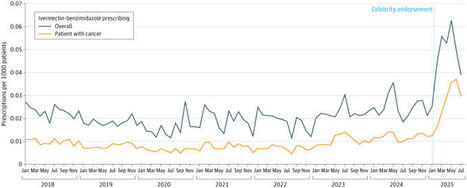
Les désinformations en santé peuvent tuer, pour de vrai.
Une étude récente publiée dans JAMA Network Open apporte une illustration particulièrement éloquente :
Après la promotion virale de combinaisons ivermectine–benzimidazoles comme supposés traitements “anticancer” par des célébrités, désinformateurs et influenceurs, les chercheurs ont observé une augmentation importante des prescriptions aux États-Unis.
Chez les patients atteints de cancer, ces prescriptions ont été multipliées par plus de 2,5.
Le problème n’est pas seulement la diffusion de fausses informations. Le danger est que certains patients atteints de maladies graves puissent retarder, interrompre ou abandonner des traitements validés scientifiquement au profit de thérapies non prouvées.
La désinformation médicale n’est pas “virtuelle”. Ses effets, eux, sont bien réels.
|
|
Scooped by
Gilbert C FAURE
May 11, 7:31 AM
|
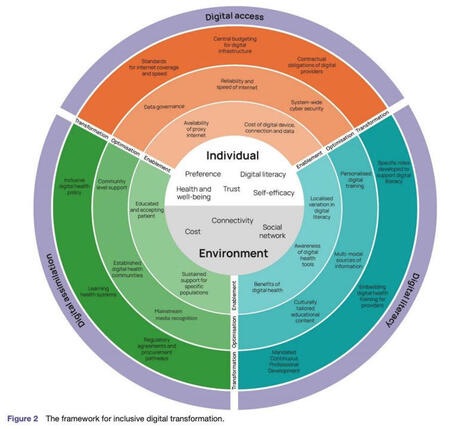
Digital health doesn't just fail to close health inequalities. It actively makes them worse, unless services are designed from the start to account for how inclusion actually works.
1️⃣ Existing frameworks for digital inclusion focus on individual technologies or cross-sectional snapshots, missing how people's relationships with digital health change over time.
2️⃣ A new framework combines two established concepts: the digital divide (access, literacy, assimilation) and digital transformation (enablement, optimisation, transformation).
3️⃣ Digital access covers infrastructure: internet coverage, speed, cost of devices and data, and it remains unequal across geography, income and ethnicity.
4️⃣ Digital literacy is more than knowing how to use a tool. It includes trust, self-efficacy, awareness of available tools and culturally appropriate training.
5️⃣ Digital assimilation describes the degree to which technology gets embedded into everyday life, and it varies sharply based on personal circumstances and social networks.
6️⃣ Organisations pass through three stages too: enablement (getting data online), optimisation (securing and improving systems), and transformation (restructuring care delivery around digital).
7️⃣ The framework shows that inclusion strategies fail when they treat barriers as fixed rather than evolving alongside both users and services.
8️⃣ 31 papers were reviewed; most evidence on digital inclusion comes from high-income countries, limiting generalisability to low-income and middle-income settings.
9️⃣ Community-based interventions and sustained support for specific populations show the strongest engagement. One-size digital rollouts don't work for underserved groups.
🔟 Policymakers and commissioners need strategies that evolve with their users, not static toolkits designed at a single point in time.
✍🏻 Ian Litchfield, David Shukla, Sheila Greenfield. Understanding digital inclusion through the transformation of services and users: a narrative review and novel framework. BMJ Digital Health & AI. 2026. DOI: 10.1136/bmjdh-2026-000051 | Open Access | 14 comments on LinkedIn
|
|
Scooped by
Gilbert C FAURE
May 10, 8:56 AM
|
Fuzzy Regression discontinuity design on vaccins data.
The Nature journal has published a study where researchers nvestigated whether receiving the herpes zoster vaccine reduced:
shingles disease, and more importantly, dementia risk in older adults.
The researchers exploited a policy eligibility cutoff based on date of birth, and use Fuzzy RDD to approximate the randomization locally.
Some eligible people refused vaccination,
some noneligible people later obtained vaccination.Therefore the probability of treatment changed discontinuously at the cutoff rather than perfectly and justify the Fuzzy RDD.
(link in comments)
|
|
Scooped by
Gilbert C FAURE
May 8, 11:34 AM
|
We’re excited to see Science Communication for Scientists: Linking Strategy with Creativity, Practice and Respect recognized in the Journal of Science Communication with a thoughtful review by Matthew S. VanDyke.
The review praises the textbook’s evidence-based, ethical, and practical approach to science communication. As Professor VanDyke writes, Science Communication for Scientists “serves as a necessary, current resource for scientists hoping to communicate about their work more effectively.” The book also incorporates many of the core principles of the Alda approach to science communication, emphasizing connection, audience awareness, and communication grounded in clarity, empathy, and responsiveness.
Co-written by Alda Center Executive Director Laura Lindenfeld alongside fellow communication scholars John Besley (Michigan State University College of Communication Arts and Sciences), Xia Zheng (Stony Brook University School of Communication and Journalism), Anthony Dudo (Moody College of Communication at UTAustin), and Todd P. Newman (University of Wisconsin-Madison), the open-access textbook combines research-backed communication strategies with practical applications for scientists, students, and educators. Since its release in September, thousands of readers around the world have accessed the resource, highlighting the growing demand for effective science communication training.
We’re proud to see this work contributing to a broader movement toward science communication that strengthens trust and understanding between STEM professionals and the communities they serve.
👉 Read the review in the Journal of Science Communication: https://lnkd.in/eagUx3MT
👉 If you are already using Science Communication for Scientists, leave a comment below or reach out to the authors with your thoughts! If you haven't had a chance to check out this great resource, you can get it here, along with resources for instructors: https://lnkd.in/ev3G9Can
#SciComm #sciencecommunication #STEM
|
|
Scooped by
Gilbert C FAURE
May 8, 11:26 AM
|
No Link Between Aluminum Adjuvants and Serious or Long-Term Health Outcomes: BMJ Meta-analysis
"The review included 59 studies (37 case series, 11 randomised controlled trials, nine cohort studies, two ecological studies). High quality evidence from randomised controlled trials and large cohorts consistently showed no association between aluminium adjuvanted vaccines and serious or long term health outcomes, such as asthma, autism spectrum disorders, or other chronic conditions."
Link to study in Comments
|
|
Scooped by
Gilbert C FAURE
May 8, 4:38 AM
|
Our paper on vulnerability to misinformation has been published in NPJ Complexity. We look at a framework for understanding how misinformation is about incentives, not just deception.
This framing adds to bias-driven explanations by identifying connections of misinformation studies to areas like complexity science, cultural studies, political economy, evolutionary biology, and platform studies, etc. where behavior is shaped by feedback loops within and among technosocial systems and individual users.
https://lnkd.in/gY6tJCWX
|
|
Scooped by
Gilbert C FAURE
April 29, 8:05 AM
|
New paper out today in Nature Health, the newest Nature Portfolio journal: a 30-country, 31,000-respondent survey on how adults judge quality health information.
This is the first look at this topic at this scale. It is also a huge milestone for me professionally as a faculty member.
The finding I keep coming back to: digital health literacy was highest in low- and middle-income countries and lowest in high-income countries. National wealth does not automatically translate into stronger digital skills, and in many LMICs, social media has become a primary route to health information.
A few other patterns from the data:
👉 Medical providers were the most endorsed source of trusted health information globally (40.7%), followed by verification across multiple sources (31.2%). Government sources came in at 21.6%, family and friends at 6.5%.
👉 Acceptance of AI-generated health information ranged from above 75% in China, India, Pakistan, and Indonesia to below 50% across most of Western Europe, North America, and Japan.
👉 Combined text-and-image formats were the dominant preference almost everywhere, but video-only was preferred by a meaningful share of respondents in Egypt, India, and Pakistan.
👆 The takeaway for global health communication is not that one approach beats another, but that the same message will not work everywhere. Format, sourcing, and channel all matter, and they vary by age, country income, and political context in ways that should shape how campaigns are designed.
Grateful to my co-authors Ayman El-Mohandes, MBBCh, MD,MPH,FAAP Katarzyna Wyka Scott C. Ratzan MD Ken Rabin at CUNY SPH, Trenton M. White, PhD at ISGlobal, Rebecca Katherine Ivic, Ph.D. at the University of Alabama, and Carolina Batista MD at Baraka Impact Finance / DNDi. Thrilled that CUNY Graduate School of Public Health and Health Policy is supporting the mission of the Nature Medicine Commission on Quality Health Information for All and this broader research agenda.
Read the paper: https://rdcu.be/ffPk3
#AcademicPublishing, #ResearchImpact, #QualityHealthforAll
|
|
Scooped by
Gilbert C FAURE
April 29, 7:46 AM
|
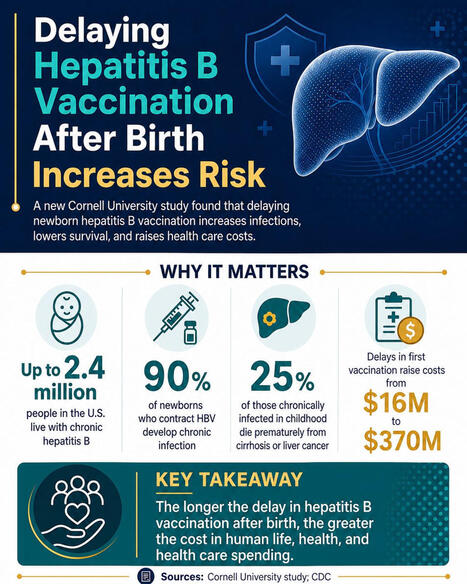
A new Cornell University study published in JAMA Pediatrics warns that delaying #hepatitisB #vaccination after birth could increase infections among newborns, reduce survival and quality of life, and raise health care costs.
▪️ The study, led by Noele Nelson, professor of practice in Cornell’s Department of Public and Ecosystem Health, modeled the impact of delaying the first #hepB #vaccine dose to 2 months, 7 months, 4 years, or 12 years. Across scenarios, delays led to more chronic infections and serious complications, including #cirrhosis and #livercancer.
▪️ The projected costs were significant: from $16 million to $370 million, depending on timing and completion of the vaccine schedule. This matters because newborns face the highest risk from hepatitis B #virus: 90% of infected newborns develop chronic #infection, and 25% may die prematurely from cirrhosis or liver cancer.
▪️ The researchers emphasized that preventing #HBV transmission at birth is central to hepatitis B elimination efforts and noted that later first doses are associated with lower completion of the full vaccine series.
▪️ The study also follows a December 2025 vote by the federal Advisory Committee on Immunization Practices (ACIP) to delay the birth dose for infants whose birth parent tests negative for HBV, reversing a 2018 recommendation for universal vaccination within 24 hours of birth.
▪️ Additional authors include Eric Hall, PhD, MPH of Oregon Health & Science University, Prabhu Gounder of the Los Angeles County Department of Public Health, and Heather Bradley of Emory University.
🗃️ See comments for reference.
|
|
Scooped by
Gilbert C FAURE
April 28, 6:52 AM
|
✨️ #WorldImmunizationWeek each year is a great celebration of the million of lives saved from vaccines - but its also a sobering reminder of the deep inequities that still persist and need to be closed. The children who still have no access due to living in conflicts or having disabilities, or migrants & displaced populations who get lost through the health system. These inequities are only widening.
🔥 For day 2 of WIW - invite you to read the work led Adeline Tinessia et al, who conducted this complex systematic review of pro-equity strategies to improve vaccination among priority populations -
🔗 https://lnkd.in/gnxGDkvz
➡️ In this study, Addy brings together the evidence known to improve vaccination in people with living with disability, gender barriers, migrants, ethnic minorities and those living in urban vs rural settings.
#VaccinesWork
|
|
Scooped by
Gilbert C FAURE
April 19, 11:07 AM
|
Unconvinced Yet Influenced: Vaccine Decision-Making in the Shadow of Misinformation (Philpapers):
https://lnkd.in/dYkANKaR
Glimpse: This study examines how false information affects vaccine decision-making, causing delays or rejection even when people doubt its veracity. It makes the case that, rather than being a cognitive failure, such behavior can be a reasonable reaction in the face of uncertainty using an expected utility paradigm. According to the study, this effect is caused by three mechanisms: decreased confidence in reliable sources, increased perception of vaccine dangers, and a combination of changes in risk assessment and trustworthiness. While highlighting the limitations of proactive tactics like media literacy and prebunking, it also draws attention to the permanence of false information.
|
|
Scooped by
Gilbert C FAURE
April 18, 5:21 AM
|
I am listening to RFK testify to the House Ways and Means Committee. He just stated that the Hepatitis B vaccine was not studied against a placebo. This is not a true statement. Here is the chart in the original study in the New England Journal of Medicine that was a placebo controlled trial proving benefit and safety comparing placebo to vaccine. That statement misleads the public and does not restore trust. See the link in my comment for the full placebo study. | 98 comments on LinkedIn
|
|
Scooped by
Gilbert C FAURE
April 17, 3:07 AM
|
|
|
|
Scooped by
Gilbert C FAURE
May 16, 5:57 AM
|
Pleased to share our new publication on HPV Vaccination titled: "Vaccination-Related Applications and Health Care Professionals’ Observed Changes in Human Papillomavirus Vaccine Hesitancy: Cross-Sectional Survey" in JMIR mHealth and uHealth
Key takeaways
1. Healthcare professionals who reported promoting vaccination-related applications at their facilities had significantly higher odds of observing a decrease in HPV vaccine hesitancy among patients (adjusted odds ratio [aOR] 2.48, 95% CI 1.10-5.55; P=.03).
2. Healthcare professionals working at federally qualified health centers or city, county, or public health care facilities had significantly higher odds of observing a decrease in HPV vaccine hesitancy at their practices.(aOR 4.02, 95% CI 1.33-12.14; P=.01)
3. Healthcare professionals who administered the HPV vaccine under standing orders at their facilities had significantly higher odds of observing a decrease in HPV vaccine hesitancy at their practices (aOR 2.91, 95% CI 1.11-7.63; P=.03).
When healthcare settings make vaccination easier, more routine, and more visible, patient hesitancy decreases.
This highlights how organizational policies in addition to patient education play a critical role in cancer prevention.
https://lnkd.in/gBXeCSwn
|
|
Scooped by
Gilbert C FAURE
May 14, 3:15 AM
|
Misinformation increasingly undermines trust in childhood immunization among both the public and healthcare workers. Innovative, scalable educational approaches are needed to strengthen vaccine confidence across diverse settings. Objectives: To describe and evaluate a global initiative delivering as …
|
|
Scooped by
Gilbert C FAURE
May 11, 4:45 AM
|
📢 Cover Paper – Vaccines Volume 14, Issue 4
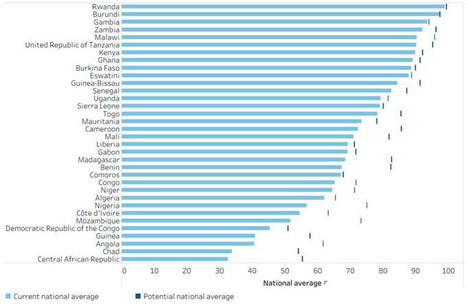
State of Inequality in Childhood Immunization: Monitoring Progress Across Low- and Middle-Income Countries over the Past Decade
By Nicole Bergen, Anne Schlotheuber, Katherine Kirkby, Luisa Arroyave, M. Carolina Danovaro-Holliday, Aluisio J. D. Barros and Ahmad Reza Hosseinpoor
This cover paper analyzes household survey data from up to 92 low- and middle-income countries across nine childhood immunization indicators.
Key findings:
- Mother’s education: median coverage differences of 9–14 percentage points
- Household economic wealth: largest gaps in low‑income countries
- Over the past decade, only modest reductions in economic‑related and place‑of‑residence inequalities (e.g., DTP3: ↓3.25 percentage points)
Conclusion: Persistent inequalities demand targeted policy attention to reach Immunization Agenda 2030 goals.
🔗 Read the cover paper: https://brnw.ch/21x2hzl
#Vaccines #CoverPaper #ChildImmunization #HealthEquity #GlobalHealth #LMICs
|
|
Scooped by
Gilbert C FAURE
May 10, 3:19 AM
|
Ethiopian Evidence Series (EES)-11
If the vaccine only waits at school, some girls never meet it!
Telake Azale,Tewodros Alemayehu and colleagues studied HPV vaccination in Ethiopia and found a major difference between girls who attend school and those who do not.
The study included more than 1100 girls, and overall vaccination coverage was 71%. However, about 85% of girls attending school were vaccinated, compared with only around 1 in 3 girls not attending school.
The study also showed that awareness campaigns through teachers, health workers, friends, and community outreach helped improve vaccine uptake.
👉In simple terms:
Many girls are protected from cervical cancer, but girls not attending school are still being missed.
👉Simple story
Two girls live in the same neighborhood. One regularly attends school and receives the HPV vaccine during a school campaign. The other is not attending school and never hears when the vaccine team arrives.
👉 Same age, same town but very different access to protection.
👉Key message
The challenge is not only having the vaccine it’s reaching every girl.
✍️ Authors: Telake Azale, Tewodros Alemayehu, Hiwot Tadesse Belay, Lisa Oot, Abebaw Gebeyehu, Zinabu Temesgen Melsebo, Tinebeb Tamir, Lidya Mulat, Melkamu Ayalew, Mengistu Bogale, Liya Wondwossen
Article link: 🔗 https://lnkd.in/d7GQbW5W
Ethiopian Evidence Series (#EES_11)
|
|
Scooped by
Gilbert C FAURE
May 8, 11:27 AM
|
The rapid advancements in digital technology have provided new opportunities to enhance public health systems, particularly in the management of vaccination programs. VaxHub is a digital solution designed to streamline vaccination details and monitoring, offering a centralized platform to track vaccination records, schedules, and status for individuals and healthcare providers. The system enables real time updates on vaccine availability, appointment scheduling, and reminders, improving access to timely immunizations. Through data integration, VaxHub also facilitates monitoring of vaccination coverage, helps identify gaps in immunization, and assists in effective resource allocation. By leveraging mobile applications, cloud storage, and user friendly interfaces, VaxHub seeks to enhance vaccine distribution and compliance, reducing inefficiencies and improving overall public health outcomes. The solution promises to play a pivotal role in ensuring comprehensive immunization, minimizing vaccine hesitancy, and supporting pandemic response efforts globally.
by Shreya Prajapati | Tanishq Prajapati | Tushar Mohod | Tejas Dhengre | Tanmayi Meshram | Vanshika Mahato | Prof. Usha Kosharkar "VAXHUB: Streamlining Vaccination Details and Monitoring through Digital Solutions"
Published in International Journal of Trend in Scientific Research and Development (ijtsrd), ISSN: 2456-6470, Special Issue | Emerging Trends and Innovations in Web-Based Applications and Technologies , January 2025,
URL: https://lnkd.in/ggrgWx-2
Paper URL: https://lnkd.in/g4zyhnxX
|
|
Scooped by
Gilbert C FAURE
May 8, 8:00 AM
|
Information is a determinant of health but very little is known about trusted sources or health literacy worldwide.
This week we published the first global survey of digital health literacy and trust in health information sources at Nature Health Nature Portfolio from Rachael Piltch-Loeb Ayman El-Mohandes, MBBCh, MD,MPH,FAAP Scott C. Ratzan MD Ken Rabin Carolina Batista MD Rebecca Katherine Ivic, Ph.D. and colleagues at CUNY Graduate School of Public Health and Health Policy.
A few key findings:
Medical providers were the most trusted source of health info worldwide (in all but one country).
Most younger people accept AI generated health information, older people less so.
There were correlations between democratic freedom and trusted sources of health information.
Self-reported digital health literacy was generally high - and higher in lower middle income countries than high income countries.
Most people prefer health information in ‘words and pictures’ format - not video (take note: social media companies!)
There is a wealth of data here for anyone interested in this crucial topic of health information. #health #trust #healthliteracy #information #medicine
https://lnkd.in/efTZZUwt
|
|
Scooped by
Gilbert C FAURE
May 3, 4:46 AM
|
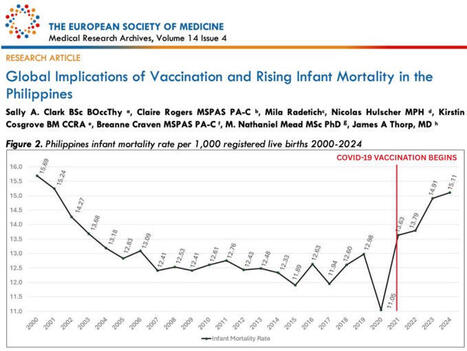
BREAKING STUDY: Infant Mortality SURGED 37% and Birth Defect Deaths JUMPED 46% Since 2020
Using official Philippine government data, we found 20 years of declining infant mortality were ERASED in just 5 years—alongside a COLLAPSE in live births.
Analyzing 41.7M births + 546,000+ infant deaths (2000–2024) with Department of Health vaccination data, we found:
📈Infant mortality hit a historic low (11.05/1,000) in 2020 → then rose 37% to 15.11 by 2024 (p<0.0001)
📈Congenital abnormality deaths jumped 46%
📉Live births down 24% from the 2012 peak
Read the full study: https://lnkd.in/gSHtSq3S
|
|
Scooped by
Gilbert C FAURE
April 29, 7:52 AM
|
#VaccineHesitancy remains a complex challenge, even among those already vaccinated. This study applies the Diffusion of Innovation #DoI theory to analyze #COVID19 booster hesitancy.🧬🔍
⚕️By categorizing participants from innovators to "refusers," we identified key drivers like vaccine literacy and institutional mistrust. These insights are vital for tailoring future #PublicHealth interventions.
#AcademicResearch #SocialScience #HealthEquity #DataDriven
Read more here⤵️
https://lnkd.in/ekF3_ZkM
|
|
Scooped by
Gilbert C FAURE
April 29, 7:45 AM
|
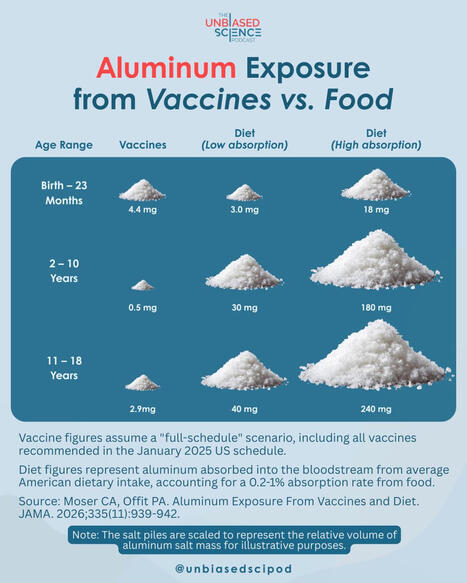
We get a lot of questions about aluminum in vaccines, so let's answer them.
A paper published earlier this year by Charlotte Moser and Paul Offit MD in JAMA helped quantify and compare the amount of aluminum in vaccines versus food, while addressing the other important pieces of the puzzle: how our bodies process aluminum differently when it's injected versus ingested, where it goes after vaccination, and why the amounts matter less than people often think. There's another fantastic paper by Edward Nirenberg and colleagues in Pediatrics that digs into the role and safety of aluminum adjuvants in childhood vaccines, and it's an excellent reference for anyone who wants to go deeper.
Both linked below. 👇
https://lnkd.in/gj7xbbzy
https://lnkd.in/garybvM5
|
|
Scooped by
Gilbert C FAURE
April 27, 8:16 AM
|
Signal-to-Noise: Toward an Alternative Account of the ‘Fake News’ Phenomenon (Preprint to 'Misinformation and other Epistemic Pathologies,' Cambridge University Press):
https://lnkd.in/dcNpV4Ye
Glimpse: This essay refutes the conventional wisdom that claims fake news primarily undermines democracy by directly influencing or misleading people into adopting incorrect views. Instead, it contends that by reducing the overall signal-to-noise ratio in the information ecosystem, fake news can be harmful without altering opinions at all. Users are less exposed to a variety of viewpoints as a result of this deterioration in information quality, which pushes them to abandon large, inclusive platforms in favor of more selective ones that are thought to be more trustworthy. As a result, public discourse becomes less representative and polarization rises, undermining democratic deliberation. The study goes on to say that portraying fake news as an "epidemic" would be detrimental since it might lead people to retreat into echo chambers and reduce their epistemic networks, which would ultimately make the issues it aims to solve worse.
---
Free articles and analyses on soft counter-extremism, against online hate, and on the theory of mis-/disinformation (usually third-party content).
The most recent LinkedIn posts on the above subjects, with glimpses, can be accessed via:
• https://lnkd.in/eBarZAew
Two-week reviews available via the following three Policyinstitute.net websites:
• counter-terrorism.org
• preventhate.org
• strategism.org
The views expressed in this post is that of the author(s) of the source content and do not necessarily represent those of Policyinstitute.net and its staff. While we carefully produce the glimpses to the articles, documents, or recordings that we hyperlink, we are not responsible for textual changes nor for imponderable parts of the original items.
#policyinstitutenet #preventradicalization #preventextremism #counterextremism #preventhate #disinformation #misinformation
|
|
Scooped by
Gilbert C FAURE
April 18, 5:23 AM
|
#JournéeMondialedelEspritCritiqueenSanté #Désinformation
La désinformation gangrène tous les secteurs, en particulier celui de la santé. Un rapport d’expertise a été remis au ministère de la Santé en janvier dernier : le constat est sans appel, la population est insuffisamment préparée pour repérer et résister aux fausses informations en santé. Ses rédacteurs proposent des solutions pour promouvoir l’esprit critique et développer un système d’infovigilance.
👇👇
https://lnkd.in/egFSU-9B
Ministère de la Santé Haute Autorité de Santé Vaccination et Lien Social
Herve Maisonneuve Mathieu Molimard Dominique Costagliola
|
|
Scooped by
Gilbert C FAURE
April 17, 3:51 AM
|
Visual Analytics of Vaccine Hesitancy: Mapping Sentiment and Misinformation Flows Across Digital Ecosystems (Next Research, Elsevier):
https://lnkd.in/dttt7HbV
Glimpse: This study uses a dataset of 1,000 posts from Brazil, India, Pakistan, the UK, and the US to examine vaccine reluctance and false information on social media sites. It examines the evolution of vaccine-related debate on the internet using sentiment analysis, misinformation labeling, influencer network mapping, and visual analytics. The findings indicate that although sentiment has increasingly evolved toward more neutral tones, negative sentiment and false information are prevalent, with a significant percentage of posts containing false information. It was discovered that anti-vaccine narratives are largely disseminated through influencer accounts. The emotional tone of vaccine conversations was captured using a refined BERT model. Overall, the study provides insights for enhancing public health communication and intervention tactics by highlighting the intricate connection between sentiment and false information.
---
Free articles and analyses on soft counter-extremism, against online hate, and on the theory of mis-/disinformation (usually third-party content).
The most recent LinkedIn posts on the above subjects, with glimpses, can be accessed via:
• https://lnkd.in/eBarZAew
Two-week reviews available via the following three Policyinstitute.net websites:
• counter-terrorism.org
• preventhate.org
• strategism.org
The views expressed in this post is that of the author(s) of the source content and do not necessarily represent those of Policyinstitute.net and its staff. While we carefully produce the glimpses to the articles, documents, or recordings that we hyperlink, we are not responsible for textual changes nor for imponderable parts of the original items.
#policyinstitutenet #preventradicalization #preventextremism #counterextremism #preventhate #disinformation #misinformation
|