Your new post is loading...

|
Scooped by
Gilbert C FAURE
Today, 8:59 AM
|
Let's make sure that every child has the right to be involved in decisions about their health. Discover our leaflet "Your Health, Your Say!" designed for children aged 9-15.
✅ Illustrated, easy-to-follow guidance
✅ Based on real children’s input
✅ Available in 7 languages
📥 Download, print and share it with your young patients ➡️https://lnkd.in/erv9GxKU
|
|
Scooped by
Gilbert C FAURE
January 8, 4:09 AM
|
"he truth is that, across wealthy countries with advanced health systems, childhood immunization schedules show a striking consistency. As illustrated in the figure, by early childhood most high-income nations vaccinate against roughly a dozen to fifteen serious pathogens. The United States, the United Kingdom, France, Germany, Israel, Japan, and Nordic neighbors such as Sweden, Finland, and Norway all fall squarely within this range. Denmark represents the low-water mark.
Denmark’s schedule reflects a set of choices made in a small, highly homogeneous country with a centralized health care system that guarantees universal access to care, low baseline disease prevalence, and strong social infrastructure. Those conditions do not apply to the United States, not even close. And they do not apply to most of our peer countries, either. Even the Danes are puzzled by the notion that we would try to mirror their schedule.
It’s true that the United States vaccinates against more pathogens than other countries—decisions reached after extensive debate and examination of evidence – but the claim that our country is uniquely aggressive in childhood vaccination collapses under even cursory international comparison.
What is unique is Denmark’s approach. Aligning US vaccine policy with Denmark would not move America toward international consensus. But it would put American children at risk."
|
|
Scooped by
Gilbert C FAURE
January 5, 4:18 AM
|
I may take a bit of an issue with what they call "very rare", but overall, this is great guidance. We need numbers clearly communicated. I will also use this as a post to remind people that ovarian cancer is not rare even though you have likely read that it is. I still see this language being used by reputable sites. I have read as low as 1 in 91 women (~ 1% or close to 1 in 100) to as high as 1 in 57 women (close to 2%) will experience ovarian cancer in their lifetime. Look around at all of the women you know - you likely know someone with ovarian cancer and they may not know it yet. 2 of my close friends have died from ovarian cancer. Hopefully, by encouraging clinicians to use clear language, they will also be more attentive to possible outcomes that they may have once thought of as rare.
|
|
Scooped by
Gilbert C FAURE
January 1, 4:35 AM
|
L'ANSM Agence nationale de sécurité du médicament et des produits de santé avait publié le 30.12.2025 "Les médicaments homéopathiques ne sont pas des vaccins" sur X (ex-Twitter) et de nombreuses personnes ont corrigé : ce ne sont pas des médicaments.
En Suisse, il faudrait aussi corriger les allégations de santé non vérifiées des fabricants Boiron et Schmidt-Nagel autorisées par Swissmedic, qui sont un scandale absolu puisque cela met en danger des patients. Rappelons aussi que l'oscillococcinum (soit bactérie "oscillante") n'existe pas et ne correspond donc même pas à un remède homéopathique selon le prétendu principe de similitude de Samuel Hahnemann.
Sur ce, bon nouvel-an à toutes et tous !
|
|
Scooped by
Gilbert C FAURE
December 24, 2025 4:38 AM
|
Élus locaux : rendre l’information en santé vraiment accessible, c’est aussi une compétence territoriale
Garantir l’accès à la santé ne se limite pas à l’offre de soins. Cela passe aussi, très concrètement, par la capacité de chacune et chacun à comprendre les informations de santé, quels que soient son niveau de formation, sa langue, ses revenus ou son parcours de vie.
Un guide récent publié par l’Office fédéral de la santé publique suisse et la Croix-Rouge suisse rappelle une réalité souvent sous-estimée : les personnes socialement défavorisées sont plus exposées aux maladies aussi parce que l’information sanitaire ne leur est pas toujours accessible .
Les collectivités locales ont ici un rôle clé à jouer. Communes, intercommunalités, départements et régions sont en première ligne pour :
adapter les messages de prévention aux réalités locales,
utiliser un langage clair et compréhensible,
diversifier les supports (papier, numérique, vidéo, audio),
s’appuyer sur les réseaux de proximité (centres sociaux, CCAS, associations, professionnels de terrain),
impliquer les habitants dans la conception des messages pour qu’ils soient réellement compris et appropriés.
Ce guide montre que penser l’accessibilité de l’information dès la conception permet de réduire les inégalités sociales de santé, de renforcer la prévention et d’améliorer l’efficacité des politiques publiques locales.
En matière de santé publique, la clarté n’est pas un luxe, c’est un levier d’équité et de cohésion sociale.
Source : Pour des informations sur la santé accessibles et faciles à comprendre – Comment atteindre les groupes de population socialement défavorisés ?
|
|
Scooped by
Gilbert C FAURE
December 24, 2025 4:28 AM
|
Dr. Paul Offit explains why the MMR vaccine is given as a combined shot that protects against three diseases at once—rather than as three separate shots.
Sincere thanks to Voices For Vaccines for allowing us to share clips from this discussion!
|
|
Scooped by
Gilbert C FAURE
December 20, 2025 5:08 AM
|
🔷 La grippe progresse en France.
⚠ Certains d'entre vous pensent qu'en se vaccinant plus tard, ils seront mieux protégés à la fin de l'hiver. Ce n'est pas forcément un bon calcul.
➡ D'une part, avant la phase épidémique d'une région on a des cas sporadiques, rien ne vous dit que vous n'en ferez pas partie, ensuite vous ne serez pas immunisé sitôt l'injection faite.
Le vaccin lui-même ne contient pas de virus de la grippe actif capable de causer la maladie. Il contient des composants du virus, des antigènes sans pouvoir pathogène.
✅ Une fois injectés, ces antigènes sont repérés par des cellules immunitaires appelées cellules présentatrices d'antigènes, comme les macrophages et les cellules dendritiques.
✅ Ces cellules capturent les fragments viraux et migrent vers les ganglions lymphatiques, les centres de commandement du système immunitaire. C'est là qu'elles présentent l'antigène aux autres cellules de défense.
L'activation du système immunitaire va se fait en deux étapes clés :
✅ La réponse cellulaire qui correspond à l'activation des lymphocytes T-helpers qui vont libérer des signaux pour diriger les autres cellules, et aider les lymphocytes B à produire les anticorps.
✅ La réponse humorale où les lymphocytes B vont reconnaître l'antigène et, avec l'aide des lymphocytes T, se transformer en plasmocytes. Ces derniers sont de véritables usines à protéines, dont la seule fonction est de produire en masse des anticorps spécifiques à l'antigène de la grippe.
✅Les anticorps sont des protéines en forme de "Y" qui se fixent spécifiquement aux virus de la grippe, les neutralisant et les marquant pour leur destruction par d'autres cellules immunitaires.
✅ Et le temps nécessaire pour faire tout ça nous demanderez-vous ?
Environ deux semaines !
📌C'est pour ça qu'attendre d'être en pleine épidémie pour vous vacciner n'est pas la meilleure idée.
Illustration par Santé Publique France épidémies bronchiolite et grippe
Pas encore inscrit à notre newsletter ? https://lnkd.in/em8sSemJ
#grippe #épidémie #effetsindésirables #effetssecondaires #prévention #vaccination #santépublique #vaccins
|
|
Scooped by
Gilbert C FAURE
December 18, 2025 4:59 AM
|
The Australian Immunisation Handbook COVID-19 chapter has been updated with the latest recommendations, and ATAGI has introduced its first GP bulletin to support timely vaccination.
Stay up to date:
👉 Handbook update: https://lnkd.in/gaz_Z7te
👉 ATAGI GP bulletin: https://lnkd.in/gBECuisi
#Immunisation #COVID19 #Vaccines #PublicHealth #GPResources #ATAGI #AustralianImmunisationHandbook #HealthcareUpdates #NCIRS
|
|
Scooped by
Gilbert C FAURE
December 18, 2025 4:48 AM
|
A good Christmas present can be a regulatory amendment. Authorised nurse/midwife immunisers can now give vaccines to their patients more independently than before because NSW Health have amended their Poisons and Therapeutic Goods Regulation of 2008 this week.
At Melissa's nurse-led wound care clinic in Port Macquarie they were keen to offer vaccines to patients, trained, equipped and ready. But they were unable to do so without a presiding doctor. With this change, patients can now access vaccination services more easily and get better protection from diseases like pneumococcal pneumonia, influenza and shingles. There are many studies showing that offering vaccines when patients attend care for other reasons can increase vaccination coverage. This is a win for public health and for patients. Nice work Melissa Freeman FACN.
NSW Health | Dr Kerry Chant | Australian College of Nurse Practitioners (ACNP) | Lexi Metherell | Australian Primary Health Care Nurses Association (APNA) | National Centre for Immunisation Research and Surveillance (NCIRS) | SABII Research Group - Social and Behavioural Insights in Immunisation
|
|
Scooped by
Gilbert C FAURE
December 14, 2025 5:06 AM
|
....from the Center for Vaccine Ethics and Policy...GE2P2 Global Foundation
|
|
Scooped by
Gilbert C FAURE
December 13, 2025 9:13 AM
|
Materials are updated as needed. The Vaccine Education Center staff regularly reviews materials for accuracy. You should not consider the information in this site to be specific, professional medical advice for your personal health or for your family's personal health.
|
|
Scooped by
Gilbert C FAURE
December 12, 2025 4:29 AM
|
The World Health Organization Global Advisory Committee on Vaccine Safety (GACVS) review found no causal link between #vaccines and #autism spectrum disorders (ASD).
▪️ The committee examined:
- Thiomersal-containing vaccines and ASD
- All vaccines in general and ASD
- Vaccines with aluminum adjuvants and potential health risks
▪️They reviewed 31 primary #research studies (2010–2025) from multiple countries, plus a large Danish cohort study of children born between 1997 and 2018, and broader literature from 1999–2023 on #aluminum in vaccines.
▪️The evidence consistently shows:
- Vaccines used in childhood and pregnancy have a strong safety profile.
- Thiomersal and aluminum in vaccines are not associated with ASD.
▪️GACVS therefore reaffirms its earlier conclusions (2002, 2004, 2012): vaccines, including those with thiomersal and/or aluminum, do not cause autism.
▪️WHO urges countries to base vaccine policies on this latest high-quality evidence, noting that childhood #immunization has saved at least 154 million lives in the past 50 years.
Why this analysis is important
✅ Directly addresses a persistent myth. Claims that vaccines cause autism = particularly because of thiomersal or aluminum - have fueled #vaccinehesitancy for decades. This review systematically re-examines the issue with newer data up to 2025, showing that the myth is still not supported by evidence.
✅ Covers the main “suspects”. The analysis specifically looks at thiomersal (a preservative critics often blame), aluminum adjuvants (used to boost immune response), vaccines in general. By addressing each of these, it closes off the most common “it might be this ingredient” arguments.
✅ Uses large, high-quality, multi-country data. The conclusions are based on:
- 31 primary studies over 15 years
- A very large national cohort from Denmark
- Decades of safety data on aluminum
That breadth and depth make the findings more robust and globally relevant, not just specific to one country or one dataset.
✅ Supports confident vaccination in pregnancy and childhood. The committee explicitly notes the positive safety profile of vaccines in pregnancy and early life, which are often the stages where parents are most worried. This supports clinicians when reassuring families.
✅ Reinforces the enormous benefits of vaccination. By reminding us that childhood immunization has saved at least 154 million lives, the statement places the small, repeatedly disproven alleged risk (autism) against the massive, proven benefits of vaccines - an important reframing for public and policymakers alike.
🗃️ See comments section for link to reference. | 12 comments on LinkedIn
|
|
Scooped by
Gilbert C FAURE
December 8, 2025 4:35 AM
|
|
|
|
Scooped by
Gilbert C FAURE
January 8, 4:17 AM
|
The CDC's new childhood immunization schedule represents one of the most dramatic changes in childhood disease prevention policy in decades.
“When it comes to explaining these changes in recommendations, the short answer is that the CDC demoted several vaccines that used to be in the plain-and-simple, ‘you should get this vaccine’ category, to specialized sub-categories that have their own criteria and implications,” said Prof. Jason L. Schwartz. “The concern is this is going to create widespread confusion about when those ‘special-category’ vaccines should be used, which will doubtlessly mean fewer kids will get those vaccines and more kids will get those diseases.”
Some key questions and answers:
❓Can my child still receive all of the vaccines from the old schedule?
➡️ Yes, and the American Academy of Pediatrics advises that they do.
❓Will insurance cover all vaccines?
➡️ Yes. All of the vaccines are still available at no cost to families.
❓What does “shared clinical decision-making" mean?
➡️ A conversation with a health care provider about the risks and benefits of a vaccine. Parents and providers have long had these types of conversations routinely.
Find our full breakdown of what parents should know in the comments.
|
|
Scooped by
Gilbert C FAURE
January 5, 4:31 AM
|
2025 is over, but measles cases will almost certainly continue in the U.S. (as well as other countries). This video shows maps of the spread of measles over the year in the U.S. since cases first appeared in February. I expect the CDC's data to "reset" to zero for cases for 2026, but it would be nice if they continued with the cumulative case displays for ongoing local/regional outbreaks since more cases in SC and along the UT/AZ border are extremely likely - and I wouldn't be surprised if we soon see outbreaks in the upper mountain region (e.g. WY, ID), as well as cases finally appearing and ticking up in New England. Stay Well. Stay Safe.
MedPage Today Genevieve Friedman Steven Grossman Steve Projan Peter Hotez MD PhD DSc(hon) Asaf Bitton #vaccines #measles #2026
|
|
Scooped by
Gilbert C FAURE
January 4, 3:53 AM
|
🎉 Excited to share our latest research on HPV vaccination and cervical cancer prevention!
The HPV vaccine is one of the most effective tools we have to prevent cervical cancer—yet coverage remains far too low worldwide.
Our cohort study followed women with cervical cancer or high-grade lesions over two decades, revealing both the remarkable effectiveness of the vaccine and a critical gap in its implementation.
💡 Key findings:
HPV vaccination is highly effective in preventing not only cervical cancer but also high-grade cervical lesions.
However, the rate of secondary prevention—vaccinating women after diagnosis and treatment—remains critically low.
Why this matters: While primary prevention for adolescents is essential, our study highlights the untapped potential of adjuvant vaccination following treatment of cervical disease. Even after diagnosis, HPV vaccination offers substantial protection against future lesions—yet this strategy is vastly underutilized in clinical practice.
🔑 Moving forward:
Healthcare providers need better education about the benefits of post-diagnosis vaccination.
Clinical guidelines should explicitly integrate secondary prevention into care pathways.
Communication strategies must reach both young people (through social media and trusted voices) and adult women in clinical care.
Catch-up vaccination programs should be expanded.
The evidence is clear: we have powerful prevention tools at multiple stages. Now we need comprehensive strategies that use them effectively.
📖 Read the full open-access paper:
https://lnkd.in/dp8sibJj
Grateful to my co-authors: Debora Fiorito, Gabriele Giorgianni, Eleonora Irato, Alessia Anna Di Prima, Chiara Chillari, Antonella Ippolito, Liliana Mereu, and Rosalia Ragusa.
#HPV #CervicalCancer #PublicHealth #Vaccination #CancerPrevention #SecondaryPrevention #HealthEquity
|
|
Scooped by
Gilbert C FAURE
December 28, 2025 7:12 AM
|
🔷 Que se passe-t-il dans les phases qui précèdent la commercialisation d'un vaccin ?
Retrouvez Elisabeth Botelho-Nevers, Cheffe du service Infectiologie du CHU de St-Etienne et Professeure de maladies infectieuses pour comprendre les différentes étapes.
https://lnkd.in/e72RsD_g
#vaccins #santépublique #prévention #vaccination
|
|
Scooped by
Gilbert C FAURE
December 24, 2025 4:29 AM
|
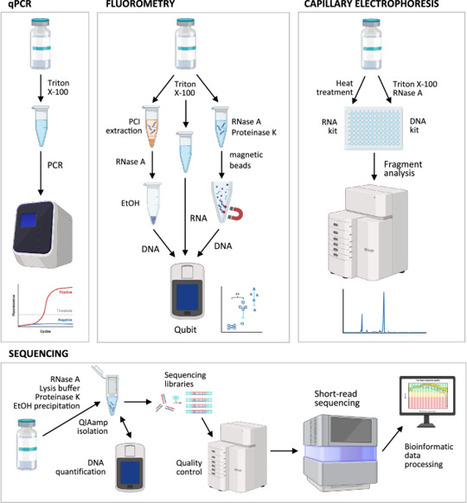
We have seen so many posts claiming presence of DNA contamination in mRNA vaccines. This attached study was initiated as part of a national effort to address growing public concerns and misinformation regarding the presence of residual DNA in mRNA-based COVID-19 vaccines. Claims suggesting the presence of high levels of potentially harmful DNA have been widely disseminated by anti-vaccine groups, fuelling vaccine hesitancy and undermining public confidence. To tackle this infodemic with independently verified data, we performed a comprehensive analysis of 15 mRNA vaccine batches, including 11 expired batches, using four orthogonal molecular methods: quantitative PCR, fluorometry, fragment analysis, and sequencing analysis (short-read massively parallel).
Across all samples and quantitative analytical methods, residual DNA content was consistently below 10 ng per dose, complying with regulatory thresholds established by EMA and FDA. Moreover, the inclusion of expired batches further supports the chemical stability and regulatory compliance of mRNA vaccines over time with respect to DNA content. The low DNA quantity, plasmid origin, and high fragmentation collectively suggest negligible risk to human health.
|
|
Scooped by
Gilbert C FAURE
December 21, 2025 4:09 AM
|
Peter Hotez MD PhD DSc(hon) posted images on LinkedIn
|
|
Scooped by
Gilbert C FAURE
December 19, 2025 2:43 AM
|
They are destroying public health and it matters.
|
|
Scooped by
Gilbert C FAURE
December 18, 2025 4:58 AM
|
Continuing our conversation guide series 💬
Today we’re answering one of the most common questions we hear about the HPV vaccine: why is it recommended at such a young age?
This guide also walks through the evidence behind early vaccination, addresses common concerns about safety and behavior, and shows how the HPV vaccine works to prevent multiple cancers later in life.
Questions are normal. Clear, evidence-based answers matter.
Aimee Pugh Bernard, PhD
|
|
Scooped by
Gilbert C FAURE
December 18, 2025 4:31 AM
|
Un grand merci à Isabelle Moncada Raphaelle Aellig Regnier et à toute l’équipe de 36.9° (RTS - Radio Télévision Suisse) pour leur invitation dans l’émission consacrée aux vaccins contre la varicelle et le zona.
Au-delà du plaisir de participer, je tiens à saluer la remarquable capacité de cette équipe à expliquer des sujets médicaux complexes avec pédagogie, rigueur et une clarté rare. Une vraie force de service public : rendre la science accessible, sans jamais la simplifier à l’excès.
Bravo, et continuez ! Votre travail fait réellement la différence dans le paysage de l’information en santé.
https://lnkd.in/eAf_AJPq
|
|
Scooped by
Gilbert C FAURE
December 13, 2025 9:40 AM
|
📣 In a new bonus episode of #ESWIAirborne, Professor Heidi Larson, Founder and Director of the Vaccine Confidence Project, shares powerful insights on how to bring more diverse, trusted voices into public discussions on vaccination. Tune in now 👇
https://lnkd.in/eSjEE-UT
#ESWIEducationHub
#Influenza
#flu
#RSV
#hMPV
|
|
Scooped by
Gilbert C FAURE
December 12, 2025 6:17 AM
|
Karen from Voices for Vaccines reminds us that our real opponents in this fight are germs, not other people, and our allies are communities that don’t want to be sick.
|
|
Scooped by
Gilbert C FAURE
December 11, 2025 4:12 AM
|
Despite the recent change in US ACIP vaccine recommendations, ATAGI still recommends a birth dose of Hepatitis B vaccine for all newborns at birth because:
• screening for hepatitis B infection in pregnancy does not always occur
• errors or a delay in reporting results to the pregnant person still occur
• infection of the pregnant person may occur after screening leaving the baby at risk
• hepatitis B infection from another household member to the baby may
occur
Babies infected at birth have a 90% chance of developing chronic hep B infection which can lead to liver failure and/or cancer later in life 🦠
A birth dose provides an important level of protection for newborns at birth and this recommendation in Australia is backed by evidence and has not changed - please see the ATAGI statement 👇
Murdoch Children's Research Institute (MCRI) Faculty of Medicine, Dentistry and Health Sciences The Royal Children's Hospital National Centre for Immunisation Research and Surveillance (NCIRS) Australian Government Department of Health, Disability and Ageing DFAT
|