The Asian Food Gazette.
170.8K views | +0 today
Follow
The Asian Food Gazette.
Cooking and enjoying Asian cuisine.
Curated by Frank Kusters
Your new post is loading...
Scooped by Frank Kusters
July 25, 2017 9:33 AM
Scoop.it!

Stalking—and Saving—the Wild Eel: An Interview with Marine Biologist Tsukamoto Katsumi

Stalking—and Saving—the Wild Eel: An Interview with Marine Biologist Tsukamoto Katsumi | The Asian Food Gazette. | Scoop.it
Tsukamoto Katsumi has devoted most of his long career to the study of the Japanese eel and its spawning behavior. Now, with overfishing and other pressures threatening populations of freshwater eel worldwide, Tsukamoto has joined forces with colleagues from China, South Korea, and Taiwan in a race to unlock the secrets of these mysterious—and famously tasty—migratory fish and rescue them from extinction.
No comment yet.
Scooped by Frank Kusters
January 23, 2016 11:24 AM
Scoop.it!

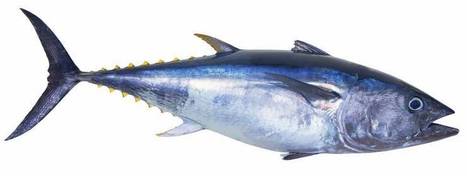
Can farmed tuna save the bluefin from extinction? | The Japan Times

Can farmed tuna save the bluefin from extinction? | The Japan Times | The Asian Food Gazette. | Scoop.it
Conservationists have long warned that bluefin tuna stocks are declining. While the development of aquaculture may offer an alternative, it doesn’t come without a few headaches of its own.
No comment yet.
Scooped by Frank Kusters
March 4, 2014 10:29 AM
Scoop.it!

Is methane from palm oil waste the next industry climate concern?

Is methane from palm oil waste the next industry climate concern? | The Asian Food Gazette. | Scoop.it
While the debate about deforestation due to palm oil rumbles on, new research has suggested that the release of methane from palm oil processing wastewater may also be a significant concern.
Brooke Clark's curator insight, April 26, 2014 10:28 PM

In the Palm Oil debate students need to be well informed to make an educated decision about where they stand on the issue. This includes thinking about the long term benefits and problems of Palm Oil.  This includes critiquing competing factors that influence the design of services (ACARA, n.d).  This article discusses the environmental cost of the manufacture of Palm Oil in regards to methane emissions. 

Scooped by Frank Kusters
May 14, 2013 5:25 AM
Scoop.it!

Bouman: Don’t just ban pesticides, find other ways to protect rice

Bouman: Don’t just ban pesticides, find other ways to protect rice | The Asian Food Gazette. | Scoop.it
In the wake of the European Commission’s announcement that it will adopt a proposal to restrict the use of three pesticides belonging to the neonicotinoid family, rice research guru Bas Bouman has called for Asia to take different...
No comment yet.
Rescooped by Frank Kusters from Trends in Sustainability
January 25, 2013 6:18 AM
Scoop.it!

Fish Out of Water: Five Ocean Species We're Eating to Death

Fish Out of Water: Five Ocean Species We're Eating to Death | The Asian Food Gazette. | Scoop.it

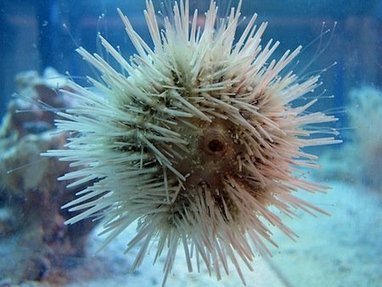
Sea urchins appear to be the lowliest of marine creatures—the painfully prickly echinoderms sit at the bottom of the ocean, feeding on algae far beneath the sea’s majestic swimmers. But there’s one set of landlubbers that can’t get enough of the briny deep’s ugliest residents: Sushi eaters.


Green sea urchin populations have plummeted in North America, thanks in large part to rising demands for uni, a sweet, creamy dish made from sea urchin gonads. As food writer Barry Estabrook recently noted, uni’s popularity on sushi bars prompted nearly 3,000 commercial fishermen to take to Maine’s seas in the mid-1990s in search of the delicacy. Diners couldn’t get enough, business boomed, and Maine’s fishermen hauled in nearly 40 million pounds of sea urchin worth about $33 million in 1994 alone.


Via Olive Ventures
No comment yet.
Scooped by Frank Kusters
May 21, 2012 12:33 PM
Scoop.it!

Khmerization ខែ្មរូបនីយកម្ម: Prey Lang: A Forest on the Brink of Destruction

Khmerization ខែ្មរូបនីយកម្ម: Prey Lang: A Forest on the Brink of Destruction | The Asian Food Gazette. | Scoop.it
No comment yet.
Scooped by Frank Kusters
April 12, 2012 1:13 PM
Scoop.it!

‘Green Muslims,’ Eco-Islam and Evolving Climate Change Consciousness | The Yale Forum on Climate Change & The Media

‘Green Muslims,’ Eco-Islam and Evolving Climate Change Consciousness | The Yale Forum on Climate Change & The Media | The Asian Food Gazette. | Scoop.it
No comment yet.
Scooped by Frank Kusters
March 24, 2012 5:06 AM
Scoop.it!

Australian PlantBank to safeguard diversity

Australian PlantBank to safeguard diversity | The Asian Food Gazette. | Scoop.it
The largest seed bank in the southern hemisphere is being constructed in Sydney's south-west to help prevent a loss to the planet's diversity of flora.
No comment yet.
Scooped by Frank Kusters
January 17, 2012 4:45 AM
Scoop.it!

Chinese Dam Project in Cambodia Raises Environmental Concerns

Chinese Dam Project in Cambodia Raises Environmental Concerns | The Asian Food Gazette. | Scoop.it
Sinohydro's Kamchay Dam is complicating life for the people downstream, especially those who rely on fish for food and work.
No comment yet.
Scooped by Frank Kusters
June 7, 2017 8:56 PM
Scoop.it!

Australian power plant's waste puts bubbles in beer

Australian power plant's waste puts bubbles in beer | The Asian Food Gazette. | Scoop.it
An Australian state known for its recycling initiatives and clean energy production is now using waste carbon dioxide from a gas-fired power plant to grow tomatoes and put bubbles in beer.
No comment yet.
Scooped by Frank Kusters
September 29, 2014 4:05 PM
Scoop.it!

Japan's Dangerous Packaging Fetish

Japan's Dangerous Packaging Fetish | The Asian Food Gazette. | Scoop.it
The country's obsession with bags and wrappers and disposable items is likely bad for the environment—is there any way to change people's deeply ingrained habits? I spoke with an expert in consumer be…
No comment yet.
Scooped by Frank Kusters
June 24, 2013 6:33 AM
Scoop.it!

Jellyfish carry the sting of human overcrowding

Jellyfish carry the sting of human overcrowding | The Asian Food Gazette. | Scoop.it
It may not be immediately apparent what jellyfish, human population growth and our protein diet have in common. Take a closer look, though, and all three offer warning signs that ...
No comment yet.
Scooped by Frank Kusters
February 7, 2013 6:18 AM
Scoop.it!

PNG firm named as a global sustainability leader - Australia Network News - ABC News (Australian Broadcasting Corporation)

PNG firm named as a global sustainability leader - Australia Network News - ABC News (Australian Broadcasting Corporation) | The Asian Food Gazette. | Scoop.it
Papua New Guinea's biggest palm oil producer has been named as the world's leading sustainable agricultural company.
No comment yet.
Scooped by Frank Kusters
January 12, 2013 1:05 PM
Scoop.it!

Jiro Dreams of Sushi - Disappearing Fish

www.facebook.com/jirodreamsofsushimovie
No comment yet.
Scooped by Frank Kusters
May 21, 2012 12:22 PM
Scoop.it!

Saola still a mystery 20 years after its spectacular debut

Saola still a mystery 20 years after its spectacular debut | The Asian Food Gazette. | Scoop.it
Two decades after the sensational discovery of a new ungulate species called the saola, this rare animal remains as mysterious and elusive as ever.

...

No comment yet.
Scooped by Frank Kusters
April 3, 2012 12:33 PM
Scoop.it!

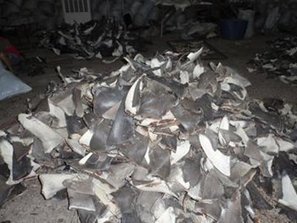
Asia Sentinel - Indonesia's Shark Fin Trade

Asia Sentinel - Indonesia's Shark Fin Trade | The Asian Food Gazette. | Scoop.it
Independent news and analysis about Asia's politics, economics, culture and more...

...

No comment yet.
Rescooped by Frank Kusters from Rice origins and cultural history
February 21, 2012 12:42 PM
Scoop.it!

Environmental impact on the development of agricultural technology in China: the case of the dike-pond (‘jitang’) system of integrated agriculture-aquaculture in the Zhujiang Delta of China 10.1016...

The development of the environmentally conserving dike-pond system of integrated agriculture and aquaculture in the Zhujiang Delta of south China is traced to illustrate the impact of environmental changes on technological innovations. The technologies of dike building, land reclamation, pond fish culture, and crop cultivation on dikes, which were either independently developed or modified from ideas brought in by migrant farmers from northern China, represented farmers' efforts to adapt to the new characteristics of a changed environment as population pressure increased. The new technologies revealed the farmers' awareness of the need for environmental conservation. However, increased population pressure also necessitated more intensive use of the land, both in the highland and lowland regions, giving rise to inappropriate dike building and premature reclamation activities, which in turn brought about more frequent flooding in the delta region. Careless application of a new technology tended to have harmful effects on the environment. Political conditions in different periods of China's economic development have also caused changes in the dike-pond system which has to maintain high productivity and profitability. Recent advances in dike-pond system technology have focused on crop diversification and animal husbandry to match the three-dimensional characteristics of its ecological components. New agricultural technologies can be successful in China only if they can provide a balance between land use and conservation.


Via Dorian Q Fuller
Issam Krouma's curator insight, July 23, 2013 5:35 PM

A remedy for reclamation of salt land that brings it back to agriculture within a year or two; also an effective agriculture-aquaculture rotation concept. Both have been tested and economically proved as feasible in Syria in mid 1990s.