


At CAN we don’t really care for lists. But as we look back as the year winds down, we’re known to make an exception. To keep up with our tradition, we present our most memorable projects of the year.

 Your new post is loading...
 Scoop.it! At CAN we don’t really care for lists. But as we look back as the year winds down, we’re known to make an exception. To keep up with our tradition, we present our most memorable projects of the year. 
No comment yet.
Sign up to comment
Scoop.it!

Avec le PERSYSTOGRAF, installation interactive d’Avoka, le collectif poursuit son exploration du détournement des instruments de musique. Alors que le DYSKOGRAF entendait l’expérimentation de l’écriture rythmique, au moyen de la rotation sur platine d’une partition graphique sur disque de papier, le PERSYSTOGRAF permet quant à lui de s’essayer aux notions d’harmonie et de mélodie, grâce à l’emprunt de codes et techniques issus de la vielle à roue ou encore de l’orge de barbarie. ...
Scoop.it!

There are hundreds of programming languages and tools, but only a few are truly designed for learning programming. Programs written in Java, C++, Visual Basic have challenging “syntax” and they are usually run inside complex “development environment” products, such as Microsoft Visual Studio or Eclipse – widely used by experienced software programmers, but not all that great for just getting started. There are also products to create programs that tell a story or show animation, but they focus on “drag-and-drop,” not on writing code – and that’s what makes Phrogram different. It’s built on the idea that programming means knowing how to write source code, which is not as hard as it may look! With a concise syntax and easy-to-use toolset, along with dozens of sample programs, Phrogram is real programming that’s really fun.
Scoop.it!

The Margaret Guthman Musical Instrument Competition doesn’t crown any old clarinet or guitar. Nicknamed the “X-Prize of musical instruments,” the annual Georgia Tech competition showcases the revolutionary ideas and innovations that are changing the way music is made and experienced, and highlights some of the best instrument makers in the world. “A lot of what the judges have to deal with is trying to define for themselves what it means to be a musical instrument. Then they can begin to understand what is an effective or a particularly exemplary or transformative example,” explains Jason Freeman, an assistant professor at the school of music in the preview video. ...
Scoop.it!

Avec le numérique, le son se programme au gré de la volonté des machines. À travers des dispositifs génératifs commandés par des algorithmes, l’artiste japonais Ryoichi Kurokawa a construit un langage esthétique qui s'appuie sur les liens subtils entre le son et des images animées avec toutes les ressources du numérique.
Scoop.it!

Here's how the most expensive art website ever sold signals changing market attitudes towards digital art. New media artist Alexandra Gorczynski is known for net art that obliterates lines between the fine and digital art forms. After Dark, her first collection for DIY publishing platform NewHive, sold for $5,000 at Gorczynski's Zhulong Gallery exhibition at the PULSE Art Fair during Miami Art Week. ...
Scoop.it!
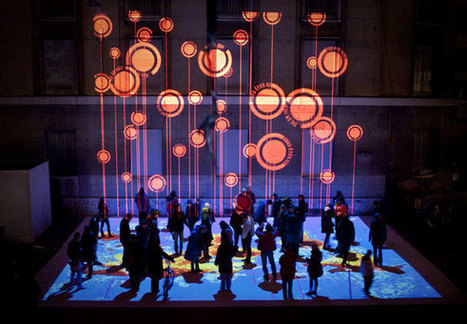
Les arts numériques – le pluriel marquant la diversité de ces pratiques – sont un des lieux d’expression et d’interrogation des enjeux provoqués par les technologies de l’information et de la communication. En parallèle des réalisations des laboratoires de R&D ou des projets de start-ups, les projets d’artistes dans ce champ constituent une modalité alternative et riche d’exploration des limites et des opportunités du numérique. Au-delà d’une description de la place des arts numériques dans la société, l’entretien fait ressortir la convergence d’objectifs et d’approches entre acteurs des technologies provenant de différents secteurs : capacité d’hybridation, transversalité des disciplines, rapport aux « publics » forment l’ossature de l’activité de cette structure. L’entretien montre aussi comment la mise en réseau d’acteurs du numérique, qu’ils soient chercheurs, artistes, designers ou entrepreneurs, vient stimuler l’écosystème lyonnais et rhônalpin...
Scoop.it!

We are one of the top interdisciplinary computing departments in the country – working across art, music, journalism, gaming, and many other subject areas. This video features students and staff from our creative undergraduate and postgraduate programmes talking about how the culture of Goldsmiths makes us unique.
Scoop.it!

At this year’s Society for Social Studies Conference at the University of Tokyo, Aug. 25-29, there will be a session on “BioArt,” which begs the question: What would that be? BioArt describes the variety of art forms emerging in the last two decades that use biotechnology or genetics to manipulate living things, altering food, plants, even livestock. In best do-it- yourself tradition, artists have started to swap their studios for laboratories and are using molecular biology to deliberately create hybrids, clones or mutations as artistic expressions. ...
Scoop.it!

ARTPLUS was initially created as an online platform for presenting curated contemporary art exhibitions. The best known of these is the BiennaleOnline, which opened on 26 April 2013. The success of BiennaleOnline prompted us to separate the event from ARTPLUS and present BiennaleOnline on a platform of its own. Facilitating secure ownership and online trade of media art has now become the focal point of the ARTPLUS activity.
Scoop.it!

A worldwide call for projects made via Ars Electronica’s online submission tool will be open from mid of December till 9th of February, 2015. The submitting artists have the chance to win a residency at the European Southern Observatory (ESO) in Chile. There is free access to the application process by all interested artists.
Submitters have to include the following to their online application:
A Jury consisting of representatives of Ars Electronica, scientific mentors from ESO and some members of the seven cultural partner institutions will choose outstanding ideas and concepts as winners of the residency award. The evaluation criteria are aesthetics, originality, a compelling conception, innovation, the technique and quality of the presentation as well as the interest in the ideas of science as expressed by ESO.
Scoop.it!

Quelle place pour le toucher dans notre monde ultra connecté où une grande partie des relations s’effectuent par écrans interposés ? Avec leur installation "Saving Face" le duo d’artistes Karen Lancel et Hermen Matt tentent d’apporter de la sensualité dans les données. Si les médias sont peu à peu devenus une extension de notre corps, comment y intégrer les gestes qui communiquent la confiance, l’amitié comme une poignée de main, une bise, une accolade ? Ce sont ces questions que Karen Lancel et Hermen Matt ont souhaité poser sur une place publique de Dessau avec leur installation "Saving Faces".
Scoop.it!

2014 brought us plenty of new open-spec, community-backed SBCs — from $35 bargains, to octa-core powerhouses — and all with Linux or Android support.
|
Scoop.it!

Exhibit Worldwide, Instantly From the lobby of a luxury hotel in Milan to a media facade in Hong Kong, or a fashion store in New York, BRIGHT connects your art to a world-class network of connected screens. A screen + a connection = Instant exhibition. Monetize A Thousand of Times Why restrain your art to limited editions when it can be monetized a thousand times? BRIGHT hosts, sells & distributes your art to places willing to pay for your artworks. BRIGHT then shares revenues with you and your gallery. One virtuous circle, thousands of opportunities. Keep Control Context is everything. You can delimitate the display of your artwork with an extreme precision : select type of venue where you'll be displayed, economic sector, choose or unselect advertising monetization. And if you want to maximize your exposure and monetization, there’s a ticking box for that.
Scoop.it!
C'est l'objet principal de ce second tome que de permettre à tout un chacun de comprendre quels sont les risques et les limites associés à l'utilisation d'Internet [et] de se donner les moyens de faire des choix éclairés quant à nos usages de l'Internet. Aussi : Le Guide d'autodéfense numérique était jusqu'ici disponible uniquement en version électronique. La sortie du second tome est l'occasion d'une édition papier. Un livre incluant les deux tomes ainsi que de nouvelles illustrations vient donc de sortir aux éditions Tahin Party. Même si le format papier rend complexe les mises à jours (n'oubliez pas de vous tenir au courant des nouvelles éditions sur http://guide.boum.org/ de temps en temps), il se révélera, nous l'espérons, un support plus facile à appréhender par certaines personnes que le format PDF. Pour en finir avec les illusions et les demi-solutions, apprenons et diffusons des pratiques d’autodéfense numérique avec un vrai livre en papier !
Scoop.it!
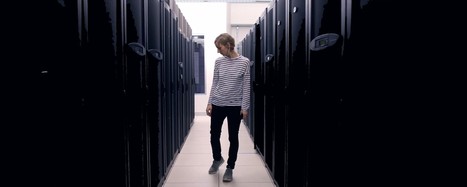
“There is something about the internet that isn’t working anymore,” is the line that opens filmmaker Jonathan Minard’s short documentary on Deep Lab—a group of women hackers, artists, and theorists who gathered at Carnegie Mellon University in December to answer the question of what, exactly, that disquieting “something” is. The film premieres on Motherboard today. What Deep Lab represents is just as hard to pin down as the “something” invoked in the opening minutes of Minard’s short film. Is it a book, a lecture series, or Minard’s documentary—all of which were put together in under a month? Is it an ethos? Is it feminist? Is Deep Lab a charrette, a dugnad, or a “congress,” as its participants called it?
Scoop.it!

Quelques minutes avec les professeurs du Collège de France pour découvrir leur domaine de recherche, leurs travaux et leurs enseignements.
Scoop.it!

Le numéro 76 de MCD, le magazine des cultures digitales, est entièrement consacré à l'argent post-internet et titré «We grow money, We eat money, We shit money» (rédactrice en chef invitée: l'artiste Shu Lea Cheang, assistée par la journaliste Annick Rivoire) et propose 33 visions et textes d'artistes, de théoriciens et d'acteurs de l'Internet, qui s'intéressent à la nouvelle situation monétaire.
Scoop.it!

A la pointe de l'innovation et déjà aux limites de l'obsolescence, les médias utilisés par les artistes contemporains mutent et ne cessent d'être réinventés. Retro-futuristes, interactives, augmentées ou numérico-analogiques, à quoi ressembleront les créations de demain ? Chaque nouvelle révolution technologique bouleverse les pratiques de nos artistes et plus personne ne s'étonne de voir aujourd'hui les drones se mettre à danser et les disques durs jouer aux chefs d'orchestre. Mais il semblerait que la particularité des arts numériques ne réside pas seulement dans leur facilité à dialoguer avec les évolutions techniques mais plutôt dans leur capacité à transcender les disciplines et surtout les époques, en puisant autant dans les technologies passées que présentes. Le monde soluble du numérique a logiquement envahi depuis déjà plusieurs années celui de l'art contemporain ou encore du spectacle vivant et les hybridations n'auront de cesse de se multiplier.
Le Mirage Festival poursuit donc ses missions d'explorations en invitant des artistes aux univers différents à présenter leur vision de la création liée aux technologies et à l'innovation sous toutes ses formes, des propositions artistiques innovantes, de par leurs propos mais aussi de par leurs modes de représentation. ... Dolus & Dolus est une association lyonnaise née en 2008 oeuvrant dans le domaine artistique et culturel.
Scoop.it!

From
io9

Futurists R.U. Sirius and Jay Cornell have published a witty, snide, and incredibly informative new book titled, Transcendence: The Disinformation Encyclopedia of Transhumanism and the Singularity. We spoke to the authors to learn more about the project and their own personal visions of the future. Many of you will remember R.U. Sirius — aka Ken Goffman — from his co-publishing work at MONDO 2000, the first popular digital culture magazine (and a kind of precursor to io9). He's a "digital iconoclast" who has written about technology and culture for Wired, BoingBoing, Rolling Stone, and many other publications. Jay Cornell is a writer, editor, and web developer. He's also the former managing editor of h+ magazine, and the former associate publisher of Gnosis magazine. He's quite active in the futurist community, currently serving as a member of the Board of Advisors of the Lifeboat Foundation, a nonprofit organization dedicated to defending humanity from existential risks. ... Via Jean-Philippe BOCQUENET
Scoop.it!

Comme certains fidèles abonnés ont pu le remarquer, ce blog est en sommeil depuis quelques mois. Pas l'envie qui manque ni les infos, mais le temps. Aussi, de loin en loin, par à-coups, soudainement, un nouveau post apparaîtra... Et aujourd'hui, fort à propos, en voici un tout chaud ou presque, débusqué lors d'une pérégrination webesque aventureuse. Du 15 janvier au 22 février 2014 se tiendra au Bon Accueil, Cause and Nature of Sound, première exposition française de l'artiste belge Aernoudt Jacobs, coproduite avec Overtoon. ...
Scoop.it!
CT4C est un projet d’art numérique polymorphe qui a pour volonté d’investir tous lieux et environnements, d’explorer ses particularités architecturales pour une création In situ. Le dispositif est une configuration de deux musiciens et un vidéaste sur scène interconnectés. La musique générant une matière vidéo remodelée en temps réel pour un live immersif et puissant facebook.com/CT4Ctrio Romain CONSTANT : composition et traitement numérique - romainconstant.com/
Scoop.it!
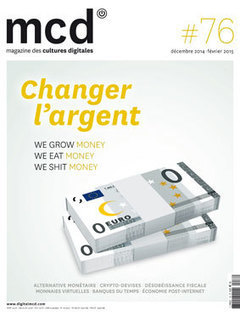
La crise économique de nos sociétés globalisées a au moins une conséquence positive : elle pousse citoyens, artistes et activistes à se coltiner la question de l’argent. Trouver des alternatives, inventer de nouvelles formes d’échange et même dépasser la monnaie : Changer l’argent dresse l’état des lieux de cette réappropriation collective, électronique et partagée de l’argent. La première bulle spéculative de l’histoire de la finance mondiale remonte au XVIIème siècle, on l’a appelée Tulipomanie. En Hollande, le cours du bulbe de tulipe grimpe alors de manière démesurée pour atteindre un point culminant en 1637 : un bulbe vaut alors plus qu’un tableau de Rembrandt… L’origine de cette première crise spéculative (puisqu’évidemment le bulbe et la bulle se sont dégonflées, entraînant une crise économique) est à mettre sur le compte d’une forme d’hystérie spéculative. ...
Scoop.it!
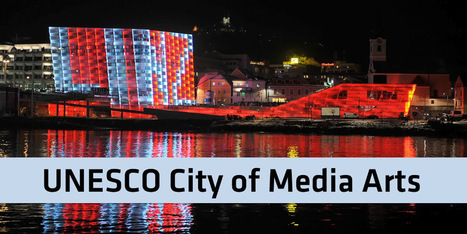
On December 1, 2014 Linz was incorporated as the City of Media Arts in the Creative Cities Network of UNESCO (Credit: City of Linz). As the birthplace of Ars Electronica, Linz has been a global leader at the interface of art, technology and society for decades now. On December 1, 2014, the Upper Austrian capital’s pioneering achievements were singled out for recognition by UNESCO. Linz has been accepted as a member of the prestigious Creative Cities Network and is now officially entitled to use the epithet UNESCO City of Media Arts. Obviously, this is a major boost for Linz’s international profile. Today, we chatted with one of the driving forces behind the effort to bring this about: Christopher Lindinger, co-director of the Ars Electronica Futurelab and administrator of the elaborate application process. ...
Scoop.it!

Creative minds like Lorna Mills and Rollin Leonard have propelled modern art into the digital age. "Internet art" has been around as long as the Internet itself. GIFs, CAPTCHA codes, found imagery, experimental social networks—the manifestations and run-off of our daily online experience is all ripe fodder for the net artist. ...
|




