Media Arts Watch Lab - www.arts-numeriques.info - laboratoire de veille Arts Numériques - twitter @arts_numeriques - @processing_org - @DigitalArt_be - by @jacquesurbanska @_Transcultures
As part of our ongoing curatorial exploration of the social and political implications of technological infrastructures, Lighthouse presented a special event which brings internationally renowned artists and critical engineers, Julian Oliver and Danja Vasiliev, to Brighton. They were joined by artist and critical designer, Tobias Revell, and activists from the Open Rights Group, in a day of talks and workshops, which critically questioned the systems that surround us.
Critical Exploits showed how a new generation of artists, designers and engineers are taking a highly critical approach to the development and use of the engineered systems and infrastructures that we increasingly rely on for daily life. It comprised of a major presentation on the ideas and practices which comprise Critical Engineering by Berlin-based artists and engineers, Julian Oliver and Danja Vasiliev, a comprehensive primer on Critical Design, by London-based designer, Tobias Revell, and a CryptoParty led by activist Chris Pinchen and the Open Rights Group, which demonstrated practical ways of operating within our often opaque and illegible technological environment.
“[An] inability to describe and understand technological infrastructure reduces our critical reach, leaving us both disempowered and, quite often, vulnerable.” - Julian Oliver
When 28-year-old New York University grad student Josh Begley first decided he would tweet more than a decade of reported U.S. military drone strikes and their aftermaths in Pakistan, Somalia, and Yemen, he thought he could finish rapid-fire in ten minutes. Four weeks later — with his pace slowed a bit over the holidays — Begley is just nearing the end of 2010. The @dronestream project, conceived as part of NYU's Interactive Telecommunications Program, is a follow-up to Begley's Drone+, an iPhone app mapping every drone strike in real-time that was banned by Apple, and draws constant, methodical attention to a hush-hush reality. Wondering just what Begley was hoping to accomplish with what's now become an extended part-time job, we e-mailed him a few questions.
While investigating a hosting company known for sheltering child porn last year the FBI incidentally seized the entire e-mail database of a popular anonymous webmail service called TorMail.
Now the FBI is tapping that vast trove of e-mail in unrelated investigations.
The bureau’s data windfall, seized from a company called Freedom Hosting, surfaced in court papers last week when prosecutors indicted a Florida man for allegedly selling counterfeit credit cards online. The filings show the FBI built its case in part by executing a search warrant on a Gmail account used by the counterfeiters, where they found that orders for forged cards were being sent to a TorMail e-mail account: “platplus@tormail.net.”
Acting on that lead in September, the FBI obtained a search warrant for the TorMail account, and then accessed it from the bureau’s own copy of “data and information from the TorMail e-mail server, including the content of TorMail e-mail accounts,” according to the complaint (.pdf) sworn out by U.S. Postal Inspector Eric Malecki.
on our server, you auto-generate an "INJUNCTION" [.pdf/.rtf format], a standard court-order, claiming the target-website to operate on an illegal basis. this document will then be sent to the appropriate dns-registrar [dns=domain name service], to the owner of the web-site and to some journalists and lawyers for legal and public processing. all you have to do is to simply fill out a form and send it off, it will take you not more than 15 minutes. if the web-site is taken down we will inform you via email. ...
Cofondateur de La Quadrature du Net, Jérémie Zimmermann passe 36 heures par jour à défendre les droits et les libertés des citoyens sur Internet. Empêcheur de tourner en rond, ami de Julian Assange, défenseur de la neutralité du Net… Zimmermann cumule les tares, ce qui lui vaut le mépris des Hadopiens. Et il le leur rend bien. Rencontre avec cet épicurien à l’élocution parfaite, qui connaît ses dossiers sur le bout des doigts.
C’est l’un de vos principaux combats : peux-tu me rappeler ce qu’est la neutralité du Net ?
C’est un principe fondateur de l’Internet libre et ouvert, selon lequel chacun, sur Internet, peut accéder à tous les contenus, services et applications, et peut également en publier, sans restriction ni discrimination. c’est l’universalité d’Internet. Que tu sois au Botswana, au Canada ou en Corée du Sud, tout le monde a le même Internet, avec les mêmes capacités de participation dans le réseau. Cette participation change radicalement les rapports sociaux, politiques et fait qu’aujourd’hui, nous ne sommes plus que de simples consommateurs passifs, devant la télé ou la radio. Mais depuis quelques années, les opérateurs ont la capacité technique de « discriminer » les communications. ...
The undersigned, being alternately pissed off and bored, need a means of speculation and asserting a different set of values with which to re-imagine the future. In looking for a new framework for black diasporic artistic production, we are temporarily united in the following actions.
***The Mundane Afrofuturists recognize that:***
We did not originate in the cosmos.
The connection between Middle Passage and space travel is tenuous at best.
Out of five hundred thirty-four space travelers, fourteen have been black. An all-black crew is unlikely.
Magic interstellar travel and/or the wondrous communication grid can lead to an illusion of outer space and cyberspace as egalitarian.
This dream of utopia can encourage us to forget that outer space will not save us from injustice and that cyberspace was prefigured upon a "master/slave" relationship.
While we are often Othered, we are not aliens.
Though our ancestors were mutilated, we are not mutants.
Post-black is a misnomer.
Post-colonialism is too.
The most likely future is one in which we only have ourselves and this planet.
The connection between Middle Passage and space travel is tenuous at best.
Out of five hundred thirty-four space travelers, fourteen have been black. An all-black crew is unlikely.
Magic interstellar travel and/or the wondrous communication grid can lead to an illusion of outer space and cyberspace as egalitarian.
This dream of utopia can encourage us to forget that outer space will not save us from injustice and that cyberspace was prefigured upon a "master/slave" relationship.
While we are often Othered, we are not aliens.
Though our ancestors were mutilated, we are not mutants.
Julian Oliver provides new and alluring approaches to augmented reality. Augmented reality means creating virtual ad-on's to what is already there. Recently Oliver started working on new forms of utilizing public space that is already dense with advertisements. Just imagine seeing art all around Times Square instead of advertisements for sport shoes and soft drinks. Or imagine some one entering one of those advertisements for soft drinks and thus adding new message and meaning to what it was before. You could be the one who decides what you want to see or be invited by a - preferably famous - curator to look at his selection. ...
®TMark receives project ideas from internet users, then lists them (here). Each listed project has its own discussion list (linked from the project). When a project requires a bit of funding to be accomplished, sometimes investors will step up to the plate and offer their help. Even more often, people will offer non-financial help or feedback.
In the age of international telecommunications, global migration and the emergence of the information economy, how can class conflict and property be understood? Drawing from political economy and concepts related to intellectual property, The Telekommunist Manifesto is a key contribution to commons-based, collaborative and shared forms of cultural production and economic distribution.
Bloodshed, famine, rape, internal displacement. There are truly few things as awful as the reality of living through modern warfare. The horror, suffering, and pain caused by war are acutely felt on an individual level—what it does to that woman, man, or child and their family can be as devastating as any large bomb that destroys a city. Often though, that pain is endured quietly, out of view, while the media focuses on bombs falling and guns firing.
The goal of projects like ours are to make public what has previously been private in order to create a world in which no humans are subject to or forced to witness that kind of secret horror. Yet while we strive for that, we live with the reality that mainstream media must pick and choose which stories to share, and politics—and profit—often play profound roles in determining which stories we get to know. ...
Au vu des récentes informations sur la NSA et l’espionnage des américains, j’ai été particulièrement choqué par l’argument « si vous n’avez rien à cacher, vous n’avez rien à craindre. »
Au premier abord, cet argument semble solide – après tout, si le gouvernement ne fait que mener une surveillance antiterroriste, les « non-terroristes » ne devraient pas être concernés non ? Mais si vous regardez de plus près, vous allez vous rendre compte que cette idée n’est pas sans failles.
Le « je n’ai rien à cacher » suggère, à tort, que la vie privée, l’intimité, ne sont les désirs que des seuls criminels. En fait, nous faisons énormément de choses en privé – chanter sous la douche, faire l’amour, se confier à sa famille, à ses amis – qui ne sont ni mauvaises, ni illégales. Qui ne serait pas gêné par l’exposition de ces détails les plus intimes de nos vies privées?
Les barrières et les rideaux sont des manières de conserver son intimité et non des choses révélatrices d’un comportement criminel. L’intimité est une chose fondamentale dans toute vie.
In 1989, two Melbourne teenage hackers known as Electron and Phoenix stole a restricted computer security list and used it to break into some of the world's most classified and supposedly secure computer systems. So fast and widespread was the attack, no-one could work out how it had happened - until one of the hackers called The New York Times to brag.
Ten years after their arrest, this dramatised documentary uncovers not only how they did it but why. It takes us headlong into the clandestine, risky but intoxicating world of the computer underground.
Neural is a printed magazine established in 1993 dealing with new media art, electronic music and hacktivism. It was founded by Alessandro Ludovico and Minus Habens Records label owner Ivan Iusco in Bari (Italy). In its first issue (distributed in November 1993) there was the only translation in Italian of the William Gibson’s Agrippa (a book of the dead) book.
You can also subscribe to the magazine Digital Edition accessing all issues since #29. Or you can buy the magazine from the closest of the almost 200 stores stocking it. A back issues pack is available.
Découvrez une expérience multimédia qui vous emmènera du Sud au Nord de la Cisjordanie, grâce à des témoignages de Palestiniens et d’Israeliens. Vingt ans après les accords d’Oslo, qu’en est-il de la situation en territoire palestinien occupé ?
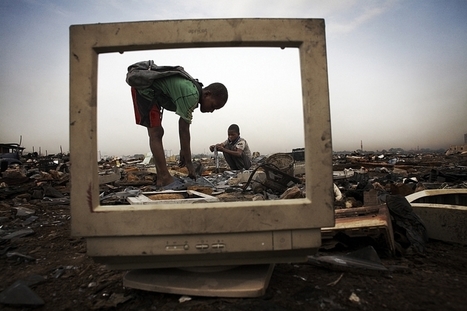
Chaque Français produit 20 kg de déchets électriques et électroniques par an ! Que deviennent notamment nos millions de téléphones, d’ordinateurs ou de tablettes devenus obsolètes ? Une partie de ces équipements électroniques est collectée par une filière de traitement des déchets. Un très petit nombre est réparé. Et des milliers de tonnes sont envoyées, illégalement, vers les décharges d’Afrique ou d’Asie. Les autorités commencent à agir pour limiter la casse. Mais les multinationales qui gèrent la filière du recyclage ont-elles vraiment intérêt à privilégier de véritables solutions ? Enquête sur le parcours de nos déchets et les intérêts en jeu.
C’est une déferlante. Environ 900 millions de smartphones se sont vendus dans le monde en 2013, dont 15 millions en France (50 millions depuis 2008). Plus de 300 millions de PC continuent d’être livrés sur la planète. Plus de 100 millions d’Européens posséderont une tablette tactile en 2016 [1]... Les parts de marché des fabricants – Acer, Apple, Dell, HP, Samsung... – se portent bien. Les décharges africaines de déchets informatiques également. ...
Several decades after the birth of artivism and net art, UBERMORGEN continue to make art with and about networked society. But where net art 1.0 was largely critical of capitalism’s use of networks, today UBERMORGEN’s tactics work through an aesthetics of affirmation. Interview by Stevphen Shukaitis
UBERMORGEN are nothing if not a little contrarian. Operating mainly as a digital and net art project since forming in 1995, their work cuts stridently against two quite prominent clichés in the way digital media and art are discussed. Firstly, the celebration of the utopian potentials of digital media and technology and, secondly, the way in which participatory dynamics in artistic practice apparently form the basis of political engagement. And these two tendencies seemingly converged in the democratising potential of net art that was going to liberate us all....
Le temps est désormais révolu où l’on considérait Internet comme un « gadget », un « phénomène de mode » ou un épiphénomène qui ne concernait qu’« une petite élite de jeunes hommes occidentaux plus quelques informaticiens venus d’ailleurs ». À l’instar de la presse écrite, du cinéma, de la radio ou de la télévision, il paraît légitime de se demander comment cette technologie – qui reste toujours « nouvelle » – interagit dans la communication entre les hommes et les formes d’organisation de la société. ...
Pour hacker les appareils informatiques, la NSA s’appuie sur une palette d’outils ultrasophistiqués, dévoilée par Edward Snowden. Voici un aperçu du catalogue.
Ceux qui pensent que la NSA se limite à remplir d’énormes bases de données en collectant des données sur le réseau Internet, se trompent. Le service secret américain a une capacité d’intrusion extrêmement précise, presque chirurgicale. Chaque élément logiciel ou matériel de votre environnement informatique peut ainsi devenir un vecteur d’attaque. C’est ce qui ressort des documents que vient de publier, lundi 30 décembre, le magazine allemand Spiegel, sur la base de documents d’Edward Snowden. L’inventivité technique est impressionnante, alors que ces documents commencent déjà à dater quelque peu (2007/2008) ...
Une armée de drones a remplacé les patrouilles de police. C'est sans doute ce que le futur nous réserve, et c'est surtout le scénario d'un montage vidéo inquiétant.
Le drone fascine ou terrifie. Les geeks et curieux de la technologie sont de plus en plus nombreux à l'utiliser pour capturer des images de paysages et les poster sur les réseaux sociaux, notamment.Mais des entreprises ou institutions s'en servent aussi pour surveiller et même poursuivre la guerre du terrorisme. On peut alors imaginer comme Alex Cornell, designer et artiste, des usages futurs irréversibles.
Cet habitant de San Francisco a utilisé des images tournées par ses propres drones pour réaliser unmontage vidéo relevant de la science-fiction : "Dans un futur proche, les villes utilisent des drones semi-autonomes pour assurer la sécurité urbaine". A terme, c'est la menace de Big Brother qui plane, voire d'un monde où les machines auraient pris le pouvoir.
Une hypothèse pas vraiment tirée par les cheveux : l'administration Obama a voté le 14 février 2013 une loi qui autorise d'ici 2015 les drones à survoler les Etats-Unis. Elle entend aussi développer intensément la surveillance des citoyens américains via les futurs drones des agences gouvernementales et des polices locales. ...
The Cryptosphere is a global peer-to-peer cryptosystem for publishing and securely distributing content pseudonymously with no central point of failure. The system is openly federated and anyone can join. To ensure quality service and prevent abuse, the Cryptosphere uses an integrated cryptographically secure reputation system which provides a distributed web of trust.
There are several systems with similar goals to the Cryptosphere, such as MNet, Freenet, and Tahoe-LAFS. These systems serve as inspiration for the Cryptosphere's design. The Cryptosphere is also heavily influenced by Git, the distributed version control system.
UBERMORGEN.COM is the theorist of digital actionism, a radical practice of artistic action which experiments on the market of attention and takes place into the media scape. The most astonishing result of this kind of practice was Vote-Auction (2000), a web site that, during the American presidential elections 2000, helped people to sell their vote to the highest bidder. The legal prosecution against UBERMORGEN.COM, and the media hysteria it produced, are an important part of the whole project. During the performance, UBERMORGEN.COM were interviewed up to 30 times per day, and was broadcasted by CNN in a 30 minutes show, the legal format Burden of Proof; but he never said whether the project was a real threat to the integrity of the U.S. election or wheter it was a political satire.
In the mass media storm, the digital actionist works with his whole body, as well as part and victim of the network around him.We are the children of the 1980s, We are the first Internet-pop-generation... Hans Bernhard is loaded with 10 years of Internet & tech [digital cocaine], mass media hacking, underground techno, hardcore [illegal] drugs, rock&roll lifestyle and net.art jet set...His neuronal networks are connected to the global network, and his mental illness the bipolar affective disorder that in March 2002 sends him in a mental hospital is the network's illness. The video called Psych|OS (2005) sums up that experience, in which those two levels digital and real, bio & tech, nervous system and operative system merge. ...
Paye ton projet se penche sur des projets créatifs prometteurs ! Grâce aux plateformes de financement participatif, vous pouvez les soutenir, et on vous dit pourquoi. Aujourd'hui, focus sur le Yes Lab, la plateforme en ligne du duo d'activistes et trublions américains, les Yes Men.
Le projet : soutenir le Yes Lab, structure basée à New York et gérée par les Yes Men pour venir en aide aux activistes du monde entier.
Qui est derrière ? Le duo de trublions The Yes Men, actifs depuis 12 ans sur le terrain du canular activiste et du happening médiatique.
L'objectif : récolter 75000 dollars via YesLab.org avant le 31/12/2013.
Vous vous rappelez certainement des Yes Men, ce duo d'activistes américains spécialisés dans le canular et la manipulation des médias. Depuis le début des années 2000, Andy et Mike organisent des conférences de presse truquées, mettent en ligne de faux sites internet ou communiqués et concoctent des happenings à base de costumes improbables pour mieux dénoncer les excès de l'ultra libéralisme. Leurs exploits sont souvent filmés, ce qui a d'ores et déjà donné lieu à 2 documentaires : The Yes Men en 2003 et les Yes Men refont le monde en 2009. ...
Women Multimedia Network soutient la création artistique de projets innovants et de musiques électroniques réalisés par des artistes féminines.
Women Multimedia Network est une association de promotion des actrices des cultures électroniques comprenant les Arts numériques & les Musiques électroniques, dont elle est la première plateforme de représentation en France.
L’association est un diffuseur de culture, à l’aide d’un blog et des réseaux sociaux, véritable espace d’expression pour les artistes féminines* de la culture numérique.
WMN! c’est aussi un collectif organisateur d’évènements révélateurs de talents et de mise en lumière d’artistes confirmées.
Nous sommes ouverts à toute idée de collaboration avec les professionnels du secteur et à quiconque souhaitant soutenir nos actions. ...
Festival féministe d'arts médiatiques + de culture numérique / Feminist festival of media arts + digital culture
Basé à Montréal, Les HTMlles est un festival biennal international qui rassemble des artistes, des théoricien-ne-s et des activistes qui sont passionné-e-s par la réflexion critique en nouvelles technologies sous une perspective féministe. S’inspirant d’un thème spécifique, chaque édition aborde des questions sociopolitiques urgentes en dépassant les frontières des pratiques artistiques et féministes.
Les HTMlles est une production du Studio XX, centre d’artistes féministe bilingue engagé dans l’exploration technologique, la création et la critique. Lancé en 1997, le festival a débuté en tant que plateforme internationale introduisant l’art web créé par les femmes. En étroite collaboration avec des organismes partenaires, Les HTMlles est devenu un festival multi-site dédié à la présentation d’œuvres d’arts médiatiques indépendantes créées par des artistes s’auto-identifiant comme femmes, trans ou dissidents et dissidentes du genre, dans un environnement transdisciplinaire, axé sur l’anti-oppression.
In February 2012, the Department of Homeland Security was forced to release a document previously requested - and denied - via the Freedom of Information Act containing a list of hundreds of keywords regularly queried for the purpose of monitoring suspicious activity on social networking sites. Subsequent news headlines about this disclosure warned that the list contained "hundreds of words you shouldn't use online if you don't want to end up on an FBI watch list".
In response to this call for "sensible", precautionary self-/censorship, I am proposing to build my own Department of Homeland Security website that monitors and archives the use of these targeted 374 keywords on popular social networking sites. The information collected will be made available to the public through homelandsecurityhearts.us as both a 24 hour live stream (phase 1) and in archival form (phase 2). The latter option will include print-on-demand services, allowing users to compile data into periodic volumes for any combination of keywords they wish to access.
My goal is to build a system that is scalable, using a combination of public and private channels (i.e. using both public API keys and data brokers) for gathering information. I will focus on developing the programming infrastructure to handle mining one of these networks at a time. At a later stage, I hope to expand processing capabilities to both increase the volume of information mined and to include a wider cross-section of relevant social media sites (phase 3). I am currently working on phases 1 and 2, which will focus exclusively on Twitter.
To get content containing either thought or leadership enter:
To get content containing both thought and leadership enter:
To get content containing the expression thought leadership enter:
You can enter several keywords and you can refine them whenever you want. Our suggestion engine uses more signals but entering a few keywords here will rapidly give you great content to curate.


 Your new post is loading...