Your new post is loading...

|
Scooped by
Jacques Urbanska
April 14, 2015 1:40 PM
|
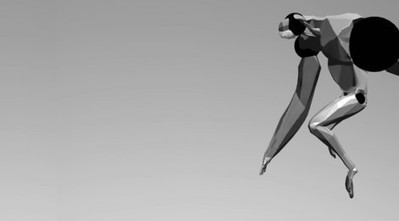
« A la lisière de nos mondes, un tanuki (dans la mythologie japonaise, un esprit de la forêt) en flottaison apparaît doucement dans une brume numérique.
Il nous découvre autant qu’il s’éveille à lui-même, guidé par une musique électro-acoustique. Nous l’accompagnons dans un voyage muet au cours duquel lui et son environnement vont s’activer, se tendre et entrer en résonance. C’est à travers le ballet de ses mouvements et de ses mutations qu’il nous conte son histoire, jusqu’à ce qu’il devienne pur son et image pour enfin retourner à la nébuleuse qui l’a vu naître. »
|
|
Scooped by
Jacques Urbanska
April 14, 2015 7:09 AM
|
Art viewers have long relied on context and written texts to fully understand and appreciate works of art. Audiences who meet conceptual and minimalist works with the reaction, “Well, I could do that,” fail to understand that context, concept, and history are vitally important to the meaning of contemporary artwork. Stripping them away can inhibit the artwork’s legibility and be highly disorienting to its audience. While such a reaction has been commonplace ever since Marcel Duchamp called a urinal a work of art, Internet-based artworks have been subject to this decontextualization at a faster rate and often to a more complete degree than physical artworks. ...
|
|
Scooped by
Jacques Urbanska
April 14, 2015 7:02 AM
|
Ad agency JWT London recently held an exhibition titled ‘Loop’, which featured framed stills of animated GIFs created by various artists.
The exhibition was organized by JWT creative Yoni Alter, and aimed to showcase the myriad creative and sophisticated designs that could be produced within the medium’s limitations.
Visitors could bring the images to life by viewing them through their smartphones with an augmented-reality app called Blippar. ...
|
|
Scooped by
Jacques Urbanska
April 12, 2015 9:13 AM
|
February-March 2015). Featuring interviews with artists Jason Wright (curator), Richard Robertshawe, Mo H. Zareei, Paul Mathews, Blake Johnston and Timothy J. Barraclough.
Original concept and audio post-production by Jason Post. Film made by Chris Watson for the Resound project at SOUNZ, funded by NZ On Air.
|
|
Scooped by
Jacques Urbanska
April 12, 2015 8:59 AM
|
Piksel is an international event for artists and developers working with Free/Libre and Open Source technologies in artistic practice. It is organized in Bergen, Norway, and involves participants from more than a dozen countries exchanging ideas, coding, presenting art and software projects, doing workshops, performances and discussions on the aesthetics and politics of free technologies, free culture & art.
Call for
1. Installations
2. Audiovisual performance
3. Presentations
4. Workshops
5. PikselSavers
|
|
Scooped by
Jacques Urbanska
April 12, 2015 8:45 AM
|
|
|
Scooped by
Jacques Urbanska
April 12, 2015 8:36 AM
|
La numérisation de masse, l’informatisation mondialisée, la connexion systématique des individus à un réseau central (concentration du trafic) et fermé (principe d’un graphe) est devenue planétaire. Cette évolution technique tiendrait davantage du phénomène naturel que de la culture et de l’intention. Il ne s’agit pas ici de revenir sur l’histoire générale de la numérisation ni son origine.
Il est acquis (le débat reste ouvert) qu’internet est un projet économique et anti-politique. Et qu’internet est bien un projet de libre échange de l’information, rien de plus qu’un programme d’économie néolibérale, supporté par une « technique de gouvernement » portant le nom de cybernétique mue pour « le bonheur statistique des masses » comme on disait en 1948 1). C’est bien pourquoi le marché et internet partagent des propriétés fondamentales : - Mondialisés et sans frontières, totalisation
- Animés par un imaginaire de prospérité économique
- Auto-régulés car au-dessus des lois et des démocraties
- Leviers d’accroissement des libertés individuelles
|
|
Scooped by
Jacques Urbanska
April 12, 2015 8:31 AM
|
Les deux artistes chercheurs collaborent depuis une quinzaine d'années sur des projets ambitieux de performances robotiques, repoussant la limite des modes de représentation, questionnant les représentations usuelles, le rôle et l'impact de la technologie cybernétique dans notre environnement. Inferno, la nouvelle réalisation de Bill Vorn et Louis-Philippe Demers, franchit un palier considérable dans leur parcours, puisque, pour la première fois dans une performance de ce type, les robots (en l'occurrence des bras robotisés) sont disposés à même les corps de quelques spectateurs. En totale immersion, ceux-ci deviennent les acteurs de la performance mais sont soumis, dans un même temps, aux mouvements préprogrammés des exosquelettes. Cette forme de pression, d'asservissement (rassurez-vous, l'expérience est indolore) exercé sur les corps entre fortement en résonance avec le thème générique de la performance, à savoir l'Enfer – ou plus exactement les représentations des châtiments des corps qui y sont associées.
|
|
Scooped by
Jacques Urbanska
April 9, 2015 4:40 PM
|
Our mission is to apply art and technology to create positive social impact through education, civic engagement, and public programs.
We use digital tools to create art and design projects that benefit society. We test and scale projects with high impact potential, teach digital tools to support artists and technologists, and inspire our community by promoting meaningful new work.
We apply the promise and inspiration of digital art to a broader social context. Our programs are transforming cities into creative outlets, applying technology to solve problems, and shaping how art is created and consumed in the digital era.
|
|
Scooped by
Jacques Urbanska
April 9, 2015 1:33 PM
|
Human Harp is an instrument that clips to suspension cables, enabling us to hear and play a bridge’s song. Founded by artist Di Mainstone in partnership with Queen Mary University of London, Human Harp is also supported by Arts Council England, Arup, Roundhouse and Sennheiser. Now a global collaboration, Human Harp connects engineers, dancers, designers, musicians and bridge lovers from around the world…
“The Human Harp performances at the Roundhouse were both beautiful and engaging, inspiring our visitors young and old” Rachel Nelken, Senior Producer, Roundhouse
|
|
Scooped by
Jacques Urbanska
April 9, 2015 1:00 PM
|
|
|
Scooped by
Jacques Urbanska
April 9, 2015 12:51 PM
|
Le moteur de recherche Google indexe les informations accessibles sur le Web. Lorsqu’un internaute effectue une requête, une liste de liens est générée, pointant vers des documents en mesure de répondre au besoin exprimé. De fait, cette hiérarchisation suppose un biais.
Un traitement a lieu, à l’issue duquel certains contenus sont mis en avant par rapport à d’autres contenus jugés eux-aussi pertinents… mais moins. L’apparence de la liste résulte quant à elle des choix graphiques effectués par les concepteurs. Ainsi le moteur est-il un dispositif méta éditorial dont la vocation est de produire un discours à propos des discours, un regard sur des regards. ...
|
|
Scooped by
Jacques Urbanska
April 9, 2015 12:43 PM
|
|
|
|
Scooped by
Jacques Urbanska
April 14, 2015 7:13 AM
|
ULTRA is a cultural project aimed to select and present those artists and those artworks which are able, today, to critically investigate the complex relationships existed between art, society and digital technologies.
Our intent is to take concretely note of subtly pervasive and intimate presence of the technology at all levels of human and daily activity. We would like to promote and support those artistic practices which prove to be aware of this renewed context, anthropologic and cultural . In this way, we propose to constitute – around them and in comparison with them – a humanly and culturally participant community.
ULTRA in the result of the availability of a group of people united by sharing horizons and goals. We aren't benefiting from public funding, but we are happy to accept and trust in the cultural and practical support to individuals and organizations. This is possible in several ways – and with different degrees of effort – participating in events, offering your own suggestions, collecting the artworks of the artists presented.
|
|
Scooped by
Jacques Urbanska
April 14, 2015 7:05 AM
|
Mo H. Zareei discusses his audio installation, "Gradient", part of the Low Noise2 exhibition at Toi Poneke. This clip is excerpted from a full length documentary about the exhibition, located here: vimeo.com/121957415/
|
|
Scooped by
Jacques Urbanska
April 13, 2015 5:50 AM
|
giacomo.carmagnola@gmail.com
|
|
Scooped by
Jacques Urbanska
April 12, 2015 9:04 AM
|
|
|
Scooped by
Jacques Urbanska
April 12, 2015 8:50 AM
|
GIFs are really global now. Well, not much more than before, but Alessandro Scali—who previously allowed us to bring GIFs anywhere with the Giphoscope—made a public Google Map based on @giphy artists list that gives visitors an easy way to see the glitchy, DIY animations from creatives all over the world. Explore the animation: here.
From Haydiroket in Turkey to Mike + Claire in New York (old favorites of The Creators Project), the map is the step in the right direction for categorizing and archiving the various individuals working in a medium that's only beginning to get recognized as an art medium. The map by no means represents the whole GIF community, and many names are missing, but as Scali notes, "it's a first step." The map includes 78 artists from 19 different countries, which probably doesn't even scratch the surface of the amount of GIF tinkerers out there. ...
Want to be added on the map? Contact me at lssndrscl@gmail.com or info@okkul.lt, and don't forget to write your website and your location.
A project by http://bit.ly/alessandroscali | www.okku.lt
Featured on The Creators Project: http://bit.ly/1lCNP8H
|
|
Scooped by
Jacques Urbanska
April 12, 2015 8:39 AM
|
Commissaire en résidence : Dominique Moulon Artistes : Cory Arcangel, Elias Crespin, Caroline Delieutraz, Pascal Dombis, Benjamin Gaulon, Pascal Haudressy, ORLAN, Jacques Perconte et Flavien Théry.
Vernissage le lundi 4 mai 2015 à partir de 18h
L’art et le numérique se confondent pour « raisonner » ensemble. Aujourd’hui, nombreuses sont les œuvres initiées grâce à un moteur de recherche ou un appareil mobile. Les pratiques artistiques et usages amateurs, en réseau, s’entremêlent. Pour faire œuvre, des artistes détournent les médias sociaux que tous nous nous approprions. Car les cultures du numérique sont aujourd’hui très largement partagées. Quant aux artistes qui se saisissent des technologies de leur temps, ils nous donnent les lectures du monde qu’elles façonnent.
|
|
Scooped by
Jacques Urbanska
April 12, 2015 8:34 AM
|
Puisqu’il paraît que la politique est un art, intéressons-nous à la politique de l’art. Ou plutôt aux rapports troubles entre l’art et la politique, le politique, les politiques… En d’autres termes, aux intentions et implications des artistes dans le champ social. Une implication qui se fait parfois au plus près de la vie quotidienne, avec une abnégation d’établi, ou au contraire, en se situant au-delà des radars, dans les limbes de réflexions abstraites; ou bien encore en maniant protestation symbolique et détournement ludique, en combinant des expériences esthétiques à des logiques technologiques, en mêlant histoire personnelle et collective…
En ce début de siècle numérique, où les seules idéologies qui perdurent sont mortifères, comment ne pas re-poser le questionnement sur l’art engagé. Difficile cependant de ne pas mesurer cette interrogation à l’aune des flamboyantes années 70s porteuses d’un militantisme échevelé où tout semblait encore possible, puis aux années 80s, fossoyeuses des utopies collectives au « profit » d’un individualisme et d’un matérialisme de plomb. Pour autant, après ce « grand cauchemar », on a vu se profiler « un nouvel art de militer », avec des modalités d’actions plus directes, plus ludiques et plus artistiques. ...
|
|
Scooped by
Jacques Urbanska
April 12, 2015 8:25 AM
|
La #Surveilance engendre la conformité
Depuis le 7 janvier, ces malheureux attentats, la surveillance de masse est devenue l’une des priorités pour le gouvernement. Dans la précipitation, il fallait prendre des mesures, réagir à ces événements qui ont secoué la France. Surveiller, contrôler, endiguer l’endoctrinement de l’état Islamique, oui, mais comment ?
La mesure mise en place est donc la surveillance de masse. Cela voudrait dire que chaque individu est un danger potentiel. Chacun est surveillé. Il y a donc une nécessité de surveiller individuellement chaque personne, dans le cas contraire, la surveillance de masse ne serait pas nécessaire, ni pertinente. La surveillance de masse n’est pas une fatalité, c’est une option parmi toutes celles qui peuvent être efficaces pour endiguer le terrorisme.
|
|
Scooped by
Jacques Urbanska
April 9, 2015 4:14 PM
|
" SPAMM of Virtualism ", Net Art exhibition offers to connect with a webcam interactive scenography these great capitals, Moscow, Paris and New York, around a digital creation on the Internet and the artistic movement of virtualism.
As Art is a source of communication, Art is a communication in itself, this exhibition is a symbol of unity around the sharing tool which is the Internet 2.0
« The virtualism is an artistic movement that defines art forms designed with the help of digital tools. It interprets the notions of gestures and materials in the field of digital: the virtualist work is based on a creative act in power, reflected by the interfaces that reduce the action to simple actions, automated by peripheral tools. »
Encyclopedia, « 100 notions of digital art »
Editions de l’immateriel
The raw material of digital creations being virtual, the acted gesture of creation redefines the creative act in power. Indeed, what is virtual is inherently powerful and the creative gesture in this case has no tangible impact on the material being worked. The gesture in power is what is observable in the digital, the acted gesture on the interface. The virtualism is a reconsideration of the creative act and its plastic relationship to the material.
The virtualism in the post-industrial context
In the 1960s, in the heart of the industrial society, the consumption of goods is the major societal concern. Thus Yves Klein and Pierre Restany develop the new realism theory. By implementing the object of consumption as a subject in itself, this artistic movement is directly related to the context of industrial society. This approach will be extended by the creation of the current sociological art by Fred Forest and the relational art by Nicolas Bourriaud. Thus the history of art is in dialogue with the social context and it should be taken into account this context while writing new theories. The 1980s saw the birth of the concept of post-industrialism, an assumption that the raw material of industrial society would be replaced by a knowledge economy through an exponential growth of tertiary sectors. This theory, rediscovered in the 2000s, is particularly visible in the digitalwhere the information is dominant in a social system. It is in this movement that fits the virtualism, in a society where the digital is spreading in a daily life of virtual reality.
|
|
Scooped by
Jacques Urbanska
April 9, 2015 1:20 PM
|
A vertical cinema screen, giant USB stick Fabergé eggs, and a video installation of a rocket lift-off
Technology. You can’t avoid it. We at Dazed can't help but get excited by artists playing with tech-infused concepts, methods and materials. To coincide with Lauren Cornell and Ryan Trecartin’s New Museum Triennial Surround Audience, it felt like time to visit the tech-infused art symposiums, biennials, and exhibitions on and offline that are getting us hot over our phablets this week. ...
|
|
Scooped by
Jacques Urbanska
April 9, 2015 12:55 PM
|
SEI = Star 星、Silent 静、live 生, is a Japanese homophone. SEI: Stella Octangula is 13 foot high, large-scale interactive LED sculpture designed for the Manhattan Bridge archway during the 2014 Dumbo Arts Festival. The installation is brought to life through the public's interaction. By placing a finger over one of eight different sensors, a viewer activates the dormant installation from a still light star into a moving light symphony.
http://www.imagima.com
|
|
Scooped by
Jacques Urbanska
April 9, 2015 12:49 PM
|
Le département Communication / Hypermédia défend l’Image. L’Image avec un grand « I » au sens d’informations visuelles. Dans une société dite de l’image, ce département s’affirme en ce début du XXIème siècle au cœur de l’Europe et du Monde, au cœur des questions de ses contemporains sur la création et diffusionde données informationnelles liées aux médias numériques.
A la frontière étendue et poreuse entre le quotidien, l’entreprise, l’art et les médias, la communication n’est pas ici considérée comme un système ou un modèle mais comme une invention permanente, à expérimenter dans sa dimension critique, esthétique et professionnelle. . Associé à ce département, G-SICA, groupe interlaboratoire sur l’Image, la Communication et les Arts numériques (Université de Savoie), composé de chercheurs et d’artistes, développe une recherche volontairement interdisciplinaire. Des travaux, engagés autant sur les territoires de l’anthropologie visuelle que la communication, la sociologie des usages, les scénarios interactifs, le motion design, l’art vidéo, la réalité augmentée, les dispositifs immersifs, les installations interactives (alternate reality games), les serious game ou le documentaire, les arts numériques… interrogent la place du corps. Comment celui-ci fait signe et inversement pourquoi le signe – associé à ce dernier – devient un langage du corps ? Plusieurs nouveaux projets sont actuellement en cours de réalisation…
|