Media Arts Watch Lab - www.arts-numeriques.info - laboratoire de veille Arts Numériques - twitter @arts_numeriques - @processing_org - @DigitalArt_be - by @jacquesurbanska @_Transcultures
Concours international réservé aux jeunes créateurs en arts appliqués, design et technologie.
Talente accueille chaque année, depuis 1979, les pièces de plus de 90 créateurs sélectionnés dans environ 25 pays. Ces œuvres font l'objet d'une exposition présentée sur quelque 600 m², accompagnée d'un catalogue.
Cet événement offre aux jeunes créateurs actifs dans le domaine des arts appliqués et du design à travers le monde l’opportunité unique de participer à une compétition internationale de grande envergure, dotée de plusieurs prix, mais aussi l’occasion de nouer d'intéressants contacts professionnels avec des galeristes, des représentants d'institutions ou des éditeurs et de se faire connaître d’un public spécialisé et international. Le WCCŸ BF a pour tâche de diffuser l’appel à projets pour cette nouvelle édition.
Pour les créateurs de Wallonie et Bruxelles, le WCC-BF s'occupe également de collecter les oeuvres sélectionnées et de les transporter vers Munich.
L’époque aime l’innovation à la folie. Le mot est partout : dans les pitchs des start-up, les appels à projet, les initiatives des villes et des ministères... Aujourd’hui, on innove dans tous les domaines, du travail à l’éducation en passant par la politique et les arts.
Mais pour l’artiste Nicolas Maigret, l’innovation est surtout, aujourd’hui, une forme de propagande. Il en fait la critique depuis plusieurs années dans son projet « Disnovation », lancé avec Bertrand Grimault, qu’il décline en ce moment dans une exposition à voir sur le site du Jeu de Paume, « Futurs Non-Conformes »...
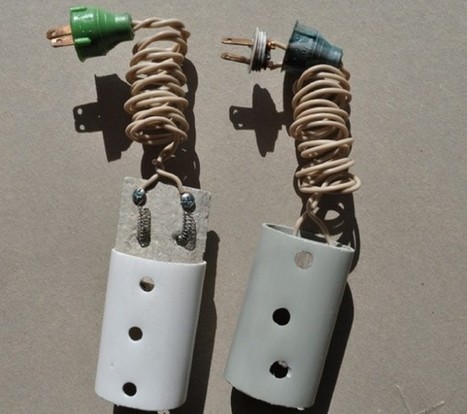
Quadcopters capable of transmitting high-quality video are making it possible to affordably record unique perspectives. But these “unmanned aircraft systems,” as the FAA calls them, have posed new challenges in security, safety, and privacy, and many experts caution pilots to consider the implications of increased drone usage. In addition to the concern of constant surveillance, there’s the possibility that businesses (or hackers) can collect location information from mobile devices by using roving drones.
As a result, a cottage industry is forming for anti-drone technology. These devices come in a range of sizes, from plane-mounted to handheld tools. I will show you how to build our own rig to execute a particular network-based attack against one type of quadcopter control: Wi-Fi. ...
La compagnie Adrien M & Claire B crée des formes allant du spectacle aux installations dans le champ des arts numériques et celui des arts vivants. Elle est codirigée par Claire Bardainne et Adrien Mondot. Leur démarche place l’humain au centre des enjeux technologiques, et le corps au cœur des images, avec comme spécificité le développement sur mesure des outils informatiques. Ils poursuivent la recherche d’un numérique vivant : mobile, artisanal, éphémère et sensible.
Cette première monographie consacrée à leur travail présente de nombreux documents inédits sur leur processus de création, un entretien avec les artistes ainsi que des textes de plusieurs collaborateurs qui permettent de découvrir les différentes facettes de leur approche. Une série d’œuvres en réalité augmentée, conçues spécifiquement pour ce livre, vient compléter l’ensemble.
Direction artistique : Claire Bardainne & Adrien Mondot Direction éditoriale : Clarisse Bardiot Conception graphique : Aurore Chassé Développement des œuvres en réalité augmentée : Rémi Engel
For over 17 years Furtherfield has been working in practices that bridge arts, technology, and social change. Over these years we have been involved in many great projects, and have collaborated with and supported a variety of talented people. Our artistic endeavors include net art, media art, hacking, art activism, hacktivism and co-curating. We have always believed it is essential that the individuals at the heart of Furtherfield practice in arts and technology and are engaged in critical enquiry. For us art is not just about running a gallery or critiquing art for art’s sake. The meaning of the art is in perpetual flux, and we examine its changing relationship with the human condition. Furtherfield’s role and direction as an arts collective is shaped by the affinities we identify among diverse independent thinkers, individuals and groups who have questions to ask in their work about the culture.
Here I present a selection of Furtherfield projects and exhibitions featured in the public gallery space, we have ran in Finsbury Park in North London for the last two years. I set out some landmarks on the journey we have experienced with others, and end my presentation with news of another space we have recently opened (also in the park) called the Furtherfield Commons. ...
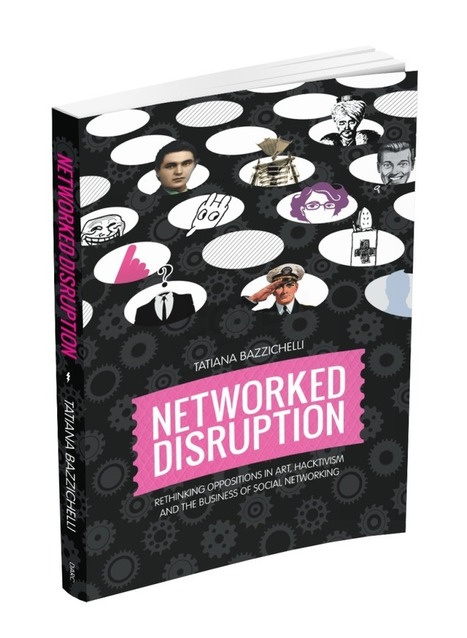
The current techno-economic paradigm of Web 2.0 has challenged notions of art and hacktivism within digital culture. The book “Networked Disruption” takes up this challenge and discusses a new perspective on political and social criticism. It simultaneously asks what are the conditions for hacker and artistic practices under Web 2.0 and how can social networking be seen to build on and incorporate artistic practices from the earlier decades of digital and network culture.
Through its theoretical discussion of contemporary art and hacktivism, the book maps out a new contradictory space for art and criticism: Networked disruption.
What is the book about?
After the emergence of Web 2.0, the critical framework of art and hacktivism has shifted from developing strategies of opposition to embarking on the art of disruption. By identifying the emerging contradictions within the current economical and political framework of Web 2.0, the aim is to reflect on the status of activist and hacker practices as well as those of artists in the new generation of social media (or so called Web 2.0 technologies), analysing the interferences between networking participation and disruptive business innovation...
Ce texte a été écrit dans le cadre du numéro « Arts & Sciences » du magazine MCD (n°81, mars/avril/mai 2016) dont Annick Bureaud était la rédactrice en chef invitée. Une version condensée a été publiée sous le titre « Ici & Ailleurs. Panorama des structures arts-sciences »...
La France ne dispose pas, ou pas encore, d’un lieu emblématique arts-sciences, mais, comme partout, les initiatives fleurissent : du soutien à la création, à la monstration, en passant par la formation et la recherche, durables ou éphémères, portées par des institutions de taille et de nature diverses, initiées par toutes sortes de gens (artistes, scientifiques, acteurs culturels), parfois relabellisant simplement du bon vieil art numérique ou flirtant avec l’ingénierie. En bref, l’art-science devient tendance. ...
Le cerveau humain connaît, étudie, explique et comprend, au point qu’il en est arrivé à prendre comme objet d’étude… lui-même. Et les nouvelles connaissances sur le fonctionnement du cerveau ébranlent profondément nombre de croyances au fondement de la culture occidentale. Car les remarquables avancées des neurosciences rendent en effet désormais envisageable pour certains la perspective d’améliorer le cerveau et de supprimer ses faiblesses et ses « défauts » : le rêve d’un cerveau « parfait » semble à portée de la main. Cette vision conduit à considérer notre cerveau comme un ordinateur qu’il s’agirait d’optimiser en l’améliorant par divers outils pharmacologiques ou informatiques. À partir d’une vulgarisation très pédagogique de recherches récentes souvent très « pointues » en neurosciences, Miguel Benasayag montre ici, de façon fort convaincante, pourquoi ce nouvel idéalisme du « cerveau augmenté » est en réalité une illusion dangereuse : le monde qu’entendent préparer les transhumanistes et certains scientifiques risque fort d’être surtout habité par la folie et la maladie… Une thèse critique solidement argumentée, qui a commencé à faire son chemin dans le milieu des chercheurs les plus préoccupés par les apories et les failles de ce nouveau mythe du progrès.
Deep neural networks are remaking the Internet. Able to learn very human tasks by analyzing vast amounts of digital data, these artificially intelligent systems are injecting online services with a power that just wasn’t viable in years past. They’re identifying faces in photos and recognizing commands spoken into smartphones and translating conversations from one language to another. They’re even helping Google choose its search results. All this we know. But what’s less discussed is how the giants of the Internet go about building these rather remarkable engines of AI.
More than a year ago the Süddeutsche Zeitung was contacted by a source who was intent on staying anonymous. The source called himself “John Doe” and offered internal data belonging to the Panamanian law firm Mossack Fonseca. The Süddeutsche Zeitung decided to analyze the data in cooperation with the International Consortium of Investigative Journalists (ICIJ). In the course of the research the cooperation was extended to include more than 100 media organizations from over 80 countries. The publication of the Panama Papers caused an enormous stir all over the globe: Politicians and functionaries had to resign, there was a large amount of public protest, and the stories led to raids and investigations in dozens of countries.
Now “John Doe”, the anonymous source, has sent the SZ a manifesto, which can be read as an explanation of his actions – and as a call to action. The manifesto and its inherent political stance had no editorial influence on the reporting by the SZ or of any of the other cooperating media organizations – nor will it influence them in the future. The SZ did not have to agree to any conditions concerning the reporting in order to receive the data of the Panama Papers.
Le Festival est l’occasion, pour les FabLabs français et européens, d’organiser des temps de rencontres et d’échanges autour des projets de chacun.
Le Festival donne l’occasion aux curieux, aux débutants et aux habitués de s’immerger, le temps d’un week-end entier, dans un monde de création et de fabrication : un monde où les idées peuvent se concrétiser rapidement.
Chacun a la possibilité de rencontrer et d’échanger avec nos makers, ou bien de participer à des ateliers pour apprendre à créer.
The festival is a project of an Italian studio tad (design) in partnership with the Casoria Contemporary Art Museum (CAM). The first festival was held in January 2006 with about 190 entrants from various countries around the world. The jury selected 30 videos which have become part of permanent collection of CAM. Over 220 artworks were presented during the second festival held in 2007 with a large increase in women's participation (about 33% of all artists).
SoundWays est une application dédiée à la création, l’édition et la diffusion de parcours sonores géolocalisés. SoundWays propose une écoute inédite et spatialisée du son en fonction du trajet, de l’orientation et de la géolocalisation de l’utilisateur.
En déposant des bulles sonores géolocalisées, et en liant ces bulles pour créer des parcours, l’utilisateur de SoundWays sonorise l’espace qu’il traverse.
La première expérimentation de SoundWays s’est effectuée durant l’été 2014, dans le cadre de la manifestation artistique Bande Originale. Bande Originale est une exploration artistique du canal de l’Ourcq proposée par le Collectif MU à l’invitation du Département de la Seine-Saint-Denis à l’occasion de L’été du canal 2014.
The UTOPIAS exhibition dwells on a transition the collective imaginary made at the turn of the 20th century, abandoning the notion of development as conquest and embracing scenarios of integrated future. The concepts of time and space transform, the Europe-centric world map morphs, and artists show fullness in place of emptiness, like in ancient Asian cosmologies. In artistic renderings, the ecosystem is inhabited by multiple, not only human, beings; animate and inanimate nature is no longer merely a resource of raw materials. The exhibition addresses the various ways in which arts explore the quest for sustainability and gestures at the art-showcased processes in which humans develop new understandings of their place in and relevance to the world as only one of its several components.
Viola Krajewska, curator of the Eco Expanded City
Lynn Cazabon (US), Uncultivated, curators: Dominika Kluszczyk, Krzysztof Dobrowolski , Magdalena Kreis R. Buckminster Fuller (US), Inventions: Twelve Around One, curator: Piotr Krajewski Takahiko Iimura (JP), MA: Space/Time in the Garden of Ryoan-Ji, curators: Viola Krajewska, Piotr Krajewski AKI INOMATA (JP), Why Not Hand Over a «Shelter» to Hermit Crabs?, curators: Yukiko Shikata, Junya Yamamine Paweł Janicki (PL), Vibra v.2 [Vv2], curator: Piotr Krajewski Paweł Janicki (PL) + Bartosz Konieczny (PL), WTF, curator: Piotr Krajewski Hajime Narukawa (JP), AuthaGraph, curator: Agnieszka Kubicka-Dzieduszycka Semiconductor – Ruth Jarman (UK) + Joe Gerhardt (UK), 20 Hz, curator: Viola Krajewska Natalia Szczęch (PL), Soft Toys, curator: Viola Krajewska Akira Wakita (JP), Furnished Fluid, curator: Piotr Krajewski
exhibition coordinator: Dominika Kluszczyk exhibition architecture and design: Piotr Krajewski, Michał Michałczak, Sebastian Siepietowski
Born in 1982 in Shiraz, Golnaz Behrouznia orientedherself from a young age in visual arts.She began practicing sculpture while studying finearts in Tehran and, after that, continuedher work as a professional artist. In Iran, she participated in fifteen solo and groupexhibitions in Tehran, Isfahan and Shiraz and won several awards at festivals and biennials.In 2008 she decided to go to France to continue herartistic career. Fascinated bymultimedia, she studied Digital Media Design in inToulouse. She has presented her work inthe form of sculptures, video installations and paintings in different places like the “Muséedes Abattoirs", "La salle des Illustres" and "la Fabrique culturelle" in Toulouse, the "SalleEspalioux" in Pamiers, the "Salle Aubette" in Strasbourg and the “PAD” art fair in Paris
In my last blog, I talked a little about the general principles of the cyberattack marketplace. Today, we will take a closer look at the Darknet. There is so much talk these days about the Darknet. It’s the stuff of crime novels – a hotbed of criminal activity where anything can be bought and sold.
While that is true, the Darknet also provides an anonymizing layer to journalists and activists around the world who fight for the freedom of information and privacy. It is often a place where they can securely and anonymously communicate with their contacts. ...
Get ready to be shuttled between story lines at lightning speed mirroring the disjointed lives of the protagonists and life on the Internet. The Hacker Wars- a film about the targeting of (h)ac(k)tivists and journalists by the US government. Hacktivists are either terrorists or freedom fighters depending on one’s perspective on who should control information.
The Hacker Wars, a feature-length documentary film, directed by Vivien Lesnik Weisman, will open theatrically in New York October 17th 2014 at the Village East Cinema. It is under consideration for the 2015 Academy Awards for Best Documentary.
Ripped from international headlines, The Hacker Wars takes you to the front lines of the high-stakes battle over the fate of the Internet, freedom and privacy. The Hacker Wars tells the tales of the anarchic troll provocateur Andrew “weev” Aurenheimer, prodigy hacker hero Jeremy Hammond, and incendiary watchdog journalist Barrett Brown — three larger than life characters whose separate quests to expose the secrets of empire hurled them into a fateful collision course with shadowy corporations, the FBI, and ultimate betrayal by one of their own...
The event is rooted in the successful Free Software movement of the early 2000s. In conjunction with the Austrian-wide initiative Linux Weeks, servus.at was a co-organizer from the beginning with an event in Linz (LiWoLi – “Linux Weeks Linz”)
The cultural, artistic and socio-political focus of the association, which is still marked by the spirit of the Free Software movement, has been systematically expanded with a new cooperation with the Institute for Time-Based Media (Art University Linz) beginning in 2008. Social, societal and political aspects arising from the pervasion of technology in everyday life are shifted into the foreground.
Consequent to a local development, the term “freedom” has been transferred in this context to culture and art, thus engendering a new title: Art Meets Radical Openness.
Art Meets Radical Openness
Festival dedicated to Art, Hacktivism and Open Culture
“Art Meets Radical Openness” is a community festival, an open lab, and a meeting point for artists, developers, hactivists, and idealists involved with the culture of sharing and communal production. They are catalysts that spark new discourses and open up new directions of thinking. Free Open Source Software, open tools in general and the use of free licenses are the precondition and basis for the digital practice of a community like this, which impels social transformation. This tangible transformation goes beyond a digital practice and also changes our real life.
Festival des cultures numériques et pratiques électroniques libres
Electropixel #6 est un festival dédié aux arts numériques et électroniques émergents, qui expérimente avec l’espace public. Cette année, le thème se focalise sur le Powerhack, dans ces différentes compréhensions : en terme de pouvoir (la faculté, la capacité, la possibilité matérielle ou la permission de faire quelque chose), d’énergie à travers l’acte de détournement et de transformation : le hacking.
DATE LIMITE d’envoi de votre proposition : 9 juin 2016 à minuit
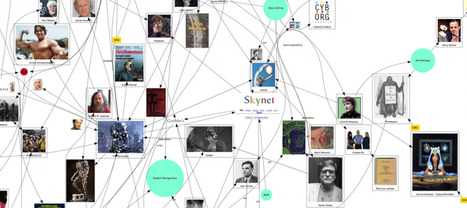
Ce projet propose une relecture de la série de science-fiction « Terminator », dont le scénario se révèle un véritable almanach prophétique. Alors que le fameux « scénario Terminator » devient de plus en plus plausible, chaque jour amène son lot de validation des hypothèses fictionnelles du film. De Foxconn, qui remplace ses travailleurs humains par des androïdes pour fabriquer les nouveaux iPad, à Amazon qui met en esclavage les humains ou Google qui prendrait soudain le contrôle à la « Skynet ». La catastrophe de Fukushima qui est survenue, à quelques jours près, à la même date que l'attaque nucléaire dans « Rise of the machines » (le « Terminator 3 »). La résistance s'organise : des scarabées qui mutent pour résister aux OGM, à James Cameron qui se mobilise pour la sauvegarde des tribus amazoniennes...
Jean-Baptiste Bayle est artiste, actionniste audio, dé-programmeur et expert de la contre-surveillance au quotidien. Il est l' anti-auteur de nombreux sites parodiques et collections de remixes, que quelques institutions et initiatives privées ont pris le risque de présenter, dont le festival README04, le CNEAI à Chatou, Villette numérique, le Cnac-Magasin à Grenoble, la galerie W139 à Amsterdam, le Jeu de Paume à Paris. Actif dans différents réseaux de recherches et d'action citoyenne, il continue de rêver d?un monde vivable sous la perspective de la vie immédiate. Il a coordonné différents projets radiophoniques, enseigné à l?Ecole supérieure d?art de Grenoble et conduit des ateliers avec l' Atelier d' Architecture Autogérée à Paris, et se produit régulièrement en concert. Il est un manifestant permanent contre la société de Big Brother.
Harold Cohen, an abstract painter who developed Aaron, one of the first and eventually one of the most complex computer software programs for generating works of art, died on April 27 at his home in Encinitas, Calif. He was 87.
The cause was congestive heart failure, his son, Paul, said.
Mr. Cohen was a painter growing weary with the traditional practice of art in the late 1960s when he taught himself, out of curiosity, how to program a computer. ...
Proposez un projet innovant au croisement des arts et des nouvelles technologies,pour vivre des expériences poétiques et insolites ! L’association Electroni[k] lance un appel à projets international pour la prochaine édition du festival Maintenant qui aura lieu en octobre …
Conditions :
• Utiliser ou détourner une technologie ou un logiciel • Ouverts aux artistes, collectifs, ingénieurs… • Le projet doit être professionnel et pas nécessairement une première présentation.
Electroni[k] contribue au projet à hauteur de 5 000 €. Candidatez à l’une de ces deux catégories : • moins de 1 500 € • entre 1 500 € et 5000 €
Today, humans suffer from a wide range of diseases and disorders that didn't exist in the past, a trend that will likely continue well into the future. Here are 10 unexpected and wholly unpleasant diseases we'll eventually have to contend with.
It's impossible to know which pathogens will afflict us in the future, but by looking at technological and social trends, we can make some educated guesses about the kinds of diseases and disorders that are likely to emerge.
Consider this your speculation warning. We're about to journey out of what we do know, into the realm of what might happen.
Ogilvy & Mather Advertising Bangkok teamed up with PETA Asia to launch this shocking pop-up shop in Bangkok's popular CentralWorld mall to show consumers the suffering behind every exotic-skins bag, belt, jacket, and pair of gloves or shoes.
To get content containing either thought or leadership enter:
To get content containing both thought and leadership enter:
To get content containing the expression thought leadership enter:
You can enter several keywords and you can refine them whenever you want. Our suggestion engine uses more signals but entering a few keywords here will rapidly give you great content to curate.


 Your new post is loading...