Media Arts Watch Lab - www.arts-numeriques.info - laboratoire de veille Arts Numériques - twitter @arts_numeriques - @processing_org - @DigitalArt_be - by @jacquesurbanska @_Transcultures
“Can you hear me?” was a temporary network that artists Christoph Wachter and Mathias Jud set up above the rooftops of the German government district in Berlin to downright force intelligence agencies to listen in on what they and thousands of other people were saying. Besides getting the agents’ attention, the artists are also the recipients of a Golden Nica in the 2016 Prix Ars Electronica’s Interactive Art + category.
Hackers éthiques, Civic Tech, hackers recrutés pour la cybersécurité : la figure du pirate numérique a fait place à celle des hérauts de la contestation, de la justice, de l’information libre, de la sécurité… Les hackers participent désormais à rendre le monde plus transparent, plus libre, plus engagé : certains livrent même les outils en open source pour que chacun puisse agir. Quel est le rôle de ces figures aujourd’hui ? Y a-t-il des différences entre les hackeurs ? Comment fait-on cohabiter un monde de règles, de pare-feu et de lois, et ceux qui les contournent ? Peut-on désormais faire profession de hacker?
Intervenants
Guillaume Poupard
Directeur de l'ANSSI, Agence Nationale de la Sécurité des Systèmes d'Information depuis 2014
Tris Acatrinei
Auteure du blog Hacker Republic, consultante en sécurité informatique, fondatrice du Projet Arcadie
Gaël Musquet
Co-fondateur de la communauté OpenStreetMap France
Modérateur : Florent Latrive - Délégué aux nouveaux médias à France Culture
As global society becomes more and more dependent, politically and economically, on the flow of information, the power of those who can disrupt and manipulate that flow also increases. In Hacktivism and Cyberwars: Rebels with a cause? Tim Jordan and Paul A. Taylor provide a detailed history of hacktivism’s evolution from early hacking culture to its present-day status as the radical face of online politics. They describe the ways in which hacktivism has re-appropriated hacking techniques to create an innovative new form of political protest.
A full explanation is given of the different strands of hacktivism and the ‘cyberwars’ it has created, ranging from such avant-garde groups as the Electronic Disturbance Theatre to more virtually focused groups labelled ‘the digitally correct’. The full social and historical context of hacktivism is portrayed to take into account its position in terms of new social movements, direct action and its contribution to the globalisation debate. This book provides an important corrective flipside to mainstream accounts of e-commerce and broadens the conceptualisation of the Internet to take into full account the other side of the digital divide.
Tim Jordan is a Lecturer in Sociology at the Open University and Paul A. Taylor is a Senior Lecturer in the Institute for Communication Studies at the University of Leeds.
For over 17 years Furtherfield has been working in practices that bridge arts, technology, and social change. Over these years we have been involved in many great projects, and have collaborated with and supported a variety of talented people. Our artistic endeavors include net art, media art, hacking, art activism, hacktivism and co-curating. We have always believed it is essential that the individuals at the heart of Furtherfield practice in arts and technology and are engaged in critical enquiry. For us art is not just about running a gallery or critiquing art for art’s sake. The meaning of the art is in perpetual flux, and we examine its changing relationship with the human condition. Furtherfield’s role and direction as an arts collective is shaped by the affinities we identify among diverse independent thinkers, individuals and groups who have questions to ask in their work about the culture.
Here I present a selection of Furtherfield projects and exhibitions featured in the public gallery space, we have ran in Finsbury Park in North London for the last two years. I set out some landmarks on the journey we have experienced with others, and end my presentation with news of another space we have recently opened (also in the park) called the Furtherfield Commons. ...
The current techno-economic paradigm of Web 2.0 has challenged notions of art and hacktivism within digital culture. The book “Networked Disruption” takes up this challenge and discusses a new perspective on political and social criticism. It simultaneously asks what are the conditions for hacker and artistic practices under Web 2.0 and how can social networking be seen to build on and incorporate artistic practices from the earlier decades of digital and network culture.
Through its theoretical discussion of contemporary art and hacktivism, the book maps out a new contradictory space for art and criticism: Networked disruption.
What is the book about?
After the emergence of Web 2.0, the critical framework of art and hacktivism has shifted from developing strategies of opposition to embarking on the art of disruption. By identifying the emerging contradictions within the current economical and political framework of Web 2.0, the aim is to reflect on the status of activist and hacker practices as well as those of artists in the new generation of social media (or so called Web 2.0 technologies), analysing the interferences between networking participation and disruptive business innovation...
More than a year ago the Süddeutsche Zeitung was contacted by a source who was intent on staying anonymous. The source called himself “John Doe” and offered internal data belonging to the Panamanian law firm Mossack Fonseca. The Süddeutsche Zeitung decided to analyze the data in cooperation with the International Consortium of Investigative Journalists (ICIJ). In the course of the research the cooperation was extended to include more than 100 media organizations from over 80 countries. The publication of the Panama Papers caused an enormous stir all over the globe: Politicians and functionaries had to resign, there was a large amount of public protest, and the stories led to raids and investigations in dozens of countries.
Now “John Doe”, the anonymous source, has sent the SZ a manifesto, which can be read as an explanation of his actions – and as a call to action. The manifesto and its inherent political stance had no editorial influence on the reporting by the SZ or of any of the other cooperating media organizations – nor will it influence them in the future. The SZ did not have to agree to any conditions concerning the reporting in order to receive the data of the Panama Papers.
The exhibition smartly enrolled artists, media historians and writers to chart the history and current rise of data-technologies and the world they bring about, exploring and exposing our quantified society and the processes of self-quantification. The food for thought that this show provide is overwhelming. Almost as much as this (partial) review of it!
Nervous Systems was co-curated by Anselm Franke and by Stephanie Hankey and Marek Tuszynski from the Tactical Technology Collective but because pretty much every single artwork and historical artifact in that deserves to be mentioned, i thought it would be better for everyone’s patience and sanity if i focused on one segment of the exhibition only.
Besides NewMediaFest, also ENGAD – Engaged Arts Directory was initiated by Agricola de Cologne in 2001 – so it’s the time to celebrate also this project’s 15th anniversary.
ENGAD was established as a media art platform following the curatorial goal to encourage contemporary artists using new media to deal with engaged contents reflecting political, cultural and social developments on Earth. As a platform, the project is representing an appeal against any totalitarianism – this is good especially in these time when there are continuously attempts to restrict and even eliminate freedom and the democratic rights and values – tendencies which can be obswerved in all parts on the globe, and especially in these countries which have a democratic constitution.So, an eseential goal of ENGAD is to activate and sensitize the artists and the audience alike via new approaches and technologies. ...
Yegor Tsvetkov uses neural networks to show the dangers of digital access...
With the use of neural networks, a photographer from St. Petersburg has matched people he met on the subway with their social network profiles and compared their real look with how they present themselves on the internet.
For six weeks Yegor Tsvetkov, a young St. Petersburg photographer, has been snapping random people and then identifying them on Russia’s biggest social network VKontakte with the help of the FindFace app (based on algorithms of self-learning neural networks). ...
Loophole for All is a service to democratize offshore business for people who don't want to pay for their riches. It empowers everyone to evade taxes, hide money and debt, and get away with anything by stealing the identities of real offshore companies.
Paolo Cirio works as media artist in various fields: net-art, street-art, video-art, software-art and and experimental fiction. He has won prestigious art awards and his controversial works have been sustained by research grants, collaborations and residencies. He has exhibited in museums and art institutions worldwide. As public speaker he delivers lectures and workshops on media tactics.
Présent dans l’expositon Disnovation avec The Transparency Grenade, Julian Oliver est le co-fondateur de Men in Grey et co-auteur avec Danja Vasiliev du Manifeste de l’ingénieur critique qui exhorte à la réappropriation et au détournement radical des technologies de l’information et de la communication. Figure notoire du hacking, il interviendra sur sa pratique entre art et politique.
moderated by Panayotis Antoniadis, Daphne Dragona, James Stevens
The choice to go “off the cloud” stems from current disillusionment with networked connectivity, reaching instead for the potential of emerging user-owned and user-controlled infrastructures. Over the last decade a growing scene of artists, hackers, and network practitioners has been actively working on creating community networks, ad-hoc connectivity, and autonomous systems of sensing and data collecting. But how feasible are the changes these groups want to see? Following last year’s offline networks unite! panel at transmediale and several specially organised workshops, Off-the-Cloud Zone brings together various actors to discuss the challenges, barriers, and possibilities of the field. With open conversation formats and hands-on demonstrations, the event seeks new strategies of joining forces and building common tools to take users beyond the sovereignty of the cloud.
The Kopimashin creates an endless amount of copies of a specific audio track (gnarls barkley’s crazy). The audio track is copied to /dev/null, a unix data pipe for avoiding permanent storage. The Kopimashins lcd display consists of three rows of information, the serial number of the mashin, amount of copies created and the dollar value it represents in losses for the record labels (Downtown Records / Warner Music), currently represented by USD1,25 per copied piece.
The goal of the kopimashin is to make the audio track the most copied in the world and while doing so bankrupting the record industry.
This project is part of the psk value series.
86mm x 54mm x 19mm. Series of 13. raspberry pi, lcd display, python code
Lanky and standing at 5″3′, he passes off as a regular among thousands of college students in the country’s largest engineering educational institution. He slacks, procrastinates and crams for his academics. Kyuubei, his preferred alias, admittedly never topped the class: His real talents lie somewhere he deems more practical and useful outside the four corners of a classroom.
He started young. In fifth grade, autorun viruses that were captured in storage devices were spreading like wildfire. Kyuubei decided to venture out and look deep into the Internet for communities centered on hacking and specialized in dealing with malicious software (malware).
There, he stumbled upon a fellow enthusiast “Tear[A]Door” whom Kyuubei credits to having spawned the vbscript-worm generator that allows users of the program to construct viruses of their own. He also met “alcopaul,” who has mastered and is one of the creators of the Joint Photographic Experts Group infector malware. Their conversations became regular correspondences. Kyuubei was hooked. ...
We investigate the secret world of government surveillance and expose the companies enabling it. We litigate to ensure that surveillance is consistent with the rule of law. We advocate for strong national, regional, and international laws that protect privacy. We conduct research to catalyse policy change. We raise awareness about technologies and laws that place privacy at risk, to ensure that the public is informed and engaged.
To ensure that this right is universally respected, we strengthen the capacity of our partners in developing countries and work with international organisations to protect the most vulnerable.
Privacy International envisions a world in which the right to privacy is protected, respected, and fulfilled. Privacy is essential to the protection of autonomy and human dignity, serving as the foundation upon which other human rights are built. In order for individuals to fully participate in the modern world, developments in law and technologies must strengthen and not undermine the ability to freely enjoy this right.
Benjamin Gaulon est un artiste hacktiviste. Nous l'avons rencontré à l'occasion de l'exposition de deux de ses œuvres : "2,4 GHZ" au festival Mal au Pixel et "KindleGlitcher" dans la galerie virtuelle du Jeu de Paume.
The event is rooted in the successful Free Software movement of the early 2000s. In conjunction with the Austrian-wide initiative Linux Weeks, servus.at was a co-organizer from the beginning with an event in Linz (LiWoLi – “Linux Weeks Linz”)
The cultural, artistic and socio-political focus of the association, which is still marked by the spirit of the Free Software movement, has been systematically expanded with a new cooperation with the Institute for Time-Based Media (Art University Linz) beginning in 2008. Social, societal and political aspects arising from the pervasion of technology in everyday life are shifted into the foreground.
Consequent to a local development, the term “freedom” has been transferred in this context to culture and art, thus engendering a new title: Art Meets Radical Openness.
Art Meets Radical Openness
Festival dedicated to Art, Hacktivism and Open Culture
“Art Meets Radical Openness” is a community festival, an open lab, and a meeting point for artists, developers, hactivists, and idealists involved with the culture of sharing and communal production. They are catalysts that spark new discourses and open up new directions of thinking. Free Open Source Software, open tools in general and the use of free licenses are the precondition and basis for the digital practice of a community like this, which impels social transformation. This tangible transformation goes beyond a digital practice and also changes our real life.
Ce projet propose une relecture de la série de science-fiction « Terminator », dont le scénario se révèle un véritable almanach prophétique. Alors que le fameux « scénario Terminator » devient de plus en plus plausible, chaque jour amène son lot de validation des hypothèses fictionnelles du film. De Foxconn, qui remplace ses travailleurs humains par des androïdes pour fabriquer les nouveaux iPad, à Amazon qui met en esclavage les humains ou Google qui prendrait soudain le contrôle à la « Skynet ». La catastrophe de Fukushima qui est survenue, à quelques jours près, à la même date que l'attaque nucléaire dans « Rise of the machines » (le « Terminator 3 »). La résistance s'organise : des scarabées qui mutent pour résister aux OGM, à James Cameron qui se mobilise pour la sauvegarde des tribus amazoniennes...
Jean-Baptiste Bayle est artiste, actionniste audio, dé-programmeur et expert de la contre-surveillance au quotidien. Il est l' anti-auteur de nombreux sites parodiques et collections de remixes, que quelques institutions et initiatives privées ont pris le risque de présenter, dont le festival README04, le CNEAI à Chatou, Villette numérique, le Cnac-Magasin à Grenoble, la galerie W139 à Amsterdam, le Jeu de Paume à Paris. Actif dans différents réseaux de recherches et d'action citoyenne, il continue de rêver d?un monde vivable sous la perspective de la vie immédiate. Il a coordonné différents projets radiophoniques, enseigné à l?Ecole supérieure d?art de Grenoble et conduit des ateliers avec l' Atelier d' Architecture Autogérée à Paris, et se produit régulièrement en concert. Il est un manifestant permanent contre la société de Big Brother.
Ogilvy & Mather Advertising Bangkok teamed up with PETA Asia to launch this shocking pop-up shop in Bangkok's popular CentralWorld mall to show consumers the suffering behind every exotic-skins bag, belt, jacket, and pair of gloves or shoes.
L’anthropologue Gabriella Coleman s’est immergée dans l’univers des défenseurs des libertés numériques. traduction française de Hacker, Hoaxer, Whistleblower, Spy. The Many Faces of Anonymous
Si pour vous, comme pour la plupart des membres de la famille de Gabriella Coleman, Internet, « c’est la corvée des courriels à trier, les nouvelles qu’on lit en buvant son café le matin, le coup d’œil sur sa page Facebook pour voir les dernières photos des amis (et de leurs bambins) et, dans les moments d’ennui mortel au travail, le visionnage de fantastiques vidéos de chats », passez votre chemin. Ce livre ne vous apportera que doutes et inquiétudes.
Nowadays, we continually share data: a message via WhatsApp, a picture on Instagram, an update on Facebook or an e-mail through Gmail. With whom do we really share this data? And how can we make sure that our personal data stay strictly personal?
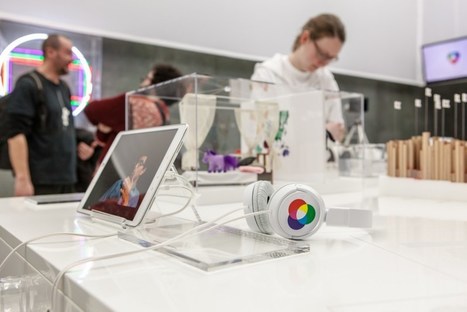
This exhibition addresses issues of online privacy and digital surveillance. Next to several historical examples of encrypting, ‘Design my Privacy’ also shows some surprising contemporary strategies by more than 35 young designers and artists to maintain control over our data.
With work by Roel Roscam Abbing, Zineb Benassarou & Jorick De Quaasteniet, Josh Begley, Dennis de Bel, Caitlin Berner & Jana Blom, Heath Bunting, F.A.T., Giada Fiorindi, Front 404, Roos Groothuizen, Arantxa Gonlag & Eva Maria Martinez Rey, Monika Grūzīte, Rafaël Henneberke, Jan Huijben, Daniel C. Howe & Helen Nissenbaum & Vincent Toubiana, Rosa Menkman, Owen Mundy, Naomi Naus, Joyce Overheul, Ruben Pater, Wim Popelier, Freek Rutkens, Vera van de Seyp, Mark Sheppard, Dimitri Tokmetzis & Yuri Veerman, Janne Van Hooff & Christina Yarashevich, Michaele Lakova, Jasper van Loenen, Jeroen van Loon, Esther Weltevrede & Sabine Niederer, Leanne Wijnsma & Froukje Tan, Joeri Woudstra, Sander Veenhof and Simone Niquille.
An exhibition by MOTI, Museum of the Image in Breda (NL)
Généralement, quand on pense au big data et au traitement des données informatiques, on pense illico aux stratégies commerciales agressives et à la surveillance généralisée des citoyens. Mais Paul Duan lui, y voit surtout la possibilité d’un monde meilleur. A 22 ans, ce génie revient des Etats-Unis avec la ferme intention de diminuer le chômage… rien qu’avec des algorithmes ! Explications.
Paul Duan est né à Trappes de migrants chinois qui ont fui la répression communiste. Excellent élève, il a eu un parcours exemplaire : le lycée de Buc dans les Yvelines, Sciences Po puis Berkeley, dans la Silicon Valley.
Là-bas, il crée en 2014 une ONG baptisée Bayes Impact. Son but ? « Faire de la Terre un endroit meilleur » grâce à une saine utilisation des données.
Ça peut sembler ambitieux mais, malgré son jeune âge, Paul Duan a déjà quelques succès à son actif : l’optimisation du trajet des ambulances de San Francisco et la prévention des risques dans les hôpitaux. Deux exemples qui sauvent des vies tous les jours rien qu’avec l’utilisation de données statistiques et informatiques !
The Social Innovation Tournament is the flagship initiative of the Institute’s Social Programme. It is organised every year in a different country to reward and sponsor European entrepreneurs whose primary purpose is to generate a social, ethical or environmental impact.
Four prizes are awarded by a jury, composed of specialists from the academic and business world: General Category and Special Category 1st and 2nd Prizes of EUR 50 000 and EUR 20 000 respectively. In 2016, the Special Category Prizes will go to projects focusing on health with a special emphasis on childhood obesity.
Projects are typically related to combating unemployment, marginalisation of disadvantaged communities and promoting access to education in a wide range of fields, from education and health care to natural or urban environment, through new technologies, new systems, and new processes....
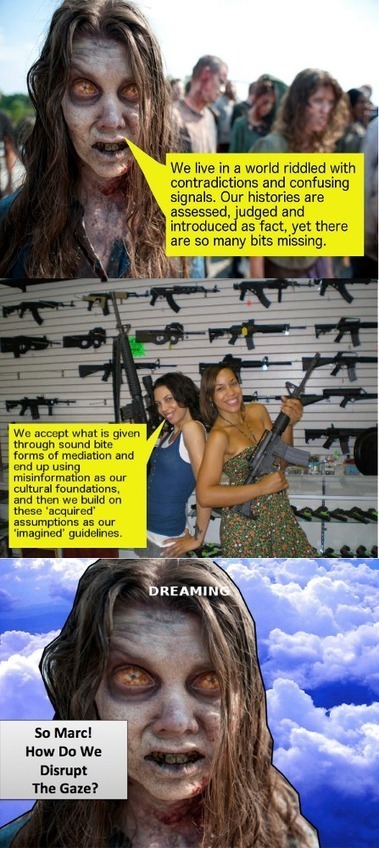
Marc Meillassoux (Fr) et Mihaela Gladovic (All) sont journalistes en presse écrite et télévision. Ils sont auteurs et réalisateurs du documentaire indépendant "Nothing to Hide", en cours de réalisation.
Marc Meillassoux (Fr) and Mihaela Gladovic (Ger) are newspaper journalist and TV producer. They are the authors and directors of "Nothing to Hide", in progress.
Estabilished in 2005 Digicult is an online platform that examines the impact of digital technologies and applied sciences on art, design, culture and contemporary society. Digicult is an independent project, with no funds from any institutions or companies, it is neither public nor private, that reaches more than 100,000 online users on a monthly basis. Based on an international Network of critics, curators, artists, designers, professors, researchers, journalists, media center, galleries and festival, Digicult is an editorial project that daily publish news, informations, articles, interviews, reports, essays. Digicult is founded and directed by art critic and curator Marco Mancuso...
Marco Mancuso is a critic and curator in the field of digital technologies applied to Art, Design and Contemporary Culture.
Founder and Editor-In-Chief at Digicult and Digimag Journal (part of The Leonardo Affiliate Program), he teaches "Media Art Management" at NABA Academy in Milan, "Phenomenology of Contemporary Art" at IED Institute in Milan, "New Media Theory" at SUPSI in Lugano, "Digital Publishing for the Arts" at Academy of Fine Art in Bergamo, "Marketing of Net Culture" at Bauer in Milan and is visiting professor at Transmedia-Postgraduate Program in Arts+Media+Design in Brussels.
With the Digicult Agency he curated and co-curated a number of exhibitions, round-tables, meetings and events including Mixed Media Festival (Milan, 2006), Screen Music Festival (Florence, 2006-2007), Otolab ‘op7’ exhibition (Bergamo, 2008), Graffiti Research Lab / Laser Tag public performance (Rome, 2008), Sincronie Festival (Milan, 2008-2009), Thorsten Fleisch Retrospective (Milan, 2009), The Mediagate exhibition (Lodz, 2010), Connecting Cultures DIY workshops (Milan, 2013), he presented his screenings and productions at art and cultural events, including Dissonanze Festival (Rome, 2006), Cimatics Festival (Brussels, 2008), Strp Festival (Eindhoven, 2008), Sonic Acts Festival (Amsterdam, 2009), Nemo Festival (Paris, 2009), Elektra Festival (Montreal, 2010), Subtle Technologies Festival (Toronto, 2011), Che Fare Prize (Milan, 2013) and lectured - among others - at Market for Digital Arts/Elektra (Montreal 2008), Fabrica Workshops (Treviso, 2009), Laptop’r’s (Madrid, 2010), Subtle Technologies (Toronto, 2011), Isea (Istanbul, 2012), Open World Forum (Paris, 2012), Design Week (Milan, 2013), 55th Venice International Art Exhibition (Venice, 2013), Cyberfest (Berlin, 2013), Ninth International Conference on Arts in Society (Rome, 2014), BOZAR Festival (Brussels, 2014)…
To get content containing either thought or leadership enter:
To get content containing both thought and leadership enter:
To get content containing the expression thought leadership enter:
You can enter several keywords and you can refine them whenever you want. Our suggestion engine uses more signals but entering a few keywords here will rapidly give you great content to curate.


 Your new post is loading...