Your new post is loading...

|
Scooped by
Jacques Urbanska
July 31, 2016 5:59 AM
|
You are kindly invited to submit your suggestions for the International RethinkArtDigitalFestival, taking place in Rethymno Crete, 9-10-11&12 September 2016.Artists may submit artwork falling into the following categories: - Digital Installations
- Videomapping
- 3D printing objects
- Videoart up to 15΄
- Digital illustrations
- Digital photographies
- Performing arts with digital features
- Animation videos up to 15΄
- Artwork with digital elements
All those who are interested must submit their application forms by Sunday, July 31, 2016. z
|
|
Scooped by
Jacques Urbanska
July 31, 2016 5:48 AM
|
If your understanding of early punk derives mainly from documentaries, you’re sorely missing out. As I wrote in a post yesterday on international treasure John Peel—the BBC DJ who exposed more than a couple generations to carefully-curated punk rock—finding such music before the internet could be a daunting, and exciting, adventure. Without a doubt the best way die-hard fans and curious onlookers could get a feel for the music, manners, and personalities of any number of local scenes was through magazine culture...
|
|
Scooped by
Jacques Urbanska
July 30, 2016 2:53 PM
|
Polymorph is a hub for artists, designers, academics, musicians, developpers et enthousiasts focused on experimental video games. Its main goals are: - promotion of libre vision & tools;
- empowerment of graphical exploration;
- investigation alternative gameplays.
Polymorph is hosted by F/LAT (Free / Libre Art and Technology), a non-profit organisation located in brussels, belgium.
|
|
Scooped by
Jacques Urbanska
July 30, 2016 2:09 PM
|
A resource for teachers and students, who are exploring the creation of electronic literature; for digital poets and writers, who are interested in how their colleagues approach their work; and for readers, who want to understand how electronic literature is created, the content | code | process project (formerly Authoring Software) is an ongoing collection of statements about how writers and artists create electronic literature...
|
|
Scooped by
Jacques Urbanska
July 30, 2016 1:54 PM
|
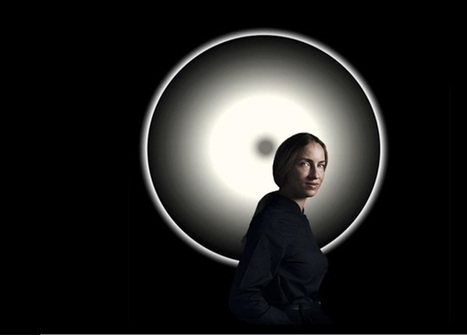
Dans la grande famille des arts numériques, je voudrais… les femmes ! Si cet ensemble divers de créations s’est activement développé depuis les années 1960, il semblerait que le secteur soit encore bien trop peu paritaire. La constatation a été avancée lors d’événements dédiés aux pratiques du langage numérique comme Viva Technology ou Web2day. Machiste, la création numérique ? Les femmes n’auraient-elles pas leur place dans la pratique de l’art robotique ou génératif ? Pas si sûr… Rencontre avec quelques artistes femmes qui font bouger les arts numériques par leur grande créativité ! ...
|
|
Scooped by
Jacques Urbanska
July 25, 2016 10:16 AM
|
Media labs are liminal but increasingly powerful spaces in many contemporary settings. They appear in universities and colleges, wedged uneasily between traditional departments and faculties. They’re also in basements, warehouses, strip malls and squats. They are stable to varying degrees; many have long-term addresses and an itinerant roster of occupants. Some pop up in one location for a few days, then relocate to another. Sometimes they’re even in mobile trucks in the streets, bringing tools and expertise to children in schools and the general public. As clusters of tools and talent streamlined to produce economic value, labs sometime align with the most ruthless of venture capitalists; in other cases, they are free and open for all to use, disdainful of all commercial motivations. Despite their sudden visibility due to the burgeoning of the digital humanities, media labs have a surprisingly long history. As part of the historical avant-gardes, media arts labs were the sites where the new materials and aesthetics of technical modernity were developed. They often share a common ideology, tied not just to the neoliberal drive to privatize, innovate and disrupt, but to long-standing modernist ideas about creative destruction, quantification and the value of scientificité...
|
|
Scooped by
Jacques Urbanska
July 25, 2016 9:58 AM
|
THE PRIVACY SOFTWARE Tor has aided everything from drug dealing marketplaces to whistleblowing websites in evading surveillance on the darknet. Now that same software can be applied to a far more personal form of security: keeping hackers out of your toaster. On Wednesday, the privacy-focused non-profit Guardian Project, a partner of the Tor Project that maintains and develops the Tor anonymity network, announced a new technique it’s developed to apply Tor’s layers of encryption and network stealth to protecting so-called “Internet of things” or “smart home” devices. That growing class of gadgets, ranging from refrigerators to lightbulbs to security cameras, are connected to the Internet to make possible new forms of remote management and automation. They also, as the security research community has repeatedly demonstrated, enable a new breed of over-the-Internet attacks, such as the rash of hackers harassing infants via baby monitors or the potential for hackers to steal your Gmail password from your fridge.
|
|
Scooped by
Jacques Urbanska
July 25, 2016 9:53 AM
|
Une fois par an, le Château Éphémère lance un appel à projet à destination de créateurs, plasticiens, musiciens désireux de bénéficier d'un accompagnement privilégié qui mêle à la fois bourse de production et espace de travail et d'hébergement.
Cependant, tout au long de l'année, Château Éphémère accueille sur des périodes plus courtes ou de manière plus informelle des artistes porteurs de projets innovants et ayant besoin d'un espace pour le réaliser.
Château Éphémère propose ainsi plusieurs dispositifs en fonction des projets allant de la mise à disposition payante, co-production et location.
N'hésitez pas à nous contacter pour plus de renseignements.
|
|
Scooped by
Jacques Urbanska
July 25, 2016 9:47 AM
|
Oudeis accueille Fabien Zocco tout le mois de juillet dans le cadre de son appel à projet Potlatch numérique. Cette rencontre entre Oudeis et Fabien Zocco était inéluctable tant les enjeux et problématiques soulevés dans le travail de l'artiste sont proches de notre questionnement sur les nouvelles technologies, ce qu'elles suscitent, ce qu'elles changent en nous et dans la société. Il est question d'Intelligence Artificielle, de bots, de programmes et des données qui constituent notre corps virtuel. Il y a de la poésie, mais aussi de l'absurde propre à un regard dystopique, critique et révélateur de situations étranges, rendues possibles par les technologies. C'est aussi un travail de rebonds, de tissage de liens invisibles entre des données, des contenus et des hommes qui laissent de plus en plus de place à la machine. "Survol" est un projet qui questionne le fantasme de la technologie comme appareil unificateur et reliant. L'obscurantisme banni par la science rejaillit paradoxalement par elle, diffusé largement par ses voies de communication. Le devenir humain est, somme toute, fragmenté, divisé et tourmenté par des nationalismes radicalisés. Dans "Survol", Fabien Zocco s'appuie sur la station spatiale internationale, l'ISS, comme symbole des projections utopiques générées par la conquête spatiale. Paradoxalement, Fabien Zocco rappelle l'origine militariste de cette conquête spatiale et de la concurrence entre des États dominants qui justifie bien le terme de "conquête". De nouveaux pays se sont ajoutés depuis plusieurs années à la liste affirmant ainsi la puissance de la nation (la Chine, l'Inde, le Brézil, l'Indonésie, l'Afrique du Sud) et répondant aussi bien à des besoins de développement technologiques que patriotiques. Dans "Survol", l'ISS opèrera comme "tête de lecture" des hymnes nationaux des pays qu'elle survolera. La vitesse de vol de la station est telle, que c'est tout aussi rapidement qu'elle passera d'un hymne à l'autre, permettant d'entonner un chant étrange multilingual et pluri-sensoriel (son, images, textes). "Survol" est au stade de projet et le temps de la résidence permettra de passer ce stade avec la complicité de Thierry Guibert. Ce dernier est un artiste qui travaille depuis quinze ans
|
|
Scooped by
Jacques Urbanska
July 18, 2016 4:04 PM
|
Call for participants to the first Global Cultural Leadership Programme Malta from 16 to 21 October. Deadline to apply is 1 August 2016.
Are you a young cultural practitioner looking to develop and strengthen your cultural leadership skills in an international working context? Apply for the Global Cultural Leadership Programme, which specifically aims to improve the skills of cultural managers, enhance collaborative peer-to-peer learning, network building and enable you to develop fresh insights into international cultural collaboration practices. The programme offers a set of learning modules, tools and manuals for practice-based learning, giving you opportunities to build meaningful collaborations at the global level and within the EU.
|
|
Scooped by
Jacques Urbanska
July 18, 2016 3:39 PM
|
One Monday morning last September, Britain woke to a depraved news story. The prime minister, David Cameron, had committed an “obscene act with a dead pig’s head”, according to the Daily Mail. “A distinguished Oxford contemporary claims Cameron once took part in an outrageous initiation ceremony at a Piers Gaveston event, involving a dead pig,” the paper reported. Piers Gaveston is the name of a riotous Oxford university dining society; the authors of the story claimed their source was an MP, who said he had seen photographic evidence: “His extraordinary suggestion is that the future PM inserted a private part of his anatomy into the animal.” The story, extracted from a new biography of Cameron, sparked an immediate furore. It was gross, it was a great opportunity to humiliate an elitist prime minister, and many felt it rang true for a former member of the notorious Bullingdon Club. Within minutes, #Piggate and #Hameron were trending on Twitter, and even senior politicians joined the fun: Nicola Sturgeon said the allegations had “entertained the whole country”, while Paddy Ashdown joked that Cameron was “hogging the headlines”...
|
|
Scooped by
Jacques Urbanska
July 18, 2016 12:54 PM
|
The Macintosh Lab series has been in standby during the last three years, but it has been recently updated and firstly featured through two great mediums ; two new pieces are announced on the last issue of the Japanese magazine MASSAGE 10 containing a screenshot series “Vertical Desktops” and a screen video capture called “Returning Folders”, and another four new screen-video-captures exploring the "Opening Folders" property from the operative system have been presented in a group exhibition titled Kaleidoramacurated by Josephine Skinner at Stills Gallery, Sidney. All these new pieces have in common a gradient rainbow color palette which has been used as background of the folders performing in live on the desktop and which color gradient composition and design varies depending on the animated concept of every piece. Into the post you can read and watch all of them...
|
|
Scooped by
Jacques Urbanska
July 18, 2016 12:44 PM
|
Humankind has been fighting for its very survival since time immemorial. For millennia, we have modified our habitats in going about this. We have been so successful in making everything around us so complex that we now find ourselves in the paradoxical situation of no longer being able to comprehend this world we have made. The Human Factor, the very thing that has fostered our survival heretofore, is now yielding consequences that threaten to overwhelm us. At the nexus of art, society and industry, artists are now working together with engineers, technologists and scientists to seek promising solutions. The upshots are concepts and projects that remain unfinished, have not yet fully matured, are still untested, or whose outcome and/or further progress are unknown. Artistic prototypes that seek to answer social, ecological and economic questions. Works that inspire, and that are emblematic of new, unconventional and innovative linkups between art and industry.... ----- In 2004 Ars Electronica created Ars Electronica Export, a program dedicated to the production of exhibitions, workshops and education programs for and together with partners from all over the world.
|
|
|
Scooped by
Jacques Urbanska
July 31, 2016 5:51 AM
|
Both technology and art define and continue to reshape the world we live in. Re-imagining what we know as real or as a solid ground, pushes not only our opinions and understandings of nature to the limits, but with new inventions and experiments, both the mind and the body, the language, and the world itself seems to be making room for a new sphere and new rules. Governed by the new aesthetics, the virtual, the scientific and the logic that is beyond belief, technology in art challenges our perceptions and that is what creativity and science are all about. If we are to understand that art reflects the period of time we are all in, how are we to grasp the growing number of young contemporary artists that base their practice on the presentation of immaterial and ephemeral things? ...
|
|
Scooped by
Jacques Urbanska
July 30, 2016 3:03 PM
|
Praise for the book - Its very well done .. and for free .. amazing.' (Daniel Bilar, Siege Technologies, LLC.)
- ...excellent and free (Pete Finnigan, Oracle RDBMS security guru.).
- ... book is interesting, great job! (Michael Sikorski, author of Practical Malware Analysis: The Hands-On Guide to Dissecting Malicious Software.)
- ... my compliments for the very nice tutorial! (Herbert Bos, full professor at the Vrije Universiteit Amsterdam, co-author of Modern Operating Systems (4th Edition).)
- ... It is amazing and unbelievable. (Luis Rocha, CISSP / ISSAP, Technical Manager, Network & Information Security at Verizon Business.)
- Thanks for the great work and your book. (Joris van de Vis, SAP Netweaver & Security specialist.)
- ... reasonable intro to some of the techniques. (Mike Stay, teacher at the Federal Law Enforcement Training Center, Georgia, US.)
- I love this book! I have several students reading it at the moment, plan to use it in graduate course. (Sergey Bratus, Research Assistant Professor at the Computer Science Department at Dartmouth College)
- Dennis @Yurichev has published an impressive (and free!) book on reverse engineering (Tanel Poder, Oracle RDBMS performance tuning expert)
- This book is some kind of Wikipedia to beginners... (Archer, Chinese Translator, IT Security Researcher.)
|
|
Scooped by
Jacques Urbanska
July 30, 2016 2:47 PM
|
By Maria Popva Originally posted on Brain Pickings. “Make good art,” Neil Gaiman advised in his endlessly heartening counsel on the creative life. But what, exactly, is “good” art? English musician and visual artist Brian Eno, born on May 15, 1948, is celebrated as a pioneer of ambient music and one of the most influential…
|
|
Scooped by
Jacques Urbanska
July 30, 2016 2:02 PM
|
Overcoming any borders, be they external borders or one's own, is invariably accompanied by a feeling of their other predestination. The matter seems to lie not even in the fact that man in himself is a creature implicating restrictions, and only through it and thanks to it he can overcome them - it is rather that while leaving a border one always approaches another border. In the long run, by repeatedly reproducing the border situation, the man rather ritually recreates the only verge, a reminder-verge, over which he - a being formed within the framework of his heredity flow - is initially denied possession of power. Namely, he cannot possess power over the borders set by his birth and death… Nothing can bring out this essentially simple speculation better than issues of time and technologies that claim abolishment and removal of time constraints. The pioneering direct manipulations in this field, performed via bio- and genetic technologies, definitely belong to the most significant milestones of the current era and are an important step forward in the development of the general theme of "borders" within European cultures, and a new subject in the exploration and realization of this theme. Never before, it seems, has the price of such research been so breathtakingly high: man begins to reshape himself according to his own conceptions. By decoding our biological structure and learning to alter it, we gain power over our own evolution. We start traveling into the unknown …
|
|
Scooped by
Jacques Urbanska
July 25, 2016 10:23 AM
|
With Cellout.me, artist Jeroen van Loon is offering his complete DNA sequence for sale. His DNA sequence contains 380 GB of data, which consists of the three billion ACTGs that make up his source code. The DNA sequence has been determined with a 30-fold coverage depth, making it ‘laboratory’ quality. The data is stored on a server in a server rack which shows the DNA sequence and the website www.cellout.me. The public can see both the current bid and the actual data simultaneously. The buyer of Cellout.me will own an extremely personal ‘self portrait’ and will become co-owner of the artist’s DNA. By turning DNA data into a commodity, Cellout.me tries to show some of the future ethical, financial and artistic questions and consequences that arise with DNA sequencing technology, which is getting cheaper, easier and more accessible each day. Biology is converted into binary data – data that is stored in data centers. Data that can be copied, manipulated, shared, sold, bought and so on.
|
|
Scooped by
Jacques Urbanska
July 25, 2016 10:11 AM
|
One man’s music really is another man’s noise, based on a new study from the Massachusetts Institute of Technology. The researchers found that only cultures previously exposed to Western music formed opinions on consonance and dissonance–an element of music theory that establishes consonant chords as more aurally pleasing than dissonant chords. The findings, published today in Nature, may end longstanding arguments over whether or not musical preference is biological...
|
|
Scooped by
Jacques Urbanska
July 25, 2016 9:56 AM
|
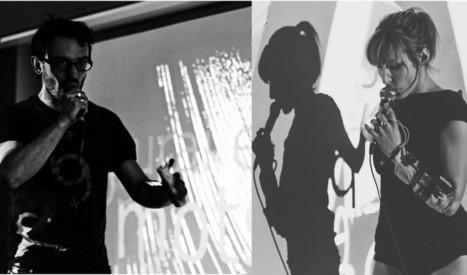
Un homme, une femme, des robots (et nous) Propos générés par Donatien Garnier
|
|
Scooped by
Jacques Urbanska
July 25, 2016 9:48 AM
|
When programmers at the MIT Instrumentation Laboratory set out to develop the flight software for the Apollo 11 space program in the mid-1960s, the necessary technology did not exist. They had to invent it. They came up with a new way to store computer programs, called “rope memory,” and created a special version of the assembly programming language. Assembly itself is obscure to many of today’s programmers—it’s very difficult to read, intended to be easily understood by computers, not humans. For the Apollo Guidance Computer (AGC), MIT programmers wrote thousands of lines of that esoteric code...
|
|
Scooped by
Jacques Urbanska
July 21, 2016 8:48 AM
|
Le pass, en association avec la fabrique de théâtre, cherche des projets d'artistes numériques pour la waouh zone...
En mars 2017, le Pass inaugure un nouvel espace d'exposition, la Waouh Zone, implanté au cœur de ses bâtiments historiques.
Cet espace, dédié aux cultures numériques, explorera les limites Arts/sciences/technologies en présentant une exposition de travaux artistiques réunis autour d'une thématique centrale, celle de la relation homme/machines. Pour mener à bien cette exposition, le Pass s'associe à la Fabrique de Théâtre et lance le présent appel à participation à destination des artistes numériques belges et européens dont les orientations artistiques et thématiques entrent en étroite ligne avec le projet.
Le choix des propositions se fera par l'intermédiaire d'un comité de sélection composé d'experts et constitué spécifiquement pour l'occasion. Date limite d'introduction des propositions : 05/09/2016 à 14h
Date de communication de l'avis de sélection : 23/09/2016
Le Pass, c'est un musée original qui invite à comprendre les sciences et les technologies en s’amusant.
|
|
Scooped by
Jacques Urbanska
July 18, 2016 3:46 PM
|
Où sont les femmes dans le numérique ? La question revient régulièrement dans certaines discussions-débats récents ouverts à des manifestations « tech » comme à Web2day ou récemment à Viva Technology dont les organisateurs avouaient rencontrer des difficultés à mobiliser des femmes. La Journée de la Femme Digitale souhaite quant à elle encourager plus de mixité dans des secteurs encore trop peu paritaires. En effet, dans le numérique le chemin à parcourir est encore long : la part des femmes dans les métiers du numérique n’est que de 28% en France (voir l’article [Débat] Les femmes prennent-elles enfin leur revanche dans le numérique?). Qu’en est-il dans l’art numérique ? Compositrices, artistes sonore, chorégraphes, plasticiennes, chercheuses, enseignantes en robotique en encore commissaires d’exposition ou directrices de festival, la gent féminine, bien qu'encore minoritaire, n'en est pas moins investie et se fait peu à peu sa place dans les festivals et expositions. Faute de pouvoir donner des statistiques précises, Digitalarti Media revient sur la création numérique en 8 artistes féminines s'appropriant les nouveaux enjeux des domaines de l'art & des technologies.
|
|
Scooped by
Jacques Urbanska
July 18, 2016 1:01 PM
|
How would the internet look like if all data were temporary and ephemeral?
An Internet unfolds a vision of such a future internet, with a radically new type of data: smoke.
An Internet converts the 280 internet undersea cable names into (binary) smoke signals.
The names are puffed into the glass network, causing it to fill up, to spill over by which it puffs the data out again. Together the smoke signals create a unique moment without any form of documentation.
|
|
Scooped by
Jacques Urbanska
July 18, 2016 12:49 PM
|
Plus aucun doute là-dessus : le son s’expose lui aussi.Depuis 30 ans Phonurgia Nova expérimente des formats et des dispositifs d’écoute donnant aux artistes sonores deslieux à leur (dé)mesure. Chambres d’écoute et Balcon d’écoute (au Musée Réattu), Grandes nuits avec Pierre Henry (au Théâtre antique), installation de Grandes oreilles dans la courde l’Archevêché, ou encore enfouissementde haut-parleurs dansles Cryptoportiques(avec la WDR Cologne). Cette année encore, nous investissons 4 nouveaux sites.
|