Your new post is loading...

|
Scooped by
Jacques Urbanska
February 14, 2013 8:46 AM
|
The aim of Kinetica Art Fair is to present works that exemplify universal concepts, heighten consciousness and advance human potential; it is through the performative and immediate nature of the works and the viewers creative engagement with them that a strong attunement to the concepts are activated. Many of the works are intuitive in the ways that they reach out to the viewer or the viewer will activate the work into being, a kind of living art where the viewer and art are creating an inter-change, or physical dialogue. The interconnection between art and science has been around for a long time, Kinetica is dedicated to the historical and contemporary importance of these themes and provides London with an international platform unlike anything realised before. Kinetica Art Fair brings together galleries, artist’s collectives, curatorial groups and organisations specialising in kinetic, electronic and new media art from around the world, collectively portraying an ‘Art of Universal knowledge’, where many disciplines are called upon in the creation of the work and its concepts.
|
|
Scooped by
Jacques Urbanska
February 14, 2013 8:39 AM
|
"The Dump, 207 Hypotheses for Committing Art" The whole Dump on paper, French and English version, now available on amazon.fr, augmented with PhD introductive text and jury reports by Anne-Marie Duguet, Derrick de Kerckhove, Hubertus von Amelunxen, Jean Da Silva and Louis Bec and an introduction by Timothy Murray. The Dump, 207 Hypotheses for Committing Art
|
|
Scooped by
Jacques Urbanska
February 14, 2013 8:24 AM
|
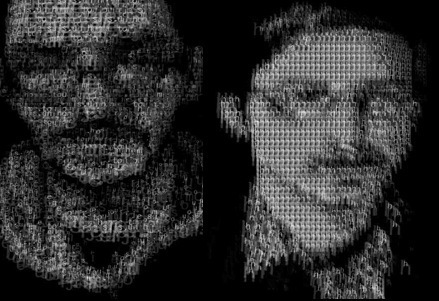
phAUTOmaton sera inauguré dans le cadre du festival Digital choc à l'Institut français de Tokyo @ 12H am heure de Paris // 19h heure de Tokyo. Les participants écriront un texte qui créera leur visage celui-ci étant en temps réel mis dans la galerie web, faisant ainsi une galerie de visages de la pensée.
suivez en temps réel cette création (la page web se recharge et fait défiler automatiquement la galerie).
|
|
Scooped by
Jacques Urbanska
February 10, 2013 5:24 PM
|
In From Technological to Virtual Art, respected historian of art and technology Frank Popper traces the development of immersive, interactive new media art from its historical antecedents through today's digital, multimedia, and networked art. Popper shows that contemporary virtual art is a further refinement of the technological art of the late twentieth century and also a departure from it. What is new about this new media art, he argues, is its humanization of technology, its emphasis on interactivity, its philosophical investigation of the real and the virtual, and its multisensory nature. He argues further that what distinguishes the artists who practice virtual art from traditional artists is their combined commitment to aesthetics and technology. Their "extra-artistic" goals—linked to their aesthetic intentions—concern not only science and society but also basic human needs and drives. Defining virtual art broadly as art that allows us, through an interface with technology, to immerse ourselves in the image and interact with it, Popper identifies an aesthetic-technological logic of creation that allows artistic expression through integration with technology. After describing artistic forerunners of virtual art from 1918 to 1983—including art that used light, movement, and electronics—Popper looks at contemporary new media forms and artists. He surveys works that are digital based but materialized, multimedia offline works, interactive digital installations, and multimedia online works (net art) by many artists, among them John Maeda, Jenny Holzer, Brenda Laurel, Agnes Hegedus, Stelarc, and Igor Stromajer. The biographical details included reinforce Popper's idea that technology is humanized by art. Virtual art, he argues, offers a new model for thinking about humanist values in a technological age.
|
|
Scooped by
Jacques Urbanska
February 10, 2013 5:06 PM
|
Gavin Baily, Tom Corby and Jonathan Mackenzie have been working together for over 10 years, through an art practice that explores the intersections of complex systems, technology and information.` Lleading artists and critics describe how artists have extended the Internet’s social and digital architectures, in order to formulate proposals for operating in the highly connected world in which we live. Contributors include:
0100101110101101.ORG
Mark Amerika
Tilman Baumgaertel
Josephine Bosma
Natalie Bookchin
Sarah Cook
Corby & Baily
Charlie Gere
Lisa Jevbratt
Lucy Kimbell
Thomson and Craighead with Kris Cohen
Maciej Wisniewski
The Yes Men
|
|
Scooped by
Jacques Urbanska
February 10, 2013 4:53 PM
|
Guertin begins to define the territory of her investigation as the "third space of authorship", borrowing a definition from Homi Bhabha's "Location of Culture". According to the author this is a site of resistance and renegotiation, in contrast to the first space of authorship as "oral culture", and the second space as "solitary genius" . This third space is also ultimately a site of creation, as the many creative works and actions illustrated in the text definitively prove. "Digital Prohibition" describes strategies artists have employed to challenge prohibition and the deliberate or mimicked use of piracy, framing these in appropriate contemporary economical and legal contexts. This is an inclusive text that connects media philosophers with radical changes to internet periodicals and plenty of related digital artworks. It defines three conceptual "zones" (Appropriation, Authorship and Digital Cannibalism/Anthropophagy) carefully mapping both their historical references and their most current manifestations. So beyond the expected sampling, remixing and mash-up practices, Guertin also considers strategies of interruption, disturbance, capture/leakage, archiving, vernacularity and digital anthropophagy (among the others) - with a specific last chapter about analogous works in China and Pakistan. Nicolas Bourriaud's definition of "art as a social interstice" suitably describes most of the art present here, with its distinctively disruptive, powerful and subtle qualities.
|
|
Scooped by
Jacques Urbanska
February 10, 2013 2:15 PM
|
A new way to connect stuff Chirp is an incredible new way to share your stuff – using sound. Chirp sings information from one iPhone to another. Share photos, webpages, contacts: all from your built-in speaker. Anything's possible: what will you chirp?
|
|
Scooped by
Jacques Urbanska
February 8, 2013 2:28 PM
|
The Cyborg Foundation is a nonprofit organization created in 2010 by cyborg activist Neil Harbisson and choreographer Moon Ribas. The foundation is an institution for the research, creation and promotion of projects related to extending and creating new senses and perceptions by applying technology to the human body.
|
|
Scooped by
Jacques Urbanska
February 8, 2013 12:04 PM
|
http://www.studioroosegaarde.net - Intimacy 2.0 features Studio Roosegaardeʼs new, high-tech wearable dresses composed of leather and smart e-foils which are daringly perfect to wear on the red carpet. The e-foils become transparent and opaque in response to the heartbeat of the model wearing the e-dress.
|
|
Scooped by
Jacques Urbanska
February 8, 2013 11:41 AM
|
The 7th international celebration of interactive media art will take place at PB43 and other venues in Copenhagen, Denmark. Media artists, visual artists, performers, musicians, composers and others working in digital media in its many forms will meet during the event which takes place in on re-new digital arts forum furthers interactive media art’s role and contribution to society by commissioning and gather artworks, prepare presentations of excellence that are aimed at a wider, non-expert audience that enhance dialogue and exchange between technologists, researchers, curators, artists, and audience. Held for the first time in 2007, the international event has over the years attracts media art practitioners and researchers from all over the world. Peter Tilg's Succubus; from re-new 2011 To reach its goal, re-new uses a multidimensional and co-located stage where the festival’s exhibition and interactive media performances are interwoven with academic presentations, demonstrations and workshops on novel techniques that combine the natural eco-systems of developers, researchers and artists. This is executed on novel platforms and presentation formats that have been designed to allow innovative and focused interchange to flow freely between technology, science and art. ...
|
|
Scooped by
Jacques Urbanska
February 8, 2013 10:35 AM
|
Ultra-lab n'est pas seulement un magasin en ligne: nous développons de nombreuses collaborations pour diffuser les technologies open source et la fabrication numérique.
On l'a déjà annoncé discrètement. Cela ne vient pas de rien. Marseille, ce n'est pas un hasard. Et là ça y est, c'est enfin public, on s'installe à Marseille.
De Madrid à Marseille. C'est notre trajectoire, c'est là que nous mènent nos passions, de Madrid à Marseille et vice-versa.
On commence pas à pas, Marseille n'est pas Madrid et même si on l'aime, et même si on brûle d'enthousiasme, il nous faudra un peu de temps. Mais on est là.
|
|
Scooped by
Jacques Urbanska
February 8, 2013 10:22 AM
|
Pour accélérer la numérisation de ses collections patrimoniales, la Bibliothèque nationale de France a noué des partenariats public-privé avec plusieurs firmes dans le cadre des Investissements d'avenir : ProQuest pour la numérisation des livres anciens, Believe et Memnon pour celle des fonds de 78 tours. Alors que ces accords ont soulevé une vague de protestations, Bruno Racine, le président de la BnF, défendait ces projets la semaine dernière dans les colonnes du Monde, en mettant en avant des arguments d'efficacité économique. Il avait reçu la veille le soutien du Ministère de la Culture, manifesté à l'occasion d'une réponse à la question parlementaire posée par le député Marcel Rogemont en octobre dernier.
...
|
|
Scooped by
Jacques Urbanska
February 6, 2013 8:32 AM
|
Thanks to a powerful yet precise laser, the lasercutter cuts and engraves quickly materials like wood, plexiglas, cardboard, … The lasercutter only works in 2D and can either follow vector paths (as you can draw in Illustrator, etc) or engrave black&white bitmap pictures.
This workshop is an introduction to the software driving the machine, the different file formats and conversions, and will explore softwares allowing to creating 3D objects by assembling cut parts.
Workshop leaded by François Chasseur.
|
|
|
Scooped by
Jacques Urbanska
February 14, 2013 8:41 AM
|
The open terrain of new media is closing fast. Market concentration, legal consolidation and tightening governmental control have effectively ended the myth of the free and open networks. In Delusive Spaces, Eric Kluitenberg takes a critical position that retains a utopian potential for emerging media cultures. The book investigates the archeology of media and machine, mapping the different methods and metaphors that speak about technology. Returning to the present, Kluitenberg discusses the cultural use of new media in an age of post-governmental politics. Delusive Spaces concludes with the impossibility of representation. Going beyond the obvious delusions of the 'new' and the 'free', Kluitenberg theorizes artistic practices and European cultural policies, demonstrating a provocative engagement with the utopian dimension of technology. Eric Kluitenberg is a Dutch media theorist, writer and organizer. Since the late 1980s, he has been involved in numerous international projects in the field of electronic art, media culture, and information politics. Kluitenberg heads the media program at De Balie, Centre for Culture and Politics in Amsterdam. He is the editor of the Book of Imaginary Media (NAi Publishers, 2006) and the theme issue Hybrid Space of Open, journal on art and the public domain (2007).
|
|
Scooped by
Jacques Urbanska
February 14, 2013 8:35 AM
|
Sound and Language Distribution is an online bookstore and distribution for printed matter and recordings, owned and operated by Alexis Bhagat, and based in New York City. Sound and Language Distribution began as the North American Distributor for Journal of Aesthetics and Protest Press and distributes work of friends and fellow travelers of the Journal--radical critics, activist artists, infernal drummers and clandestine clowns. And, Sound and Language Distribution has the good fortune of operating from the Wordship II-- "a cathedral of books!"--the home and art-literary factory of Richard Kostelanetz. We distribute items from the extensive back catalog of Archae Editions--i.e., Assembling Press, Future Press and works by Richard Kostelanetz. This includes Kostelanetz's classics Text-Sound-Texts and Scenarios, issues of Assembling, and chapbooks and posters by artist/poets including Peter Barnett, Raymond Federman and others. Sound and Language will be making periodic sales on cartons of Archae Editions inventory.
|
|
Scooped by
Jacques Urbanska
February 10, 2013 5:53 PM
|
RHUTHMOS a pour objectif de développer une analyse critique des rythmes qui organisent l’individuation singulière et collective.
Seule une analyse rythmique peut nous permettre de prendre la mesure du monde, à la fois fluide, fragmenté et lieu de puissances nouvelles, dans lequel nous venons d’entrer.
Seule une analyse rythmique peut nous permettre d’imaginer les nouvelles formes de subjectivation singulière et collective dont nous avons besoin.
|
|
Scooped by
Jacques Urbanska
February 10, 2013 5:20 PM
|
Background Noise follows the development of sound as an artistic medium and illustrates how sound is put to use within modes of composition, installation, and performance. While chronological in its structure, Brandon LaBelle's book is informed by spatial thinking - weaving architecture, environments, and the specifics of location into the work of sound, with the aim of formulating an expansive history and understanding of sound art.
At its center the book presupposes an intrinsic relation between sound and its location, galvanizing acoustics, sound phenomena, and the environmental with the tensions inherent in what LaBelle identifies as sound's relational dynamic. For the author, this is embedded within sound's tendency to become public expressed in its ability to travel distances, foster cultural expression, and define spaces while being radically flexible.
|
|
Scooped by
Jacques Urbanska
February 10, 2013 5:02 PM
|
Culture Machine is an international open-access journal of culture and theory, founded in 1999. Its aim is to be to cultural studies and cultural theory what 'fundamental research' is to the natural sciences: open-ended, non-goal orientated, exploratory and experimental. All contributions to the journal are peer-reviewed. The aim of Culture Machine is to seek out and promote the most provocative of new work, and analyses of that work, in culture and theory from a diverse range of international authors. Culture Machine is particularly concerned with promoting research which is engaged in the constitution of new areas of inquiry and the opening of new frontiers of cultural and theoretical activity. It is also committed to the generation of possibilities for new scholarship and research. Other than these founding aims (which are themselves, along with the very concepts of 'founding' and of 'aims', possible themes to be analysed), Culture Machine has no specific agenda, no project or programme - cultural, theoretical, political, social or ethical - it intends to see worked out in its various manifestations. Culture Machine is instead endeavouring be to cultural studies and cultural theory what 'fundamental research' is to the natural sciences: open ended, non-goal orientated, exploratory and experimental in approach. ...
|
|
Scooped by
Jacques Urbanska
February 10, 2013 2:19 PM
|
One web page for every book ever published. It's a lofty but achievable goal. To build Open Library, we need hundreds of millions of book records, a wiki interface, and lots of people who are willing to contribute their time and effort to building the site. To date, we have gathered over 20 million records from a variety of large catalogs as well as single contributions, with more on the way. Open Library is an open project: the software is open, the data are open, the documentation is open, and we welcome your contribution. Whether you fix a typo, add a book, or write a widget--it's all welcome. We have a small team of fantastic programmers who have accomplished a lot, but we can't do it alone! Open Library is a project of the non-profit Internet Archive, and has been funded in part by a grant from the California State Library and the Kahle/Austin Foundation.
|
|
Rescooped by
Jacques Urbanska
from confettis
February 10, 2013 7:09 AM
|
Un événement annuel dans la suite des Journées Arts-Sciences 2012... Les Journées Arts-Sciences du Printemps de la Culture 2012 de l'Université Paris Sud ont réuni étudiants scientifiques et artistes autour de projets surprenants et innovants: ateliers numériques, concerts expérimentaux et expositions interactives, conférences et débats sur les enjeux arts-sciences, la cuisine moléculaire ou les liens science et musique. Elles ont permis de découvrir un lieu historique, l’ancien Anneau de Collisions, qui a servi d’espace scénique pendant les 4 jours de la manifestation.
Via Xavier Leton
|
|
Scooped by
Jacques Urbanska
February 8, 2013 12:12 PM
|
The musical table installed 504 volumes on the top plate, and there are 504 musical box movements which play only a single sound in the point of the 5-m electric line extended from there. The motor revolving speed of the musical boxes are adjusted by the volume of the table, and the musical boxes play sound at random.
|
|
Scooped by
Jacques Urbanska
February 8, 2013 11:59 AM
|
Le pixel vient de la contraction anglaise des deux mots « picture » et « element », le pixel désignerait donc un élément de l’image. L’expression n’est cependant pas idoine car le pixel n’est pas un simple élément mais l’unité de base de toute construction d’image numérique : sans pixel, pas d’image possible ! Le pixel est à l’image ce que l’atome est au corps humain, l’élément le plus petit. Le pixel, dans notre société du numérique, a un telle importance qu’on lui prêterait presque une forme de vie : ne parle-t-on pas d’un pixel mort ou d’un pixel vif ? de pixels cachés? Le jeune étudiant en marketing, Alex Tew, a chiffré en 2005 la valeur du pixel avec sa Million Dollar Homepage. Il a en effet conçu une page d’1 million de pixels dont il vendait « l’occupation » à des annonceurs à raison d’1 $ par pixel. L’évolution technologique tend néanmoins à réduire la place occupée par un pixel dans notre champ visuel : la mémoire de nos ordinateurs, la résolution de nos écrans, permet désormais de multiplier leur nombre et de les camoufler parmi leurs congénères. ...
|
|
Scooped by
Jacques Urbanska
February 8, 2013 11:35 AM
|
The research of Quiet ensemble goes through the observation of the ballance between chaos and control, nature and technology, creating subjects that perfectly merges the those elements, elements that take form from the relation of organic and artificial subjects, moving the attention to insignificant and wonderful elements, like the movement of a fly or the sound of trees. The interest is connected to those technologies that explores the aesthetic and conceptual possibilities deriving from interactivity techniques, aproaching the newest technological discoveries as if they would be the tools for creation, like the brush for the painter. Working on the relation between time and space, sound and image the work of Quiet ensemble changes and develops in time, relating to the space, changing it. Emphasizing the unespected events, refuting the apparent immobility of shapes and melting the appearing opposition of forces in nature.
|
|
Scooped by
Jacques Urbanska
February 8, 2013 10:31 AM
|
The University of Denver Emergent Digital Practices program brings together art, design, media, culture, and technology studies in a hands-on, collaborative environment. The Emergent Digital Practices program brings together art, design, media, culture and technology studies in a hands-on, collaborative environment. Technology links academic disciplines with professional fields and joins shared communities with our personal lives in many new and exciting ways. To understand and explore this landscape, we infuse the digital practices of making and writing with contemporary critical approaches to cultural technologies, media philosophy, the critique and investigation of electronic and new media arts, and studies in science fiction, trans-global politics and science.
|
|
Scooped by
Jacques Urbanska
February 7, 2013 4:57 PM
|
La JSPH5 est organisée par la Commission Recherche du Pôle hainuyer. Elle sera animée par le Pr. Thierry DUTOIT, président de l’Institut NUMEDIART de l'UMONS. Pôle Hainuyer - Le plus large éventail d’études supérieures et universitaires en Hainaut du bachelier professionnalisant au doctorat
|