Your new post is loading...

|
Scooped by
Jacques Urbanska
December 14, 2013 4:01 AM
|
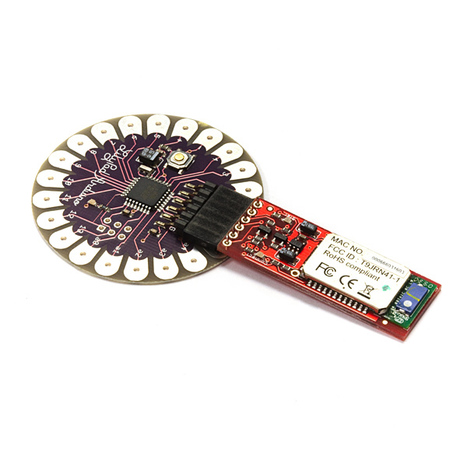
This is a collection of code samples for physical computing, on a variety of different platforms. More thorough introductions to the platforms involved can be found on my main physical computing site. The examples here assume you know the basics, and are ready to program and/or build. You’ll also find links to other code samples here as well. If you’re looking for an introduction to electronics or physical computing, check out the pages on electronics, microcontrollers, input & output, and others for my class notes on those subjects. You’l find links in the menu to your left. I’ll also post resources for building things and buying things here; in other words, things that used to be on my resources blog. If you don’t find what you’re looking for, you might also check my general blog which needs a name, where I put more recent links, topical links that are likely to be irrelevant in time, and things that don’t fit into the categories here.
|
|
Scooped by
Jacques Urbanska
December 14, 2013 3:50 AM
|
Great ideas and technology create ever-new opportunities to bring projects to life everywhere and anywhere imaginable. Along with this opportunity comes the inevitable trials and challenges of site specific work. One-off projects made for one-off locations can make you pull your hair out, and/or go broke in the process. The volume of variables, old and new, can be overwhelming: unpredictable environments, bleeding edge technology, custom fabrication, code, bugs, insects, greasy fingers, hackers, crashers, crashes, caches, spoilers, laws, landlords, curators, committees, workers, shippers, solder, electricity, sunlight, moonlight, fluorescent light, reflections, bad ideas, egos, feasibility, durability, production planning, scope, scale, budgets, and on, and on. What knowledge can be applied from previous experiences and what has to be learned on-the-fly, on a per project basis? Do you always have to start from square one?
INST-INT aims to arm you with insights, and expand your ability to prepare and execute projects in this exciting, but complex, sometimes harrowing, and ever-shifting field. We want INST-INT to help your next, or first, installation endeavor to be a success. ...
|
|
Scooped by
Jacques Urbanska
December 14, 2013 3:29 AM
|
Et si les secrets de la réussite des géants du Web, les Google, Facebook, Twitter ou autres Amazon trouvaient leur origine au XVIIIe siècle à Königsberg, en Allemagne ? A cette époque un mathématicien, Leonhard Euler, donna en effet naissance à une discipline devenue pilier de ces sites Internet : la théorie des graphes. Le problème d'Euler était de parcourir les quatre quartiers de sa ville sans emprunter deux fois l'un des sept ponts les reliant. Soit, sur un dessin, le fameux graphe, quatre sommets (ou noeuds) reliés par sept arêtes (ou liens). Les problèmes des vedettes du Web sont conceptuellement semblables, mais à une tout autre échelle : des milliards de "quartiers" (les pages Web, les profils, les clients...) et des milliards de "ponts" (les liens html, les "amis", les achats... reliant tout ce beau monde). La question est d'inventer les outils permettant de trouver la bonne information dans cette nuée, d'identifier des noeuds capitaux pour la bonne tenue de l'ensemble, de regrouper les gens par affinité, ou de recommander de nouveaux produits aux acheteurs. En outre, contrairement à Königsberg, cette "ville" possède des quartiers et des ponts qui bougent, naissent ou meurent...
|
|
Scooped by
Jacques Urbanska
December 11, 2013 11:08 AM
|
Et si Dragos Ruiu avait raison sur la communication d'un malware à travers les haut-parleurs et le micro des PC. Des chercheurs allemands ont fait la démonstration que même isolés de toute connexion réseau, les ordinateurs ne seraient plus à l'abri des attaques. Lorsque le chercheur en sécurité Dragos Ruiu a affirmé que le malware baptisé « Badbios » était capable de faire communiquer les machines infectées uniquement par des ondes sonores- donc sans connexion réseau - tout le monde prétendait qu'il était fou. Une récente recherche réalisée par le Fraunhofer-Institut für Kommunikation, Informationsverarbeitung und Ergonomie (FKIE), un laboratoire de recherche situé près de Bonn en Allemagne, vient au contraire de confirmer qu'il est parfaitement sain d'esprit. Comme l'écrivait le Journal of Communications et comme l'avait rapporté le premier ArsTechnica, le malware proof-of-concept mis au point par Michaël Hanspach et Michaël Goetz est capable de transmettre des informations entre ordinateurs en utilisant des ondes sonores à haute fréquence, inaudibles par l'oreille humaine. ...
|
|
Rescooped by
Jacques Urbanska
from UseNum - ArtsNumériques
December 11, 2013 10:37 AM
|
« Jeux vidéo et art numérique » est un accrochage innovant au musée Fabre. Ce musée des Beaux Arts de Montpellier Agglomération a choisi de faire entrer l'art numérique dans ses salles avec un accrochage inédit, du 19 novembre 2013 au 5 janvier 2014. Vingt-et-une œuvres, réalisées par sept sociétés ou indépendants implantés dans la région Languedoc-Roussillon, sont ainsi présentées afin de faire découvrir la vivacité de la création, et les différentes voies graphiques et imaginaires développées dans le domaine du jeu vidéo.
Via Suteau Alexandre
|
|
Scooped by
Jacques Urbanska
December 11, 2013 10:28 AM
|
The New Technological Art Award is an international art competition of the Liedts-Meesen Foundation, that focuses on the contribution of new technologies in the world of art. During the last few years, Zebrastraat Ghent has developed into a stimulating knowledge centre with a strong interest in art. Every two years, Update/ the New Technological Art Award (NTAA) tries to fill a gap in the mainstream art world by paying attention to the technological developments which impel our global culture.
NTAA selects and presents creations in which culture-forming technology plays a central role. Whether low or high tech, or intuitive or experimental, these creations always make us attentive to the innovative trends of our times. The exhibition of achievements of the selected winners is a compass that orients you to the relevant and innovative use of technology in the artistic sector.
A new section consists of the selection, by specialists from various sectors, of key works from the art world, from scientific discoveries or from innovative breakthroughs that have significantly changed our living and thinking habits. These objects or concepts form the basis for a separate presentation and perception, while interacting with the works of the winners of the NTAA.
|
|
Rescooped by
Jacques Urbanska
from Robots
December 11, 2013 10:23 AM
|
Google continue à vouloir se diversifier en investissant cette fois-ci dans le domaine de la robotique. Ce projet encore discret, risque de rapidement venir faire de l'ombre à certains acteurs déjà fortement impliqués dans ce marché futuriste.
Via Gauthier Bouly
|
|
Scooped by
Jacques Urbanska
December 11, 2013 10:18 AM
|
Articulate figurine frame featuring many AR code points can alter poses of virtual models, put together by Alcyone ...
|
|
Scooped by
Jacques Urbanska
December 11, 2013 8:34 AM
|
The Sahel area has recently been thrown into political turmoil with an ongoing rebellion in Northern Mali and the creation of an independent nation known as "Azawad" in june 2012. Over the last years, the introduction of digital tools of creation have resulted in an abundance of graphic ephemera circulating via Facebook, Cyber Cafes, and cellphones. ...
La région du Sahel connait depuis peu des bouleversements politiques causés par la rébellion qui sévit actuellement au nord du Mali et par la création en juin 2012 d'une nation indépendante connue sous le nom d’"Azawad".
Depuis quelques années, l'introduction d'outils de création numérique bon marché y a engendré une déferlante d'images graphiques éphémères circulant via Facebook, les cyber-cafés et les puces des téléphones portables. ....
|
|
Scooped by
Jacques Urbanska
December 8, 2013 3:13 PM
|
I could have titled the post "Gift ideas for Christmas" but to be honest, these books are not christmassy in the traditional sense of the word. Neither is my blog, for that matter. The truth is that this is a list of books i've enjoyed but never found the time to review as they deserved. I always meant to but here we are in mid-December and the "to review ASAP" pile of books is reaching skyscraping dimensions on my table. So here's a few publications that shouldn't be off your radar:
Bulletproof Skin. Exploring Boundaries by Piercing Borders, by Jalila Essaïdi, was the very good surprise of the year. Its starting point is the famous project 2.6g 329m/s, aka the 'bulletproof skin' developed with the help of the Designers & Artists 4 Genomics Award. The publication is described as A stunning hardcover book with a special cover and paper that feels soft like skin/silk, counting 160 pages that visually explore the process of creating bulletproof skin. Which is true but doesn't do the book justice. What Bulletproof Skin. ...
|
|
Scooped by
Jacques Urbanska
December 8, 2013 12:25 PM
|
4d space: interactive architecture
|
|
Scooped by
Jacques Urbanska
December 8, 2013 12:17 PM
|
Il peut être difficile d’imaginer qu’il y a près de 240 ans, un homme a inventé un automate hyper complexe capable d’écrire à la demande… Et pourtant c’est bel et bien le cas : DGS vous présente l’Ecrivain, un petit garçon automate qui écrit ce que vous voulez.
L’Ecrivain est un automate créé par l’horloger suisse Pierre Jaquet-Droz. De nos jours, il existe des centaines d’automates aux allures et aux actions différentes. Mais ce que l’Ecrivain a de particulier est qu’il a été créé il y a 240 ans, au XVIIIème siècle ! Cet horloger suisse a d’ailleurs conçu plusieurs autres automates spectaculaires, mais c’est celui-ci qui est le plus remarquable.
|
|
Scooped by
Jacques Urbanska
December 8, 2013 11:58 AM
|
Have you ever faked a restroom trip to check your email? Slept with your laptop? Or become so overwhelmed that you just unplugged from it all? After a Sundance world premiere, a theatrical release, 14 awards including a Disruptive Innovation Award from Tribeca Film Festival, and travelling the world with the U.S. State Department’s 2012 American Film Showcase and more – Connected is now available on just about every platform imaginable.
|
|
|
Scooped by
Jacques Urbanska
December 14, 2013 3:55 AM
|
[namethemachine] was commissioned by Bassnectar to develop the Ultimate Nerd Server: a system to run video content in sync with his improvised Ableton performance. [namethemachine] principals Matt Davis and Peter Sistrom reached out to me to help them design some of the underlying data structures for creating cues, build a cue editor, and make realtime visuals and effects. The result is that holy grail of AV performance: the performer can improvise—tempo-warping, jumping around the tracks, live editing the set—and the video stays in perfect sync.
|
|
Scooped by
Jacques Urbanska
December 14, 2013 3:44 AM
|
Neurotic Armageddon Indicator (NAI) is an installation artwork which visualises the ‘Doomsday Clock’, a symbolic clock maintained by an academic journal, ‘The Bulletin of Atomic Scientists’. The Doomsday Clock represents the proximity to armageddon expressed as minutes to midnight where midnight represents nuclear holocaust. The clock is ‘set’ by a panel of scientists and experts at long intervals, usually years apart. The artwork is in two pieces. One is a small computer programme running on a server which ‘scrapes’ the content of the bulletins home page as often as possible. The software checks the current status of the clock and then sends the results over the internet to the second part of the work, a small wall clock which displays the time of the Doomsday Clock on a red LED clock display. This process repeats as fast possible so that the device shows in near-real-time the status of the doomsday clock. At the time of writing, it is currently five minutes to midnight. tomschofieldart.com/Neurotic-Armageddon-Indicator
|
|
Scooped by
Jacques Urbanska
December 12, 2013 10:31 AM
|
Passerelle entre la cité et le monde scientifique imaginée en 1994 par Pierre-Gilles de Gennes, l’Espace des sciences, rebaptisé Espace des sciences Pierre-Gilles-de-Gennes (ESPGG) en juin 2007, est l’espace grand-public de l’ESPCI ParisTech. Entre espace d’animation grand public et laboratoire d’innovation pour la médiation scientifique, il se situe à l’interface entre science, culture, art et société. Il constitue un lieu ouvert pour favoriser les échanges, les rencontres et les réflexions communes entre chercheurs, enseignants, journalistes, artistes, narrateurs, curieux des sciences et des cultures. Les objectifs de l’Espace des sciences Pierre-Gilles de Gennes consistent essentiellement en la valorisation du patrimoine historique et des recherches menées à l’ESPCI ParisTech, ainsi qu’en leur mise en perspective du point de vue des relations science-technologie-société. ...
|
|
Scooped by
Jacques Urbanska
December 11, 2013 10:55 AM
|
Reality Mediators is created as part of an ongoing research on the effect of Mediated Reality on user and user’s interaction with the built environment. Set of reactive technological devices are 3D printed and produced for a series of experiments investigating the effect of Mediated Reality on user experience through extended period of wearing the prosthetics.
|
|
Rescooped by
Jacques Urbanska
from music innovation
December 11, 2013 10:32 AM
|
This weekend, Music Hack Day returned to the city where it all began. On Saturday morning, nearly 200 hackers arrived with the hottest hackathon tickets at the Shoreditch Works Village Hall, in Hoxton Square to spend the weekend exercising their passion for music and technology. After 24 hours of hacking, over 50 hacks were built – hacks that let you explore, discover, arrange, create and play with music.
Via Simon Decreuze
|
|
Rescooped by
Jacques Urbanska
from The Digicult Daily
December 11, 2013 10:25 AM
|
Ludovica Amoroso talked with Daniele Spanò, curator with Monique Veaute of the Digital Life 2013 exhibition in Rome by Romaeuropa. The show which gave life to the rooms of MACRO Testaccio - La Pelanda and MAXXI - MUSEO NAZIONALE DELLE ARTI DEL XXI SECOLO in Rome has just closed the last 1st of December. It's time now for a review of the big show which included artworks by Carlos Franklin e Roque Rivas Ryoichi Kurokawa Laurent Mareschal, Michale Boganim Mattia Casalegno Robin Rimbaud Zhenchen Liu, Devis Venturelli Roberto Pugliese Donato Piccolo Mihai Grecu Paul Thorel and Quiet Ensemble among others...many thanks to Claudia Cottrer
Via Marco Mancuso
|
|
Scooped by
Jacques Urbanska
December 11, 2013 10:21 AM
|
D’une durée de 2 à 3 mois, le nouveau programme de résidences américaines lancé pour 2014 est fondé sur un partenariat avec une structure locale – centre d’art, galerie, musée, etc. – que l’artiste sollicite pour élaborer, avec elle, un projet. Le partenaire américain peut ainsi accompagner le plasticien et faciliter des rencontres professionnelles fructueuses.
|
|
Scooped by
Jacques Urbanska
December 11, 2013 10:10 AM
|
A ten-dimensional theory of gravity makes the same predictions as standard quantum physics in fewer dimensions. A team of physicists has provided some of the clearest evidence yet that our Universe could be just one big projection. In 1997, theoretical physicist Juan Maldacena proposed1 that an audacious model of the Universe in which gravity arises from infinitesimally thin, vibrating strings could be reinterpreted in terms of well-established physics. The mathematically intricate world of strings, which exist in nine dimensions of space plus one of time, would be merely a hologram: the real action would play out in a simpler, flatter cosmos where there is no gravity. ...
|
|
Scooped by
Jacques Urbanska
December 10, 2013 4:04 AM
|
LeWeb is the most talked-about international conference for startups and web entrepreneurs. Looking to kickstart your business, attract the global media or discover the next Big Idea? In just three days, you might meet the most valuable contacts of the year.
In honor of the 10th anniversary of LeWeb Paris, we invite you to fast forward to the future and imagine “The Next 10 Years”. Gathering today’s brightest technological innovators and visionaries, this universal theme will explore several market segments (mobile, hardware, social, etc.) and their potential trajectory, as well as technology as a whole, and what the next 10 years might hold.
|
|
Scooped by
Jacques Urbanska
December 8, 2013 1:03 PM
|
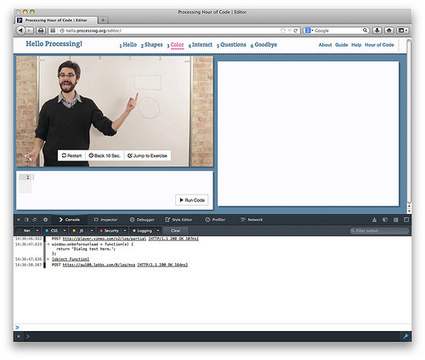
One of the topics my daughters and two of their friends asked me to do this year in our home school is programming. They call it Code Club, and we have been learning HTML, JavaScript, CSS together. We’ve been using Thimble to make things like this visualization of Castles around the world. It’s been a lot of fun. This past week I introduced them to the Processing programming language usingthis great new interactive tutorial. It was made for Computer Science Education Week and the Hour of Code, in which many organizations (including Mozilla Webmaker, who is also participating) have put together tutorials and learning materials for new programmers. ...
|
|
Scooped by
Jacques Urbanska
December 8, 2013 12:22 PM
|
This issue of AD introduces a new approach to architectural practice based on the interrelationship of emergence and self-organisation concepts. A sequence to the successful Emergence: Morphogenetic Design Strategies title by the same guest-editors, it advances on the previous publication by taking on board the latest developments for fully integrated design evolution, manufacturing and construction.
Emergence requires the recognition of architectural structures not as singular and fixed bodies, but as complex energy and material systems that have a lifespan, exist as part of the environment of other active systems, and as an iteration of a series that proceeds by evolutionary development. Thus the focal point of this issue will be the exploration of techniques and technologies that enable the implementation of such morphogenetic strategies, requiring a new set of intellectual and practical skills. Though the publication stands alone as an investigation and presentation of cutting-edge techniques and technologies within the design and construction field supported by examples from adjacent industries, it also introduces a new springboard for understanding and rethinking the radical changes in which architecture is now being conceived, designed and produced. While representing a timely exploration of the embedding of techniques and technology in an alternative design approach, it also presents wholly new strategies for tackling issues of sustainability.
|
|
Scooped by
Jacques Urbanska
December 8, 2013 12:04 PM
|
Zach Gage is a contemporary artist, programmer, and game designer from New York. His art explores the aspect of communication in new media and how it shapes the modern society and culture. Gage is the author of such games and applications as Spell Tower, Halycon, Sonic Wire Sculptor, Bit Pilot, Unify, SynthPond and the co-author of the new and highly acclaimed Ridiculous Fishing. Recently he also designed a classical board game Guts of Glory, which you can view on its official Kickstarter backing page. ...
|