Media Arts Watch Lab - www.arts-numeriques.info - laboratoire de veille Arts Numériques - twitter @arts_numeriques - @processing_org - @DigitalArt_be - by @jacquesurbanska @_Transcultures
Claudia Maté is a spanish web developer working on a large area of online based projects. As she tells us; "I like to experiment with different structures and languages, I have recently started to spend much time learning 3D softwares. I want to find the perfect fusion between the web world and 3 dimensions." Claudia has designed some cool tumblr themes, and created interesting interactive websites using HTML5
"I researched the Apollo Program as well as NASA’s Mission Control Center and designed my own console roughly based on those," Highsmith wrote. "I say 'roughly' because the actual Mission Control does more monitoring than controlling, and isn’t awash in the whiz-bang rocket noises young kids appreciate. I took great liberties and made more of a 'space-themed' play console than an accurate simulator. My goal was simply to provide some extra ideas and sound effects for my two sons to play 'space' together."
Un défi international de fabrication numérique autour de la donnée, des objets connecté et de la relation : rendre tangible la donnée par l'objet, le volume et l'interaction...
artplayer is a video platform aimed at showcasing the best video content from the UK arts industry. As well as a website, artplayer offers mobile access and apps, exclusive editorial content, access to major UK arts organisations and a range of video services, including production and training.
Funded by Arts Council England, artplayer is aimed at promoting the UK arts industry as a whole and being a central place from where industry content can be distributed across a range of channels. The platform has also been developed in partnership with FACT (Foundation for Art and Creative Technology), Error Creative Studio and Apposing.
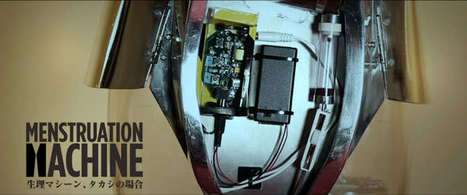
Quand il s’agit de combattre les stéréotypes de genre, cette jeune femme de 28 ans sort l’artillerie créative : pour sa vidéo intitulée « Menstruation Machine », elle a consulté des biologistes, afin de fabriquer une machine scientifiquement étayée qui reproduise exactement les sensations que provoquent les menstruations. Les douleurs au ventre sont assurées par des électrodes et un réservoir laisse s’écouler des gouttes de sang à intervalles réguliers.
Dans sa lettre ouverte au patron de Google datée du 16 avril, Döpfner, le patron d'Axel Springer (éditeur, entre autres de Bild et de Die Welt) salue les remarquables résultats de Google dans tous les domaines, du moteur de recherche à YouTube en passant par le système Androïd qui équipe de nombreux mobiles etc.. Et souligne sa faiblesse face au géant : "Avec quatorze milliards de dollars, le bénéfice annuel de Google est environ vingt fois plus grand que celui d'Axel Springer."
"Lorsque Google a changé son algorithme, l'une de nos filiales a perdu 70% de son trafic en quelques jours. Le fait que cette filiale est un concurrent de Google est certainement une coïncidence", ajoute Döpfner sans donner le nom de cette filiale, ni situer la date de cet événement. ...
A l'heure de l'impression 3D, la communauté scientifique se passionne pour un matériau en 2D au potentiel exceptionnel: le graphène.
Formant le seul film connu capable d’être plié autant de fois que nécessaire sans casser, une feuille de graphène est un million de fois plus fine qu’un cheveu, 200 fois plus résistante à la rupture que l’acier (sa force de traction dépasse les 130 gigapascals), plus conductrice que le cuivre, parfaitement transparente et totalement flexible. Le graphène est de plus imperméable à tous les gaz. D’ordinaire, un nouveau matériau met plusieurs décennies pour être intégré dans les produits de grande consommation. Celui-là, de l’avis même de ses découvreurs de Manchester, pourrait révolutionner un jour l’électronique, l’énergie, l’aérospatiale et les biotechnologies. D’ores et déjà il est utilisé dans les cellules photovoltaïques, les batteries des véhicules électriques, ou les processeurs des centres de calcul...
CAPTCHA Tweet* is an application which users can post tweets in a CAPTCHA form with. Since computers can hardly read it, humans can communicate behind their sight.
CAPTCHA has originally been developed to distinguish computers from humans. It asks the user to type text from a distorted image. This is easy for a human but difficult for a computer. It sorts out computers by requiring them to complete a task which only humans can. CAPTCHA Tweet uses it as cryptography for secret communication between humans based on the fact that it is not legible to computers’ eyes.
This work is an extension of our exploration of computer vision. We see CAPTCHA as a symbol of the relationship between human vision and computer vision and the intervention of computers in human life. CAPTCHA Tweet attempts to re-present this implication of CAPTCHA to the public sphere by applying it to the social network communication.
The On Line Festival for Digital Arts on its 10th edition comes under the aegis of collaborative networking, intending to exploit the potential of the internet in the dissemination of digital art by online presentations, screenings and video installations in alternative spaces, streaming performances, workshops, residencies , etc.
In this sense, the 2014 program will consist in activities proposed by network partners, both in Portugal and abroad, activities that may be proposed either by the direction of FONLAD as the festivals / partners.
The Festival program have been in constantly change, adapting to the partners with which it has maintained its relationship towards a closer approximation to the artistic community and the general public . The program is primarily divided into two major blocks: the block of artistic experimentation - with artistic residences, workshops, lectures and exhibitions in schools, and the promotion of artist works by the presentation of video art shows, installations in unconventional spaces, exhibitions, conferences, etc., to a growing and more diverse audience.
Yesterday we spoke about MediaLab-Prado‘s plight in the face of its threatened enclosure. Today we’re republishing an Open Letter pleading for help, penned by José Luís De Vicente, director of the Visualizar Program for Data Culture and part of MediaLab’s defense collective. Along with the letter, there’s a video from a year ago featuring international figures showing support for the lab.
“There’s no one better than you to help us to make them understand how important is protecting and preserving the valuable role that Medialab Prado has played in the last ten years. For this, we are requesting any of this three things:
1. A statement or blog post in your own website explaining why you appreciate and value the role of MLP and showing your concern for how the current situation could threaten it. We will link to it and translate it from the website of support we are currently setting up, that should go live in the next hours.
2. For those of you with affiliations with universities, museums or companies, a signed letter of support with the logo of your organization. If you can send it to me I will get it into the website and also printed to send them all together to the City Council.
3. A short video that we can embed in the website, offering your support.”
Let’s face it… you want an excuse to build something cool. In addition to the notoriety of winning a Hackaday contest, we have a number of very respectable prizes this time around. All you need to do is assemble a team and build something awesome inspired by your favorite Sci-Fi. It must include some type of electronics but the rest is up to your imagination and hacking skills. We’ll be judging on quality of the idea, the build, how well you shared the details along the way, how useful the project is for future hacks (open hardware/open source!), and how well you worked as a team. Pluse you don’t even need to win in order to get something. Everyone who submits an entry which we deem to be “complete” will get a T-shirt.
Need some examples to get rolling on this one?
Star Trek themed doors – single and double door versions
Sosolimited is an art and technology studio founded in 2003 by Justin Manor, John Rothenberg, and Eric Gunther. The three met at MIT where they collectively studied physics, computer science, architecture, arts and music. They are joined by Lauren McCarthy, Sam Kronick, and Wade Aaron. Today their practice operates at the boundary of art, design, experience and information.
Sosolimited creates interactive installations, applications, and live performances. These projects incorporate elements of dynamic typography, video manipulation, computer vision, sensor technologies and sound design.
Even in today’s rapidly evolving world of technology, there are few things that make your jaw drop when you see them in real life. Honda’s ASIMO is one of those things.
When you witness this bipedal humanoid robot hopping in a circle on one foot, taking a few steps back to line up a kick to a soccer ball, or transitioning smoothly from a walk to a slow jog, you have to remind yourself that you’re not looking at a person in a robot suit or some sort of computer-generated special effect. This is an autonomous mechanical being, capable of walking around on two legs and making its own decisions based on input from its sensors. Its name, an acronym that stands for “Advanced Step In Innovative Mobility,” appropriately evokes Isaac Asimov. ...
In 2007, Google initiated the Google Maps project by sending out an army of hybrid electric cars supplied with the latest image capturing devices; the 9 eyes. This camera, mounted to a pole on the top of the car, creates a picture every 10 to 20 meters. A computer software then stitches the 9 photos together and creates 360º horizontal and 290º vertical panoramic views.
Rafman's role in his 9 Eyes project is as much an artist, as being a curator. Not only browsing through millions of images created by a generic and automated process, but establishing cultural and historical context to this process. Curating the images into an endless amount of categories: gritty urban life reminiscent of hard-boiled American street photography, postcard perfect shots, old family snapshots, landscape photography and so on.
Rafman belongs to a new breed of artists that fully embraces the endless possibilities of the internet. A breed so new that they have not yet been defined by a single term: Rafman refers to his work as the work of an 'internet aware artist'. Breaking the boundaries of traditional art, and its presentation, these artists are constantly experimenting. The 9 Eyes project touches the concepts and philosophy of past Dadaist artists, anarchist in nature. However, instead of exposing and ridiculing contemporary culture, Jon Rafman uses it as vehicle to express his vision.
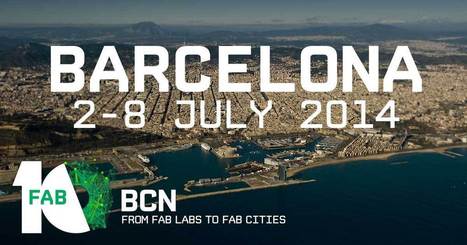
FAB10 Barcelona is the tenth international conference and annual meeting of the Fab Lab network. FAB10 Barcelona will gather the international Fab Lab community from more than 150 laboratories based in more than 40 countries, who share tools, projects, programs and processes in an open and collaborative philosophy.
This vibrantly illustrated introduction to the emerging field of the preservation and presentation of media art brings together the contributions of authors from all over Europe and the United States.
This volume can serve as a textbook for students in advanced degree programs in media art and museum studies, as well as an invaluable introduction for general readers. A potent combination of incisive scholarly articles and focused case studies,Preserving and Exhibiting Media Art offers a comprehensive overview of the history, theory, and practical skills of preserving media art.
Software has replaced a diverse array of physical, mechanical, and electronic technologies used before 21st century to create, store, distribute and interact with cultural artifacts. It has become our interface to the world, to others, to our memory and our imagination - a universal language through which the world speaks, and a universal engine on which the world runs. What electricity and combustion engine were to the early 20th century, software is to the early 21st century. Offering the the first theoretical and historical account of software for media authoring and its effects on the practice and the very concept of 'media,' the author of The Language of New Media (2001) develops his own theory for this rapidly-growing, always-changing field.
Rapprocher les sciences et les arts, permettre à des créateurs et à des scientifiques de travailler et d’inventer ensemble, explorer les territoires communs de la recherche et la création : telle est l’ambition de la formation doctorale Sciences, Arts, Création, Recherche (SACRe).
Rubens' Tube is an awesome demo and here we take it to the next level with a two-dimensional 'Pyro Board'. This shows unique standing wave patters of sound in the box.
The pressure variations due to the sound waves affect the flow rate of flammable gas from the holes in the Pyro Board and therefore affect the height and colour of flames. This is interesting for visualizing standing wave patterns and simply awesome to watch when put to music. Thank you to Sune Nielsen and everyone at Aarhus for sharing this demonstration with me! And thanks for having me at your conference.
When light passes between areas of different air density, it bends. You've probably noticed the way distant pavement seems to shimmer on a hot day, or the way stars appear to twinkle. You're seeing light that has been distorted as it passes through varying air densities, which are in turn created by varying temperatures and pressures.
In the mid-19th century, German physicist invented a photography technique called Schlieren Flow Visualization to visually capture these changes in density.
L’Atelier des médias reçoit cette semaine le géographe Boris Beaude pour parler de son livre intitulé Les fins d'Internet. Un ouvrage qui s’ouvre sur cette phrase courte et inquiétante : « Internet a à peine plus de trente ans et il est sur le point de disparaître. »
Longtemps l’univers de ceux qui parlent d‘Internet et des nouvelles technologies était divisé entre deux camps très distincts. D’un côté les technophiles, fascinés par les possibles qu’offrent la mise en réseau des individus, l’horizontalité et la décentralisation des organisations. De l’autre, les technosceptiques, raillant un nouvel univers sans règles, reposant sur une utopie destructrice d’équilibres et de consensus vitaux. ...
To get content containing either thought or leadership enter:
To get content containing both thought and leadership enter:
To get content containing the expression thought leadership enter:
You can enter several keywords and you can refine them whenever you want. Our suggestion engine uses more signals but entering a few keywords here will rapidly give you great content to curate.


 Your new post is loading...