Media Arts Watch Lab - www.arts-numeriques.info - laboratoire de veille Arts Numériques - twitter @arts_numeriques - @processing_org - @DigitalArt_be - by @jacquesurbanska @_Transcultures
A cyberspace Renaissance man reveals his current thoughts on the World Wide Web, virtual reality, and other silicon dreams
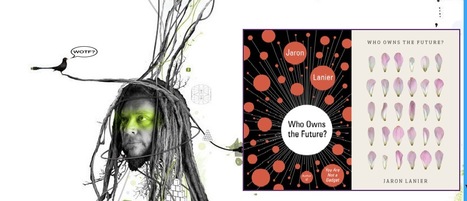
Jaron Lanier is probably best known as a pioneer of Virtual Reality technology but is probably best described as a modern Renaissance man--an eclectic mix of computer programmer, inventor, musician, artist and futurist. He divides his time between California and New York (where he has positions as a visiting scholar at Columbia University and as a visiting artist at New York University), but he can always be found in cyberspace.
Scientific American editor Corey S. Powell caught up with Jaron Lanier in the summer of 1996, to hear some of his current thoughts on the World Wide Web, synthetic worlds and other silicon dreams. ....
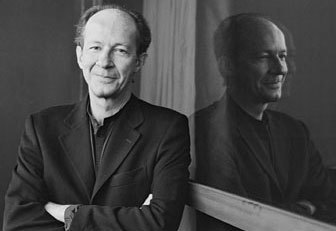
Le miracle inter-linguistique du web public — tant qu’il dure — c’est de savoir lire sinon en allemand du moins en anglais l’entretien de Giorgio Agamben avec Dirk Schümer, lequel l’a traduit de l’italien sous le titre Die endlose Krise ist ein Machtinstrument [1] pour le journal de Francfort Frankfurter Allgemeine Zeitung (FAZ) du 27 mai 2013, à son tour traduit de l’allemand sous le titre The Endless Crisis as an Instrument of Power : In conversation with Giorgio Agamben [2] pour le site des éditions Verso le 4 juin 2013, afin de pouvoir enfin le traduire en français sous le titre Conversation avec Giorgio Agamben : La crise sans fin comme instrument de pouvoir dans La RdR le 9 juin. Juste retour des choses, s’agissant d’une réponse sur la polémique installée par l’article du 24 mars dans Libération, Que l’empire latin contre-attaque ! [3], non moins traduit de l’italien par Martin Rueff. Retour aux sources de la langue éclatée d’une affaire euro-critique en culture dont ici l’auteur s’explique...
Le mot "crise" exprime deux racines sémantiques : l’un médical, référant au cours d’une maladie, et l’autre théologique, du Jugement Dernier. Les deux significations, cependant, ont subi une transformation aujourd’hui, qui a enlevé leur rapport au temps.
Aujourd’hui, la crise est devenue un instrument de domination. Elle sert à légitimer les décisions politiques et économiques qui en fait dépossèdent les citoyens et les prive de toute possibilité de décision.
Roger Malina is a physicist and astronomer, Executive Editor of Leonardo Publications (The M.I.T. Press), and Distinguished Chair of Arts and Technology at the University of Texas at Dallas. Dr. Malina helped found IMéRA (Institut méditerranéen de recherches avancées), a Marseille-based institution nurturing collaboration between the arts and sciences.
Mariateresa Sartori and Bryan Connell are two artists recently based at IMéRA. Their work connects with human movement through the city, and addresses the intersection between technology and perception. Recent work by Venice-based Mariateresa Sartori has encompassed drawing and video. Bryan Connell, Exhibit/Project Developer at San Francisco’s Exploratorium, works especially with landscape observation devices and mapping.
Lawrence Bird interviewed Roger Malina, Mariateresa Sartori, and Bryan Connell about the intersection of their work with the city. Images above courtesy: Roger Malina, Rita Gambardella, Bryan Connell.
A few posts back, I shared with you my interview with art historian Amy F. Ogata, author of Designing the Creative Child: Playthings and Places in Midcentury America. Ogata was nice enough to discuss with me her thoughts on the ways contemporary ideas about the digital child might have been informed by the thinking of the postwar era. Today, I want to push us to think even further about the nature of childhood and parenting in the digital age. My interviewee is Lynn Scofield Clark, author of the 2013 book, The Parent App: Understanding Families in the Digital Age.
The Parent App builds upon a rich tradition of work on the intersection of media and the family, going back to early work in this space by writers such as James Lull, Roger Silverstone, and Ellen Seiter, as well as more recent work by scholars such as Sonia Livingstone in the UK or the Digital Youth Project in the United States. Clark is clearly familiar with this literature, but she also pushes well beyond it — not simply because of her central focus on digital and mobile technologies, but also because she is so attentive to the shifting conditions — economic, social, technological — which impact the lives of American families today. There is an admirable balance here between the broad view — an account of significant shifts in the relations between work and family — and a more focused attention to the specific narratives of the individual families she describes. ...
"A few posts back, I shared with you my interview with art historian Amy F. Ogata, author of Designing the Creative Child: Playthings and Places in Midcentury America. Ogata was nice enough to discuss with me her thoughts on the ways contemporary ideas about the digital child might have been informed by the thinking of the postwar era. Today, I want to push us to think even further about the nature of childhood and parenting in the digital age. My interviewee is Lynn Scofield Clark, author of the 2013 book, The Parent App: Understanding Families in the Digital Age.
The Parent App builds upon a rich tradition of work on the intersection of media and the family, going back to early work in this space by writers such as James Lull, Roger Silverstone, and Ellen Seiter, as well as more recent work by scholars such as Sonia Livingstone in the UK or the Digital Youth Project in the United States. Clark is clearly familiar with this literature, but she also pushes well beyond it — not simply because of her central focus on digital and mobile technologies, but also because she is so attentive to the shifting conditions — economic, social, technological — which impact the lives of American families today. There is an admirable balance here between the broad view — an account of significant shifts in the relations between work and family — and a more focused attention to the specific narratives of the individual families she describes."...
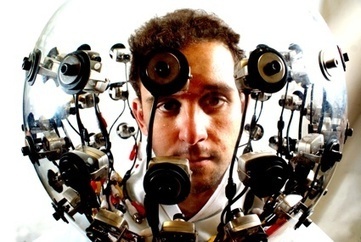
A short interview with Tamas Navarro about his installation True Hologram. Navarro is presenting his work at V2_'s Test_Lab: The Graduation Edition 2012, July 5th : v2.nl/events/test_lab-the-graduation-edition-2012 and at the Piet Zwart graduation show Exception Handling, also at V2_ from July 6 to July 15: v2.nl/events/exception-handling
About the installation: True Hologram is a lens-based and self-invented device that projects a photorealistic volume in a column of cold mist. The device gathers DIY methodologies, smart/affordable approaches to 3d imaginery and re-adapted technology in order to achieve a 3D display using light, lenses and photographic transparencies. True Hologram is an artistic and intuitive advance of futuristic cinematic outcomes. The research has been executed as an artistic, intuitive investigation about futuristic screening devices, working exclusively with self-invented methodologies.
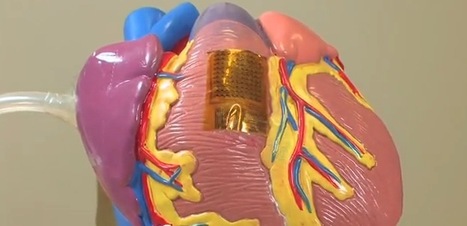
John Rogers is a materials scientist noted for his contributions to applied physics, particularly his leadership in developing flexible electronic devices. In contrast to traditional solid-state electronics, where components are fabricated on semiconductor wafers, researchers have recently discovered that a host of organic (i.e., carbon-based) molecules can also act as semiconductors. In an early line of research, Rogers used microlithographic stamping technology to design high-density, complex circuits that could be fabricated on a flexible substrate similar to paper.
He has raised the performance of such circuits substantially, to the point that they are finding their way into devices with modest speed requirements, such as commercial display technologies. Nevertheless, the capacity of known organic semiconductors to perform high-speed computations remains limited. To address this, Rogers has also devoted significant effort to developing flexible semiconducting films, based on silicon or carbon nanotubes, literally to stretch the boundaries of signal processing capacity on flexible substrates. Such devices can be placed in locations where standard silicon wafer technologies are impractical or impossible; the myriad of potential applications include photovoltaic cells, adaptive optics, electronic textiles, and implantable biomimetic circuits.
Through his basic research in nanotechnology, chemical engineering, and applied physics, Rogers is building the foundation for a revolution in manufacture of industrial, consumer, and biocompatible electronics.
Kasia Molga is a media artist whose practice is concerned with changes in our perception and relationship with the planet in the increasingly technologically mediated world.
She deals with real time environment (and not only) data visualisation - where the data becomes a pretext, motor and platform behind the work. She look at the various aspects of real time data manifestation and representation, so that first of all it can be represented not as just an infographic, but as a mean of communication of the entities it is taken from, thus giving a beginning to a dialogue between viewer and that entity. In other words - in her practice she attempt to facilitate an agency for sources of real time data, so that the representation of that data becomes a language of that source.
Andrey Smirnov' interview about Leon Theremin during the GRAZ MOCKBA GRAZ exhibition dedicated to Leon Thereminin, held at the Dom im Berg in Graz, Austria, and curated by Richard Kriesche in October/November 2005.
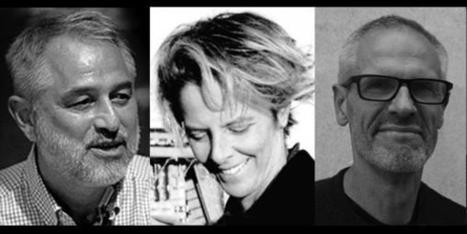
The History of Art is filled with forgeries, but are there fakes in digital art fields made from creative cut-and-pastes, collaborative works and infinite works? We approached four people who, pondering the notion of fake, point to characteristics specific to digital art.
If i were a man i'd want to be either Idris Elba or Garnet Hertz. You know Elba, he was gangster Stringer Bell in The Wire and a detective in Luther. Now Garnet Hertz is neither of that (to my knowledge) but he's the guy everybody wants to talk to at media art, tech or design conferences because his works play with several levels of engagement: from instant entertainment to deep reflection on DIY culture, design processes and technological progress. Hertz makes robots controlled by cockroaches, video game systems that you can literally drive around, he gives talks about Zombie Media and has just crafted a magazine about critical technical practice and critically-engaged maker culture that puts us all (us being media people) to shame.
Eric Steven Raymond, in an interview at the Agile Culture Conference, talks about the hacking culture and some of the lessons the Agile community could learn from open source development.
Opening monday 04 02 2013 : Mons > La Médiathèque > 18:30 exhibition : 05/06 02 2013 - 14.00 > 18.00free entrance Mauro Vitturini, composer, sound and interdisciplinary artist hosted in Mons at Transcultures for a intense 3 week M4m - M for mobility (European project supported by the European Commission-Culture Programme) residency (with the help of technician Emilien Baudelot and the final collaboration with sound-multimedia Mons artist Arnaud Eeckhout for a performance) answers to Philippe Franck (director of Transcultures)' s questions on his approach and the result of his creative process in Mons at and with Transcultures.
Filip Visnjic is an architect, lecturer, curator and a new media technologist born in Belgrade now living in London. He specialises in directing web, new media and architectural projects while also contributing to a number of blogs and magazines about art, design and technology. He is an editor-in-chief at CreativeApplications.Net, co-founder and curator at Resonate, director at Working Architecture Group and he lectures at a number of universities in the UK.
Adam Brown is a conceptual artist working with scientists to create art pieces that use robotics, molecular chemistry, living systems and emerging technologies. Years ago, i saw one of his works at Emoção Art.ficial [Art.ficial Emotion], a Biennial of Art and Technology in Sao Paulo.
The robotic sculpture, called Bion, explored the relationship between humans and artificial life. Fast forward to May 2013 when i am aimlessly clicking around and stumble upon one of his most recent pieces. This time, the project doesn't use swarms of responsive synthetic "life-form" but bacteria that, over a period of one week, process the toxins of gold chloride and produce nuggets of 24-karat gold.
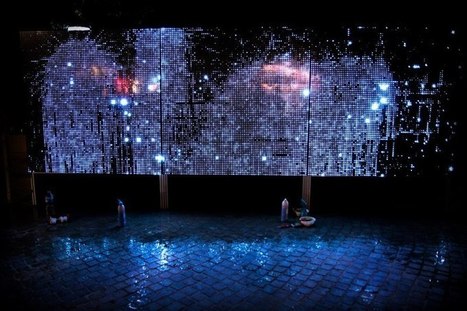
This past summer, while France was liquefying under the scorching heat wave that swept the country, artist Antonin Fourneau unveiled his interactive instalaltion Water Light Graffiti, developed in close collaboration with Digitalarti Artlab. This luminous artwork consists of a surface embedded with thousands of LEDs that light up upon contact with water, thus allowing visitors to create beautiful light frescos with a little help from simple tools like water guns, spray cans, and wet paintbrushes.
More recently, as part of Nuit Blanche, crowds in Paris got a chance to marvel at this work with Fourneau, Painthouse collective, and Graffiti Research Lab using it to create luminescent burners.
“This structure is a new way for them to emancipate and to experiment. We also wish that we can help the public to stop being so self-conscious, because they’re aware that their artwork is going to disappear anyway,” says Fourneau about the project. ...
"Hyper-actif des réseaux sociaux, créateur de sites, artiste numériquement reconnu, Rafaël Rozendaal est autant un pur produit du web qu’un pionnier dans la manière qu’il a de se l’approprier. Il créé non seulement des animations et des images mais aussi de véritables expériences visuelles, sonores et gestuelles. De celles-ci découlent des usages et des appropriations nouvelles du média internet transformé pour l’occasion en musée ludique et interactif. Les sites de Rafaël Rozendaal sont une promenade vivante et pleine de candeur dans les monstrueuses étendues de codes qui font d’internet l’une des plus poductives et foisonnantes création de l’homme moderne..."
Peter Weibel est artiste, commissaire et théoricien des médias. Il a tout d’abord exploré l’art de la performance avant de découvrir le potentiel créatif des médias et technologies. Mais il a aussi été directeur artistique d’événements d’art numérique ou commissaire d’expositions dédiés aux nouveaux médias dans l’art, tout en dirigeant le ZKM de Karlsruhe.
Tout le monde connaît votre travail de théoricien et de commissaire d’exposition, mais c’est tout d’abord en tant qu’artiste que vous investissez la scène artistique. Je me souviens de votre installation Possible (1967), de son effet de surprise ! L’illusion, tout comme la surprise, ne seraient-elles pas des notions récurrentes dans les arts médiatiques ?
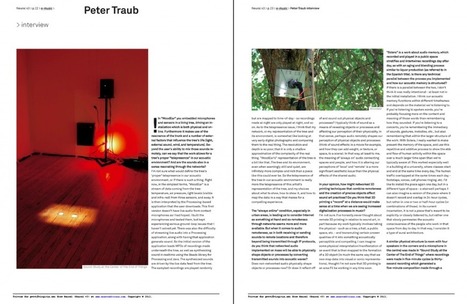
In late 2012 I was interviewed by artist, critic, and editor of Neural magazine, Alessandro Ludovico. We discussed my early net pieces through my latest, WoodEar.
PACKED : Contrairement à certains artistes qui laissent aux musées et aux institutions les problématiques de la patrimonialisation de l'art numérique, j'ai l'impression que tu abordes ce sujet assez volontairement, que ce soit au travers de tes textes ou des lectures que tu donnes. Pourquoi et comment a commencé cette réflexion ?
Grégory Chatonsky : Il y a trois raisons pour lesquelles je m'intéresse au patrimonial. La première, c'est qu'en parallèle de mon activité artistique, j'ai pendant trois ans entre 1994 et 1997 écrit et scénarisé un CD-Rom sur la déportation et la Shoah. Il s'agissait d'une activité extra-artistique mais où j'ai forcément dû aborder les questions de la mémoire et des archives. Pour ce projet, je me suis rendu dans de nombreuses archives aux Etats-Unis, en Israël, en Pologne, en Russie, etc. Il est évident que ces questions prennent une ampleur tout à fait importante dans un tel contexte, d'où aussi le « débat » qu'il y a eu autour des négationnistes et des archives de la Shoah.
Grégory Chatonsky est un artiste français né en 1971 à Paris qui travaille principalement avec les technologies de l'informatique et le web. Après des études de philosophie à l'Université de la Sorbonne et un cursus artistique aux Beaux-Arts de Paris, il fonde en 1994 le site et collectif d'artistes sur Internet Incident.net. En parallèle à son activité artistique, Grégory Chatonsky enseigne aussi dans des écoles et des universités en France et au Québec tels que Paris IV, Le Fresnoy et l'UQAM.
Packed vzw a évolué du statut d'organisation plateforme pour l’archivage et la préservation des arts audiovisuels vers celui de centre d’expertise pour le patrimoine culturel numérique. En Flandre et à Bruxelles, il joue un rôle important en consolidant le développement et le déploiement de l'expertise dans les domaines de la numérisation et de l'archivage numérique. Son objectif est d'améliorer et d'assurer la qualité et l'efficacité des actions qui sont menés dans ces domaines pour l'ensemble du patrimoine culturel.
Strange feeling when slipping between the black curtains that block the great hall of the Lieu Unique in Nantes: a mix of curiosity, excitement, but also anxiety… This is the first time we are faced with Fragile Territories, a tentacular installation by Robert Henke. We already knew some of his earlier, smaller devices (Transition machine, Traffic, Cyclone) that primarily relied on video and audio interactions. Here, the prime material is the light of laser beams, glittering, crackling and scattered like fireflies according to convoluted algorithms… all in a very dark-ambient sound atmosphere revealing the dark side of Robert Henke who is also pursuing minimal-dub and chaotic explorations as Monolake… Interview. ...
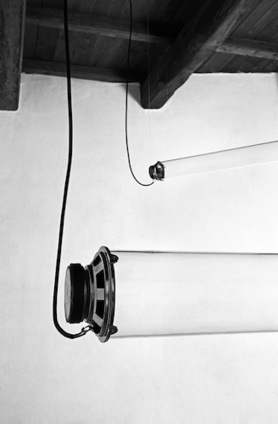
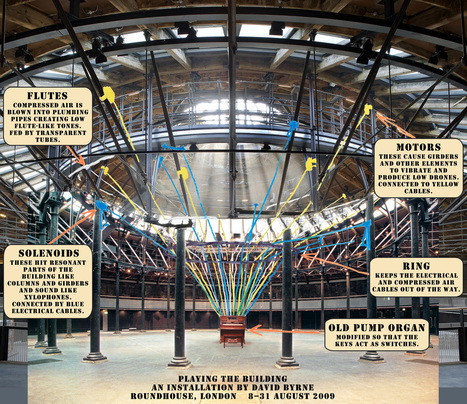
Playing the Building is a sound installation in which the infrastructure, the physical plant of the building, is converted into a giant musical instrument. Devices are attached to the building structure — to the metal beams and pillars, the heating pipes, the water pipes — and are used to make these things produce sound. The activations are of three types: wind, vibration, striking. The devices do not produce sound themselves, but they cause the building elements to vibrate, resonate and oscillate so that the building itself becomes a very large musical instrument. ...
James Patten's surreal Spring 2013 window installation for Barneys New York brings computers into the physical world in order to build a richer experience.
Find out how the NEO MODERN installation came to life and see how his engineered surprises for Christian Louboutin and fashion editor Carine Roitfeld are expanding the vocabulary of design.
HTML5, CSS3 and JS are all pretty hot topics of late, with many flash developers learning and showing off their new skills. Hakim El Hattab is a multi award-winning developer who has gained a reputation for his work with these new age technologies.
His work has been featured numerous times on The FWA (Favourite Website Awards) site of the day, including 20 Things I learned (About Browsers and The Web) and his personal experiments and profile site. Having been featured on TNW and written in .net Magazine, you can be sure Hakim really knows his stuff, currently working as Lead Interactive Developer at Qwiki. You can find Hakim on twitter as @hakimel
We asked Hakim a few questions about his work, HTML5 and his awesome experiments.
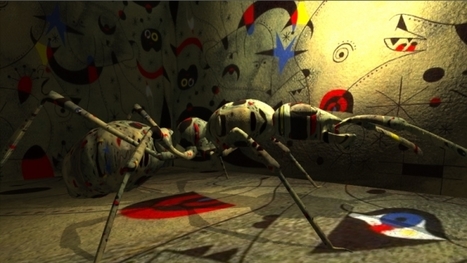
L’archéologie nous apprend qui nous étions et surtout qui nous sommes. De ces traces du passé nous pouvons envisager l’avenir. L’artiste français Grégory Chatonsky l’a bien compris et va plus loin. Avec Telofossils, son exposition monographique actuellement présentée au musée d’art contemporain de Taipei, il s’attelle à imaginer ce que pourrait être l’archéologie de notre société. Quels pourraient être les vestiges d’un monde tendant à la dématérialisation ?
Les technologies ont joué un rôle important dans ce phénomène. Si elles sont au coeur du travail de Chatonsky tant dans la forme que dans le fond, elles y sont toujours traitées d’un point de vue humain et sensible. L’utilisation des technologies de pointe dans ses installations n’est jamais gratuite mais souligne la relation étroite et complexe que notre société a noué avec elles au cours de ces dernières décennies.
Ce désir d’abondance et d’accumulation nous mènera-t-il à notre perte ? Il est trop tôt pour le savoir, mais avant la fin annoncée de notre espèce, nous avons demandé à Grégory Chatonsky de nous en dire plus sur son travail, le futur et la destruction.
Daniel Shiffman works as an Assistant Arts Professor at the Interactive Telecommunications Program at NYU’s Tisch School of the Arts. Originally from Baltimore, Daniel received a BA in Mathematics and Philosophy from Yale University and a Master’s Degree from the Interactive Telecommunications Program.
He works on developing tutorials, examples, and libraries for Processing, the open source programming language and environment created by Casey Reas and Ben Fry. He is the author of Learning Processing: A Beginner’s Guide to Programming Images, Animation, and Interaction and The Nature of Code (self-published via Kickstarter), an upcoming text and series of code examples about simulating natural phenomenon in Processing.
To get content containing either thought or leadership enter:
To get content containing both thought and leadership enter:
To get content containing the expression thought leadership enter:
You can enter several keywords and you can refine them whenever you want. Our suggestion engine uses more signals but entering a few keywords here will rapidly give you great content to curate.


 Your new post is loading...










![[Interview] : Peter Weibel, directeur du ZKM | Digital #MediaArt(s) Numérique(s) | Scoop.it](https://img.scoop.it/bhGb05rXx2vfNM3GaMyLgjl72eJkfbmt4t8yenImKBVvK0kTmF0xjctABnaLJIm9)


![[INTERVIEW] Grégory Chatonsky, l'art comme une archéologie du futur | Digital #MediaArt(s) Numérique(s) | Scoop.it](https://img.scoop.it/Dp9OoYcFlY1Q-97Psym62jl72eJkfbmt4t8yenImKBVvK0kTmF0xjctABnaLJIm9)




