From icons to soup cans-trawling the Net for Things You Can Use brought to you courtesy of the Rondebosch Boys' High School Library (If you would like to receive a weekly newsletter of the latest items in this Scoop just mail me at library@rondebosch.com)
Using biological technologies combined with cutting-edge computation The Living will use a new method of bio-design, resulting in a structure that is 100 percent organic material. The structure temporarily diverts the natural carbon cycle to produce a building that grows out of nothing but earth and returns to nothing but earth.
The Rise and Fall of Apartheid is an epic photo exhibition that is due to open in Joburg. It was co-curated by Okwui Enwezor, who first came to town 17 years ago to create the second Johannesburg Biennale. Since then, he has become terribly important in the art world – a world as charming as it is vicious. Charl Blignaut speaks to him
Roughly a year later, The Spear has reappeared, this time within the (relative) safety of the covers of a book. It may not raise the same uproar, but it still raises all the same questions – and perhaps a few more.
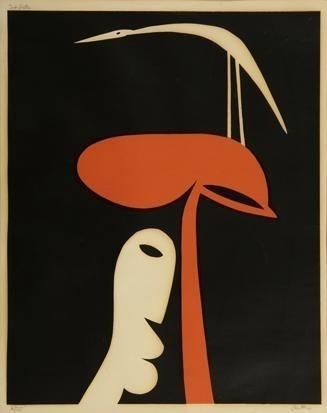
Shunned by the serious arts establishment, Paul du Toit embraced the naive and innocent.
Visual artist Paul du Toit died of cancer on January 9. He was 48 years old. There has been enough talk of dying lately, but, when thinking of Du Toit, it is not his passing that preoccupies me but his vivacity. It is telling that he understood human fallibility well, the virulence of time and the inevitability of an uncompleted life.
We visited Jeff Koons in his New York studio to discuss his career-long fascination with inflatables and the origins of his iconic Balloon Dog (Orange).
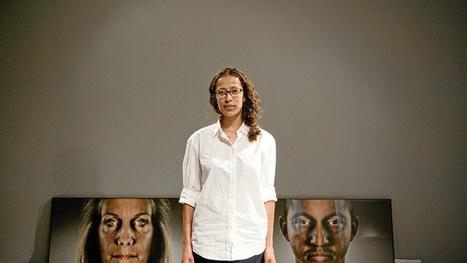
The Faces of War exhibition takes domestic violence out of the shadows.
Said Goliath: "It deals with the prevalent and distressing phenomenon of domestic violence. We know it’s out there – but it happens behind closed doors. So I’ve been trying to explore the idea of visualising the facelessness of it and articulate the silences around it. For so many complex reasons, it’s one that is not disclosed. Faces of War is a study of the portrait of this nature of violence."
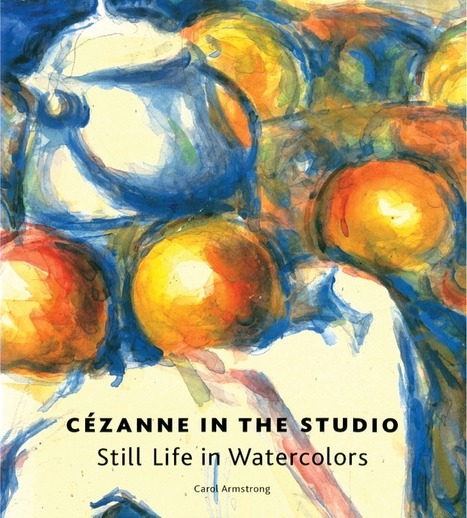
Getty Publications just announced the launch of its Virtual Library, where readers can freely browse and download over 250 art books from the publisher’s backlist catalogue. Readers can view extensively researched exhibition catalogues from the J. Paul Getty Museum, including Paul Cézanne’s late-life watercolours (Cézanne in the Studio: Still Life in Watercolors, 2004), as well as the woefully underappreciated Flemish illustrations of the 15th and 16th centuries (Illuminating the Renaissance: The Triumph of Flemish Manuscript, 2003).
Working from a remote studio on the west coast of Ireland, Cross often uses the remains of dead animals or other found natural materials in her sculptures. In this film she talks about transforming shark skins by coating them in gold and casting them in bronze, and how the coastal landscape around her inspires and feeds her art.
The self-taught artist Mr. Finch is part hunter, part gatherer and fully genius. “Flowers, insects and birds really fascinate me with their amazing life cycles and extraordinary nests and behaviour,” says the artist. He then goes hunting for vintage textiles and transforms them into all sorts of beasts and toadstools.
Hiroshi Sugimoto has his first retrospective in Korea, Julie Mehretu and Carrie Mae Weems are featured in Elle, there's an interview with Ai Weiwei and more in this week's roundup.
An exhibition of more than thirty South African print-makers has opened in Washington DC, where American art collectors are eyeing the works with interest
In its art preservationist wing Google houses an enormous digital collection of artwork spanning centuries and continents in what it calls the Art Project. Imagine seeing an image of the Fall of the Rebel Angels by Pieter Breuegel the Elder or Vincent van Gogh’s Irises, in high resolution. Google’s collection has greatly expanded since 2011. The company signed partnership agreements with 151 institutions in 2012 and the Art Project has grown since then to include over 57,000 digital representations of famous and not-so-famous works of art. Most recently, it has added work to the online collections of 34 different partner institutions.
Commissioned in 2000 by for the Contemporary African Art Show in Sao Paolo this documentary about William Kentridge, shows his creative activities including films, drawings, animations, installations, theatre and opera. In this film, shot in Johannesburg and Brazil, he talks of the impact of the South Africa landscape and social conditions on his work, and comments on his work process, inspiration, and the life of characters like Felix Teitlebaum, his alter ego.
Grant Snider of Incidental Comics has created "How to Look at Art," a comic that gives some general advice for how to look at and best come to appreciate all forms of artwork. Posters are available...
An art exhibition called "We love Mandela, Art Inspired by Madiba" opened at the V&A Clock Tower today. It marks the launch of the touring Peacemakers museum in Cape Town which is dedicated to the world's celebrated Nobel Laureates.
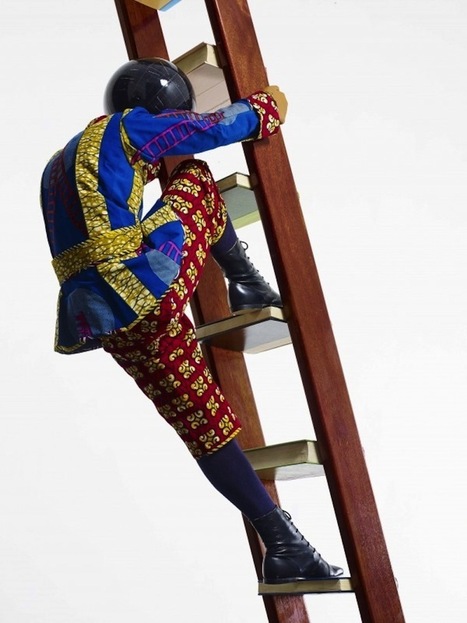
Yinka Shonibare MBE weaves together themes of history and education, James Turrell unveils never-before-seen works, Jeff Koons talks about his iconic balloon dogs, and more.
You can wear them, eat off them, hang them or even stick them on your wall: certified images of works by artist Walter Battiss, also known as the first inhabitant of the fictitious Fook Island.
Sculptors hid the rabbit after being rushed and forbidden to sign their statue. But similar jokes played by some of the greatest artists who ever lived were vicious in comparison
These videos by Adam Magyar are one of those things that are difficult to explain verbally. Filmed in Tokyo, New York and Berlin, Magyar positioned himself on trains as they pulled into subway stops, filming the waiting crowds at 50 frames per second using a high speed camera. The resulting footage creates an uncanny feeling as the train is clearly moving quickly through the station, but the people seem to remain motionless.
I find this work truly powerful. Magyar's technique allows us to see individuals in a crowd and gives us enough time to wonder what each person waiting for the train is thinking or dreaming or worrying about
Take a look at the Stainless video. What is so powerful about this work is that it allows us to see individuals in a crowd and gives us enough time to wonder what each person waiting for the train is thinking or dreaming or worrying about. It forces us to slow down and to consider each individual as unique creation.
With his short video 'Beauty,' the Italian director Rino Stefano Tagliafierro takes 'a series of well selected images from the tradition of pictorial beauty' and uses the 'fire of digital invention' to animate sentiments lost on immobile canvasses.
Luke Syson was a curator of Renaissance art, of transcendent paintings of saints and solemn Italian ladies -- serious art. And then he changed jobs, and inherited the Met's collection of ceramics -- pretty, frilly, "useless" candlesticks and vases. He didn't like it. He didn't get it. Until one day ... (Filmed at TEDxMet.)
Pablo Picasso had a long and complex relationship with book illustration. The modern painter hated to work on spec and resisted taking commissions. Nonetheless, when it came to literature, he made well over 50 exceptions, illustrating the work of scores of authors he admired.
To get content containing either thought or leadership enter:
To get content containing both thought and leadership enter:
To get content containing the expression thought leadership enter:
You can enter several keywords and you can refine them whenever you want. Our suggestion engine uses more signals but entering a few keywords here will rapidly give you great content to curate.


 Your new post is loading...