Here in an in-depth analysis on how Arizona has become a global hot spot for women’s sports.

 Your new post is loading... Your new post is loading...
 Scoop.it!
Here in an in-depth analysis on how Arizona has become a global hot spot for women’s sports. 
No comment yet.
Sign up to comment
Scoop.it!
|

|
Scooped by
AZ Mountain Lake Realty
August 14, 2:54 PM
|
Scoop.it!

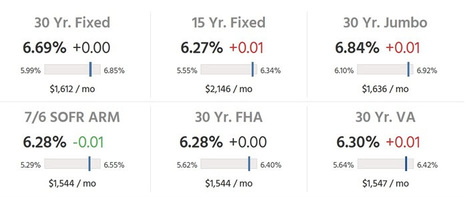
Mortgage rates continue to be stubborn and elevated. Buyers & Sellers are on 2 different planets! Plus - learn everything you need to know about jumbo home loans.
|
|
Scooped by
AZ Mountain Lake Realty
August 13, 6:41 PM
|
Scoop.it!

Sellers outnumbered buyers by 51% in July—just shy of December's record high.
|
|
Scooped by
AZ Mountain Lake Realty
August 13, 1:43 PM
|
Scoop.it!
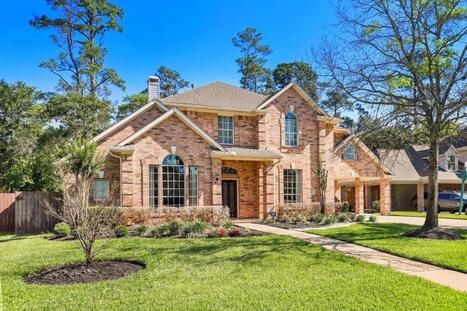
Home appraisers look at the home's interior and exterior features, square footage, location, and other factors when determining a home’s value...
|
|
Scooped by
AZ Mountain Lake Realty
August 13, 1:43 PM
|
Scoop.it!

What is a condominium? Here’s everything you need to know about how to buy a condo, from fees to how it differs from a house.
|
|
Scooped by
AZ Mountain Lake Realty
August 13, 1:38 PM
|
Scoop.it!

Happily, Phoenix ranks among the best cities in the country for mid-skilled workers. Here is a look at the analysis.
|
|
Rescooped by
AZ Mountain Lake Realty
from Real Estate News and Auction
August 12, 11:36 AM
|
Scoop.it!
|
|
Scooped by
AZ Mountain Lake Realty
August 12, 11:33 AM
|
Scoop.it!

Inflation just moved lower for the second month in a row. So, could mortgage interest rates be the next to drop?
|
|
Scooped by
AZ Mountain Lake Realty
August 12, 10:16 AM
|
Scoop.it!

Forget aging in place. Seniors are staying in the workforce longer, which is forcing them to rethink their homes.
|
|
Scooped by
AZ Mountain Lake Realty
August 11, 12:42 PM
|
Scoop.it!

Building property wealth takes more than buying real estate and waiting for values to rise. Successful investors often focus on the money a property can generate consistently. This approach makes cash flow a central part of a strong investment strategy.
|
|
Scooped by
AZ Mountain Lake Realty
August 14, 2:56 PM
|
Scoop.it!

Across the U.S., Millennials have gone from renters to owners and Phoenix leads large western cities in Millennial homeownership.
|
|
Scooped by
AZ Mountain Lake Realty
August 13, 2:07 PM
|
Scoop.it!

List your Arizona home on Zillow, Realtor.com, Trulia & more for just $59 flat fee + 0.5% at closing. Serving Phoenix, Tucson, and Prescott. Division of Mountain Lake Realty.
|
|
Scooped by
AZ Mountain Lake Realty
August 13, 1:43 PM
|
Scoop.it!
Through the deal, the real estate platform can target app users with ads based on specialty consumer segments including fixer-uppers and homebuyers.
|
|
Scooped by
AZ Mountain Lake Realty
August 13, 1:42 PM
|
Scoop.it!

Mortgage rates eased off their one-year highs this week, as markets continue to await signs of a resolution to the Iran war.
|
|
Scooped by
AZ Mountain Lake Realty
August 12, 11:36 AM
|
Scoop.it!
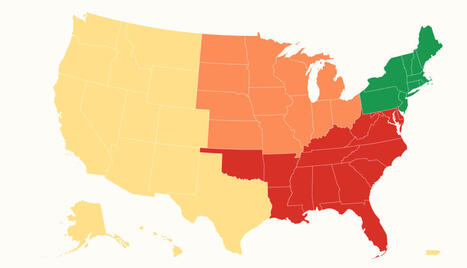
Only in the Northeast, despite surging home prices, existing-home sales rose from June to July, while they plunged in the South.
|
|
Scooped by
AZ Mountain Lake Realty
August 12, 11:33 AM
|
Scoop.it!

Mortgage rates fell today while inflation cooled slightly, in line with expectations.
|
|
Scooped by
AZ Mountain Lake Realty
August 12, 11:32 AM
|
Scoop.it!

Between 2019 and 2024, home insurance premiums rose 30% in Texas, to an average of $2,983 annually.
|
|
Scooped by
AZ Mountain Lake Realty
August 12, 10:16 AM
|
Scoop.it!

Inflation slowed a bit in July, a hopeful sign that could help temper the steady upward slide of mortgage rates.
|
|
Scooped by
AZ Mountain Lake Realty
August 11, 6:48 PM
|
Scoop.it!
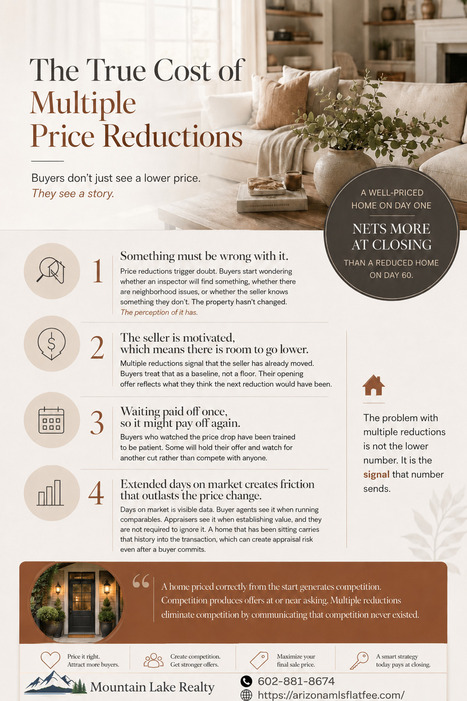
Selling a home in Arizona? Don’t make the mistake of pricing your property solely from what similar homes sold for months ago. Arizona’s housing market is constantly changing—and the right listing price should reflect where the market is going, not just where it has been.
When Arizona homeowners decide to sell, one of the first questions they ask is:
“What is my home worth?”
The traditional answer is to look at recent comparable sales, or “comps.”
That makes sense. If a similar home in your neighborhood sold for $600,000, it gives you useful information about what buyers were willing to pay.
But there is a problem with relying too heavily on yesterday's comps:
Your home isn't going to be sold yesterday. It's going to be sold in today's—or tomorrow's—market.
And that distinction can make a significant difference in how you price your Arizona home.
One of the biggest mistakes sellers make is treating the Arizona housing market as though every city and neighborhood is moving in the same direction.
It isn't.
The market in Scottsdale can behave differently from Mesa.
Chandler can behave differently from Peoria.
Gilbert can behave differently from Phoenix.
And the market in Prescott or Chino Valley can be completely different from what is happening in the Valley.
Even within the same city, individual neighborhoods can have dramatically different inventory levels, buyer demand, days on market and price ranges.
That's why a national housing statistic—or even a statewide Arizona statistic—isn't enough to determine what your house should sell for.
Your pricing strategy needs to be local.
Recent sold properties are still extremely important.
A good Comparative Market Analysis (CMA) should examine homes that are similar to yours based on:
These properties help establish a historical price range.
But here's the key:
A sold comp is evidence of what happened. It isn't necessarily a prediction of what will happen next.
That's why Arizona sellers should look beyond sold properties.
Your Real Competition Is the Arizona Homebuyer Shopping TodayWhen your home goes on the market, buyers aren't comparing it to properties that sold six months ago.
They're comparing it to the homes they can actually buy right now.
That means your pricing analysis should examine three critical groups.
Sold homes tell you what buyers actually paid.
They're the historical benchmark.
Active listings are your competition.
If buyers can choose between five similar Scottsdale homes priced between $700,000 and $750,000, you need to understand how your property compares.
You can't simply say:
“A similar home sold for $800,000 six months ago, so ours should be $800,000.”
The market may have changed.
Pending properties can provide some of the most valuable information because they demonstrate what buyers have recently responded to.
A home that went under contract quickly may tell you much more about current buyer behavior than an older sale.
Arizona Sellers Need to Watch InventoryInventory is one of the most important factors in pricing a home.
If there are very few homes available in your neighborhood, sellers may have more pricing power.
If inventory is increasing, buyers may have more choices—and sellers may need to be more competitive.
Consider two completely different Arizona markets.
You have a desirable home in Scottsdale.
There are very few comparable properties available, buyers are actively looking and well-priced homes are attracting offers.
In that environment, pricing too conservatively could leave money on the table.
Now imagine the same type of property has several competing listings.
Buyers have choices.
If your home is priced above the competition based on an older comparable sale, buyers may simply skip it.
The same house can require a different pricing strategy depending on the market it enters.
Don't Confuse Asking Prices With Market ValueHere's another important distinction for Arizona sellers:
An asking price isn't proof of value.
A homeowner can list a property for $850,000.
That doesn't mean the property is worth $850,000.
The market ultimately determines value through buyer behavior.
Price to Create Buyer InterestThe best listing price isn't necessarily the highest number you can put into the MLS.
It's the price that creates the strongest response from the buyers most likely to purchase your home.
That's especially important in competitive Arizona markets.
Think about the difference between these two strategies:
Strategy A:
“Let's price high and see what happens.”
versus
Strategy B:
“Let's analyze the current Arizona competition and price the home where today's buyers are most likely to see value.”
Strategy B is usually the more strategic approach.
The First Two Weeks MatterYour home's initial launch can be extremely important.
During the first days on the market, buyers who have been watching for properties in your price range may see your listing immediately.
Online exposure increases.
Showings can begin.
Buyer feedback starts coming in.
And if the property is priced correctly, you may create urgency.
But if the property is overpriced, you may get something very different:
Few showings. Few offers. Little urgency.
That's why pricing should be treated as part of your marketing strategy—not simply an appraisal exercise.
Arizona Home Sellers Should Price for TomorrowNobody has a crystal ball.
Nobody can guarantee exactly where Arizona real estate prices will be six months from now.
But sellers can analyze the signals available today.
Don't Let an Old Comp Set Your New Listing PriceComparable sales are a tool.
They shouldn't become a formula.
If a similar home sold for $700,000 several months ago, that sale is valuable information.
But what if:
The answer isn't automatically $700,000.
The market has to be re-evaluated.
The Bottom Line for Arizona Home SellersIf you're selling a home in Arizona, don't make your pricing decision by looking backward alone.
Look at where the market is today.
Look at what buyers are choosing.
Look at what your competition is offering.
Look at what is going under contract.
And then ask the most important question:
“Where does my home need to be priced to compete in the market my home is entering?”
Because your home isn't being sold in yesterday's market.
It's being sold tomorrow.
Before putting your home on the MLS, get a current, property-specific analysis of your local market.
At Mountain Lake Realty, we specialize in helping Arizona homeowners sell without paying a traditional percentage-based listing commission.
Our Arizona-focused flat-fee approach can help sellers keep more of their equity while still getting their property exposed to today's buyers.
Selling in Arizona? Price strategically. Market aggressively. Keep more of what you earn.
Mountain Lake Realty
602-881-8674
|
|
Scooped by
AZ Mountain Lake Realty
August 11, 12:44 PM
|
Scoop.it!

Cameras from companies like Flock are already up in thousands of neighborhoods, and most of them aren't coming down.