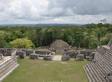
One of the ancient structures in the ancient city of Tripoli is being unearthed during excavations that will continue until the end of 2013. The structure is a bazaar that will open to tourism
An ancient closed bazaar the city of Tripoli, located in the Aegean province of Denizli’s Buldan district, will be completely unearthed and restored for commercial activity.
Despite a seaside home overlooking the Mediterranean, the very first human settlers of Sicily weren't seafood lovers, new research finds.
In an analysis published Wednesday in the journal PLOS ONE, skeletal remains of the people who occupied the site around 10,000 years ago show no telltale signs of seafood eating. Instead, researchers say, these hunter-gatherers chowed down on game such as deer and boar.
Andrew Robertshaw, Honorary Lecturer at the Institute, has recreated a WWI trench in the garden of his Surrey home, recording battle experience in a new book 24 Hours in Battle set in April 1918.
Andrew, a military historian who runs the Royal Logistics Corps Museum in Deepcut and was previously Head of Education at the National Army Museum, co-ordinated the project to recreate a 20m (60ft) long WWI trench in his back garden in Charlwood, Surrey to help to understand what soldiers went through from 1914-1918.
The replica trench system, consisting of at least two fire bays, a listening post or sap, a section of communication trench to provide access and at least one latrine, cooking area and a dug out is made up of extensive amounts of corrugated iron, revetting timber and sandbags and took a month to build by volunteers and soldiers from the 23 Pioneer Regiment Royal Logistics Corps who had recently returned from Afghanistan.
Andrew and his colleague David Kenyon, both leading experts in the character of trench life in the Great War who have carried out academic studies of trench systems and conditions and trench archaeology, have established Battlefield Partnerships to plan and supervise the replica trench system as well as advising, training and equiping the ‘soldiers'.
The San Diego Royal Presidio is the most significant archaeological site on the entire West Coast and the City of San Diego is just using it to grow grass!” laments Paul Chace, Ph.D., a local archaeologist who has taken it upon himself to promote the study and development of this historic site located on the hill in Presidio Park overlooking Old Town.
“The Presidio, founded by Spanish soldiers, sailors and missionaries, and in use from 1769 to 1834, was the first European settlement on the Pacific Coast. It marks the origin site of our city. Buried beneath the grass on Presidio Hill is a large fortress about 300 feet square, with walls, bastions, living units, chapels and a cemetery where more than 200 of our first citizens are buried.
An array of artefacts examined by Swansea University academics using 21st century technology has shed new light on life aboard the16th century warship The Mary Rose...
A necropolis with over 100 burials has been unearthed during archaeological excavations near the village of Marten in northern Bulgaria.
The discovery was made by the archaeologist from the Archaeology Museum in the Danube city of Ruse, Deyan Dragoev.
The necropolis is on the path of the future gas connection between Bulgaria and Romania.
The site includes tombs from the Thracian times to the times of the First Bulgarian Kingdom. The oldest ones date from the 5th – 4th centuries B.C. Some reveal very interesting rites such as the tomb of a decapitated soldier, whose head was laid on his lap, while others have been buried with gold and silver jewelry or with their dogs.
An excellent teaching resource by the stunning artist Libor Balák.
THis child friendly glimpse into the Palaeolithic is well worth sharing
Copyright
Images from Antropark are free to use for private, non- commercial purposes. The images can also be used for teaching in schools during projections of the web sites of Antropark on data projector, or in the materials individually – not collectively- made by lecturers.
Furthermore, selected picture materials can be printed for purposes of internal school diplomas, commemorative sheets or posters (such as recruitment posters or leaflets regarding voluntary work for students of archeology) and as an illustrative material for experts and students presentation.
For all used materials, it it appropriate always to show the source – i.e. Libor Balák, Antropark. In the case of commercial use or use for exhibition or publication, it is necessary to ask the author for permission for single use of the work, i.e. unlicensed contract. As for the materials from Antropark, we don´t provide other contracts. Before any commercial use of materials, you have to contact the author and negotiate the conditions. After agreement, materials are available in high resolution. Copyright infringement will be punished by bringing the case before the court according relevant laws.
Even as anthropologists and archaeologists continue to puzzle over the eclipse of the Mayan empire, the Maya themselves are still here, with estimated 6.2million living in Mexico, Belize, Guatemala, Honduras and El Salvador.
An archaeologist says the WA Government is falling short of its obligations to protect priceless rock art.
Ken Mulvaney has been researching rock art in the Kimberley, the Pilbara and the Northern Territory for the past 30 years.
Now based in Dampier, he is paid by a mining company to protect culturally rich areas like the Dampier Archipelago and Burrup Peninsula, where some art is thought to date back 30,000 years.
Dr Mulvaney says mining companies and university research bodies are the only ones spending big to protect the state's heritage.
A vast urn-burial site has been found at Mandapam village, near Aarpakkam intersection, about 14 km from Kancheepuram.
The importance of the site, archaeologists say, is that it belongs to a period earlier than the Megalithic Age or Iron Age in Tamil Nadu.
They estimate that the site is datable to 1,800 BCE to 1,500 BCE, that is, 3,800 to 3,500 years before the present.
The site, however, has been ravaged by quarrying for blue-metal. Earth-movers have sliced the big urns and smashed into pieces ritual pottery, bowls and terracotta plates inside the urns.
Quarrying has reduced the site to small lakes with deposits of blue metal jutting out and broken urns protruding in places. A stone-crushing machine is filling the air with dust.
Villager P. Mani, who discovered the site, reported it to V. Arasu, Head of the Department of Tamil, University of Madras, and S. Elango, lecturer in Tamil, Madras University. Dr. Elango, who visited the site a few times, said the flat/conical bottomed urns were buried only one or two feet below the soil surface. While some had ritual pottery and terracotta plates inside, others were empty. There were disintegrated human bones in several urns. More importantly, there were no cairn circles on the surface of the graves to mark them. There were no graffiti marks on the urns.
THE LARGEST haul of Roman treasure ever found in Worcestershire will be staying in the county, museum bosses have announced.
The Bredon Hoard, made up of almost 4,000 Roman coins, was discovered on Bredon Hill near Evesham last year by metal detecting enthusiasts Jethro Carpenter and Mark Gilmore, both from Redditch.
Research carried out by Worcestershire Archaeology and Archives Service with the British Museum discovered the hoard was buried nearly a century after it was accumulated - the only known example in Britain - meaning the coins were of unique and national significance.
But their importance meant Worcestershire County Council had to raise about £40,000 to display them in the area rather than at the British Museum in London.
An 11th-century book by a revered Baghdad Muslim scholar turns out to be a tongue-in-cheek guide for party crashers, according to the researcher who translated the book into English.
The tome was originally authored by al-Khatib al-Baghdadi, a well known scholar of the Prophet Mohammed's teachings.
According to Emily Selove of the University of Manchester, who did the translation, he wrote the book to remind readers "that every serious minded person needs to take a break."
KYOTO--Researchers have identified one of the oldest examples of hiragana characters ever found, a discovery that could help language historians determine how complex kanji characters became modified as the simplified syllabary used today.
Much has been made of the so-called 2012 Mayan apocalypse. But for the real Maya people, the end of the world came slowly and timed with historic droughts.
A new, ultra-detailed climate record from a cave in Belize reveals Classic Maya civilization collapsed over centuries as rain dried up, disrupting agriculture and causing instability that led to wars and the crumbling of large cities. A final major drought after the political collapse of the Maya may be what kept the civilization from bouncing back.
After nearly a century away, Harvard archaeology has returned to Iraq.
Jason Ur, the John L. Loeb Associate Professor of the Social Sciences, earlier this year launched a five-year archaeological project — the first such Harvard-led endeavor in the war-torn nation since the early 1930s — to scour a 3,200-square-kilometer area around Irbil, the capital of the Kurdish region in northern Iraq, for signs of ancient cities and towns, canals, and roads.
Already, Ur said, the effort is paying massive dividends — with some 1,200 potential sites identified in just a few months, and potentially thousands more in the coming years.
“What we’re finding is that this is, hands down, the richest archaeological landscape in the Middle East,” Ur said. “Due to the history of conflict and ethnic strife in this region, there was no work done in this area at all, so it really is a tabula rasa, so it’s a very exciting time.”
Unfortunately, he said, that blank slate is quickly being erased by development.
Some fragments of ancient Chamorro remains have been found near the Agana bridge project.
SWCA environmental consultants senior archaeologist Sandra Yee says the site is a known ancient Chamorro village and is registered with the Guam State Historic Preservation Office.
The remains and artifacts found are from the latte period which is at least a thousand years ago.
Volunteer science divers with the National Association of Black Scuba Divers (NABS) are helping Florida Keys National Marine Sanctuary unlock the mystery of an early 20th century shipwreck off Key Largo, Fla. Underwater surveys and research conducted this week will build upon past studies and bring maritime archaeologists a step closer to naming the wreckage.
The shallow coral reefs of the Florida Keys have claimed countless ships over the centuries, and contributed to a once-thriving salvaging industry. The mystery wreck rests amid the reef known as “The Elbow” and is joined in close proximity by two known shipwrecks – the USS Arkansas and City of Washington.
Starting early next year, workers with heavy machinery will begin constructing an eight-lane highway across the small country's oldest surviving major cemetery, overriding the objections of nature lovers and heritage buffs.
To get content containing either thought or leadership enter:
To get content containing both thought and leadership enter:
To get content containing the expression thought leadership enter:
You can enter several keywords and you can refine them whenever you want. Our suggestion engine uses more signals but entering a few keywords here will rapidly give you great content to curate.


 Your new post is loading...