Your new post is loading...

|
Scooped by
David Connolly
December 10, 2012 10:25 AM
|
In 2010 French archaeologists carried out excavations on a 3.5 hectares site in Bassing, Moselle. Over a period of one thousand years – 200 BCE to 800 CE – this site had been occupied by a Gallic aristocratic establishment, a Gallo-Roman villa and several medieval buildings. Numerous weapons and the discovery of 1,165 Gallic coins testify to this place belonging to the Bassing elite, both during and after the Gallic wars (58 to 50 BCE).
|
|
Scooped by
David Connolly
December 10, 2012 4:03 AM
|
Researchers say a large deposit of sediment in Lake Geneva is evidence of a deadly tsunami from the sixth century caused by a rockfall, and it could happen again.
|
|
Scooped by
David Connolly
December 9, 2012 5:19 PM
|
December has arrived and perhaps, the end of the world! If you are reading this and feel the end is nigh, please forward a blank check to Elaine Murdy. All joking aside, with December comes the excitement of the holidays.
|
|
Scooped by
David Connolly
December 9, 2012 3:09 PM
|
Stone Pages with BAJR and Past Horizons presents the long running archaeology based podcast with the latest archaeology news, mainly related to prehistory, megalithic monuments and discoveries.
the Podcast you love to hear!
|
|
Scooped by
David Connolly
December 9, 2012 3:29 AM
|
Scientists in New Zealand are studying the past behaviour of Earth's magnetic field using the stones that line Maori steam ovens.
|
|
Scooped by
David Connolly
December 9, 2012 3:11 AM
|
The largest ancient Egyptian sarcophagus has been identified in a tomb in Egypt's Valley of the Kings, say archaeologists who are re-assembling the giant box that was reduced to fragments more than 3,000 years ago. Made of red granite, the royal sarcophagus was built for Merneptah, an Egyptian pharaoh who lived more than 3,200 years ago. A warrior king, he defeated the Libyans and a group called the "Sea Peoples" in a great battle.
|
|
Scooped by
David Connolly
December 8, 2012 3:34 PM
|
Excavations in Cirencester have unearthed one of the earliest burial sites ever found in Roman Britain. The dig at the former Bridges Garage on Tetbury Road has uncovered over 40 burials and four cremations. Experts say it is the largest archaeological find in the town since the 1970s. ...
|
|
Scooped by
David Connolly
December 8, 2012 5:34 AM
|
Caves in central Thanh Hoa province have shown evidence of ancient cemetery and tools dating back more than 10,000 years and climate change from the end of the glacier age. Vietnam News Agency (VNA) reports the findings were part of a year-long research by scientists from the Vietnam Archaeology Institute and the Novosibirsk Institute of Archaeology and Ethnography.
|
|
Scooped by
David Connolly
December 8, 2012 4:27 AM
|
Yijala Yala Project is a long-term, multi-platform arts project based in Ieramugadu (Roebourne) focused on telling the story of the community’s culture, history and future in a range of media: theatre, film, games, iPad applications and music. Through arts and digital media skill development and content creation, it explores the inter-connection between past, present and future, young people and older generations, ancient and modern culture and how critical they all are to the heritage of the ‘now’.
|
|
Scooped by
David Connolly
December 7, 2012 3:11 PM
|
A new interactive map of London showing where German bombs landed over the course of eight months during World War II gives new meaning to the word Blitz...
Scary!
|
|
Scooped by
David Connolly
December 7, 2012 1:16 PM
|
In mid October an all-points bulletin was emailed to Time Team staff. It announced that after 20 seasons and over 230 episodes the programme was being axed by Channel 4. A few days later news of Time Team’s demise broke in the Guardian. It was a perfunctory end for a television institution that, over two decades, made British archaeology more accessible and popular than ever. Here we chart the highs and lows of a revolutionary format that aimed to bring archaeology to the people.
Current Archaeology examines the two decades of TT
|
|
Scooped by
David Connolly
December 7, 2012 3:18 AM
|
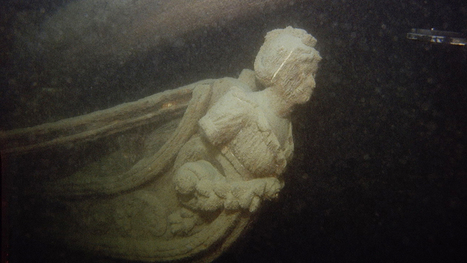
The Hamilton and the Scourge — two wooden ships from the War of 1812 — are aging well at the bottom of Lake Ontario, according to surveyors who have been studying the wrecks. The American schooners, which sank in 1813, lie 90 metres below the surface of the lake, about 10.5 kilometres off Port Dalhousie. The ships have been owned by the City of Hamilton since 1980, but a partnership with Parks Canada allows surveyors to map out every inch of the boats.
|
|
Scooped by
David Connolly
December 7, 2012 3:04 AM
|
The pressures of urbanisation and population growth are threatening the country’s historic monuments and pre-historic rock art sites. Unless we act quickly to improve the manner in which we look after these treasures, irreparable damage could be caused, said Vice-President Hamid Ansari, while inaugurating the International Conference on Rock Art-2012 at Indira Gandhi National Centre for the Arts here on Thursday. Describing rock art as humankind’s precious cultural heritage, Mr. Ansari said it depicts the earliest recorded expressions of our species. “It is also a valuable repository of our artistic, cognitive and cultural beginnings since the earliest days. India is fortunate to possess one of the three largest concentrations of this world heritage, the other two being Australia and South Africa, where rock art is still a living pursuit.”
|
|
|
Scooped by
David Connolly
December 10, 2012 10:24 AM
|
This week On the Reading Rest I have a small standard archaeological report on the excavation of a solitary grave, technically speaking a Bronze Age stone setting, probably constructed in the 15th century BCE and revisited in the Pre Roman Iron Age in the 5th-4th century before the common era. A stones setting is one of the most commonplace ancient monuments in Uppland. There are tens of thousands of them, numbered and mapped, but still a detailed new survey of any two square kilometers with known Iron Age monuments will in all probability result in more stone settings.
|
|
Scooped by
David Connolly
December 10, 2012 3:57 AM
|
When Martha Forth first saw the one-room rural schoolhouse where she would land her first teaching job in 1938, her heart sank. Last month, the Los Angeles County Board of Supervisors agreed to ask the California Office of Historic Preservation to grant the status. Meanwhile, supporters are seeking to refurbish the building by its 100th birthday in 2015. "It would be wonderful if they could restore enough of it so that people realize what it really was like when it was a one-room school," said Forth, speaking by phone from her home in Laurie, Mo.
|
|
Scooped by
David Connolly
December 9, 2012 3:15 PM
|
Amid the council budget cuts the city’s heritage faces a threat as the archaeology department, which works to protect Southampton’s history is facing closure.
|
|
Scooped by
David Connolly
December 9, 2012 5:21 AM
|
A gold earring disc, found in Norfolk by a metal detector enthusiast, has left treasure experts baffled as to the exact meaning of its decoration. Discovered in Keswick, near Norwich, the disc "is an unusual find for the Roman period", said a Norwich Castle Museum spokesman. It features a scorpion, phallus, snake and crab, but the meaning of the combination "is lost" an expert said. The Norwich museum hopes to acquire the disc for its collection.
|
|
Scooped by
David Connolly
December 9, 2012 3:27 AM
|
Rogueclassicist is using Pinterest, an online pinboard to collect and share what inspires you.
For a common occurance, it is intersting that this image is so rare.... perhaps the men don't like it.. and prefer people hacking at each other. After all... that's much less embarressing. !
|
|
Scooped by
David Connolly
December 9, 2012 3:06 AM
|
This photostream features photos of forgotten places like ruins and rooms of abandoned buildings.
|
|
Scooped by
David Connolly
December 8, 2012 6:35 AM
|
A treasure trove has been discovered in a secret room hidden underground in Christchurch for at least a century. Archaeologists uncovered a small underground room in the foundations of a 1970s office block demolished in Madras St in the city centre. When the secret room was opened in March, 1600 treasures from the 19th century were discovered, including a ladies fob watch, a brooch, mustard pots, cutlery, bottles and china. Underground Overground Archaeology director Katharine Watson said the find was "amazing and surprising".
|
|
Scooped by
David Connolly
December 8, 2012 4:41 AM
|
An inscription dating back to the sixth or seventh century that was stolen from Istanbul’s Yoros Castle has been found buried in a barn in the city’s Anatolian-side district of Beykoz. Acting on a tip, the Istanbul Police Department searched a house in Beykoz’s Tokat village. During an excavation in a barn directly next to the house, police officers found the castle’s inscription and subsequently informed the Istanbul Archaeology Museums Directorate.
|
|
Scooped by
David Connolly
December 8, 2012 2:18 AM
|
A Belizean archaeologist sues the makers of the latest Indiana Jones film for using a likeness of a so-called crystal skull. This is a story you could not make up!
|
|
Scooped by
David Connolly
December 7, 2012 1:23 PM
|
The past 5 to 10 thousand years have seen a surge in human genetic diversity (To be human is to evolve - fast: http://t.co/gemafYmo via @zite #evolution #anthropology...)...
|
|
Scooped by
David Connolly
December 7, 2012 3:35 AM
|
A MASS grave uncovered outside Bundaberg earlier this week is an historically significant find that shines further light on a dark period of alleged slavery in 19th century Queensland. Bundaberg Regional Council has confirmed ground radar technology identified 29 unmarked graves of South Sea Islanders on an old sugar cane plantation just east of Bundaberg yesterday morning. The graves are in rows of 13, 10 and six, with one child buried among 28 adults. Farmer and former federal Labor politician Brian Courtice - who last week appeared in The Courier Mail revealing plans to heritage-list his farm where scores of graves are believed to exist - said the confirmation was the first of its kind to occur in Queensland.
|
|
Scooped by
David Connolly
December 7, 2012 3:14 AM
|
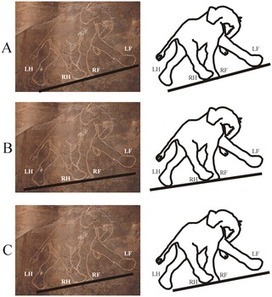
PLOS ONE: The experts of animal locomotion well know the characteristics of quadruped walking since the pioneering work of Eadweard Muybridge in the 1880s. Most of the quadrupeds advance their legs in the same lateral sequence when walking, and only the timing of their supporting feet differ more or less. How did this scientific knowledge influence the correctness of quadruped walking depictions in the fine arts? Did the proportion of erroneous quadruped walking illustrations relative to their total number (i.e. error rate) decrease after Muybridge? How correctly have cavemen (upper palaeolithic Homo sapiens) illustrated the walking of their quadruped prey in prehistoric times? The aim of this work is to answer these questions. We have analyzed 1000 prehistoric and modern artistic quadruped walking depictions and determined whether they are correct or not in respect of the limb attitudes presented, assuming that the other aspects of depictions used to determine the animals gait are illustrated correctly. The error rate of modern pre-Muybridgean quadruped walking illustrations was 83.5%, much more than the error rate of 73.3% of mere chance. It decreased to 57.9% after 1887, that is in the post-Muybridgean period. Most surprisingly, the prehistoric quadruped walking depictions had the lowest error rate of 46.2%. All these differences were statistically significant. Thus, cavemen were more keenly aware of the slower motion of their prey animals and illustrated quadruped walking more precisely than later artists.
|